
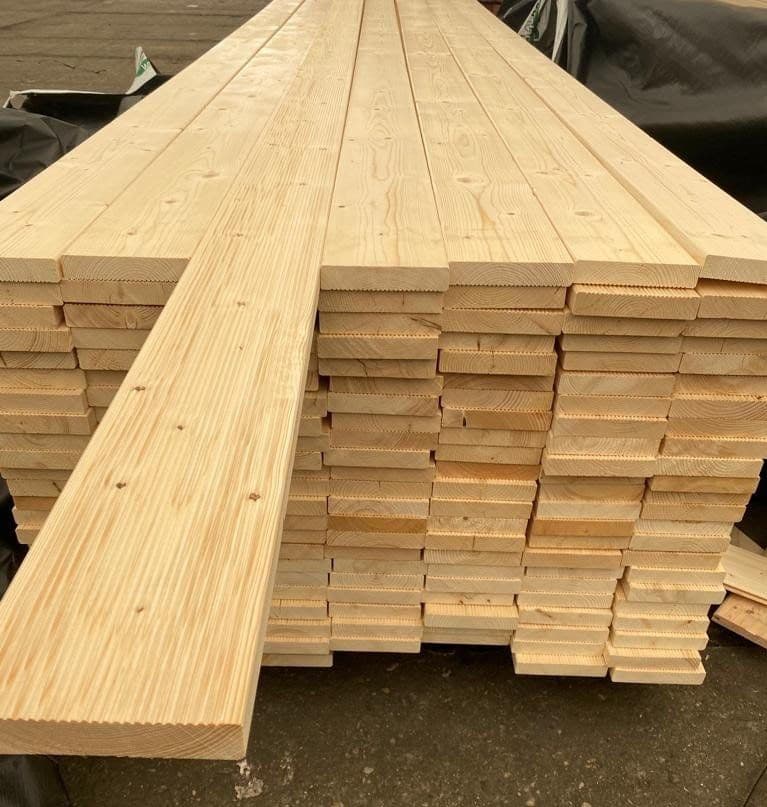
 SCANDINAVIAN SPRUCE GRADE AB decking board 28x145 fine-grooved/smooth 5.1 m€23.90Request a quote →
Categories and filters ▾
Categories
2 series
SCANDINAVIAN SPRUCE GRADE AB decking board 28x145 fine-grooved/smooth 5.1 m€23.90Request a quote →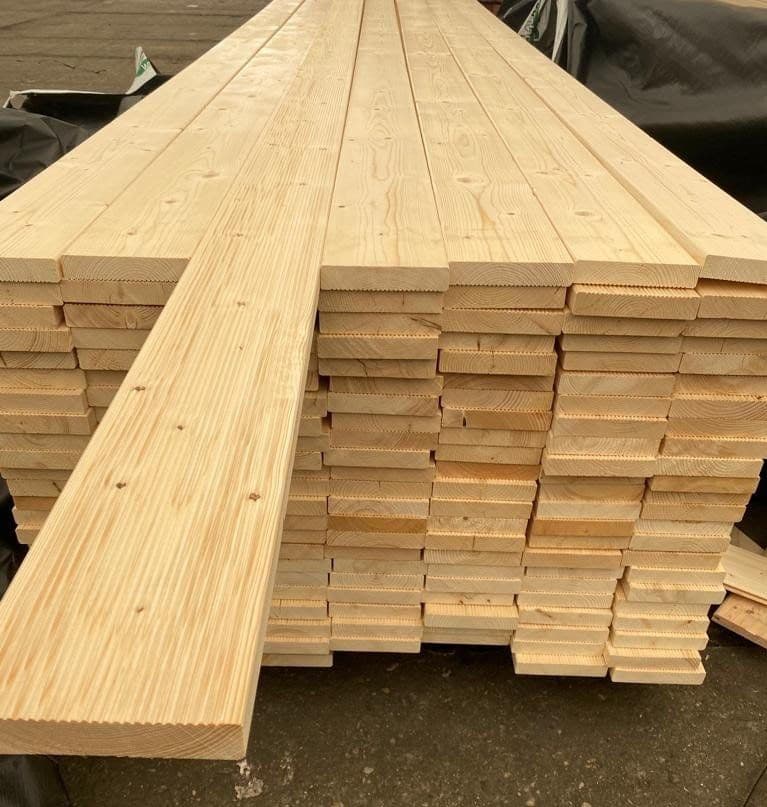 Scandinavian spruce decking board GRADE BC 28x145 fine-grooved/smooth 5.1 m€20.22Request a quote →
Products currently unavailable
We retain the descriptions and specifications from our previous range. These products are currently unavailable to order.
About this category: Timber decking boardsRead more ↓
Timber decking boards – what are their characteristics?
Timber decking boards are a classic choice that has remained popular for years. Choosing timber for a deck is often driven not only by aesthetics, but also by durability and comfort in use. A timber deck brings warmth, a natural feel and a unique atmosphere to the garden that is difficult to achieve with other materials.
Timber decking boards – types of wood
The wood species most commonly used to make decking boards are:
- Pine: pine is the most popular wood species for building decks. It is relatively soft and requires regular preservative treatment to improve its resistance to moisture and insect damage. Pine has a light, warm colour that develops a patina over time.
- Spruce: a conifer from local forests, making it a readily available and relatively inexpensive material. Its light, natural colour and ease of working make it a popular choice for many garden projects.
- Larch: harder than pine and more resistant to the weather. Larch has a beautiful reddish-brown colour that darkens over time. It is ideal for building decks that are subject to heavy use.
- Oak: one of the most durable native wood species. It is characterised by its hardness, distinctive grain and natural resistance to moisture. Oak is heavy and solid, making it an excellent choice for building elegant, durable decks.
Benefits of timber decking boards
Timber decking boards bring a unique, natural charm to the garden, blending harmoniously with the surrounding environment. Each board has its own unique grain and colour, making every timber deck one of a kind.
The surface of wood is pleasant to the touch, even on hot days, and does not heat up as much as other materials. In addition, wood does not conduct heat, making it a good material for building a deck. However, UV radiation has a negative impact on the lifespan of timber decking boards.
Wood is a renewable and biodegradable material. With responsible forest management, wood can be sourced sustainably, which benefits the environment.
Timber decking boards and their maintenance
Although beautiful, wood is a material that needs proper care to retain its appearance and functionality, so various treatments are required to keep it in good condition.
Timber decking should be oiled regularly to protect it against moisture, UV radiation and dirt. It is best to oil the deck at least once a year, in spring, to prepare it for the busy season.
Regular deck cleaning removes dirt, dust and moss that can accumulate on the surface of the wood. This should be done using specialist cleaning products or a pressure washer. Incorrect cleaning can do more harm than good, as timber decking boards are not resistant to moisture, and excessive water during deck maintenance will contribute to damage to the structure of the wood.
Wood is a natural material that can become damaged. It is important to check the condition of the boards regularly and replace damaged sections when necessary. Regular repairs prevent more extensive damage and extend the life of the deck.
Timber decking boards – surround yourself with beauty
A timber deck is not just a place to relax and unwind, but also an attractive garden feature that brings natural charm and warmth. With a variety of wood species available, everyone can find something to suit their needs and create a unique, distinctive outdoor space.
Is a timber decking board more durable than composite?
No, composite decking boards offer greater strength and durability. They are also harder than timber decking boards.
What should you use to protect a timber deck?
Decks made from timber decking boards should be regularly treated with preservative, stained and protected using a range of care products.
Can timber decking boards be laid directly on the ground?
No, timber decking boards must be fitted on timber or aluminium joists so that they do not come into direct contact with the ground.
Is a timber decking board flammable?
Yes, timber decking boards are highly flammable, so precautions should be taken when barbecuing on a deck or balcony.
How many years will a timber deck last?
A well-maintained timber decking board will last around 10 years. Of course, this will vary depending on how the material is cared for. Frequent use of suitable wood care products extends the lifespan of the boards.
Why do timber decking boards warp?
Timber decking boards warp because of the natural movement of wood. Neither the user nor the installer can control this. Even buying kiln-dried boards and treating them regularly with preservative does not provide 100% certainty that the wood will not move.
Does a higher price reflect better-quality timber decking boards?
Yes. The more a particular type of wood costs, the higher its quality and the better its performance. Each type of wood also has a specific hardness, which affects its strength.
What is the greatest advantage of timber decking boards?
The greatest advantage of timber decking boards is their beautiful, natural appearance. Their distinctive look transforms any deck or balcony into a cosy place to relax.
Which joists should you choose for timber decking boards?
Timber joists are the most common choice for timber decking boards. Pine joists are the cheapest option and provide a very good base for a deck. Remember that you can also strengthen the structure by using aluminium joists.
What is the most common problem with timber decking boards?
The most common problems affecting timber decking boards stem from the natural reactions of wood to outdoor conditions. Rot, decay and warping are possible consequences that are sometimes simply beyond our control.