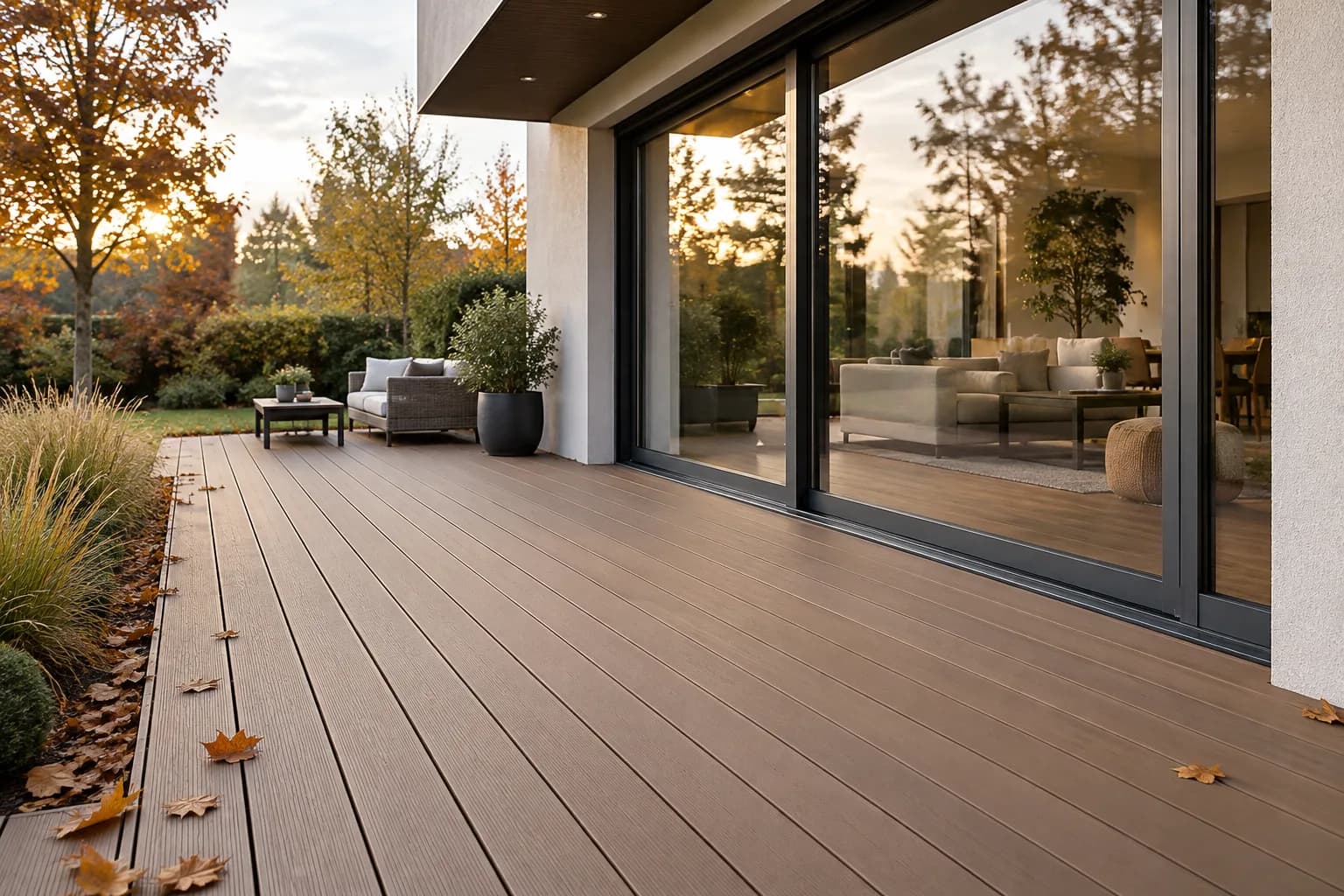
5 Mistakes to Avoid When Using Composite Decking Boards in Winter
Avoid common mistakes when caring for composite decking boards in winter! Check out our tips on removing snow, using safe products and protecting your decking from damage.

Composite decking boards are an exceptionally durable and attractive solution, ideal for patios, balconies or as cladding. However, like any material, they require proper care and use, particularly in winter, when weather conditions can be extreme. Avoiding common mistakes will help extend the life of the boards and keep them looking beautiful for many years. Here are the 5 most common mistakes to avoid when using composite decking boards in winter.
1. Using metal tools to remove snow and ice.
One of the most common mistakes is using metal shovels, scrapers or other tools to remove snow and ice from composite decking boards. Metal can cause scratches, surface damage or even distortion.
How can you avoid this?
- Instead of metal tools, use plastic shovels or soft-bristled brooms.
- For a thin layer of ice, simply sprinkle the board with sand or salt designed for composite materials, which will make it easier to remove without risking damage.
2. Using unsuitable chemicals.
In winter, many people use standard de-icing products, such as road salt or industrial chemicals. Unfortunately, these products can damage the surface of composite decking boards, causing discolouration, corrosion of the material or other permanent damage.
How can you avoid this?
- Choose de-icing products that are safe for composite decking boards – preferably magnesium chloride-based, as it is gentler than traditional salt.
- Avoid harsh chemicals that may react with the composite surface.
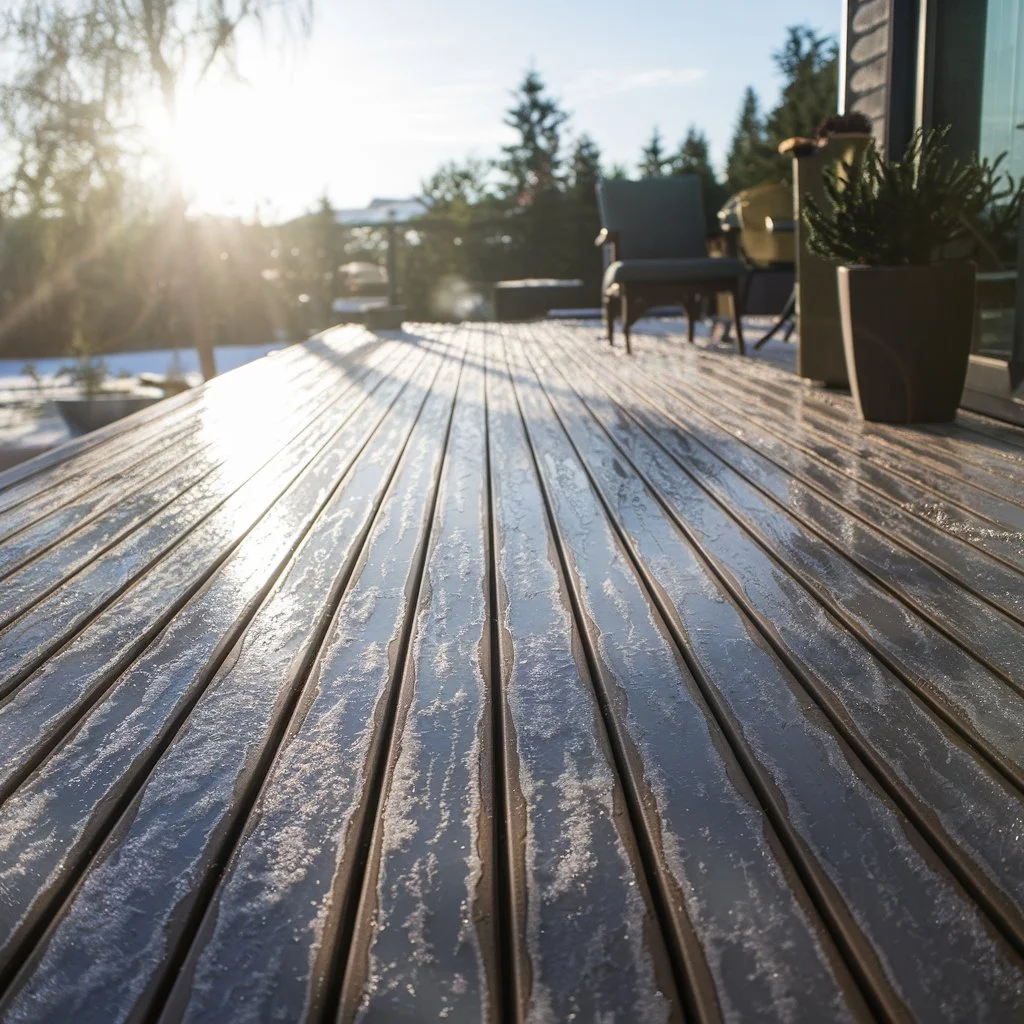
3. Neglecting regular snow clearance.
Leaving large amounts of snow or ice on composite decking boards for a long time is another mistake. The weight of the snow can cause distortion, while accumulated ice increases the risk of slipping, particularly on frequently used patios or paths.
How can you avoid this?
- Clear snow from the boards regularly, especially after heavy snowfall.
- Do not let ice form a thick layer – remove it promptly, using suitable de-icing products.
4. Ignoring slippery decking.
In winter, composite decking boards can become slippery, especially when a layer of ice or frozen water forms on their surface. Ignoring this problem not only affects users' safety, but can also lead to damage if unsuitable tools are used to tackle the ice.
How can you avoid this?
- Use anti-slip mats in areas with heavy foot traffic.
- You can sprinkle the board with fine quartz sand – this improves grip without damaging the surface.
- Check the condition of the boards regularly and remove snow before it has a chance to freeze.
5. Inadequate care and maintenance before winter.
Neglecting to prepare composite decking boards for winter is a mistake that can cause them to deteriorate more quickly. Dust, leaves and other debris can trap moisture, which, combined with frost, increases the risk of minor damage.
How can you avoid this?
- Before winter, clean dirt and leaves thoroughly off the boards – ideally using a pressure washer or a soft brush and water.
- If the manufacturer recommends using impregnating products or special protective treatments, apply them before the first frosts.
- Make sure that the drainage systems are clear, so that water does not collect on the surface of the boards.
Summary.
Composite decking boards are exceptionally resistant to changing weather conditions, but using them improperly in winter can lead to premature damage. By avoiding the mistakes above, you will protect their durability and appearance, and help keep yourself and others safe during the winter months.
Remember to use suitable snow-clearing tools, choose safe chemicals and care for the boards regularly. This will help your patio, balcony or path retain its beautiful appearance whatever the weather. Look after your composite decking boards and they will repay you with durability and ease of use for many years to come.
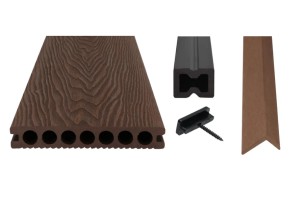
DUO composite system for a 50m2 terrace - Chocolate
DUO composite system designed for a terrace measuring 5m x 10m