
Building a terrace from scratch: What should you know before getting started?
Planning to build a deck? Find out what you need to know before work begins. A practical guide to materials, preparing the ground and the stages of construction!
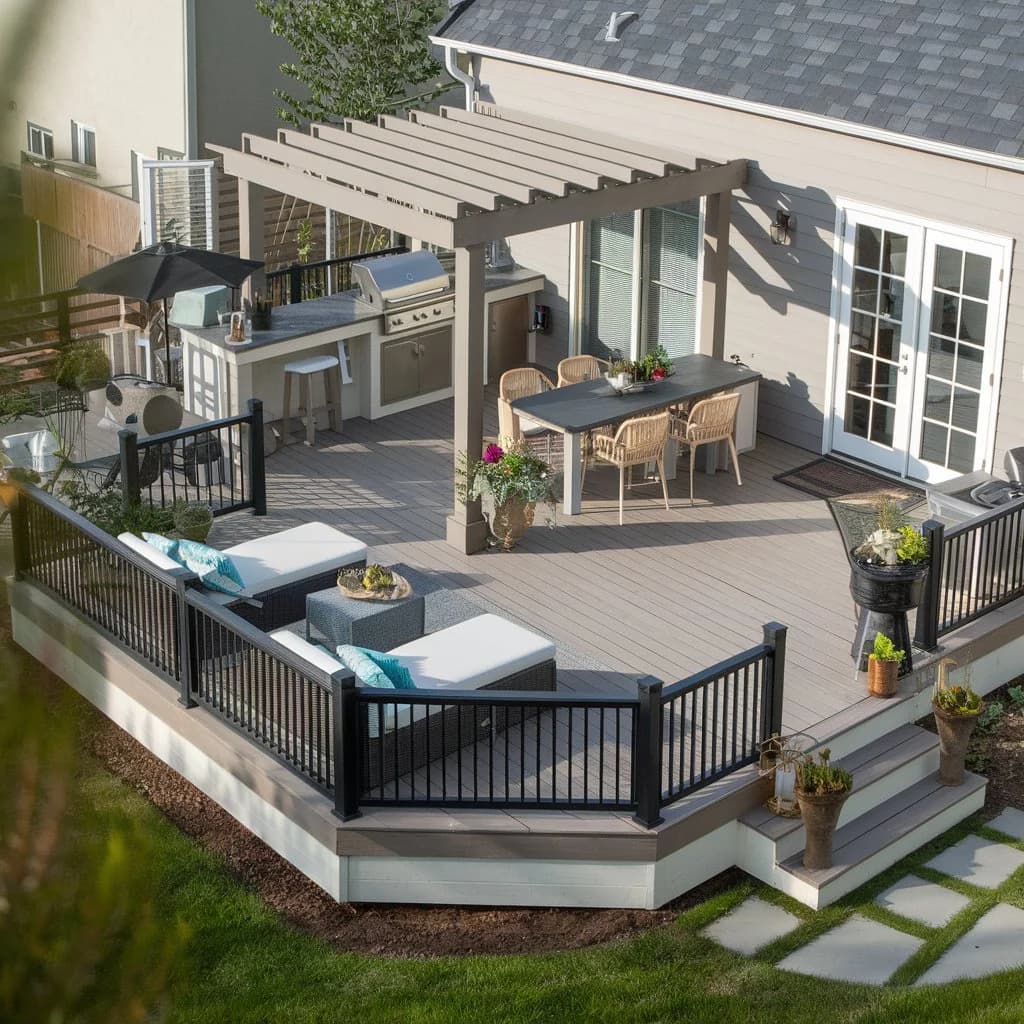
A patio is the perfect place to relax, meet up with loved ones or enjoy your morning coffee in the fresh air. Whether you are planning a large patio next to your house or a small balcony, proper preparation is the key to success. Building a patio from scratch requires not only the right materials, but also an understanding of the basic construction principles. In this article, we will take you through what you need to know before you start building a patio.
Why invest in a patio?
A patio is an investment that not only makes the space around your home more functional, but also increases its value. A patio gives you a place to relax, host an outdoor party or create a green space filled with plants. A well-designed patio can become an extension of your living room and the whole family’s favourite place.
Decide on the purpose and size of your patio.
The first step in building a patio is to decide what it will be used for and how much space it should take up. Consider whether the patio will serve as:
- A place to relax – somewhere to unwind with sun loungers and a sofa.
- A dining area – an area with a large table and chairs for family meals.
- A recreation area – a place for a barbecue, hot tub or children’s play area.
The size of the patio should suit the space available and the number of people who will use it. Remember that a well-sized patio allows you to move around freely and arrange furniture.
Choose the location of your patio.
The location of your patio is very important. When choosing a spot, it is worth considering a few factors:
- Sunlight: If the patio will be exposed to intense sunlight, consider installing a roof or pergola.
- Views and privacy: Make sure the patio will not be too visible from the street or neighbouring plots. You can use plants, fences or screens to ensure privacy.
- Distance from the house: It is best to build the patio close to the entrance from the living room or kitchen, making it easier to use every day.
Choose a material for your patio.
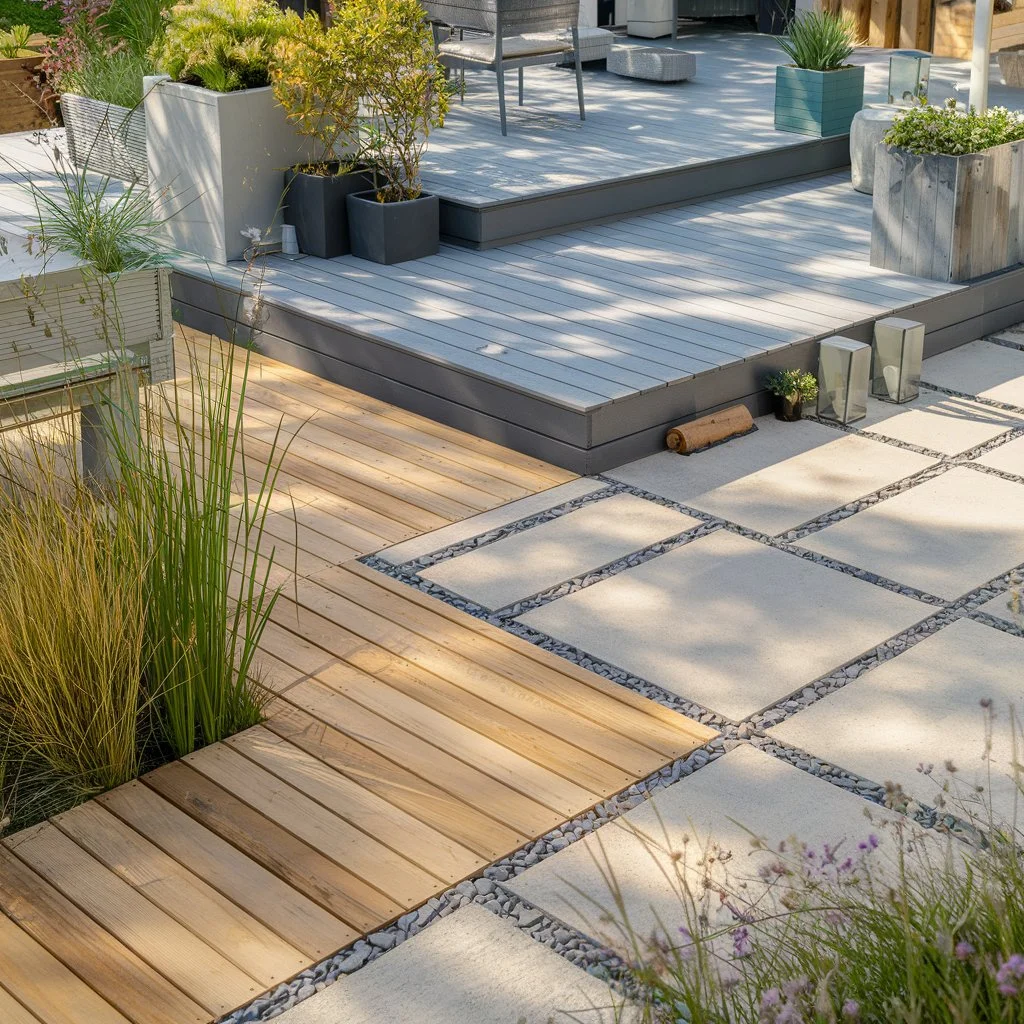
The material used for your patio affects both its appearance and durability. Here are the most popular options:
Wood.
Natural wood is beautiful and gives a patio a classic look. Popular types of wood for patios include larch, pine, acacia and exotic species such as teak.
- Advantages: A warm, natural look.
- Disadvantages: Requires regular impregnation and maintenance.
Composite decking boards.
This is a combination of wood fibres and plastic. Composite is durable and resistant to weather conditions.
- Advantages: Easy to maintain, resistant to moisture and mould.
- Disadvantages: Higher initial cost.
Ceramic or porcelain tiles.
Ideal for patios built on the ground or on a concrete base.
- Advantages: Durable and easy to clean.
- Disadvantages: Can be slippery and cold to the touch.
Concrete.
Modern patios are often built from architectural concrete, which can be finished with various textures.
- Advantages: Durable, modern appearance.
- Disadvantages: A stark look, lacking warmth.
Preparing the ground.
Preparing the ground is a key stage in building a patio. The area must be properly levelled and prepared to ensure the structure is stable.
How do you prepare the ground for a patio?
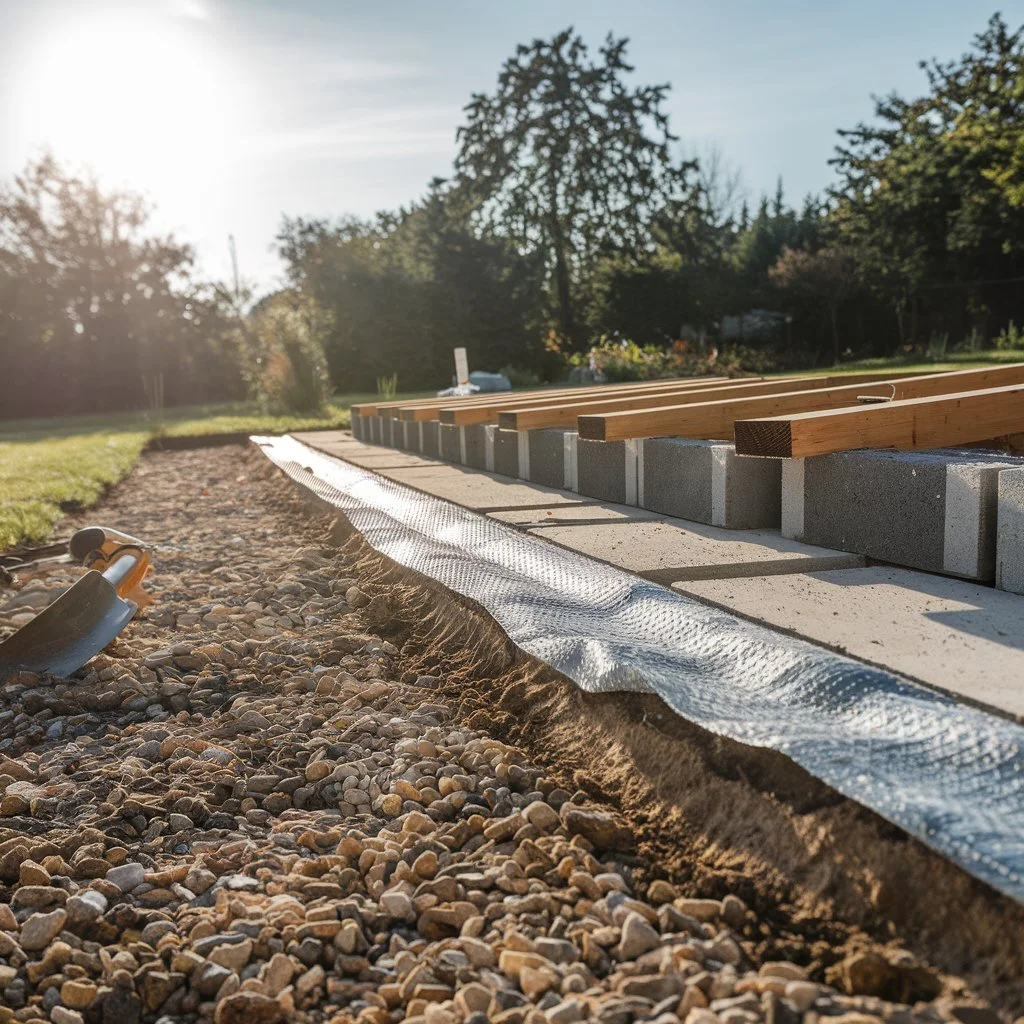
- Remove the old surface (e.g. grass, paving or concrete).
- Excavate the ground to a depth of approx. 15-20 cm to create a solid base.
- Fill the excavation with a layer of aggregate (e.g. gravel) and compact it thoroughly.
- Lay geotextile fabric on top to prevent weeds from growing.
If you are building a patio on the ground, you can use concrete foundation blocks or prepare a concrete pour.
Supporting structure and board installation.
The supporting structure of the patio should be made from durable materials such as:
- Wooden joists (impregnated)
- Composite joists
- Aluminium joists
Installing the boards.
Boards (wooden or composite) are installed on joists using fixing clips or screws. Remember to leave expansion gaps between the boards to ensure adequate ventilation and water drainage.
Roofing and lighting.
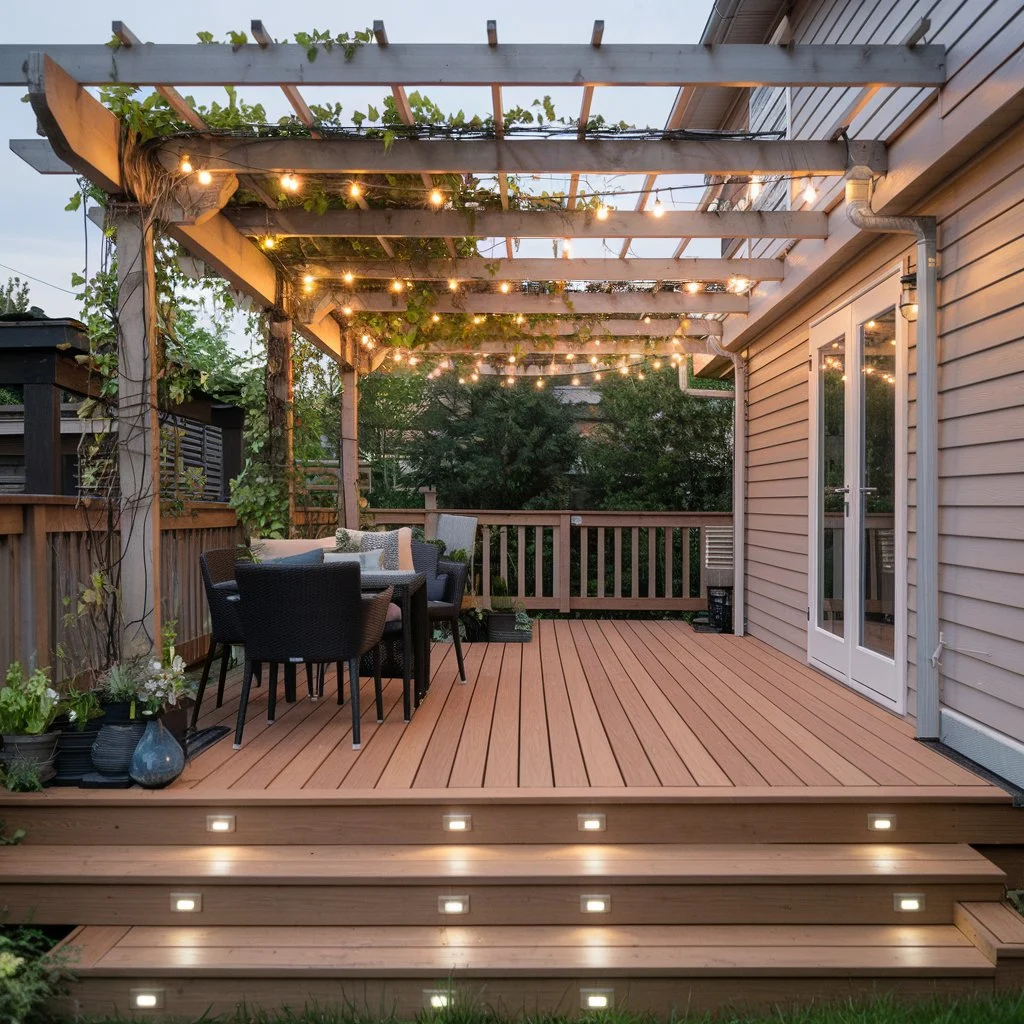
To use your patio whatever the weather, it is worth considering adding a roof. You can choose:
- An awning: A retractable cover that you can extend on sunny days.
- Pergola: A durable structure made of wood or metal, which can be planted with climbing plants.
- Polycarbonate canopy: Lets light through but protects against rain.
It is also worth investing in LED lighting, which will not only make the terrace more functional but also create a cosy atmosphere.
Common mistakes when building a terrace.
It is easy to make mistakes when building a terrace, and these can affect the durability of the structure. Here are the most common ones:
- Inadequate ground preparation: Uneven ground can cause the terrace to sink.
- Joists spaced too closely together: This can cause the decking boards to sag under the weight.
- Inadequate ventilation: A lack of expansion gaps can cause moisture to build up and damage the material.
Cost of building a terrace.
The cost of building a terrace depends on the materials used and the size of the structure. For example:
- Wooden decking boards: 100-200 zł/m²
- Composite decking boards: 200-400 zł/m²
- Concrete and tiles: 150-300 zł/m²
You should also add labour costs if you decide to hire a team.
Summary.
Building a terrace from scratch is an investment that brings great satisfaction. Proper planning, choosing the right materials and careful workmanship will let you enjoy a functional and beautiful space for years to come. Remember to avoid the most common mistakes and invest in good-quality materials. That way, your terrace will become your favourite place to relax and spend time with loved ones!

COMPO-CLEAN cleaner for composite terraces - 1L
For composite decking boards
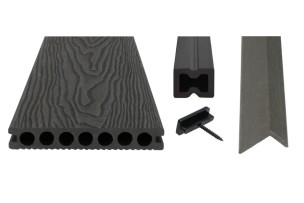
DUO composite system for a 50m2 terrace - GRAPHITE
DUO composite system designed for a terrace measuring 5m x 10m
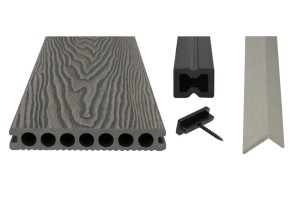
DUO composite system for a 50m2 terrace - Light grey
DUO composite system designed for a terrace measuring 5m x 10m
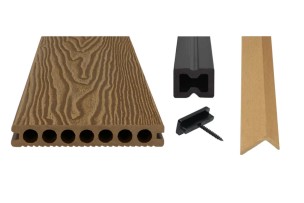
DUO composite system for a 50m2 terrace - Honey
DUO composite system designed for a terrace measuring 5m x 10m



