What can you use on your patio instead of a composite decking board? Explore the alternatives!
Is composite decking board not for everyone? See what you can replace it with! Discover the best materials for your patio: thermally modified pine, exotic timber, porcelain paving and more.
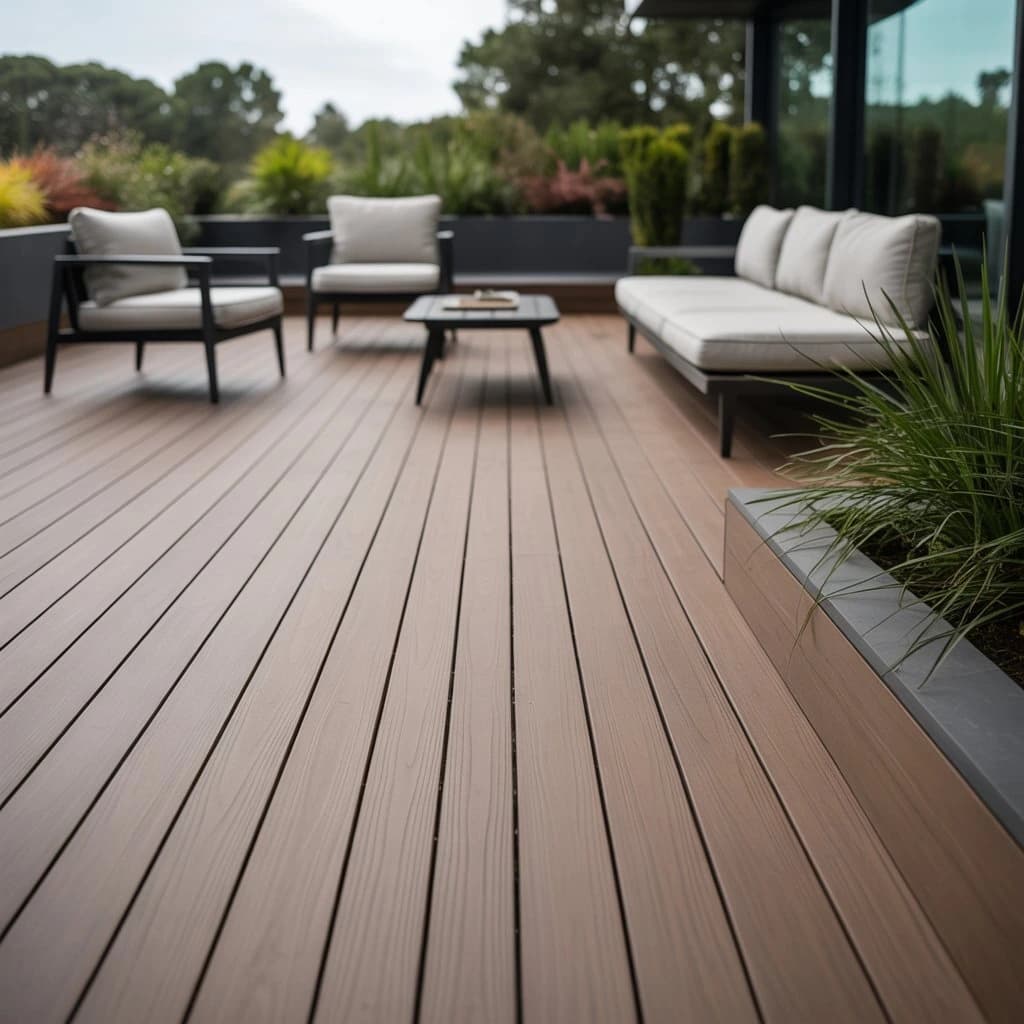
Composite decking boards are a popular choice for patios – durable, easy to maintain and resistant to the weather. But their appearance, price or installation method may not suit everyone. What then? Don't worry – you don't have to give up on your dream patio. There are plenty of alternative materials that are just as (and sometimes even more) attractive, practical and kind to your budget.
In this article, you'll find an overview of the best alternatives to composite decking boards, learn about their advantages, disadvantages and uses, and get some practical tips to help you choose a material for your patio.
Why isn't a composite decking board always the right choice?
Composite decking boards are an excellent and very popular solution – durable, easy to maintain and attractive. Our range at gardpol.pl includes many models that work beautifully on patios for many years.
However, like any material, composite is not always the right choice for every customer or every project. It's worth knowing its characteristics so you can make an informed decision.
Here are a few points to consider before making your choice:
🔸 Distinctive appearance – although modern composite decking boards imitate wood very well, some people still prefer the 100% natural texture and scent of wood.
🔸 Temperature on hot days – some composite materials (especially dark colours) can become hotter in the sun.
🔸 Varying quality on the market – it's worth choosing reputable manufacturers and solid workmanship. Cheap, low-quality boards may fade or crack over time.
🔸 Budget – good-quality composite is a worthwhile investment, but there are also cheaper alternatives that can work just as well for simpler projects.
In summary: composite decking boards are an excellent option, but not the only one. If you're looking for something different — more natural, more budget-friendly, more 'you' — take a look at the alternatives below, which also have plenty to offer.
And if you're considering composite decking boards, be sure to visit our website 👉 gardpol.pl, where you'll find high-quality composite decking for every type of patio.
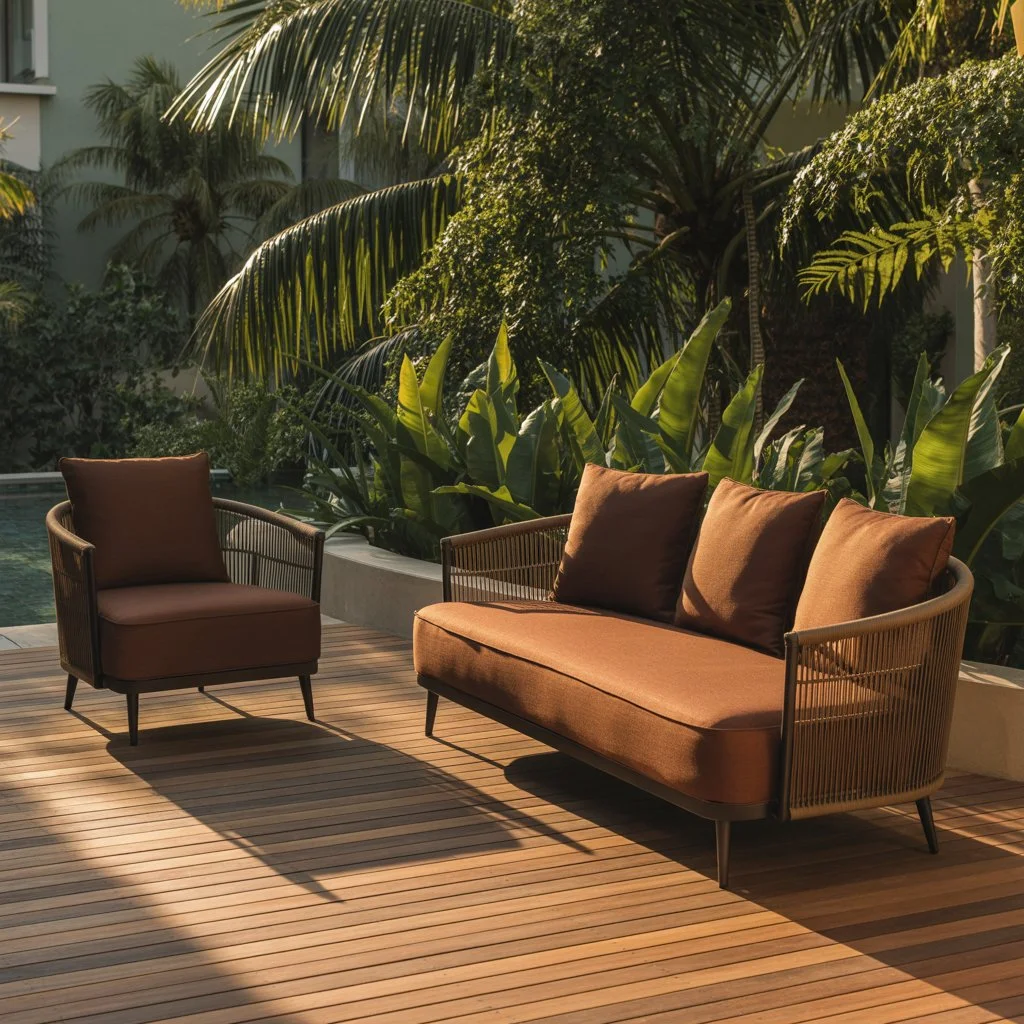
Thermally modified pine – natural wood with a technological twist.
Thermally modified pine (thermo pine) is pine timber that has undergone heat treatment, significantly improving its properties:
- resistance to moisture and fungi,
- greater durability and dimensional stability,
- a beautiful, warm wood tone,
- eco-friendly (no chemicals!)
Thermally modified pine is lighter than composite decking boards and creates a more natural look. It's an excellent choice if you're dreaming of a boho, eco or Scandinavian-style patio.
Any drawbacks?
- It needs regular treatment (once every 1–2 seasons) to preserve its colour.
- It may be slightly more expensive than ordinary pine, but is still cheaper than exotic hardwoods.
Decking boards made from exotic hardwood.
If you're looking for durability that lasts for years and don't mind higher costs, exotic hardwoods such as bangkirai, ipe, massaranduba or cumaru are made for you.
- Resistant to weather conditions and pests,
- Exceptionally hard-wearing and durable,
- They look luxurious and natural,
- With age, they develop an elegant, silvery patina.
This is a premium option that will last for decades. Its appearance is unrivalled – no composite decking board can replicate the texture of this wood.
Downsides?
- High purchase price,
- Difficult to work with and install,
- Requires oiling if you want to preserve its original colour.
Siberian larch – naturally durable.
Larch is a classic choice for decking – especially Siberian larch, whose harsh growing climate gives it denser, more durable wood.
- Naturally resistant to moisture,
- An attractive golden-russet hue,
- Good value for money.
It sits somewhere between thermally modified pine and exotic hardwoods – more durable than pine, cheaper than bangkirai.
Downsides?
- It may warp over time if it is not properly protected,
- It requires regular maintenance.
Porcelain paving – style and practicality in one.
Porcelain paving is a great alternative to composite decking boards if you are looking for a minimalist, modern finish for your decking area.
- Completely resistant to water, snow, frost and sunlight,
- Requires no impregnation or special maintenance,
- Available in thousands of colours and patterns – you can even choose a wood-effect finish!
A great option for:
- ground-level decking,
- decking on frames with support pads,
- modern homes with large glazed areas.
Downsides?
- Porcelain paving can be slippery, especially with a polished finish,
- It sometimes requires specialist installation (e.g. a support-pad system).
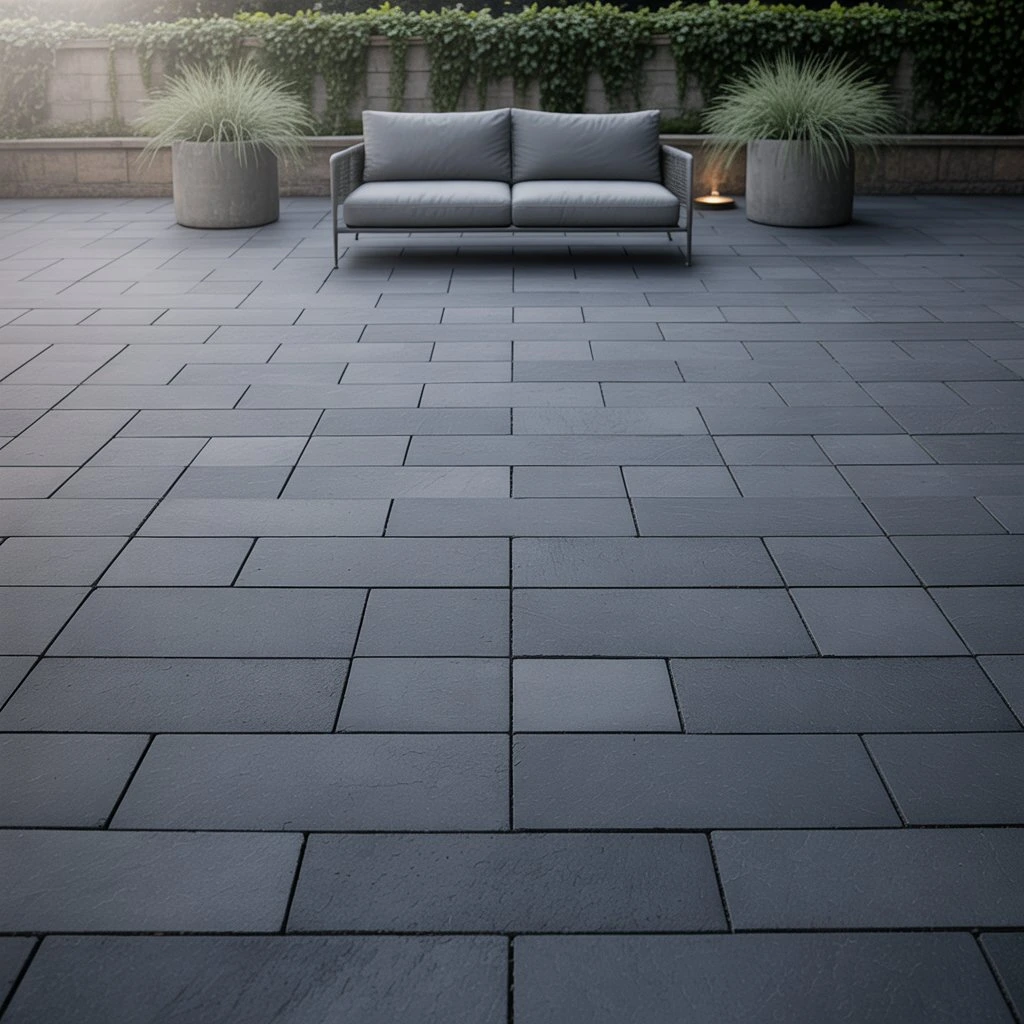
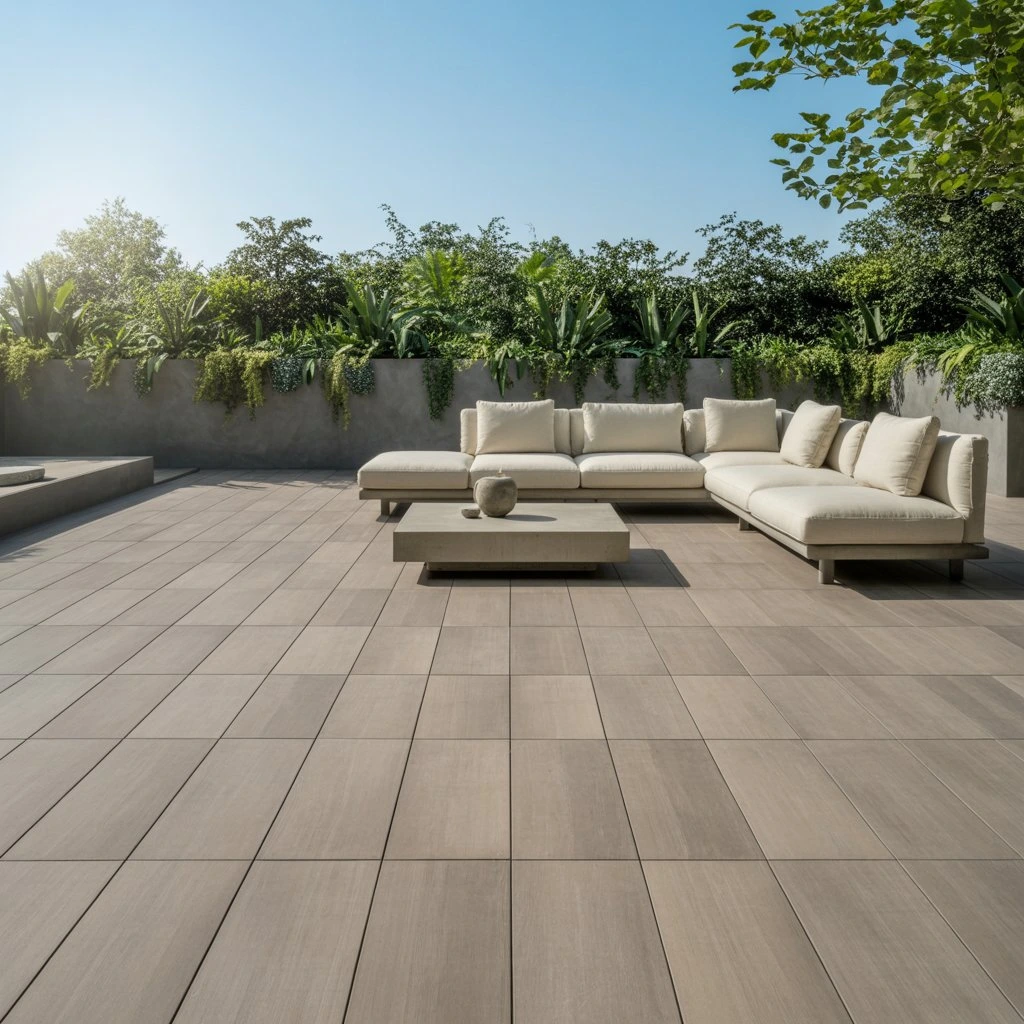
Block paving or concrete slabs.
It is a classic choice with a modern twist – today’s block paving and concrete slab designs can look truly stylish!
- Long-lasting durability,
- Low cost,
- Quick to install,
- Can be laid in attractive patterns (e.g. herringbone or mosaic).
Modern block paving does not have to be boring – options include anthracite, architectural concrete and stone-effect finishes.
Downsides?
- A harder surface – less comfortable than wood,
- It can become overgrown with moss or weeds,
- Poorer thermal insulation.
Plastic decking tiles (PVC, rubber, vinyl).
This is an unusual but increasingly popular alternative – particularly where easy maintenance and slip resistance are important (e.g. around a swimming pool).
- Slip-resistant and safe,
- Lightweight and easy to lay,
- Resistant to water and fungi,
- Often available in a click-together version (easy to install).
Downsides?
- Not everyone likes the look of plastic,
- Less durable than exotic hardwood or porcelain paving.
What should you choose? Comparing alternatives to composite decking boards.
| Material | Durability | Natural appearance | Maintenance | Cost |
|---|---|---|---|---|
| Thermally modified pine | ⭐⭐⭐⭐ | ✅✅✅✅ | Medium | $$ |
| Exotic hardwood | ⭐⭐⭐⭐⭐ | ✅✅✅✅✅ | High | $$$$ |
| Siberian larch | ⭐⭐⭐ | ✅✅✅ | Medium | $$ |
| Porcelain paving | ⭐⭐⭐⭐ | ✅✅ | Low | $$$ |
| Block paving | ⭐⭐⭐⭐ | ✅✅ | Low | $$ |
| Plastic | ⭐⭐ | ✅ | Low | $ |
Frequently asked questions (FAQ).
Is natural wood better than composite decking boards?It depends – wood looks natural and cosy, but requires more maintenance. Composite decking boards win when it comes to durability and being maintenance-free.
What is the most environmentally friendly material for decking?Thermally modified pine – heat-treated wood, free from chemicals and fully renewable.
Can porcelain paving imitate composite decking boards?Yes! There are many porcelain paving models with a texture and colour resembling wood or composite.
Which option is the cheapest?Standard block paving or concrete slabs are the cheapest options. For wood, the cheapest choices are Siberian larch or pine.
In conclusion: composite decking boards are not the only option
If composite decking boards do not meet your expectations, you have plenty to choose from! Thermally modified pine, exotic hardwood, porcelain paving or even modern block paving – each of these options has its advantages and its fans. The key is to choose a material that suits your decking area's lifestyle, budget and aesthetic.
There is no single “best solution”. There are only the ones that suit you best.
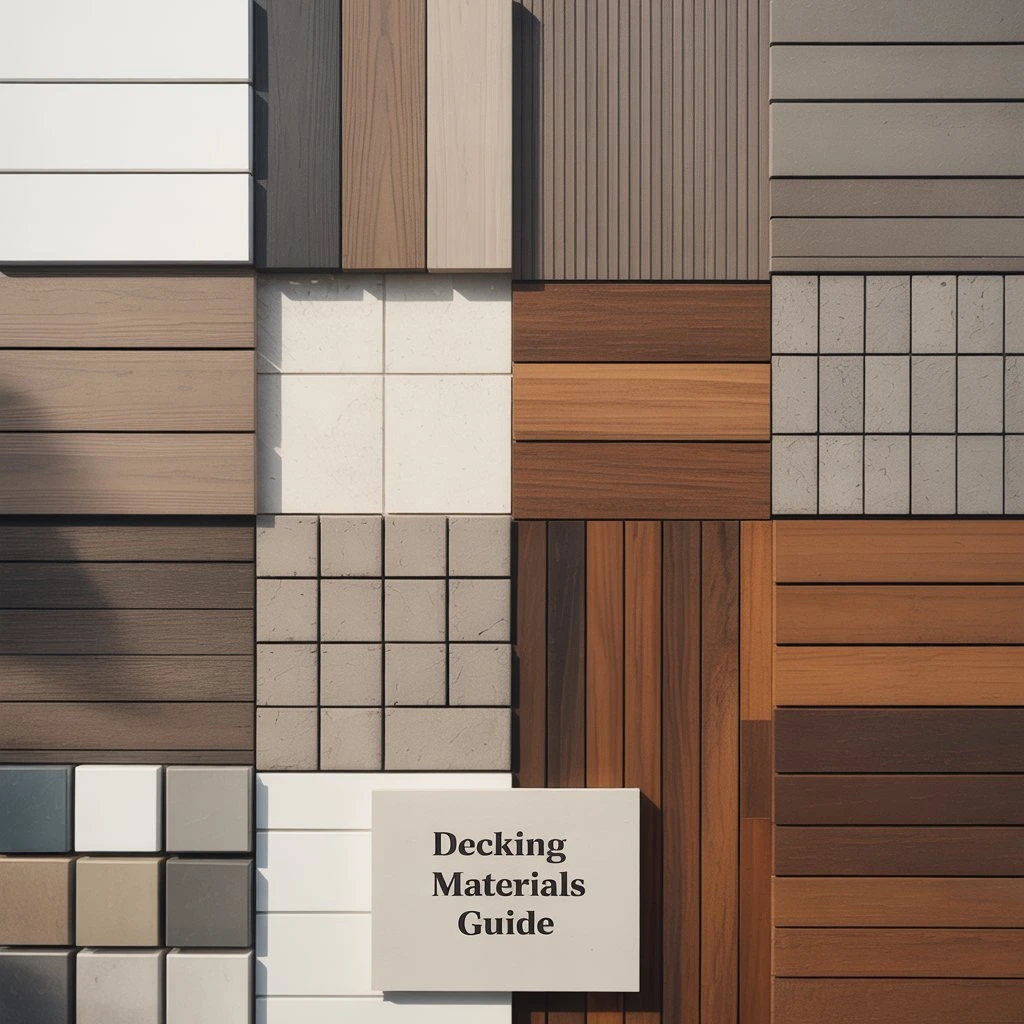
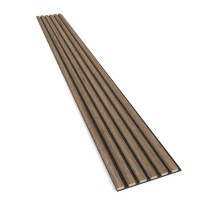
Dark oak slats on felt 24x300 mm, decorative wall strips on felt
Price is for one slat
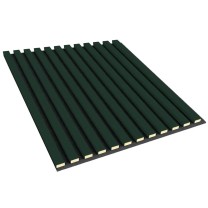
Bottle green slats on felt 60x60 cm, decorative wall strips on felt
Price is for one slat
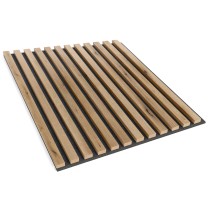
Artisan oak slats on felt 60x60 cm, decorative wall strips on felt
Price is for one slat
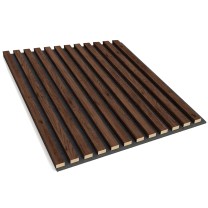
Walnut slats on felt 60x60 cm, decorative wall strips on felt
Price is for one slat