
What should you do if a composite decking board becomes discoloured? Restoration and care.
Having trouble with a discoloured composite decking board? Discover effective ways to care for, clean and restore the surface. Expert advice and handy tips for home!
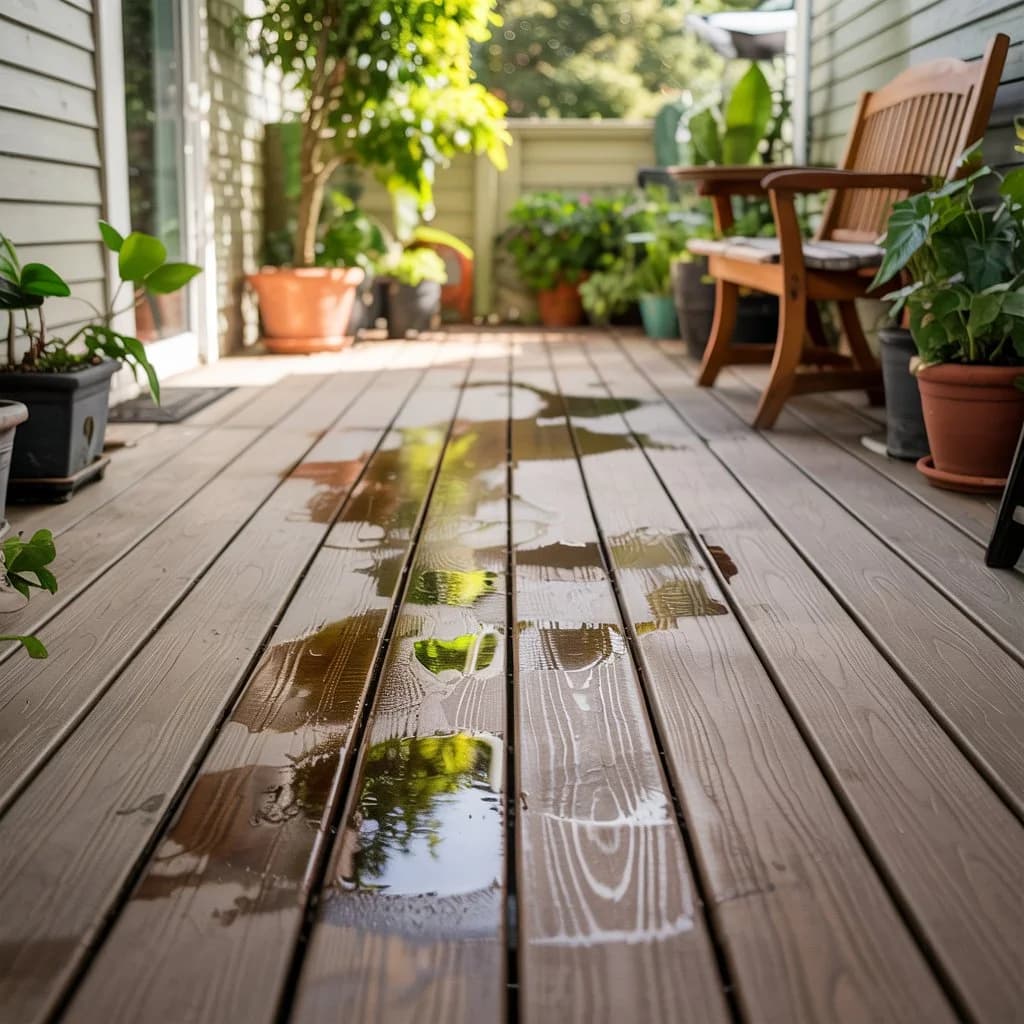
What will you find in this article?
Composite decking boards are considered durable and resilient, but even they can lose their colour over time. Sun, rain, barbecue stains and everyday dirt can all take their toll on a terrace surface. What can you do? Don't worry – it doesn't mean you have to replace them straight away!
In this article, you'll learn why decking boards discolour, how to clean them effectively, what to do about more serious discolouration and how to restore them. I'll also suggest which products to use and how to care for your terrace so it looks good for years. Everything is straightforward, practical and illustrated with examples – no unnecessary theory. Ready to restore the colour of your decking boards? Let's get started!
Why does composite decking discolour?
Although composite decking boards are considered resistant to weather, sun and moisture, their colour can change over time. This is completely natural, especially in the first few months after installation. Sometimes, though, the discolouration can be more pronounced – in that case, it's worth investigating.
The most common causes of discolouration:
-
UV radiation – the sun is the main culprit! It fades the colour, especially on cheap decking boards.
-
Organic stains – leaves, wine, food and barbecue stains.
-
Moisture and mould – water left behind can cause discolouration.
-
The wrong cleaning products – harsh chemicals can damage the decking board's surface.
-
Mechanical damage – for example, scratches that expose the material's structure to dirt.
Can discoloured decking be restored?
Fortunately, yes! Composite decking boards can be restored effectively. You don't need to replace them – good care and cleaning are enough, and sometimes light sanding or specialist restoration products can help.

1. Cleaning – the first step to restoring the colour.
Before you move on to more serious measures, check whether the discolouration is simply due to dirt or residue.
How to clean composite decking effectively
What you'll need:
-
stiff-bristled brush
-
warm water
-
mild detergent (e.g. washing-up liquid)
-
a specialist composite decking cleaner, if needed
Step by step:
-
Sweep dust and leaves off the surface.
-
Apply water and detergent to the surface.
-
Scrub the decking board along the grooves – never across them!
-
Rinse thoroughly with clean water.
-
Wait for it to dry – the colour often looks refreshed after this stage!
Tip: Avoid using a pressure washer if you're unsure who manufactured the decking board – a jet that's too powerful can damage the surface.
Deeper discolouration? Time to sand.
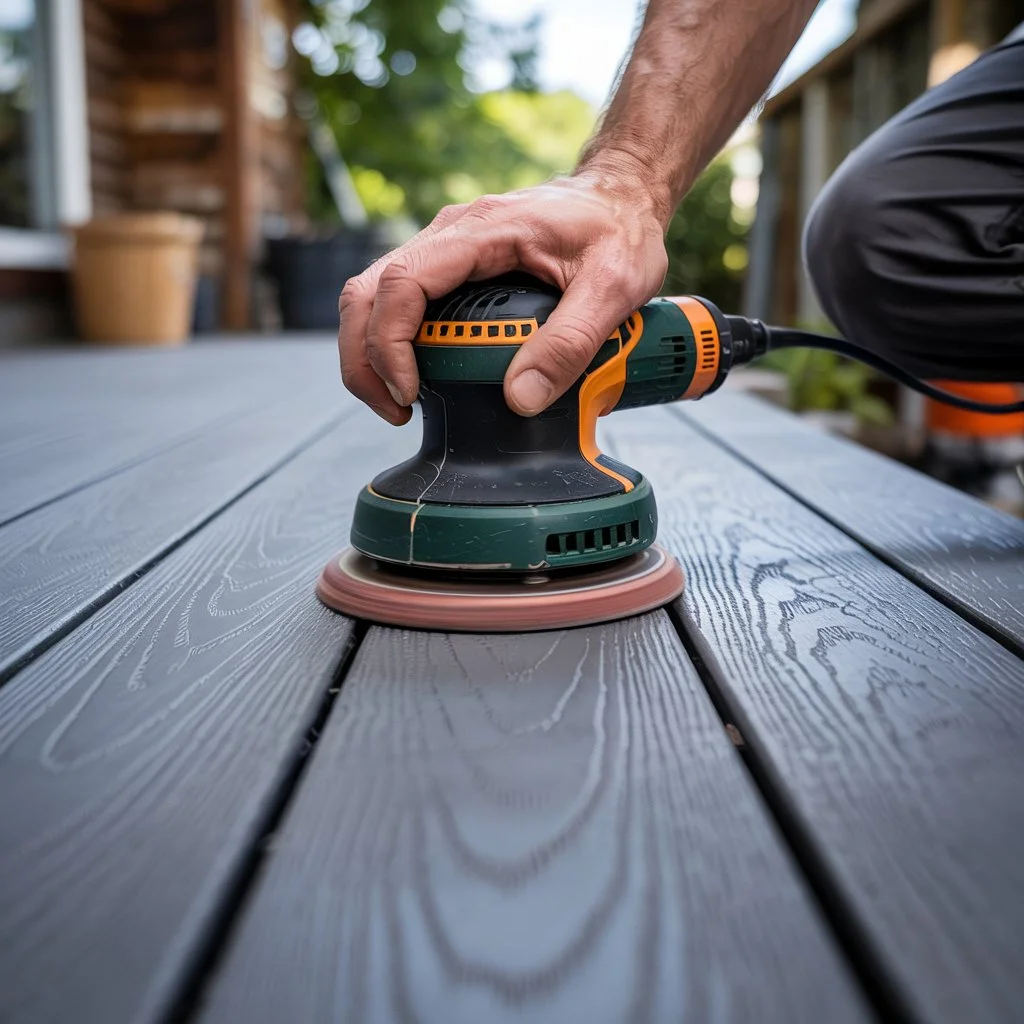
If cleaning hasn't helped, you can sand the decking board gently.
How to do it safely
Use:
-
80–120 grit sandpaper
-
an orbital or hand sander
Rules:
-
Always sand along the decking board, never across it.
-
Don't press too hard – the aim is to gently “refresh” the top layer.
-
After sanding, wipe the board with a damp cloth and leave it to dry.
Note: Not every board is suitable for sanding! Check the manufacturer's recommendations.
Preservation and care – how to look after the board after restoration?
After restoration, it is worth protecting the board against further discolouration.
What can you do?
-
Use a composite decking board care product – it creates a protective layer.
-
Wash it regularly – at least once per season.
-
Clear away leaves, don't leave water standing and don't cover the board tightly for the winter.
-
Avoid chemicals containing chlorine, acetone or alcohol.
Pro tip: Use special oils or pigmented coatings for composites (only on sanded boards!) – these can gently darken the colour and give it a new look.
When is restoration not enough?
There are times when boards are too badly damaged – deep cracks, permanent chemical discolouration or warping. In that case, unfortunately, it may be necessary to replace part of the decking.
But before you decide to do that, consult a professional or the manufacturer's representative. Sometimes the warranty is still valid, and sometimes it is possible to replace just individual boards without dismantling the entire structure.
A real-life example: decking after wine and a barbecue.
Kasia from Poznań had a beautiful graphite-coloured deck made from composite decking boards. After one summer party, red wine and grease stains were left on it. She tried a pressure washer – without success. It was only after using a specialist cleaning product and lightly sanding the surface that she restored its colour. Now she cleans the deck every season and doesn't leave anything on it for long. She says that “composite decking boards are a luxury… provided you look after them”.
In conclusion.
Composite decking boards are a great solution, but like everything else, they need a little attention. Discolouration doesn't have to mean the end of the world or the start of a major renovation. In most cases, proper care is all it takes to restore their freshness and colour.
👉 Remember: cleaning, sanding, preservation. It really works.
FAQ – Frequently asked questions.
Do all composite decking boards discolour?
Over time – yes. But good-quality boards discolour evenly and very subtly.
Can you paint a composite decking board?
It is not recommended. The paint won't adhere. You can use special pigmented coatings for composites – but take care and apply them only to a sanded surface.
Does sanding always work?
Not always. Only light discolouration can be removed this way. And only if the manufacturer permits this method.
How often should composite decking be washed?
Ideally 2 times a year – in spring and autumn. But if you have children, a dog and a barbecue, even more often!
SELECT composite decking board 25x140 - 5,8 m
Price per 1 linear metre of board: 17,27 zł
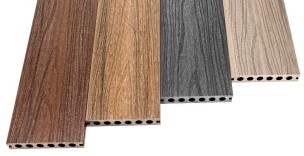
PREMIUM composite decking board 23x138 - 5,8 m
Price per 1 linear metre of board: 24,85 zł
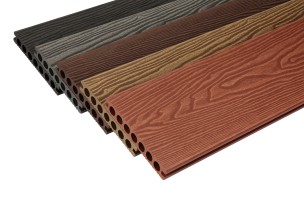
DUO composite decking board 23x148 - 5,8 m
Price per 1 linear metre of decking board: 21,30 zł
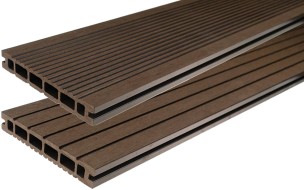
Gardin PLUS composite decking board - 4m
Price per 1 linear metre of decking board: 21.34 zł



