
Is composite decking heavy? Weight, properties and uses of composite decking.
Wondering whether composite decking boards are heavy? Find out how much they weigh, how they compare with timber, and what you should know before installing a composite decking terrace.

If you're planning a terrace, balcony or any other outdoor space finished with boards, you've probably already considered using composite decking boards – or WPC. It's no surprise: this is a fashionable, durable and relatively low-maintenance solution. But then a question comes up:
Is a composite decking board heavy?
At first glance, you might think that since it's “plastic with wood”, it should be lightweight. In practice, though, it's not that simple. Weight depends on many factors – from the type of material used and the proportions of the ingredients to the board's internal structure.
Both yes and no – some composite decking boards are much heavier than wood, while others are… surprisingly light. It all depends on what you choose.
What are composite decking boards and what affects their weight?
WPC (Wood Plastic Composite) decking boards combine two main ingredients:
-
Wood flour (e.g. from hardwood or bamboo)
-
Plastic (PVC, HDPE, PP)
Additives such as UV stabilisers, pigments and antifungal agents are also included. Their proportions have a major impact on the material's final weight.
What exactly affects the weight of a composite decking board?
-
Type of material – PVC is heavier than HDPE
-
Amount of mineral fillers – e.g. chalk, talc
-
Board type (solid or hollow-core)
-
Length and thickness – obvious, but often overlooked
-
Build quality – lower-quality boards can be heavier, but less durable
Solid vs hollow-core – a comparison.
Solid boards
-
Heavier, but more stable and resistant to damage
-
Average weight: 10–13 kg/m²
-
Ideal for large terraces, public spaces and areas with heavy footfall
Hollow-core boards
-
Lighter thanks to their hollow internal structure
-
Average weight: 6–8 kg/m²
-
Ideal for balconies, roofs and private terraces
| Board type | Weight (per 1 board, 4 m) | Cross-section |
|---|---|---|
| Hollow-core (145x25mm) | approx. 11–14 kg | Hollow inside |
| Solid (145x25mm) | approx. 19–22 kg | Solid board |
Composite decking boards vs wood – which is lighter, which is better?
Some people are surprised that a composite decking board can be heavier than natural wood, particularly pine or larch.
| Material | Weight (kg/m²) |
|---|---|
| Pine | 7–9 |
| European larch | 9–11 |
| Bangkirai (exotic hardwood) | 10–13 |
| Hollow-core composite | 6–8 |
| Solid composite | 10–13 |
The takeaway?
Composite hollow is usually lighter than wood, while solid composite can weigh the same as or more than exotic wood.
Weight and installation, transport and use.
How heavy a board is has a real impact on several practical aspects:
Transport
-
Heavier boards = higher delivery costs (important if you are ordering from another town)
-
Hollow boards are easier to unload and carry
Installation
-
Lightweight boards are convenient, especially for DIY installation
-
Solid boards require a sturdier frame and more effort
Use
-
Heavier boards can provide greater stability, especially under furniture
-
Lightweight composite boards are a better choice for balconies and roofs
When should you choose lightweight or heavier boards?
Lightweight boards (hollow):
-
Balconies, rooftop terraces
-
DIY projects
-
When you want quick and inexpensive installation
-
Structures with limited load-bearing capacity
Heavier boards (solid):
-
Ground-level terraces
-
Areas exposed to strong winds
-
Public and restaurant terraces
-
Heavy loads (e.g. a hot tub, heavy furniture)
Remember that weight is not the only indicator of quality – UV resistance, abrasion resistance, slip resistance and the manufacturer's warranty also matter.
Final conclusions and advice for buyers.
There is no single right answer to the question: is a composite decking board heavy?
It depends on which board you choose and what you need it for.
A few golden rules for choosing:
-
Always ask about the weight per m² – not just per board
-
Check the structure's load-bearing capacity (especially balconies)
-
Hollow = lightweight and cheaper, but requires good installation
-
Solid = heavier and more expensive, but more durable
-
Don't buy the cheapest boards without certificates – they are often heavier and less durable

FAQ – quick answers to your questions.
Can a composite decking board be lighter than wood?
Yes – especially hollow WPC models.
Is a heavier board better?
Not always. Weight affects durability, but does not guarantee quality.
Is composite decking suitable for a balcony?
Yes, but it is best to choose a hollow version.
Is it difficult to install heavy boards yourself?
It can be – especially without help from another person.
Does weight affect the price?
Not directly, but it can increase transport and installation costs.
Summary.
WPC composite decking boards are a great solution for a terrace, but before you buy, pay attention to their weight.
Lightweight boards offer convenience and savings, while heavier ones offer durability and strength. The final choice depends on your needs, the structure and your expectations.
Don't be swayed by looks alone – read the technical specifications, ask retailers and check what you are really buying.
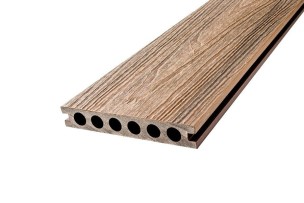
PREMIUM composite decking board 23x138 - 3,5 m
Price per 1 linear metre of decking board: 24,85 zł
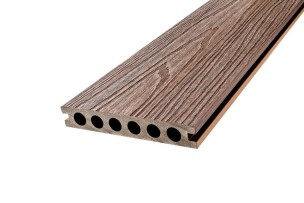
PREMIUM composite decking board 23x138 - 4,0 m
Price per 1 linear metre of decking board: 24,85 zł
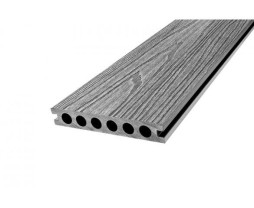
PREMIUM composite decking board 23x138 - 4,5 m
Price per 1 linear metre of decking board: 24,85 zł
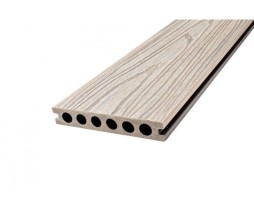
PREMIUM composite decking board 23x138 - 5,0 m
Price per 1 linear metre of decking board: 24,85 zł



