
Is composite decking flammable? Check how safe WPC is!
Find out whether WPC composite decking boards are flammable. Learn about flammability classes, EN standards and how they compare with wood. Patio safety.

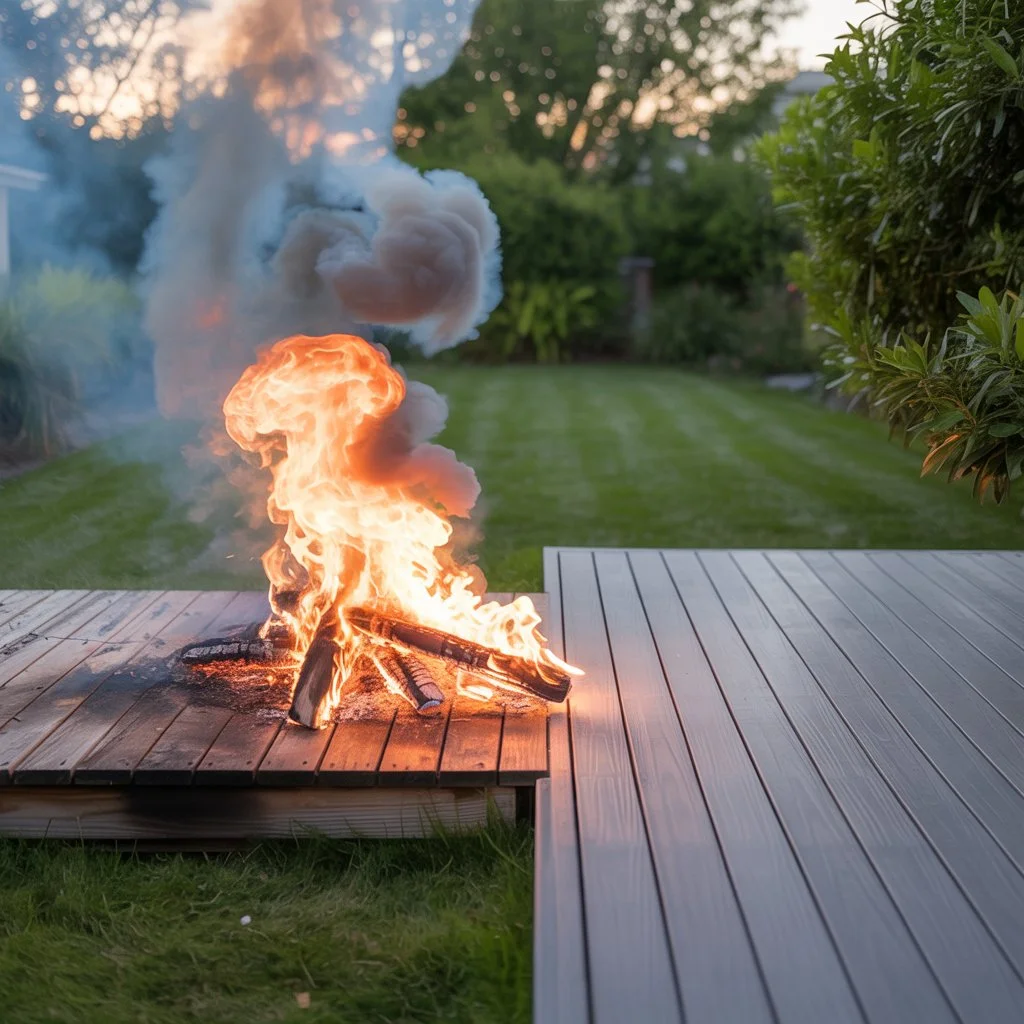
Composite decking boards (WPC – Wood Plastic Composite) have taken Polish gardens, terraces and balconies by storm. Their durability, resistance to weather conditions and lack of need for maintenance sound like a dream. But are they safe in terms of fire? Can a composite decking board catch fire easily?
In this article, we’ll take a closer look at the flammability of composite decking boards. You’ll see how they compare with wood, what the regulations say, what the fire resistance classes are and how to improve safety during installation. Let’s get started!
What exactly is a composite decking board?
Before we get into the specifics of fire, it’s worth reminding ourselves what composite decking boards are actually made of.
A composite decking board is made up of:
-
wood flour (approx. 30–60%),
-
plastic (most often PE, HDPE or PVC),
-
additives (e.g. pigments, UV stabilisers, antifungal agents).
Sounds like a mixture of wood and plastic? That’s exactly what it is. This material combines the benefits of both components: the appearance of wood and the durability of plastic.
All right, but is a composite decking board flammable?
It depends. No material is 100% non-flammable (well, perhaps apart from concrete), but composite decking boards have varying levels of fire resistance, depending on their composition and manufacturer.
Composite decking boards can fall into different flammability classes, including:
-
Bfl-s1 – low flammability, very limited smoke production (the best class for flooring),
-
Cfl-s1 – moderate flammability, little smoke,
-
Dfl-s1 or Dfl-s2 – higher flammability.
👉 The further along the alphabet the letter, the greater the risk of the board catching fire.
What do European standards say?
In Europe, the flammability of composite decking boards (and other building materials) is governed by the EN 13501-1 standard, which assigns fire resistance classes.
For flooring (that is, terraces and balconies), the most common classes are:
-
Bfl-s1 – difficult to ignite, limited smoke production,
-
Cfl-s1 – moderately easy to ignite, but without excessive smoke.
Boards in class E or F meet practically no safety standards and should be avoided in areas intended for use.
Composite decking boards versus wood – who wins the fire test?
This may come as a surprise! Although many people consider wood to be “naturally safe”, untreated wood can be more flammable than some composites.
Comparison:
| Material | Flammability | Fire class |
|---|---|---|
| Pine (softwood) | High | E |
| Larch | Moderate | D |
| Bfl-s1 composite decking board | Low | Bfl-s1 |
| Dfl-s1 composite decking board | Moderate | Dfl-s1 |
As you can see, a well-made composite decking board can be safer than wood – especially if it meets high fire safety standards.
How can you improve fire safety when installing composite decking boards?
Choosing the material is one thing, but correct installation is also extremely important. Here are a few practical tips:
- Choose boards with a Bfl-s1 or Cfl-s1 certificate
- Avoid laying decking boards directly over an open flame (e.g. near a barbecue or fireplace)
- Maintain suitable gaps between decking boards to allow heat to dissipate
- Invest in non-combustible substructures (e.g. aluminium ones)
- Clean the terrace regularly – leaves and dust can catch fire quickly
What about in the event of a fire?
Composite decking boards, especially lower-quality ones, may start to melt and release toxic fumes, just like other plastics. That is why it is always worth choosing products with certification and a fire classification certificate.
Frequently asked questions (FAQ)
1. Are composite decking boards completely non-combustible?
No. They are fire-resistant to a certain extent, but they are not non-combustible.
2. Can I install WPC decking boards near an outdoor fireplace?
Yes, but make sure to maintain safe distances and use non-combustible bases.
3. Can a composite decking board melt?
Yes, at a very high temperature, the plastic in its composition may melt.
4. What fire classification should a good decking board have?
Preferably Bfl-s1 or Cfl-s1 – these offer the highest level of safety in use.
5. Is it safe to use a barbecue on a WPC terrace?
Yes, but always use protective mats and follow health and safety rules.
In summary – what should you remember?
A composite decking board can be safe, but it all depends on its quality and installation. Look for products with a Bfl-s1 classification, clean the terrace regularly and do not underestimate the risk of fire. Compared with wood, high-quality composite performs better in fire tests.
What next?
If you are planning a terrace or replacing decking boards, be sure to:
-
Check product certificates,
-
Compare the fire classifications of different manufacturers,
-
Consult a contractor or architect.
And remember: safety is not something to compromise on.
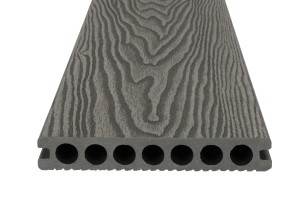
DUO composite decking board 23x148 - 1.8 m
Price per 1 linear metre of decking board: 21,30 zł
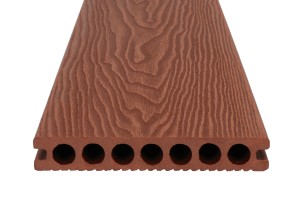
DUO composite decking board 23x148 - 2.25 m
Price per 1 linear metre of decking board: 21,30 zł
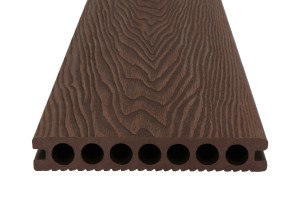
DUO composite decking board 23x148 - 3.5 m
Price per 1 linear metre of decking board: 21,30 zł
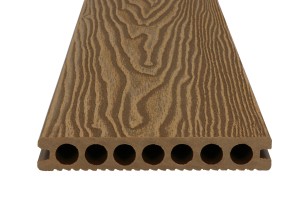
DUO composite decking board 23x148 - 2.9 m
Price per 1 linear metre of board: 21,30 zł



