
Does composite decking need expansion gaps? Find out why they matter.
Does composite decking need expansion gaps? Find out what expansion gaps are, why they matter when installing composite decking boards, and what can happen if you leave them out.
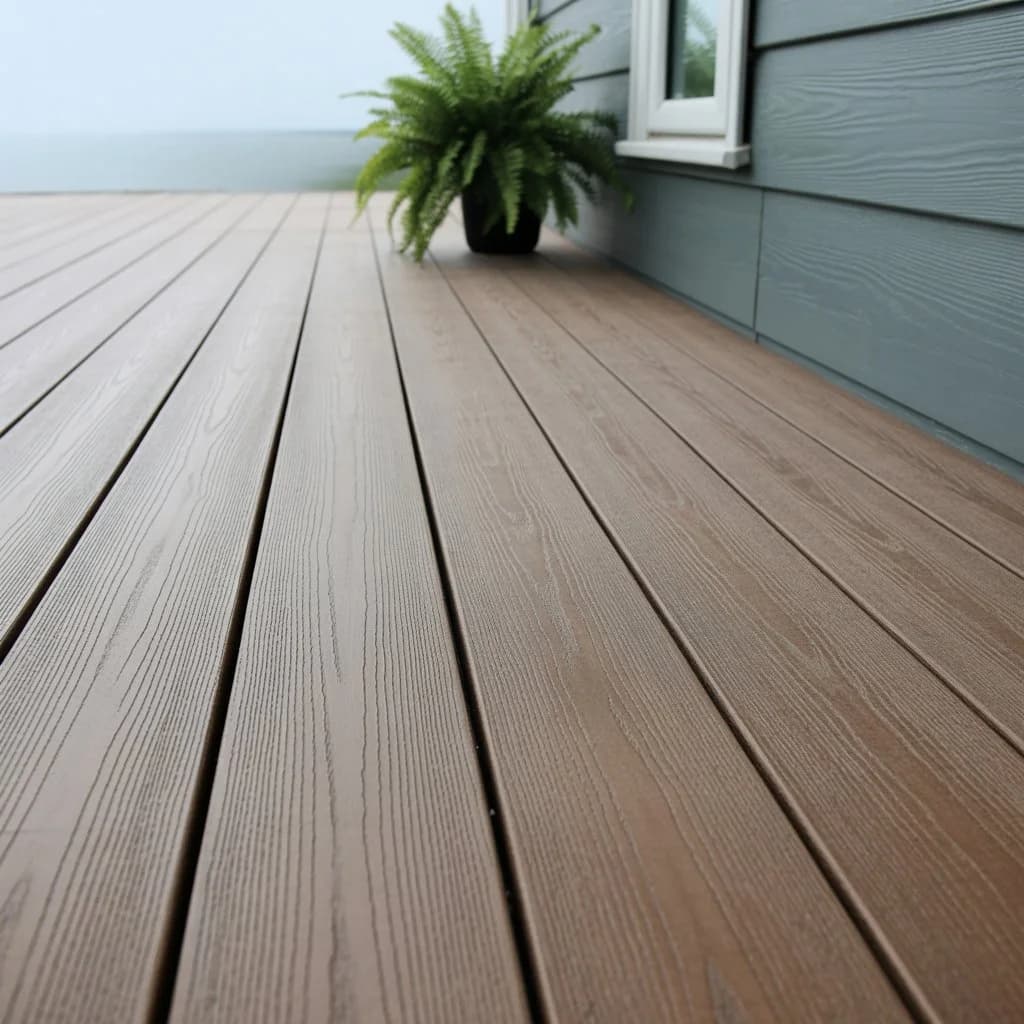
Planning to build a composite decking terrace? Great! But before you start installation, you need to learn about one of the most important structural elements – expansion gaps. Contrary to appearances, this is not a technical detail you can ignore. It is a key element that affects the durability, appearance and safety of your terrace.
In this post, we’ll clear up any doubts and answer the question: does composite decking need expansion gaps? Spoiler: YES – without a doubt!
What exactly is an expansion gap?
Let’s start with the basics. An expansion gap is simply a gap (space) between structural elements that allows the material to move naturally – that is, to expand and contract in response to temperature, humidity and loads.
For composite decking boards, which are a mixture of wood and plastic, expansion gaps are essential – precisely because of their thermoplastic nature.
Why does composite decking need expansion gaps?
1. Thermal expansion.
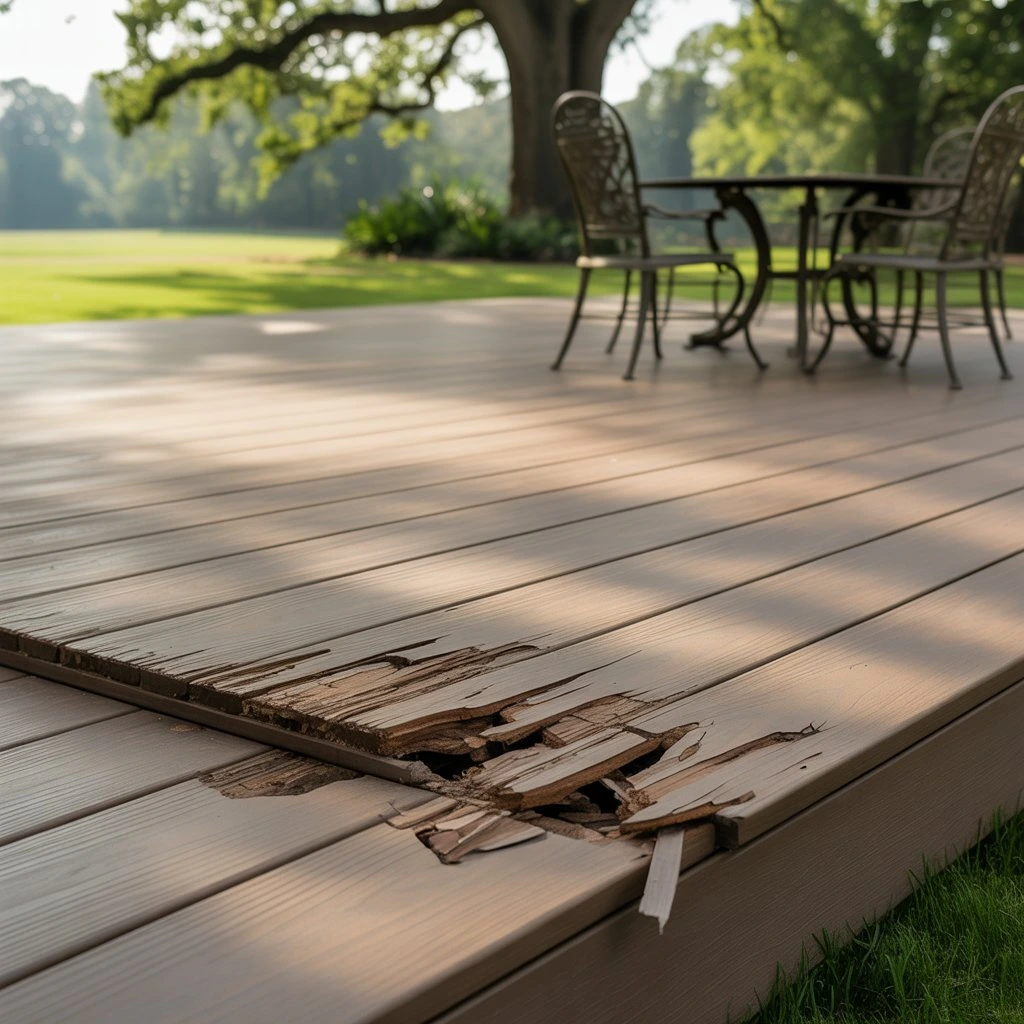
Composite expands when exposed to heat. In summer, when the terrace is warmed by the sun, the boards can lengthen by as much as a few millimetres. No expansion gap = no room to expand = warping, buckling and even cracking!
Example: A composite decking board 4 m long can lengthen by as much as 8–10 mm when the temperature changes by 30°C. Imagine what happens when there’s nowhere for this “lengthening” to go...
2. Water and moisture drainage.
Expansion gaps allow water to drain from the terrace surface, preventing it from collecting between the boards. No gaps = a greater risk of damp, mould growth and faster deterioration of the structure underneath.
3. Structural ventilation.
Gaps between the boards allow air to circulate freely, which is essential for the durability of the joists and the entire installation system. This is particularly important if the terrace is installed on the ground or above an impermeable surface.
4. Preventing popping, squeaking and cracking.
When boards are laid too close together, they can rub against one another, causing noise or minor damage as temperatures change. Expansion gaps are a simple way to avoid this.
Where should expansion gaps be left?
When installing composite decking, an expansion gap is not just a gap between boards. You need to allow for it in several places:
-
Between the boards.
The most commonly used measurement is: approx. 5–7 mm. With some installation systems (e.g. those using fixing clips), this gap is maintained automatically.
-
Between the ends of the boards.
If boards are joined end to end, leave a gap of approx. 4–6 mm for expansion.
-
Between the board and a wall (or another fixed obstacle).
Leave a larger gap here – as much as 10 mm, because the board expands more towards its ends than across its width.
-
Between the joists and the wall.
Yes, joists need expansion gaps too! In this case, a clearance of approx. 5–10 mm at their ends is sufficient.
What happens if you leave out expansion gaps?
Leaving out expansion gaps when installing composite decking boards is a recipe for disaster. Here are the most common problems:
-
Warped or buckled boards
-
Cracked ends or edges
-
Standing water on the terrace
-
Problems with water drainage
-
Squeaking and creaking boards when walked on
-
The need to dismantle and repair the entire structure (read: additional costs)
It’s not worth taking the risk – installing a composite decking terrace is an investment for years to come, so it’s better to get it right from the start.
How do you create an expansion gap correctly?
Use the manufacturer’s installation system.
Most reputable composite decking board manufacturers (e.g. Gamrat, Timberness, Trex) offer ready-made spacing clip systems, which provide the correct expansion gap without measuring or risking mistakes.
Follow the installation recommendations.
Each decking board has its own expansion coefficient – check it in the technical documentation and adjust the gaps to the board length and ambient conditions.
Remember to leave expansion gaps at corners and ends.
These are the places most often overlooked! This is especially important if the terrace adjoins two walls – space must be left for the boards to expand in both directions.
Does an expansion gap affect the look of a terrace?
Many people worry that an expansion gap “spoils the visual effect” because you can see gaps between the boards. That’s a myth! A properly made expansion gap:
-
Looks professional, especially when concealed fixing clips are used,
-
Improves functionality – the terrace doesn’t “sit” in water,
-
Increases durability and comfort of use.
What’s more, modern decking systems are designed so that the gaps are even, attractive and practically invisible from a greater distance.


Customer reviews
“Installing the terrace without expansion gaps was my biggest mistake – after one winter, the boards warped and I had to rip everything up. The second time, I followed the instructions and the terrace is perfect!” – Michał, Lublin
“We used Timberness spacing clips – installation was quick and even, and the finished result looks very attractive.” – Ewa, Kraków
Frequently asked questions (FAQ)
Does every composite decking board need an expansion gap?
Yes – regardless of the brand, shape or type of board. Composite always moves in response to temperature.
How wide should the expansion gap be?
It depends on the manufacturer, but most commonly:
-
Between boards: 5–7 mm
-
Between ends: 4–6 mm
-
By walls: 10 mm
Can I use my own clips or screws?
You can, but it’s better to use systems offered by the decking board manufacturer, as this ensures compatibility and correct installation.
Did you know?
Composite decking boards aren’t the only ones that need expansion gaps! Natural timber decking also needs gaps – the difference is that timber reacts more to moisture than to temperature. Composite, on the other hand, “moves” mainly in response to temperature.
In conclusion.
If you’re asking yourself: does a composite decking board need an expansion gap? – there’s only one answer: yes, absolutely! Without an expansion gap, there can be no durable, trouble-free terrace. It may seem like a small detail, but it has enormous significance.
A well-designed and installed expansion gap:
-
protects the terrace from deformation,
-
extends the life of the boards,
-
improves comfort of use,
-
and it also looks neat and professional.
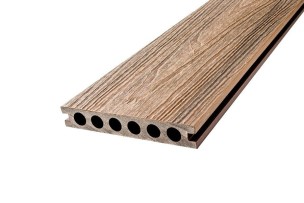
PREMIUM composite decking board 23x138 - 3.5 m
Price per 1 linear metre of board: 24,85 zł
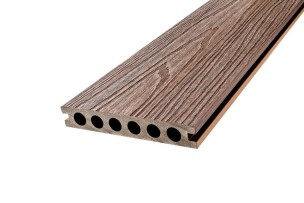
PREMIUM composite decking board 23x138 - 4,0 m
Price per 1 linear metre of decking board: 24,85 zł
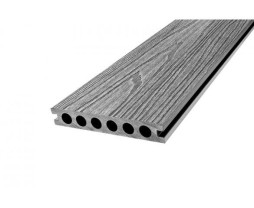
PREMIUM composite decking board 23x138 - 4,5 m
Price per 1 linear metre of decking board: 24,85 zł
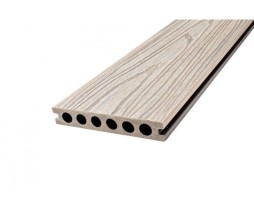
PREMIUM composite decking board 23x138 - 5,0 m
Price per 1 linear metre of decking board: 24,85 zł



