
Does composite decking burn your feet? The truth about how a terrace heats up.
Does composite decking burn your feet in summer? Find out how composite decking heats up, what difference a light colour makes and how it compares with concrete and stone.
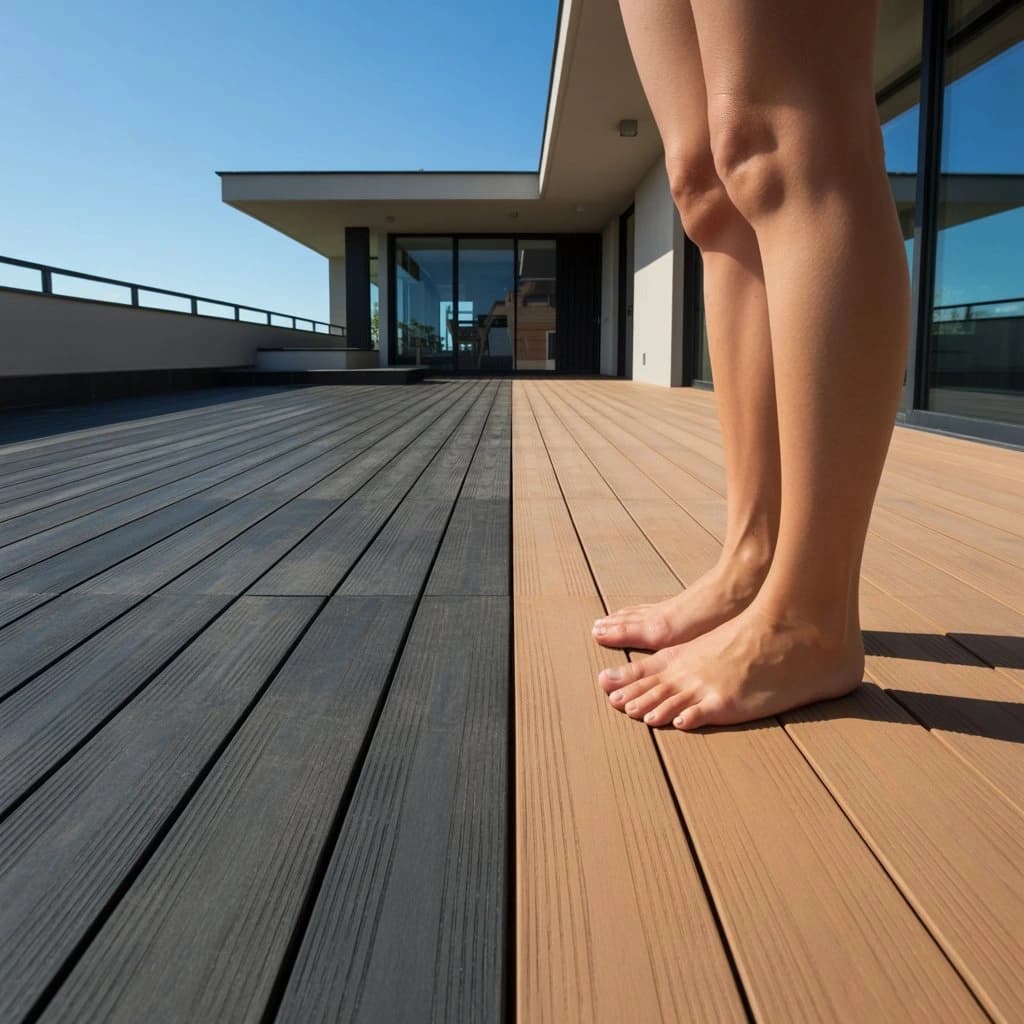
In summer, many people ask themselves a very specific question: does composite decking burn your feet? This is one of the most common concerns when choosing a material for a terrace. Online, you can find extreme opinions — from claims that composite decking heats up like a frying pan to assurances that it always stays pleasantly cool. What is the truth?
The truth lies somewhere in between. Composite decking boards can get very hot, particularly in full sun and when air temperatures are high. However, they are not the exception. Under similar conditions, other popular finishing materials also give off heat, such as dark stone, porcelain tiles, concrete slabs and architectural concrete. The key factors are not only the material itself, but also the colour of the decking board, the amount of sun exposure, terrace ventilation and time of day.
In this article, we explain what affects how much composite decking heats up, whether it can really burn your feet, and how to choose a terrace that will be more comfortable on hot days.
Does composite decking heat up in summer?
Yes, composite decking heats up in summer, especially when exposed to direct sunlight for several hours. This is a natural physical phenomenon. Any surface that absorbs solar radiation increases in temperature. This applies to wood, composite, concrete, stone, terrace tiles and practically every material used outdoors.
However, it is worth understanding one thing: the problem is not the fact that it heats up, but how hot it gets and how it feels underfoot. After all, people are not asking whether the material warms up, but whether they can walk on it comfortably barefoot. The answer is: sometimes yes, sometimes no — it all depends on the conditions.
On a terrace exposed to a lot of sun, in the middle of a hot day, composite decking can become hot. This is particularly noticeable with darker colours. In practice, this means that when the air temperature exceeds 30°C and the sun is intense, the terrace surface may be uncomfortable for bare feet.
Does composite decking burn your feet?
It depends on several factors. Yes, composite decking can burn your feet if it is dark, exposed to strong sunlight and heats up for a long time without any shade. But under the same conditions, the following can also burn your feet:
- dark concrete slabs,
- anthracite porcelain tiles,
- graphite-coloured stone,
- dark terrace paving blocks.
So it is worth debunking a popular myth: composite is not the only material that heats up. On the contrary — its thermal behaviour can be compared with that of other modern terrace surfaces. Anyone who has come into contact with hot concrete or dark stone in full sun knows that walking barefoot is then uncomfortable, regardless of the type of material.
The fairest thing to say, then, is this: composite gives off heat in a similar way to dark stone or concrete, and how hot it feels is closely linked to its colour and exposure to the sun.
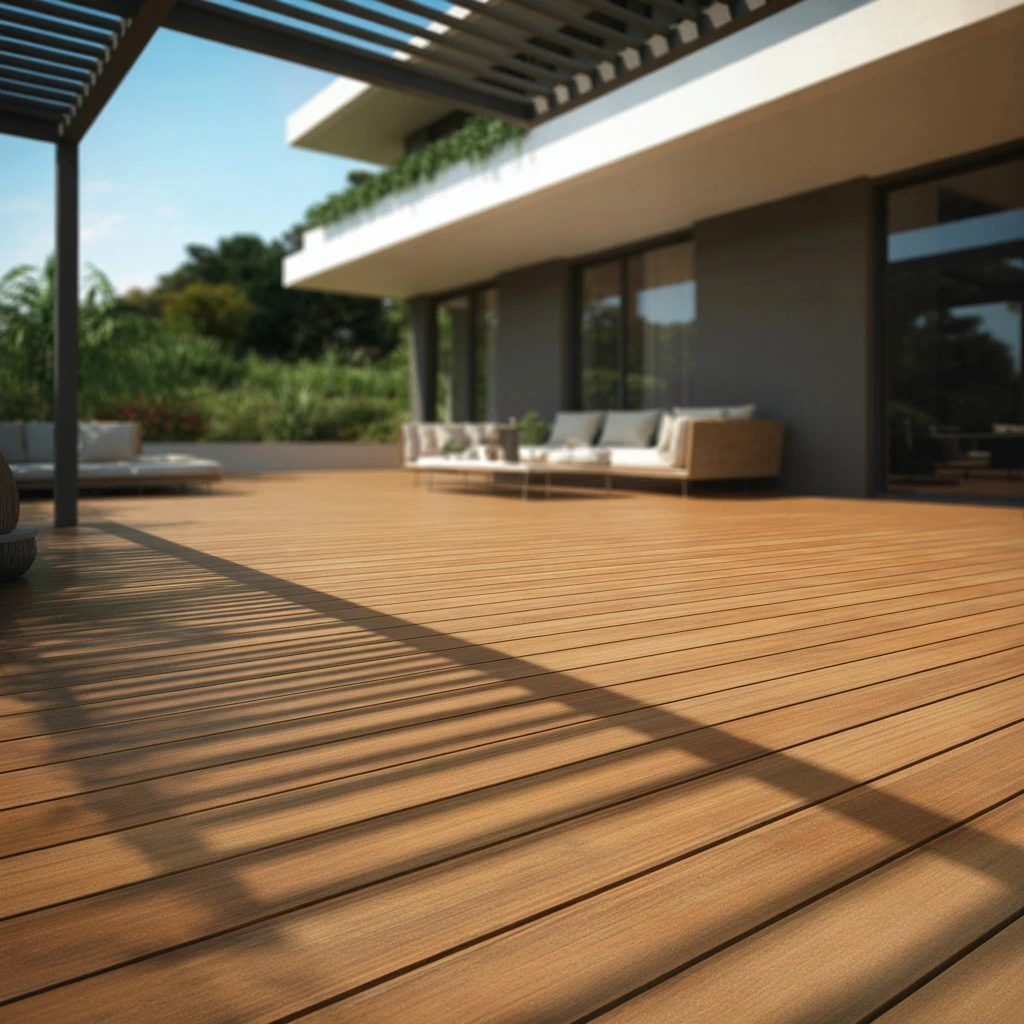
Light or dark composite decking – which heats up more?
This is one of the most important considerations when choosing a terrace. Dark colours heat up much more than light ones. This applies not only to composite, but to all materials used outdoors. Why does this happen? Dark surfaces absorb more solar radiation, while light ones reflect more. As a result:
- graphite, anthracite, dark brown and deep grey heat up more quickly,
- light grey, beige, sand, light brown and colours similar to natural wood are usually more comfortable in summer.
So, if comfortable use of the terrace in hot weather is a priority, it is worth considering lighter-coloured composite decking. This does not mean it will be as cool as shade, but the difference compared with darker models can be clearly noticeable.
This is particularly important for modern terrace designs, where fashionable shades of anthracite and graphite are often chosen. They look elegant, but in full sun they can reach higher temperatures than decking boards in light grey or sand shades.
What factors determine the temperature of composite decking board?
It is impossible to answer honestly whether composite decking boards heat up without considering the factors that affect their temperature. The most important are:
- Board colour - This is absolutely fundamental. The darker the surface, the more it heats up.
- Level of sun exposure - A south- or south-west-facing terrace will be much more prone to overheating than a partially shaded terrace.
- Time of day - Surface temperatures are usually highest during the sunniest hours, from late morning to the afternoon.
- Airflow and terrace construction - A well-ventilated terrace, built correctly, can release heat more efficiently than an enclosed, stuffy structure without adequate air circulation.
- Surroundings - A terrace surrounded by light-coloured walls, greenery or a canopy will feel different from an open, dark space next to a façade that reflects the sun's rays.
Composite decking and wood – which gets hotter in summer?
This question comes up very often. Many people assume that wood will always be cooler and composite decking will always be hotter. It is not that simple.
Natural wood can also get very hot, especially if it is dark in colour or has been oiled to a deep shade. The difference mainly lies in the subjective feel underfoot and the nature of the surface. Wood is often associated with a “softer” feel on contact, whereas composite decking can feel denser and more uniform.
However, it would not be honest to say that wood will always be noticeably cooler. In practice, comfort again depends on the colour, sun exposure and how the terrace is used. A dark wooden board in full sun can also get very hot.
Will a light-coloured composite decking board solve the problem?
Not entirely, but it definitely helps. A light-coloured composite decking board heats up less than a dark one, which is why it is a popular choice in places where household members like to walk barefoot and the terrace is exposed to a lot of sun.
It is a good solution, particularly when:
- the terrace has no canopy,
- children use it,
- the surface is large and gets a lot of sun,
- the investor wants greater comfort in summer.
Of course, this does not mean that light-coloured composite decking will stay cool during a heatwave. It simply means that it will heat up less than its dark counterpart, which can make a big difference in practice.
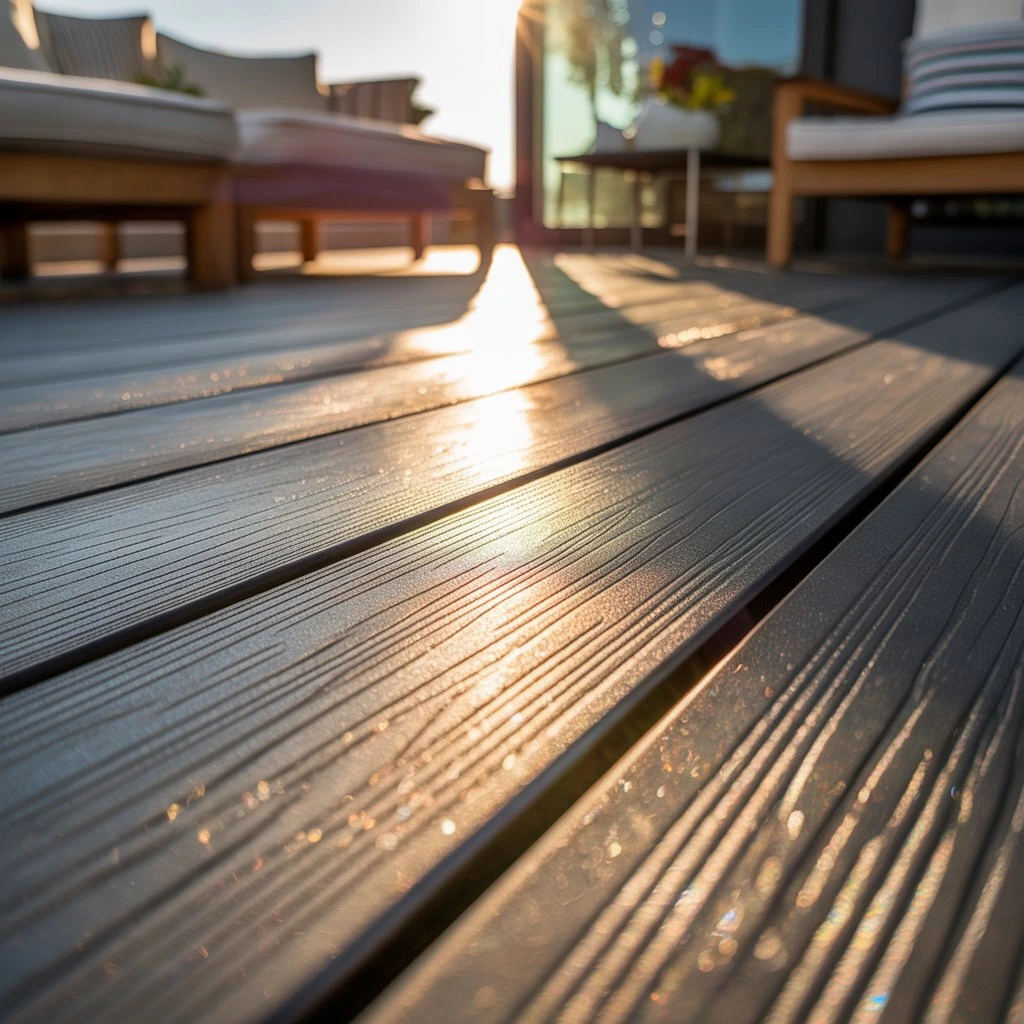
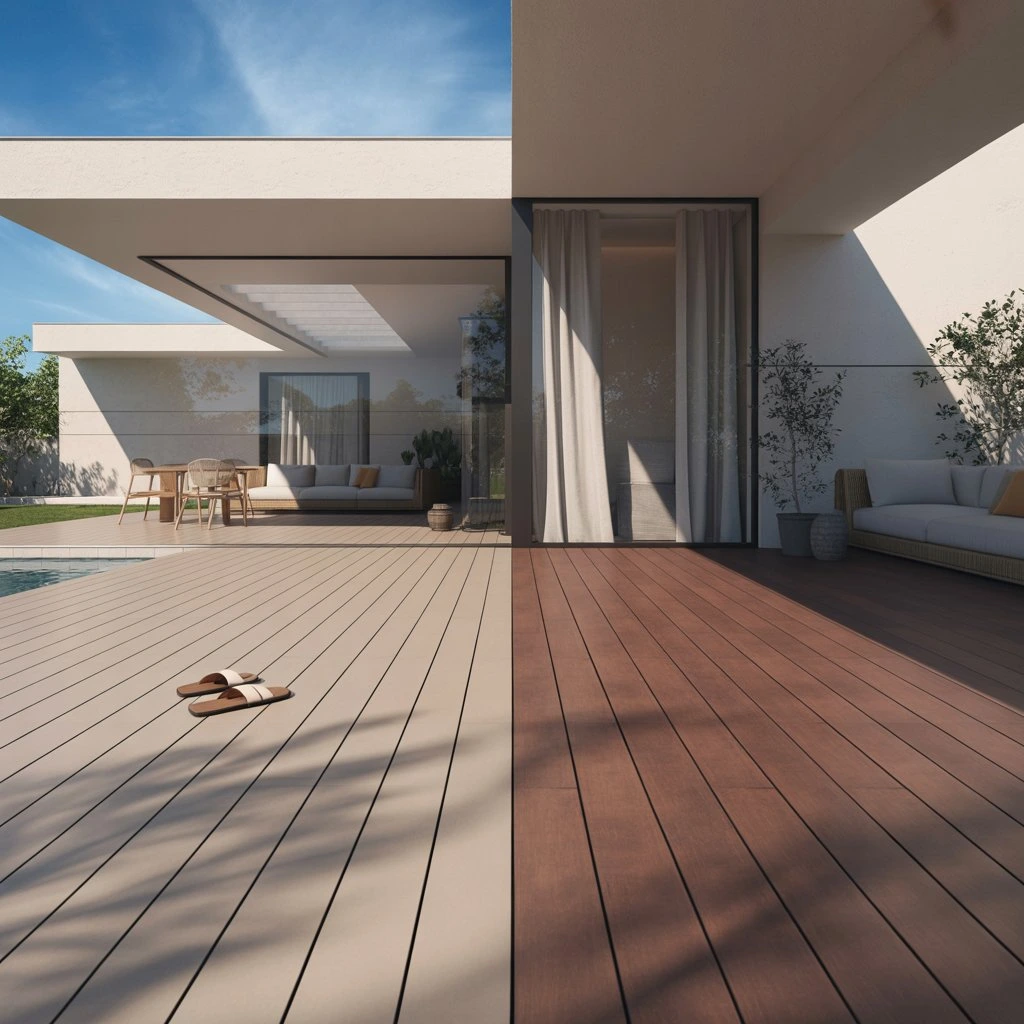
How can you reduce heat build-up on a composite terrace?
If you are worried that composite decking will get too hot in summer, you can limit this effect at the design stage.
- Choose a lighter colour - This is the simplest and most effective way. Light shades make the terrace more comfortable to use.
- Plan for partial shade - A pergola, awning, sun sail or natural shade from plants can noticeably reduce the surface temperature.
- Ensure good ventilation - A correctly built supporting structure and adequate ventilation gaps help to release heat.
- Use the terrace sensibly - Many outdoor surfaces get hot during the hottest weather. At these times, it is better to use a shaded area or wear lightweight footwear.
Is it worth giving up composite decking because it heats up?
No. Composite decking heating up should not automatically rule out this material. You simply need to take a realistic approach. A composite terrace, like one made of concrete, stone or porcelain tiles, responds to the sun. If you choose a very dark colour and install it in an open, south-facing area with no shade at all, the surface will get hot in summer. This is completely normal.
On the other hand, the right colour, sensible design and suitable conditions of use mean that composite decking can be a very comfortable, durable and attractive solution. For many investors, its advantages — easy care, resistance to weather conditions and a modern look — matter more than the risk of greater heat build-up during the hottest hours of the day.
Summary: does composite decking burn your feet?
Yes, composite decking can burn your feet in summer, but not always and not in every condition. The boards that heat up the most are dark composite decking boards exposed to full sun. Light colours are clearly the safer choice for thermal comfort.
The most important thing, however, is to compare composite decking fairly. Not with perfectly cool shade, but with realistic alternatives used on terraces. And then it turns out that composite decking releases heat in a similar way to dark stone or concrete. It is therefore not an exception, but one of many materials whose behaviour in summer depends primarily on colour, sunlight and the design of the space.
If you are planning a terrace and want it to be comfortable on hot days, choose a lighter board, good ventilation and partial shade. These are the factors that have the greatest effect on whether a summer terrace will be pleasant under bare feet.
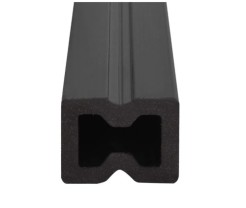
SELECT composite terrace joist 30x40 (graphite) - 4m
30 x 40 x 4000
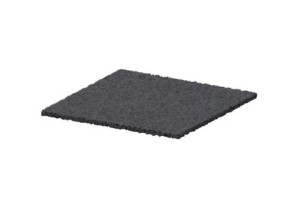
SBR rubber pads for joists 100x100x3 mm SBR100/3 104161
Sound-dampening pad to protect the insulation and surface under DDP002 and DDP008 pedestals.
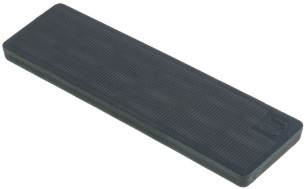
Pads for decking joists (PLASTIC) 6x30x100
Available in packs of: 500 pcs | 1000 pcs
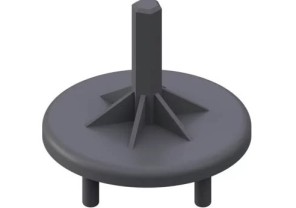
Driver bit for faster assembly and height adjustment of PPK 107471 pedestals
Driver bit designed for pedestals in the STANDARD and MAX series, for quickly adjusting the pedestal height.



