
Can you screw a composite decking board directly into concrete? Check before you start installation!
Wondering whether composite decking boards can be installed directly onto concrete? Find out whether it’s a good idea and what installation solutions are recommended.

Composite decking boards – durable, attractive and practically maintenance-free – are a great alternative to traditional timber, especially on patios, balconies or around swimming pools. But before you start installing them, an important question arises:
can you screw a composite decking board directly to concrete?
The answer is: theoretically yes, but in practice – it’s best to avoid it. And we’ll explain why in a moment.
How is a composite decking board made?
Before we move on to installation, it’s worth knowing what a composite decking board actually is. It combines wood flour and plastics to create a durable material that is resistant to weather conditions. These boards:
-
do not rot like timber,
-
do not need painting,
-
are resistant to mould and fungi,
-
and look attractive for many years.
But – and this is crucial – they are also more susceptible to material movement caused by temperature changes. That is precisely why the way they are installed matters so much.
Can they be installed directly onto concrete?
In short: it is not recommended to install composite decking boards directly onto concrete, as this can lead to:
-
the material cracking,
-
an unstable structure,
-
ventilation problems (leading to damp and mould),
-
a shorter lifespan for the entire patio.
Composite decking boards need adequate ventilation underneath, and concrete, being a solid, impermeable surface, simply cannot provide this.
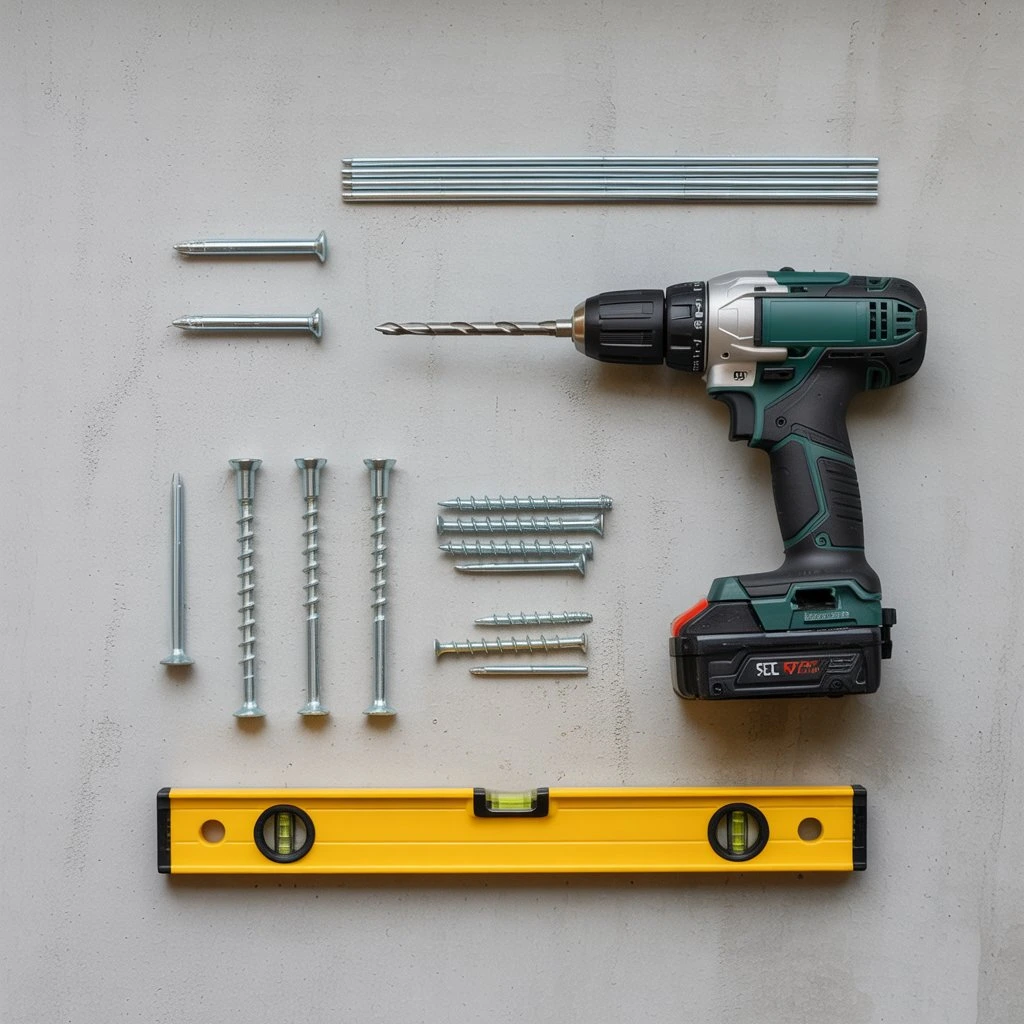
How do you correctly install composite decking boards on concrete?
If you have a concrete patio or slab and want to lay composite decking boards on it, here’s how to do it step by step:
1. Level and clean the concrete surface
Make sure the substrate is clean, dry and free of dust and greasy stains. If necessary, you can use a deep-penetrating primer.
2. Lay the joists
We do not install the boards directly onto concrete, but onto joists, i.e. special structural beams – preferably made of aluminium or plastic (e.g. PVC). They are moisture-resistant and stable.
The spacing between joists should be approx. 30–40 cm (depending on the board manufacturer).
3. Fix the joists to the concrete
Here, expansion plugs, wall plugs or mechanical anchors come in handy. This will stop the joists from shifting and make the whole structure sturdy.
4. Ensure a gradient and ventilation
Make sure the joists are laid with a slight gradient (1–2%) so that water can drain away freely. Spacer pads can be placed under the joists to allow air to circulate.
5. Install the boards
Composite decking boards are fixed to the joists using fixing clips. This means:
-
the appearance remains attractive (with no visible screws),
-
the boards can expand and contract with temperature changes,
-
the correct spacing between them is maintained.
Why not take shortcuts?
Many people think: "Why bother with joists when I can screw the boards directly onto concrete?"
Unfortunately, this approach is a ticking time bomb. Here’s what could happen:
-
The boards start to crack around the screws (the installation does not allow for movement).
-
Bulges appear because the material has no room to expand.
-
Moisture builds up, which leads to mould and unpleasant odours.
-
You lose the manufacturer's warranty – most require installation on joists.
Which joists should you choose?
The best options for installation on concrete are:
-
Aluminium joists – lightweight, corrosion-resistant and very durable.
-
Composite joists (PVC) – do not absorb water, are easy to install and economical.
-
Plastic joists – suitable for damp areas, e.g. around a swimming pool.
Avoid wood, even if treated. It will eventually absorb water and start to rot.
How much does this type of installation cost?
The cost depends on:
-
the quality of the composite decking boards (on average from 150 to 250 zł/m²),
-
the type of joists and fixing clips (from 15 zł/m to 50 zł/m),
-
labour (if you hire a team – approx. 100–150 zł/m²).
It is an expense, but worth paying – a well-built terrace will last 15–25 years without problems.
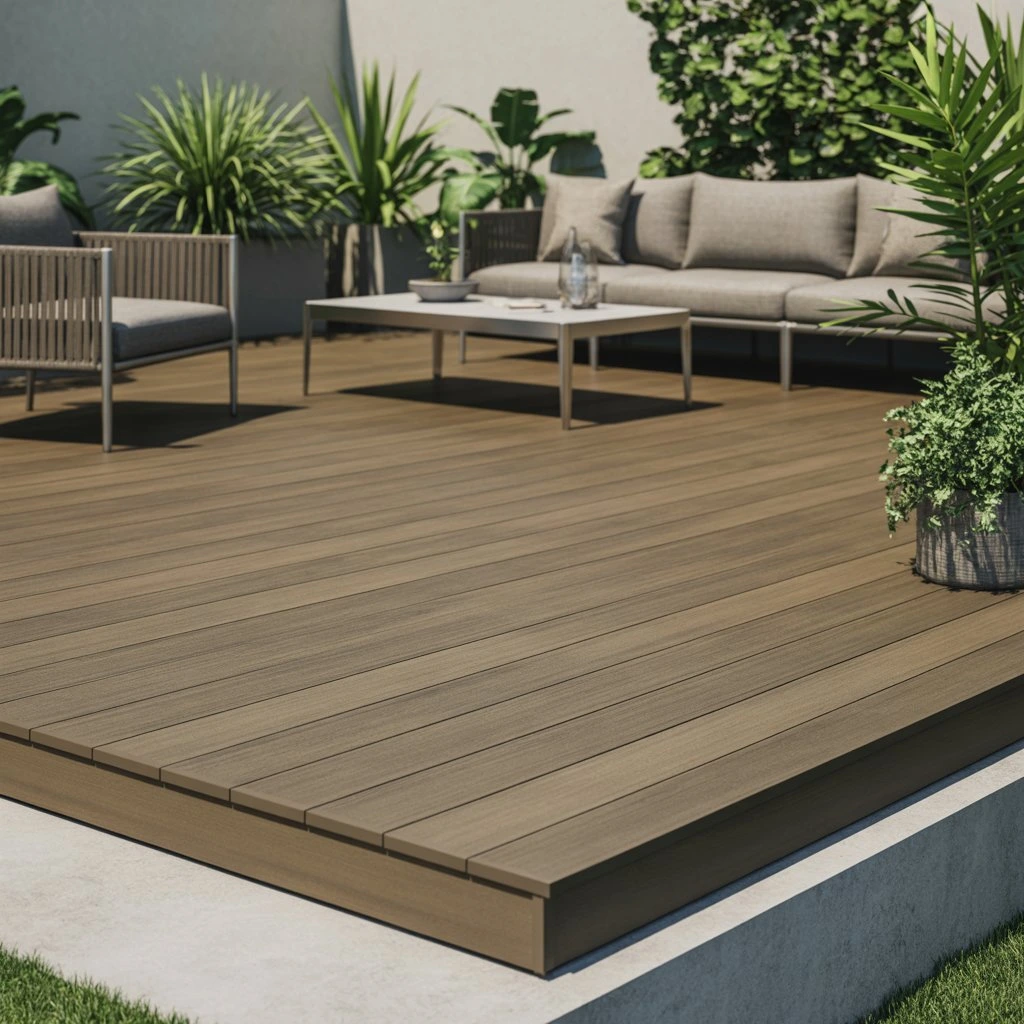
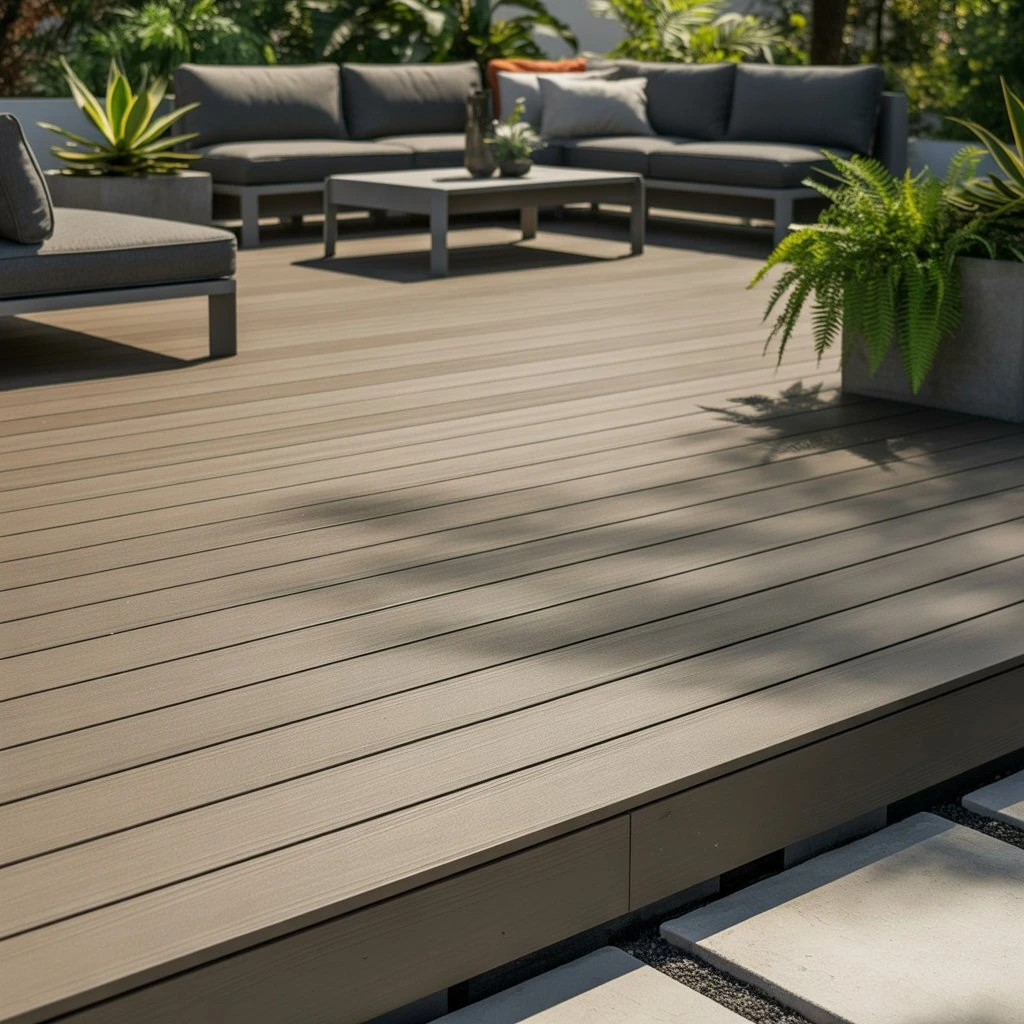
Summary – what should you remember?
Composite decking boards should NOT be installed directly onto concrete. This is the easiest way to shorten their lifespan and risk costly remedial work. Instead:
- Prepare the concrete surface,
- Use plastic or aluminium joists,
- Use fixing clips and leave the appropriate gaps,
- Ensure ventilation and water drainage.
Correct installation ensures durability and years of satisfaction.
FAQ – Frequently asked questions
1. Can composite decking boards be installed without joists?
No – there is a risk of damage, lack of ventilation and loss of warranty.
2. Can joists be glued to concrete?
They can, but mechanical fixings (e.g. plugs) are better – they are more durable and resistant.
3. How much space should be left between the boards?
Usually 5–7 mm – depending on the manufacturer. This allows the material to expand.
4. Can I install it myself?
Yes, but it requires precision and good preparation – it is worth reading the manufacturer's instructions or consulting a professional.
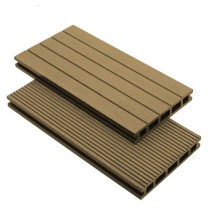
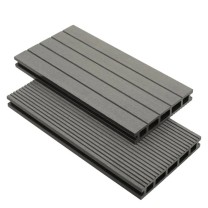
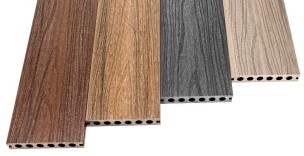
PREMIUM composite decking board 23x138 - 5.8 m
Price per 1 linear metre of decking board: 24,85 zł