Are composite decking boards eco-friendly? An analysis of their environmental impact.
Find out whether composite decking boards are eco-friendly. Let’s analyse their environmental impact, production process, durability and the benefits of using this material.
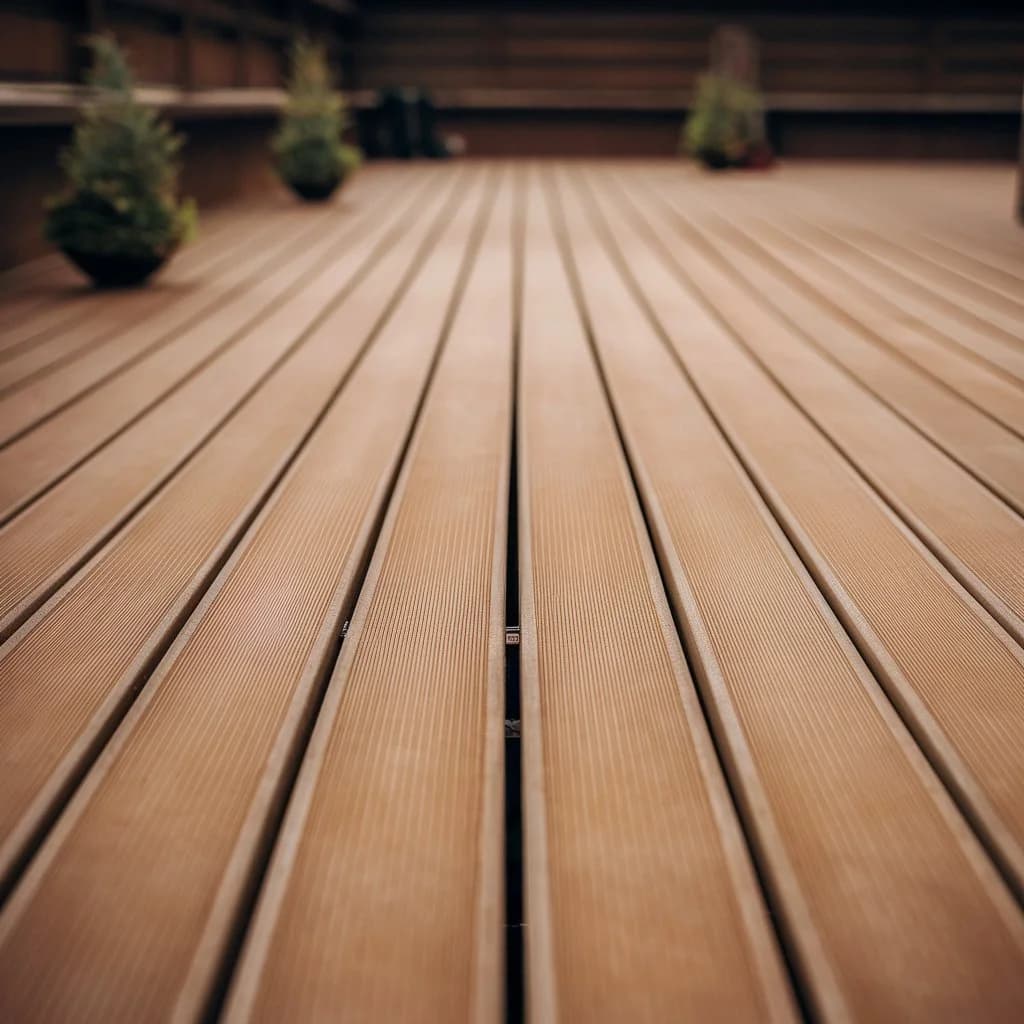
Composite decking boards, also known as WPC (Wood Plastic Composite), are a building material gaining increasing recognition among both professionals and DIY enthusiasts. They are made from a mixture of wood and plastics, with the aim of combining the advantages of both materials. But what about their environmental impact? Are composite decking boards really more environmentally friendly than traditional timber? Let’s take a closer look at the production process, durability and environmental credentials of composite decking boards.
The production process for composite decking boards.
- Source materials: Composite decking boards are made from a mixture of wood fibres and plastics, often sourced from recycled materials. Using recycled materials is one of the key factors that can make composite decking boards be regarded as environmentally friendly. Wood fibres often come from industrial waste, such as wood chips and sawdust, which might otherwise end up in landfill.
- Production process: Manufacturing composite decking boards involves several stages, such as mixing the materials, moulding and extrusion. This process requires a significant amount of energy, but using recycled raw materials can greatly reduce its negative impact on the environment. In addition, manufacturers of composite decking boards are increasingly using technologies that consume less energy and reducing greenhouse gas emissions.
- Waste minimisation: One advantage of producing composite decking boards is that it minimises waste. During the extrusion process, materials are precisely shaped, which helps to minimise the amount of manufacturing waste. Any offcuts can be reused in production, further increasing material efficiency.
Durability and longevity of composite decking boards.
- Weather resistance: Composite decking boards are highly resistant to moisture, UV radiation, mould and fungi. Unlike traditional timber, they do not rot and do not require regular maintenance. This gives them a significantly longer lifespan, resulting in lower resource consumption and less waste.
- Low maintenance costs: By choosing composite decking boards, you save not only on maintenance costs but also help to protect the environment. Traditional timber requires regular painting, staining and treatment against pests, which involves using chemicals and additional resources. Composite decking boards are virtually maintenance-free, reducing their environmental impact.
- Resistance to mechanical damage: Composite decking boards are also more resistant to mechanical damage, such as cracks, scratches and dents. This means they do not need to be replaced as often, resulting in lower consumption of raw materials and energy.

Environmental benefits of composite decking boards.
- Use of recycled materials: As mentioned above, composite decking boards are often made from recycled materials. This means they help reduce the amount of waste sent to landfill and limit the use of natural resources. The wood fibres used to manufacture composite decking boards may come from industrial waste, further reducing their environmental impact.
- Reduced deforestation: Using composite decking boards can help reduce deforestation. Traditional timber comes from felling trees, which leads to forest degradation and biodiversity loss. By using recycled wood fibres, composite decking boards help reduce demand for virgin timber.
- Reduced greenhouse gas emissions: Manufacturing composite decking boards generates fewer greenhouse gas emissions than producing traditional timber, especially when technologies that consume less energy are used. In addition, the longer lifespan of composite decking boards means they need to be replaced less often, resulting in a smaller carbon footprint.
Drawbacks and challenges relating to the environmental aspects of composite decking boards.
- Energy consumption during production: Although composite decking boards have many environmental benefits, their production process is energy-intensive. It requires significant amounts of energy to process and shape the materials. However, many companies are working to minimise this impact by using renewable energy sources and managing energy consumption efficiently.
- Use of plastics: Composite decking boards contain plastics, which is a source of some controversy. Although many of these plastics are recycled, they are still less environmentally friendly than natural biodegradable materials. Recycling composite decking boards at the end of their lifespan can also be a challenge.
- Cost: Composite decking boards are usually more expensive than traditional timber. Although their longer lifespan and low maintenance costs can offset the higher initial cost, the price may still be a barrier for some consumers.
Summary.
Composite decking boards have many environmental benefits, such as using recycled materials, reducing deforestation and reducing greenhouse gas emissions. They are durable, weather-resistant and inexpensive to maintain. Nevertheless, the production process for composite decking boards is energy-intensive and requires the use of plastics, which may raise some controversy. Ultimately, choosing composite decking boards as a building material can help protect the environment, provided they are produced and used in a sustainable way.
Frequently asked questions (FAQ).
Are composite decking boards more expensive than wood?
Yes, the initial cost of composite decking boards is usually higher than that of wood, but their lower maintenance costs can make them more cost-effective in the long term.
Can composite decking boards be recycled?
Recycling composite decking boards can be difficult, but an increasing number of manufacturers are developing ways to reuse them.
Do composite decking boards look like wood?
Composite decking boards are designed to look like wood, but some users may feel that they lack the natural appearance and texture of real wood.