
Do slats warp in the heat? Find out before you install them!
Do slats react to high temperatures and can they warp? Find out how different types of slats behave in the heat and what to consider when installing them.

Slats – these stylish vertical strips – have taken the interiors and façade market by storm. We now see them not only in living rooms and bedrooms, but also on building façades, ceilings and as partition walls. However, one question is being asked more and more often: do slats warp when exposed to heat?
And you know what? That’s a very good question! Heat, sunlight, underfloor heating and radiators can indeed affect some materials. But don’t worry – not all slats are equally susceptible to temperature. In this post, we’ll examine the subject from A to Z.
What are slats and where are they used?
Before we get into the technical details, here’s a quick look at what slats are and where they are used. Decorative slats are narrow strips fitted vertically or horizontally, usually made from MDF, natural wood, plastic (e.g. PVC) or aluminium. They are mainly used for:
- decorating walls and ceilings,
- building screens and partition walls,
- concealing imperfections,
- improving room acoustics,
- decorating building façades (so-called façade slats).
And, as you might expect, each of these materials reacts differently to temperature.
Do slats warp? It depends on the material!
Let’s get straight to the point – yes, some slats can warp when exposed to heat, but not all of them. The key factor is the material they are made from. Here’s a brief overview of the most popular types:
1. MDF slats (medium-density fibreboard).
MDF is a very popular material for making slats, mainly because it is readily available and easy to work with.
-
Advantages: attractive appearance, affordable price.
-
Disadvantages: low resistance to moisture and high temperatures.
-
Reaction to heat: Yes, MDF can warp or delaminate when exposed to high temperatures for a prolonged period – for example, near fireplaces or radiators, or in sunny locations.
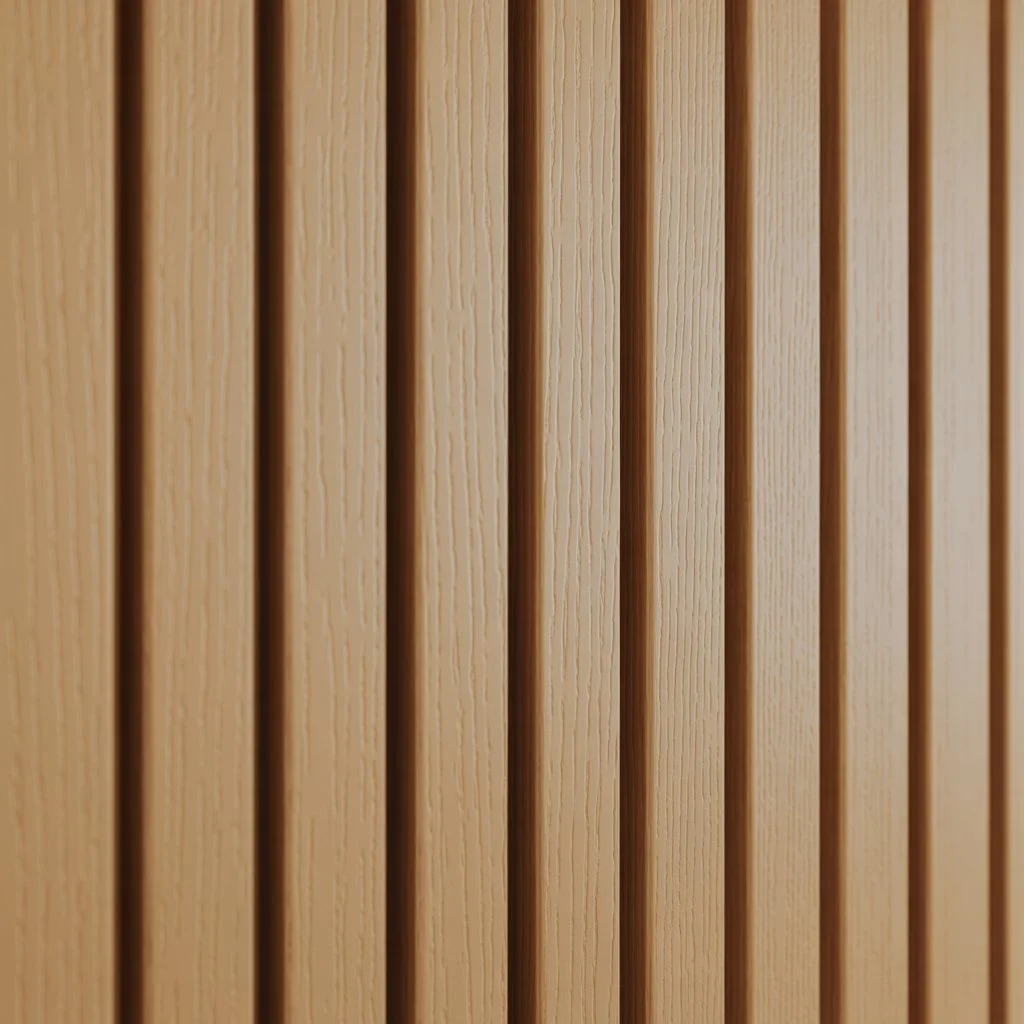
2. Wooden slats.
Natural wood is a classic choice. Beautiful and durable, but temperamental.
-
Advantages: unique appearance, eco-friendly, durable.
-
Disadvantages: susceptible to changes in humidity and temperature.
-
Reaction to heat: Wood “moves”, meaning it can shrink or expand depending on the conditions. In extreme cases, it can warp, particularly if it was not professionally installed.
3. PVC slats (plastic).
Modern and practical – often used in bathrooms and kitchens.
-
Advantages: moisture-resistant, lightweight, easy to install.
-
Disadvantages: low resistance to very high temperatures.
-
Reaction to heat: High temperatures can cause them to bend, particularly if they are exposed to sunlight through glass (e.g. at south-facing windows).
4. Aluminium slats.
The most durable and resistant.
-
Advantages: resistant to temperature, moisture and weather conditions.
-
Drawbacks: higher price, cooler appearance.
-
Response to heat: virtually none – aluminium withstands high temperatures exceptionally well, which is why it is often used outdoors (facades, fences).
What can cause slats to warp?
Warping can be caused by several factors:
- Direct sunlight – especially through glass.
- Proximity to heat sources – radiators, fireplaces, stoves, ovens.
- Poor room ventilation – heat build-up.
- No expansion gaps and incorrect installation – particularly with MDF and wood.
- Poor material quality – cheap MDF imitations can be very susceptible to warping.
How can you protect slats from warping?
Don't want your beautiful slats to look like rippling blinds in a few months? Here are some practical tips:
- Avoid installing MDF slats close to heat sources.
- Use temperature-resistant slats – e.g. aluminium or good-quality wood.
- Ensure adequate room ventilation.
- Leave appropriate expansion gaps during installation.
- Choose reputable manufacturers.
Outdoor slats and high temperatures.
If you are planning to install slats outside the building, it is particularly important that they can withstand changing weather conditions:
- PVC and MDF are unsuitable – they will not withstand changes in temperature, moisture and sunlight.
- Wood only with suitable treatment – preferably exotic species.
- Aluminium – the best choice – resistant to heat, frost, water and UV.
Frequently asked questions (FAQ).
Can MDF slats be installed next to a fireplace?
We do not recommend it. MDF does not tolerate high temperatures well and may warp.
Which slats are best suited to kitchens?
Definitely PVC or aluminium – they are resistant to moisture and temperature.
Will PVC slats withstand summer on a balcony?
Probably not. They may bend in the sun – aluminium is a better choice.
How can you prevent slats from deforming?
Choose the right material, avoid heat sources and install them with the correct expansion gaps.
To sum up? Better: What to remember.
Slats can warp under the influence of heat — but only if they are made from low-quality materials or installed incorrectly. MDF and PVC are more susceptible to deformation, especially near heat sources. Wood can also “move” if you do not ensure correct installation. If durability matters to you — choose aluminium.
If you are already planning a slatted wall – think about where you will install the slats and what material they are made from. Making the right decision at the outset means avoiding problems in the future.
3D OAK Composite Cladding Board, Slatted
Dimensions: 25x160x2950
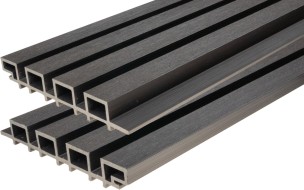
PREMIUM DARK SILVER Composite Cladding Board, Slatted
Dimensions: 33x226x2950
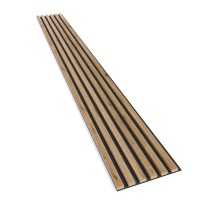
Artisan oak slats on felt, 24x300 mm, decorative wall strips on felt
Price is for one slat
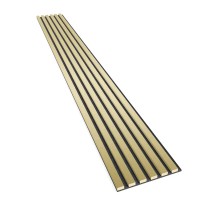
Golden gloss felt-backed slats 24x300 mm decorative wall strips on felt
Price is for one slat



