
Can composite decking boards be laid without joists?
Wondering whether you can lay composite decking boards without joists? Find out the advantages and disadvantages of this solution, and why joists are essential.

Composite decking is extremely popular for patios and balconies. It’s no surprise: it’s durable, attractive and doesn’t need maintenance as often as natural wood. However, many investors and DIY enthusiasts ask themselves: can composite decking boards be laid without joists?
At first glance, this might seem like a simpler and cheaper option. In practice, however, going without joists brings many limitations and risks. In this article, we explain why joists are a key part of the installation system, what they do and what can go wrong if they are omitted.
What are joists and what are they used for?
Joists are special profiles – most commonly made of aluminium, steel or composite – onto which composite decking boards are installed. They create a stable, level framework for the deck.
Their main functions are:
-
levelling the surface – they provide a perfectly level base for the boards,
-
draining water – they ensure adequate ventilation and moisture drainage,
-
stability – they prevent the boards from sagging and warping,
-
durability – joists help composite decking boards last longer and make them less susceptible to damage.
Without joists, the whole structure is less functional and less safe.
Can composite decking boards be laid without joists?
The answer is: theoretically yes, but in practice, it’s not worth it.
Composite decking boards could be glued or fixed directly to the substrate, such as a concrete screed. However, this approach causes a range of problems:
-
No ventilation – boards in direct contact with the substrate trap moisture, accelerating their deterioration.
-
Risk of warping – the material expands and contracts with changes in temperature, and without expansion gaps and space beneath the boards, the structure quickly warps.
-
No water drainage – standing water can seep into the gaps and lead to mould or fungal growth.
-
Shorter lifespan – composite decking boards without suitable conditions last far less time than those installed on joists.
That is why manufacturers and specialists unequivocally recommend using joists.
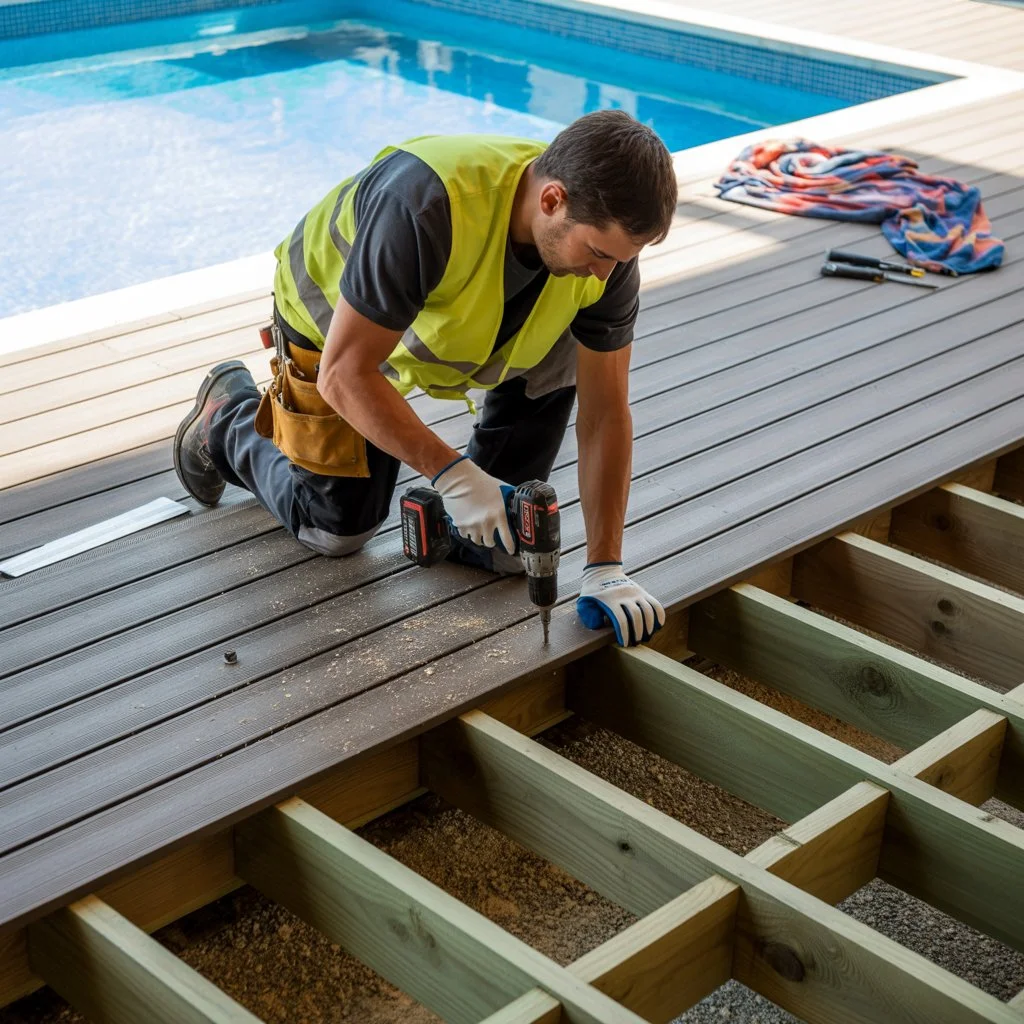
Why are joists so important?
-
Ventilation and moisture drainage.
Although composite decking boards are weather-resistant, they still need air to circulate underneath. Joists create an expansion gap that allows water to drain away and the boards to dry.
-
Structural stability.
Without joists, composite decking boards sag more quickly and may crack or creak underfoot. Joists distribute the load evenly.
-
Easier installation.
System joists and fixing clips allow for quick, clean and precise installation. Without them, every board would need to be drilled or glued, which is time-consuming and looks less attractive.
-
Longer lifespan.
A deck built correctly on joists can last for as long as 20–25 years. Without them, its lifespan is significantly reduced.
When might you consider installing without joists?
There are situations in which investors try to avoid a joisted installation – for example, on small balconies with limited clearance beneath the threshold. In such cases, special panel systems or underlay mats are used, which partly replace joists.
Even then, however, composite decking board manufacturers recommend leaving a minimum expansion gap and using dedicated accessories. It’s a compromise, not a definitive solution.
The most common mistakes when installing without joists.
-
Gluing the boards directly to the screed.
-
Leaving no expansion gap between the boards and the wall.
-
Installing without ensuring the substrate has a slope (min. 1,5–2%).
-
Using non-original installation accessories.
These mistakes lead to rapid wear and complaints, which are usually not upheld because the boards were not installed in accordance with the manufacturer’s recommendations.
How to install composite decking boards?
To ensure your deck lasts, you should:
-
use original joists (composite, aluminium or steel),
-
leave adequate expansion gaps,
-
ensure the substrate has a minimum slope,
-
use dedicated fixing clips.
This will ensure that your composite decking boards not only look great, but also retain their properties for many years.

Summary.
Can composite decking boards be laid without joists? Theoretically, yes, but in practice this is neither durable nor safe. Joists play a key role in installation: they provide ventilation and stability, and extend the life of the deck.
If you’re planning to build a deck or balcony using composite decking boards, choose a tried-and-tested joist system. This will help you avoid costly repairs and enjoy an attractive, durable deck for years to come.
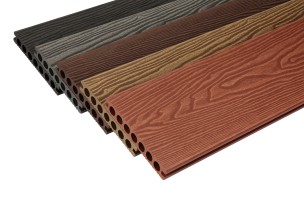
DUO composite decking board 23x148 - 5,8 m
Price per 1 linear metre of board: 21,30 PLN
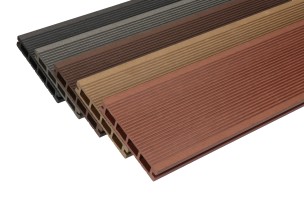
SELECT composite decking board 25x140 - 5,8 m
Price per 1 linear metre of board: 17,27 PLN
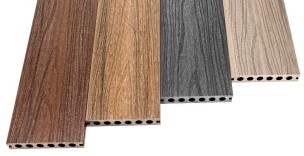
PREMIUM composite decking board 23x138 - 5,8 m
Price per 1 linear metre of board: 24,85 PLN
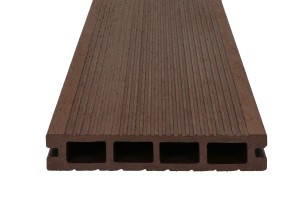
SELECT composite decking board 25x140 - 3,5 m
Price per 1 linear metre of board: 17.27 PLN



