Is a spruce decking terrace a good choice?
Wondering whether a terrace made from spruce decking boards is a good choice? Read our article to discover the advantages and disadvantages of spruce decking boards, along with tips on how to care for them.
Building a deck is one of those investments that can significantly increase the value and functionality of your home. When deciding to build a deck, you are faced with many choices – one of them is selecting the right material for the decking boards. Spruce, one of the most readily available and popular types of wood, is often considered as a material for decking. But is a deck made from spruce boards really a good choice? Let’s take a closer look at the advantages and disadvantages of spruce, as well as how to care for a deck made from this wood.
What are the characteristics of spruce?
Spruce (Picea) is a genus of coniferous trees found mainly in northern Europe and Asia. Spruce wood is lightweight, soft and easy to work with. It has a light colour, which may take on a greyish hue over time if it is not properly protected.
Advantages of spruce boards.
- Cost: Spruce boards are among the cheapest available on the market. This makes building a deck from this material more affordable. If you have a limited budget, spruce may be an attractive option.
- Availability: Spruce is widely available in Poland and other European countries. This means you should have no trouble finding suitable boards for your project.
- Ease of working: Spruce is relatively soft wood, which makes it easy to work with. Cutting, drilling and sanding spruce boards is not particularly difficult, making it easier to build a deck, even for people with less experience in carpentry.
- Aesthetics: Spruce boards have a light, natural colour that adds warmth and cosiness to any deck. The natural grain and patterns of the wood make a spruce board deck look attractive and blend harmoniously with its surroundings.
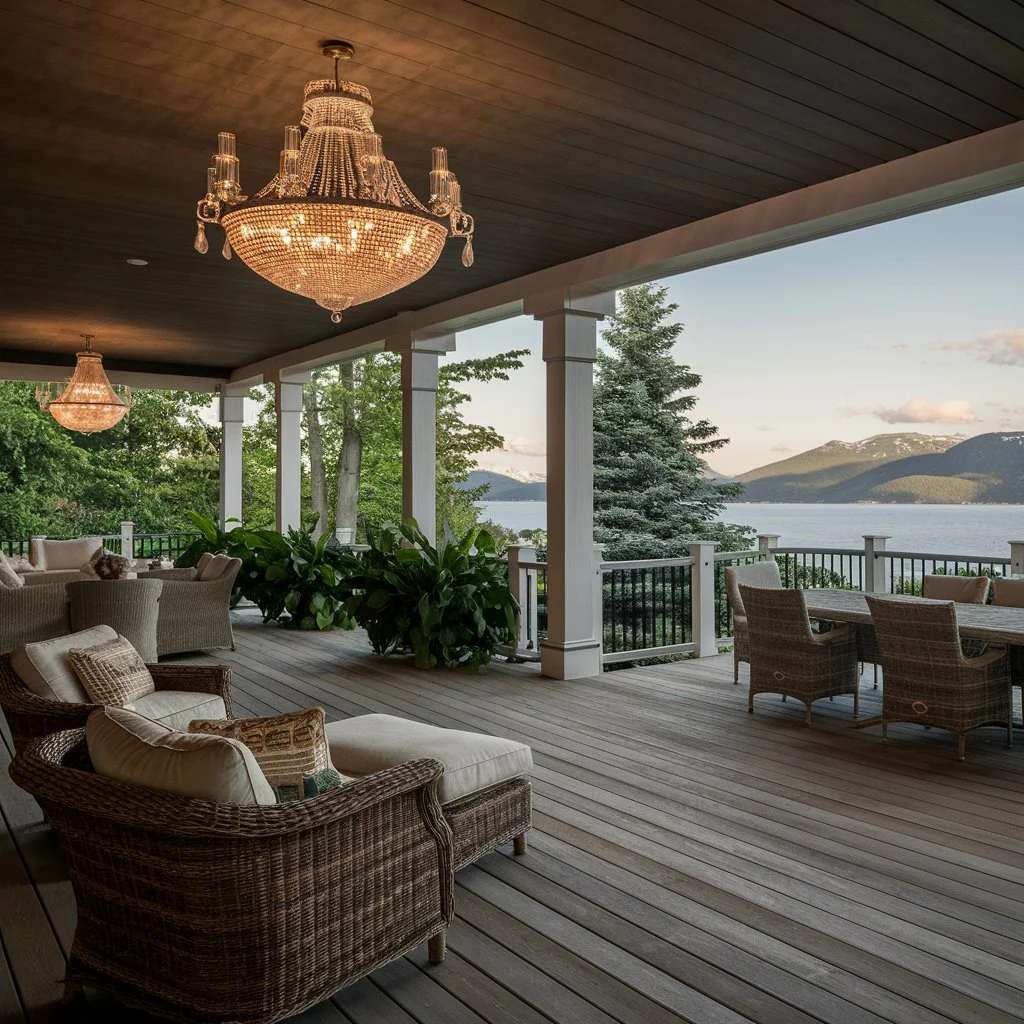
Disadvantages of spruce boards.
- Durability: One of the main disadvantages of spruce is its low durability compared with other types of wood. Spruce is less resistant to mechanical damage, weather conditions, mould and fungi.
- Maintenance: To retain its appearance and durability, a spruce board deck requires regular maintenance. Spruce wood should be treated with preservative and painted with special protective products at least once a year to protect it from moisture and UV radiation.
- Hardness: Spruce is a soft wood, which means it is more prone to dents and scratches. If you plan to place heavy garden furniture on your deck, you may find that the board surface is not very durable.
How should you care for a spruce board deck?
If you decide on a spruce board deck, it is important to care for it properly to ensure its durability and appearance for years to come. Here are some practical tips for maintaining a spruce board deck:
- Preservative treatment: Regularly treating spruce boards with preservative is essential to protect them from moisture, fungi and pests. We recommend using special wood preservatives that form a protective layer on the surface of the boards.
- Painting: Painting spruce boards not only improves their appearance but also provides additional protection against the weather. When choosing wood paint, it is worth opting for high-quality products that provide long-lasting protection.
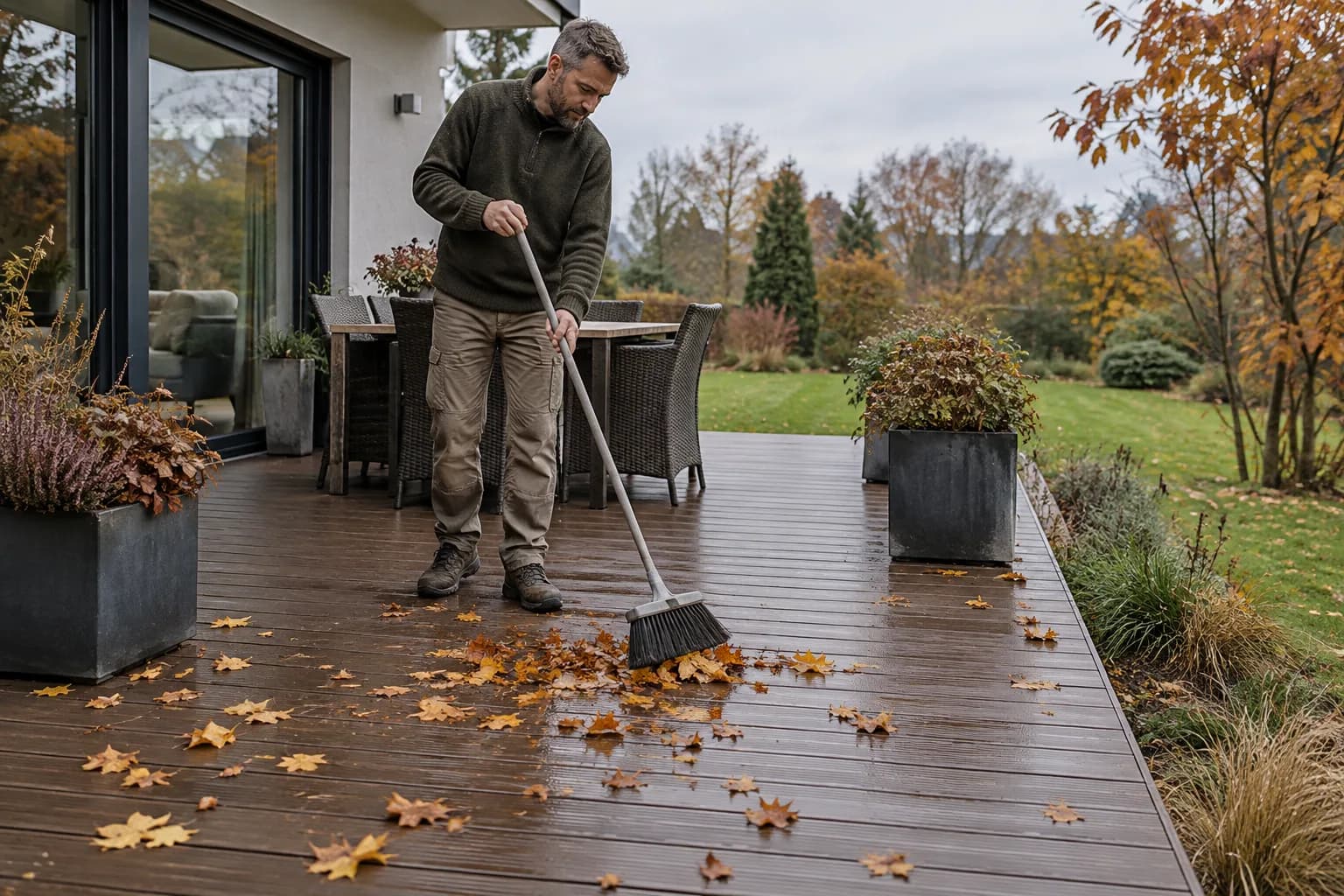
- Cleaning: Regularly cleaning a spruce board deck is important to remove dirt that could lead to damage to the wood. You can use a soft brush and mild cleaning products to avoid damaging the board surfaces.
- Repairs: In the event of mechanical damage, such as scratches or dents, it is worth repairing the boards as soon as possible to prevent further damage. Replacing individual boards or repairing them is relatively straightforward because spruce wood is easy to work with.
Comparison with other materials.
To better understand whether spruce boards are a good choice for a deck, it is worth comparing them with other popular materials, such as exotic hardwood, composite or larch.
- Larch: Larch is an excellent alternative to spruce, offering significantly greater durability and resistance to harsh weather conditions. Thanks to its natural properties, larch effectively withstands moisture, fungi and insects, making it an ideal material for outdoor applications such as decking and cladding. Although it costs more than spruce, it is still a more economical choice than exotic hardwood, while offering higher quality and longevity.
- Composite: Composite materials, made by combining wood fibres and plastics, are exceptionally durable and require little maintenance. Thanks to their construction, they are resistant to moisture, mould and insects, making them ideal for harsh outdoor conditions. Despite their many advantages, such as longevity and minimal maintenance requirements, composites may not offer as natural an appearance as traditional wood. However, modern technologies make it possible to create composites with an appearance similar to natural materials, making them more attractive to users looking for practical and durable solutions.
- Exotic hardwood: Exotic hardwoods such as teak and bangkirai stand out for their exceptional durability and resistance to weather conditions, outperforming spruce in this respect. These types of wood are naturally resistant to moisture, fungi and insects, which makes them ideal for demanding outdoor conditions. Thanks to their properties, teak and bangkirai are often chosen for building decking, garden furniture and façades. However, the high price of exotic timber can be a significant barrier for many people, limiting its availability to more exclusive projects. Even so, investing in exotic timber is often worthwhile because of its exceptional durability and appearance, which add value to every project.
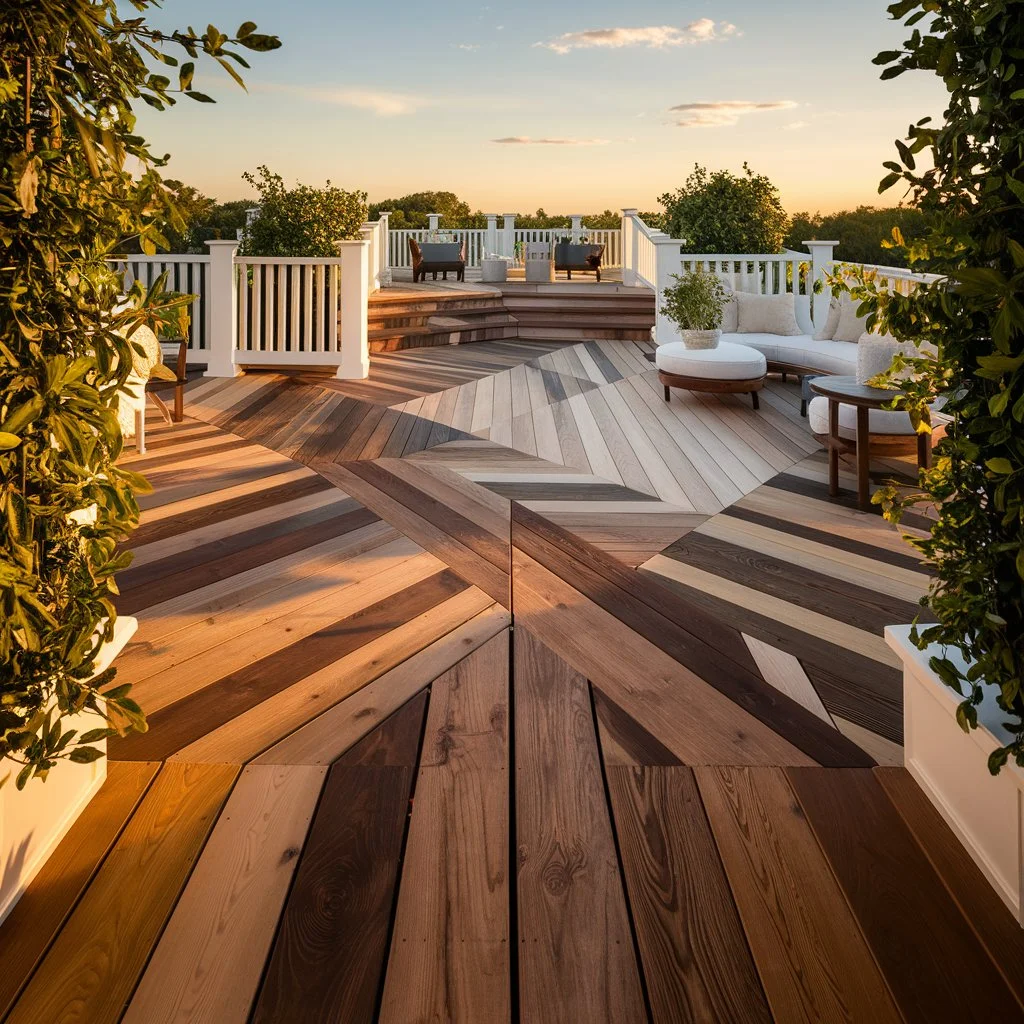
Summary.
A decking area made from spruce decking boards is a solution with its advantages and disadvantages. Spruce decking boards are characterised by their attractive appearance, affordable price and ease of working, making them an appealing material for decking. However, their limited durability and the need for regular maintenance may be a challenge for some homeowners. If you want your decking to look beautiful and natural, and are also willing to spend time maintaining it regularly, spruce decking boards may be a good choice. It is worth considering all aspects of using this material, however, so that you can make an informed decision. Think about your priorities and needs, as well as the conditions in the place where you plan to build your decking. This will help you choose the best material to meet your expectations and provide years of comfortable use.