Are Rubber Pads Worth Using Under Terrace Joists? | Moisture Protection and Durability.
Find out whether it is worth using pads under joists when building a composite deck. See how they affect moisture protection, durability and the stability of the structure.
Building a composite decking terrace is an investment that will last for years — not only in comfort and relaxation, but also in the appearance and value of your entire home. However, even the best materials are of little use if the structure is not built soundly from the ground up. And this is where one of the most common questions asked by customers comes in: are rubber pads under terrace joists worth using? Although these unassuming components may seem like no more than an extra, their role in protecting the structure from moisture and ensuring the terrace's longevity is crucial. Joist pads help prevent moisture from accumulating beneath the structure, support its stability and make it easier to level the surface. Sounds like a minor detail? And yet it is precisely these details that can determine whether your terrace lasts a decade or just a few seasons.
In this article, we’ll look at what rubber pads are, when they are worth using, what their advantages are and... whether they are really necessary. If you are planning to build a terrace and care about durability, this article is for you. It’s time to debunk the myths and check the facts!
What are rubber pads for joists?
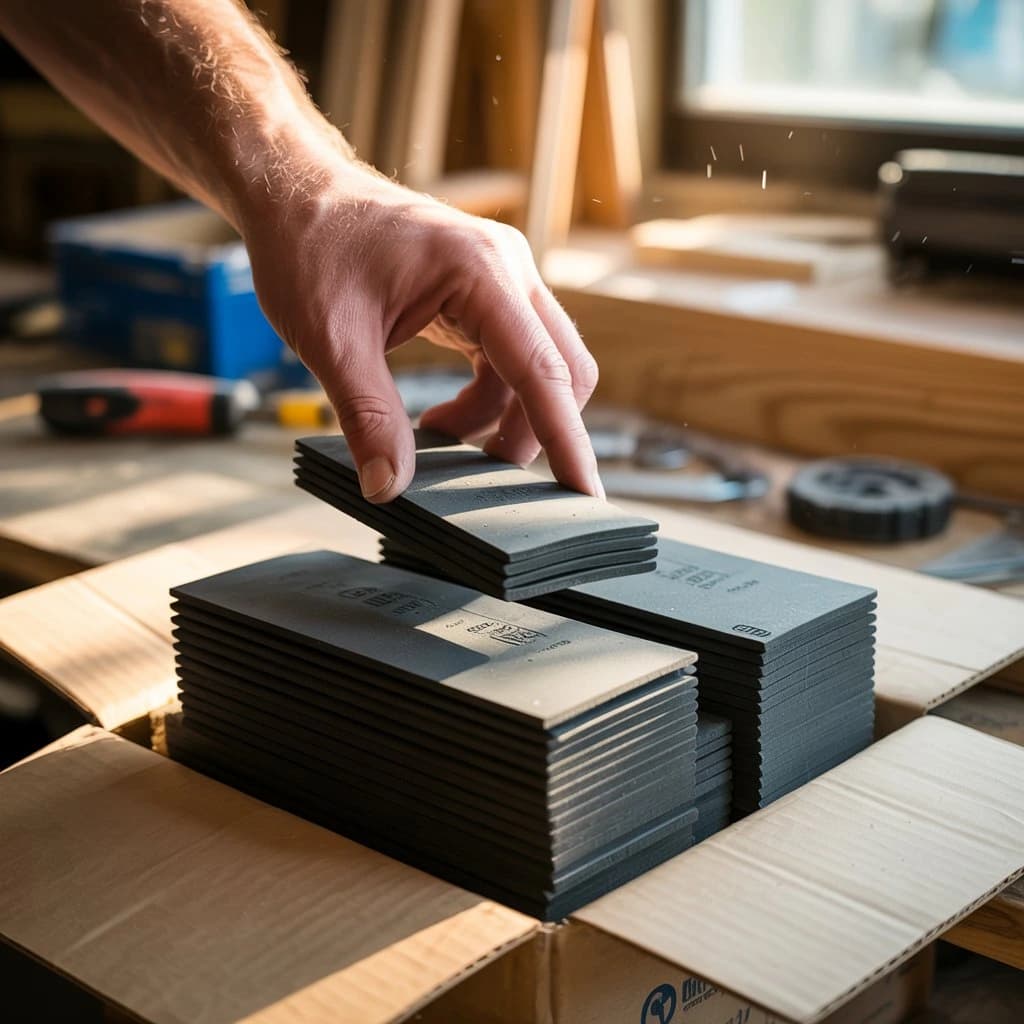
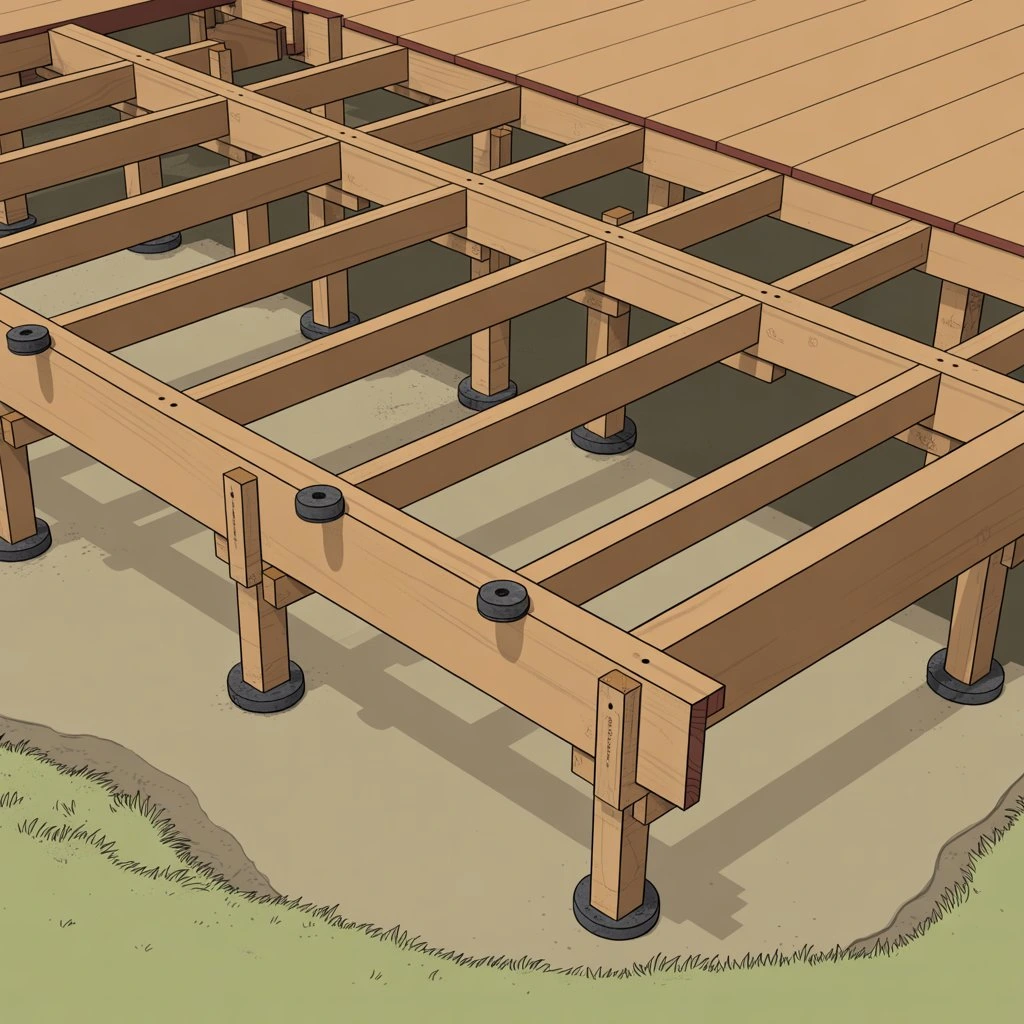
Let’s start with the basics – joist pads are simply special components, usually made of rubber or plastic, placed between a joist and the surface beneath it (e.g. concrete, a foundation slab or a support). Their main purpose is to:
- separate the joist from the damp surface beneath it,
- even out minor unevenness,
- improve the stability of the structure.
For composite decking terraces, which are known for their durability and appearance, properly supporting the joists is the key to success. Without this, even the most beautiful terrace can soon start to deteriorate.
Moisture protection – the most important argument.
Moisture is the silent killer of every terrace. Even if you use composite decking boards, which are themselves resistant to water and rot, the joists (whether wooden or composite) may be exposed to contact with damp ground.
Rubber pads act as a barrier:
- They separate the joist from water, which can collect on the foundation slab.
- They prevent mould and fungi from forming on the underside of the joist.
- They extend the life of the entire structure, reducing the risk of rot and material degradation.
Let’s be realistic – moisture will always be there. The only question is whether you’ll let it get into the structure or keep it out.
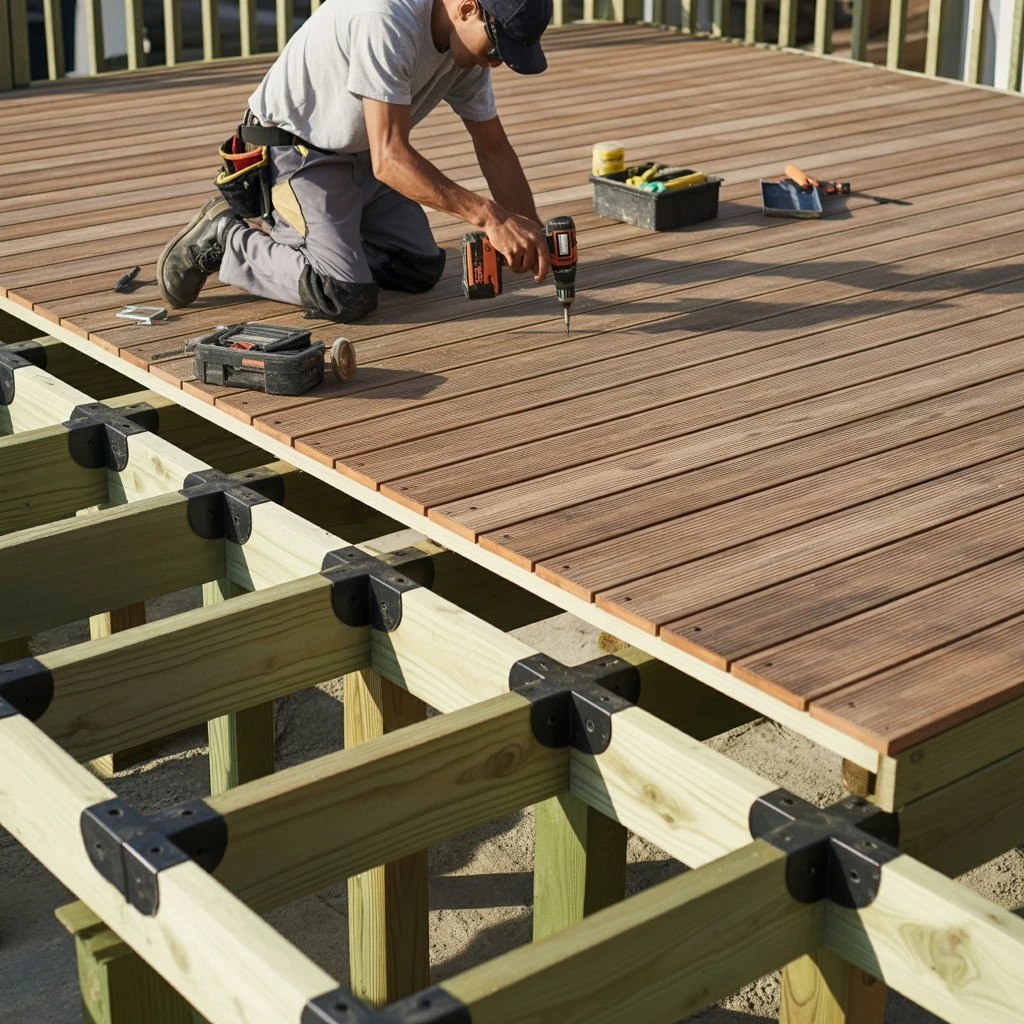
Terrace stability and levelling.
As well as protecting against moisture, joist pads also serve a practical purpose. Their varying thicknesses allow you to:
- compensate for minor differences in the level of the surface,
- stabilise joists where the surface is uneven,
- achieve a perfectly level terrace surface.
This makes installation much easier and quicker, especially if you are not using adjustable supports. Often, a difference of just a few millimetres is enough for a terrace to ‘settle’ or creak underfoot. Pads solve this problem.
Suitable for every type of structure.
Whether you are building a terrace on:
- a concrete slab,
- supports,
- concrete blocks,
- stable ground,
...joist pads will be an excellent addition to the structure. They can be used with both wooden and composite joists. Simply choose the right size and thickness.
Are pads necessary?
So, are they a ‘must-have’ or just an extra for perfectionists? In theory, you can build a terrace without pads. In practice? You risk far more than you save.
Without pads:
- joists may come into direct contact with water,
- it is harder to level the terrace,
- the structure will wear out more quickly,
- problems with water drainage may arise.
In practice, the cost of pads is a fraction of the total investment, while the benefits last for years. That is why most tradespeople and composite decking terrace manufacturers unequivocally recommend using them.
How much do they cost and how do you choose them?
Rubber pads start at just a few dozen groszy per piece. They are usually sold in packs of 20–100. When building a terrace with an area of 20–30 m², the cost of a set of pads is around PLN 100–300 – depending on the joist spacing and the thickness of the pads themselves.
When choosing pads, pay attention to:
- Material – ideally UV-resistant rubber or EPDM.
- Thickness – from 3 mm up to 10 mm.
- Size – suited to the width of the joist.
- Non-slip surfaces – for better grip.
Summary – are they worth it?
Right, let’s get down to the details. Are rubber pads under decking joists worth using?
Definitely YES, because they:
- protect the structure from moisture,
- extend the life of the joists,
- make it easier to level the terrace,
- improve stability and safety,
- cost very little compared with the total investment.
If you’re building a composite terrace that is meant to last for years, it’s not worth skimping on the small details. Pads are one of those “little heroes” whose impact you’ll only notice years later – when everything is still working perfectly.
Frequently asked questions (FAQ).
1. Can pads be used with wooden joists?Yes, absolutely – they are even more strongly recommended with wooden joists, because wood absorbs a lot of moisture.
2. Can pads be laid directly on the ground?It’s better not to – the ground may shift or draw up moisture. It’s always worth preparing a stable, compacted base.
3. How far apart should joist pads be placed?Usually every 40–60 cm along each joist. The closer together they are, the greater the stability.
4. Are there any alternatives to rubber pads?Yes – for example, plastic spacers or adjustable supports. However, rubber pads are the simplest and cheapest option.
What should you remember?
There’s no need to think twice – joist pads are a simple, inexpensive and exceptionally effective way to extend the life of your terrace. Although they may seem insignificant, they have a huge impact on the durability of the whole structure. Above all, they provide effective protection against moisture, separating the joists from the base and preventing them from rotting, cracking or weakening. This is especially important in our changeable climate, where rain, snow and temperature fluctuations are part of everyday life.
In addition, pads help level the terrace, improve its stability and make installation easier – saving time and hassle. Most importantly, they cost only a fraction of the total investment, while the benefits last a long time. So if you’re building a composite terrace and quality, solidity and peace of mind for years to come matter to you, choose these small but very important components. It’s details like these that make the difference between a terrace “for a while” and one that lasts for many years.
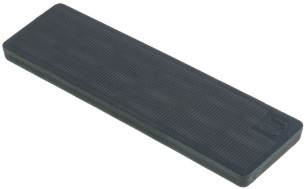
Terrace joist pads (PLASTIC) 6x30x100
Available in packs of: 500 pcs | 1000 pcs
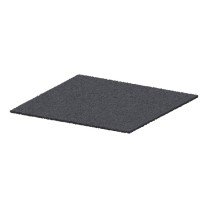
SBR rubber pad for joists and supports 100x100 (10 pieces)
Available thicknesses: 3 mm | 8 mm
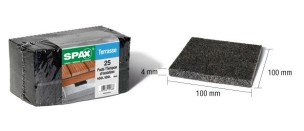
SPAX joist pad – 4x100x100mm
The pack contains 1 piece.
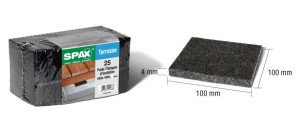
SPAX Joist pad – 8x100x100mm
Pack contains 1 piece.