
What to cut a composite decking board with and how to cut it correctly – tried-and-tested methods.
Find out which tools to use and how to cut a composite decking board. The best tools, step-by-step instructions, common mistakes and practical tips.
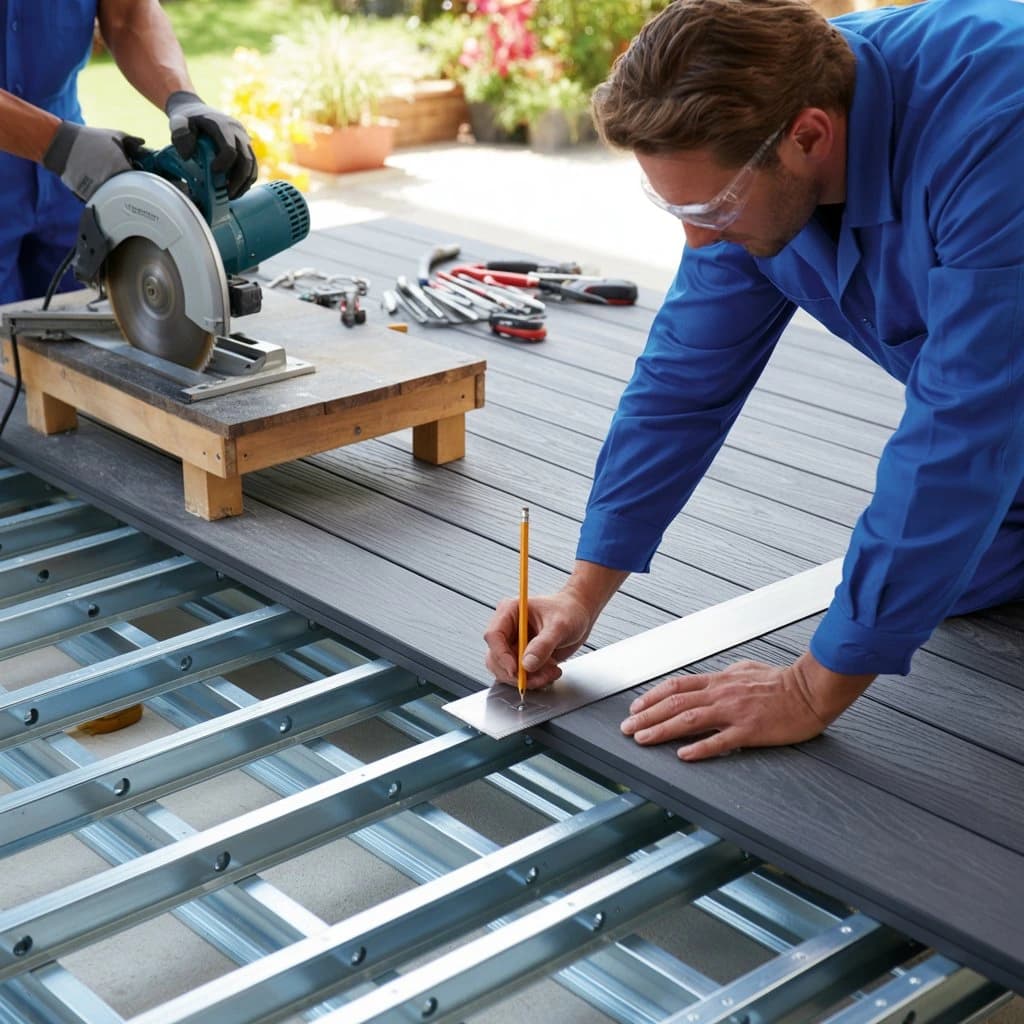
When building a composite deck, sooner or later the question arises: how do you cut composite decking boards correctly to achieve an attractive, durable finish? This is one of the key stages of installation, as the appearance of the whole structure depends on the quality of the cut. Uneven edges, ragged ends or poorly cut corners can ruin even the best-planned project. Fortunately, composite decking is relatively easy to work with – you just need to know the right methods and choose the right tools. In this article, we’ll show you what to use and how to cut composite decking boards to avoid mistakes and enjoy a perfect deck for many years.
Why does cutting composite decking boards correctly matter?
Composite decking is a material that combines the appearance of wood with the durability of polymers. This makes composite decks and façades resistant to moisture, mould and UV radiation. However, to achieve a beautiful finished result, the installation process and precise cutting of the boards are essential.
Poorly cut edges can cause:
-
an unattractive appearance,
-
problems with fitting,
-
a weakened structure.
That’s why choosing the right tools and cutting technique is essential when working with composite decking.
Which tools are best for cutting composite decking boards?
1. Circular saw
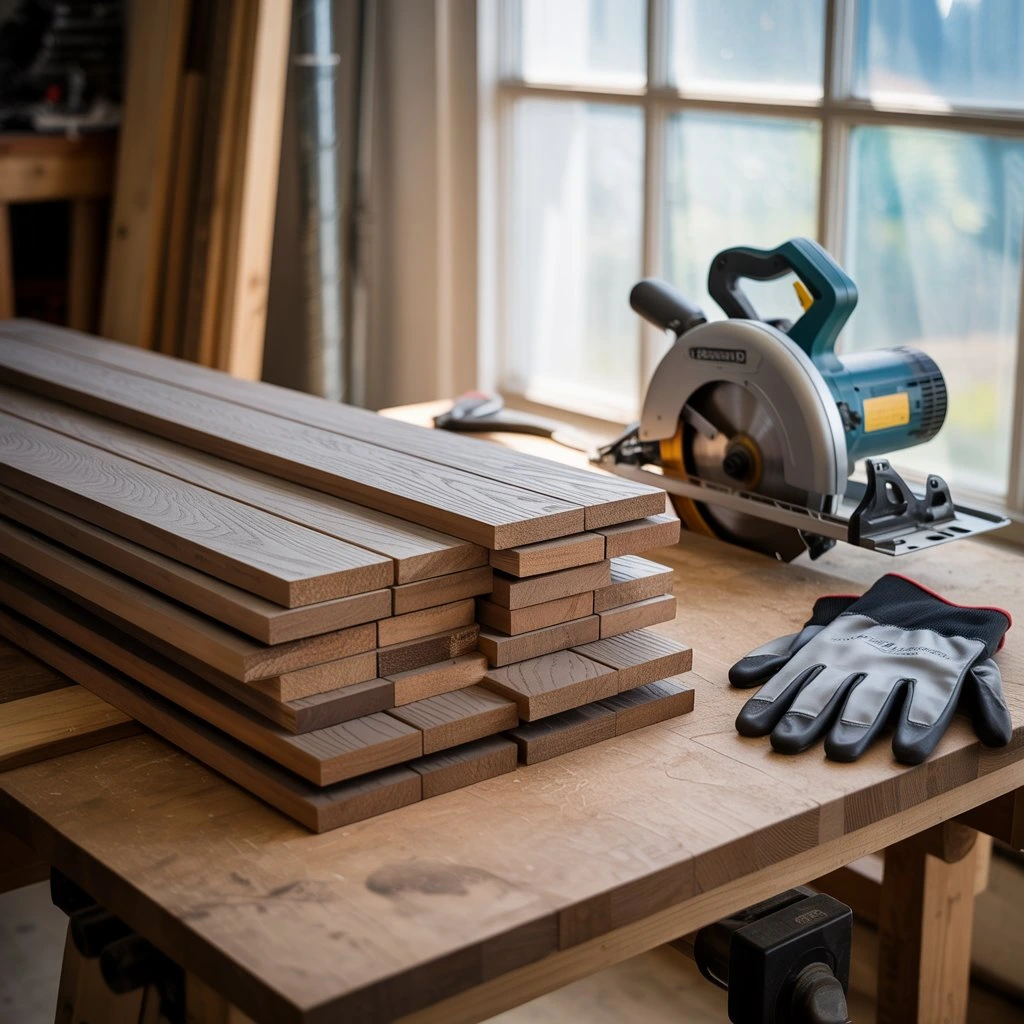
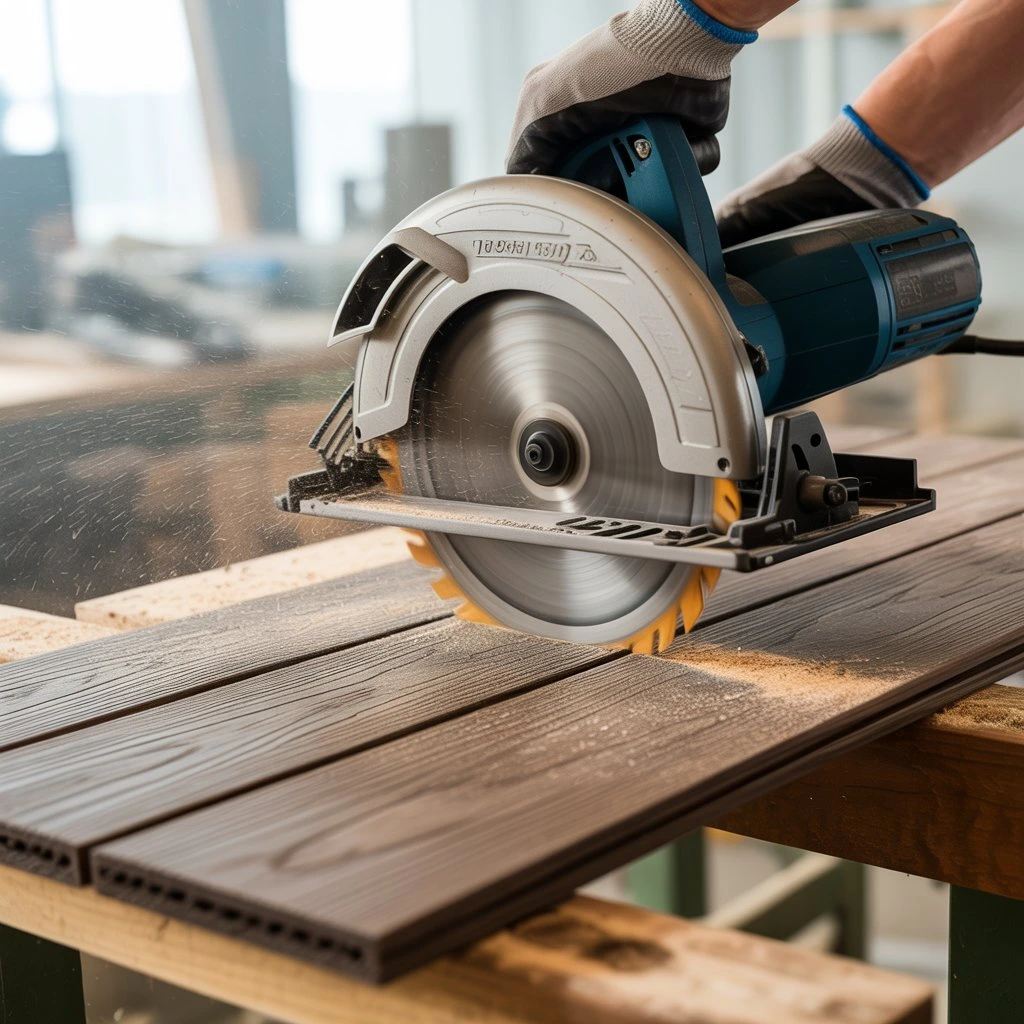
The most commonly used tool is a circular saw with a carbide-tipped blade. It’s important to use a blade designed for cutting hard materials.
-
Provides a straight, even cut.
-
Ideal for longer boards.
-
Allows for precise fitting of components.

2. Mitre saw (angle saw)
It’s ideal for cutting at an angle, for example around deck corners or when finishing steps.
-
Enables quick, accurate cuts.
-
Reduces the risk of chipping.
3. Jigsaw
Suitable for more complicated shapes, such as cut-outs around balustrade posts.
-
Works well for curved cuts.
-
Requires a suitable blade for composites.
4. Angle grinder
It can be useful for minor adjustments, but isn’t recommended for cutting entire boards – it’s better suited to beveling edges or smoothing ends.
How to prepare a composite decking board for cutting?
Before you start work, it’s worth remembering a few basic rules:
-
Measure twice, cut once – accurate measuring is essential.
-
Mark the cutting line – it’s best to use a pencil and a set square to make sure the line is perfectly straight.
-
Stable support – the board should be placed on a stable workbench or sawhorses.
-
Safety – wear safety glasses and gloves, as small fragments may be produced while cutting.
Step by step – how to cut a composite decking board?
-
Measuring and marking
Mark the cutting point according to your plans. -
Choosing a tool
Choose a circular saw or mitre saw, depending on the result you want to achieve. -
Preparing the board
Position it securely and clamp it so that it doesn’t move while you work. -
Cutting
Guide the tool slowly and evenly. Don’t press too hard – let the blade do the work. -
Finishing the edges
After cutting, you can lightly sand the edges with sandpaper or a sander to make them smooth and free of burrs.
The most common mistakes when cutting composite decking boards.
-
Using the wrong blade – a blade that is too thick or blunt can leave ragged edges.
-
Cutting on an unstable surface – the board may move, resulting in a crooked cut.
-
Working too quickly – rushing leads to uneven edges and overheating of the material.
-
Failing to use protective equipment – small fragments can pose a risk to the eyes and skin.
How to avoid problems when installing a deck made from composite decking boards?
Once the boards have been cut correctly, it is essential to lay and install them properly. Remember to:
-
maintain the correct expansion gaps,
-
use original installation systems,
-
lay the boards on a stable substructure.
This ensures that the deck will be attractive as well as durable for many years to come.
Summary – how to cut a composite decking board for a perfect result
Composite decking boards are durable and easy to work with, but only if you use the right tools and take care. The best choice is a circular saw or mitre saw with a carbide-tipped blade, which will provide a precise, straight cut. Good preparation is also essential – measure and mark the cutting line, and support the board securely.
Follow the advice above to create a deck that is not only attractive but also functional and safe. And if you are looking for reliable materials, the Gardpol.pl range includes high-quality composite decking boards, ideal for any design.
Frequently asked questions (FAQ)
1. Can a composite decking board be cut with an ordinary hand saw?
Yes, but it is time-consuming and less precise. A circular saw is definitely a better choice.
2. How can I avoid chipping along the edges?
Use blades with fine teeth and guide the cut slowly.
3. Does cutting affect the durability of a composite decking board?
No, provided it is cut correctly and the edges are properly smoothed.
4. Which tools do you recommend for installing a deck made from composite decking boards?
Circular saws, mitre saws and system installation clips available from Gardpol.pl are the best choices.
DUO composite decking board 23x148 - 2.9 m
Price per 1 linear metre of board: 21.30 PLN
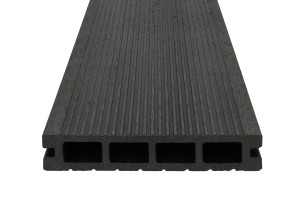
SELECT composite decking board 25x140 - 2.25 m
Price per 1 linear metre of board: 17.27 PLN
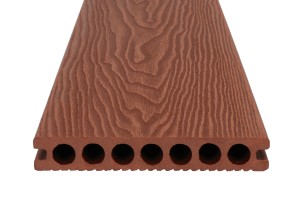
DUO composite decking board 23x148 - 2.25 m
Price per 1 linear metre board: 21.30 zł
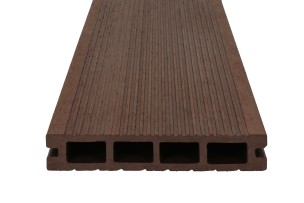
SELECT composite decking board 25x140 - 1.8 m
Price per 1 linear metre board: 17.27 zł



