How do felt slats differ from traditional ones? Facts and myths.
Felt slats or traditional ones—which should you choose? Find out about the key differences, get the facts and bust the myths. Discover which slats will work better in your interior.
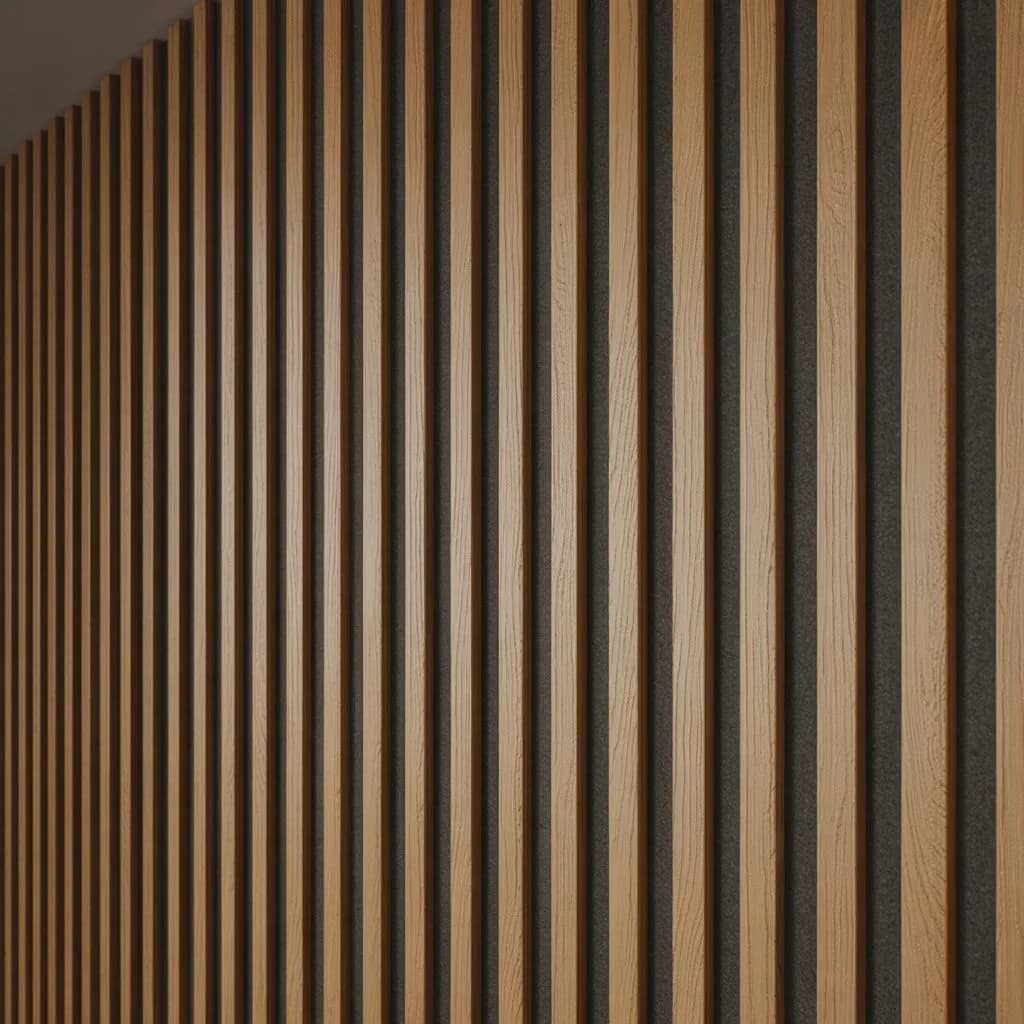
Wall slats are one of the most fashionable ways to give interiors a modern and elegant look. But alongside the popularity of traditional MDF or wooden slats, felt slats have appeared on the market – soft, acoustic and looking completely different from their classic cousins.
And this raises the question: how do felt slats differ from traditional ones? Which are better, more durable, and easier to install and maintain? Or are the differences only visual? In this article, we clear up any doubts – you’ll learn the facts and myths that will help you choose the perfect slats for your interior.
What are felt slats?
Felt slats are decorative wall panels made of soft, compressed felt (often based on recycled PET fibres), which are usually fitted vertically – like classic slats. They are characterised by:
- a soft, pleasant-to-touch surface,
- sound-absorbing properties (acoustic insulation),
- simple installation (they can be glued or attached with hook-and-loop fasteners),
- light weight – they can easily be fitted even on thin partition walls.
And what are traditional slats?
By “traditional slats”, we usually mean:
- MDF slats – the most popular, laminated and available in many colours,
- wooden slats – natural wood, more expensive but beautiful,
- PVC or composite slats – moisture-resistant, ideal for kitchens/bathrooms.
These are classic solutions, fitted to battens or frames, which require drilling and careful levelling.
The facts – how do felt slats really differ from traditional ones?
1. Material and texture.
- Traditional slats – rigid and hard, made of wood, MDF or plastics.
- Felt slats – soft, lightweight and sound-absorbing, made of felt (PET, synthetic fibres).
Fact: Felt slats are softer and safer, for example in a child’s room or hallway.
2. Acoustic insulation.
- Traditional slats – reflect sound and do not dampen reverberation.
- Felt slats – absorb sound and improve the room’s acoustics.
Fact: Felt slats are great for offices, gaming rooms, bedrooms and home cinemas.
3. Installation.
- Traditional slats – usually require wall plugs, screws and a frame.
- Felt slats – fitted using construction adhesive, hook-and-loop fasteners or double-sided tape.
Fact: Felt slats can be installed without tools – ideal for rented homes!
4. Appearance and style.
- Traditional slats – natural wood or a wood-effect texture, an elegant look and classic geometry.
- Felt slats – matt, often in a single colour, modern, with the option to combine colours and textures.
Fact: Felt slats have a more modern, minimalist style.
5. Uses.
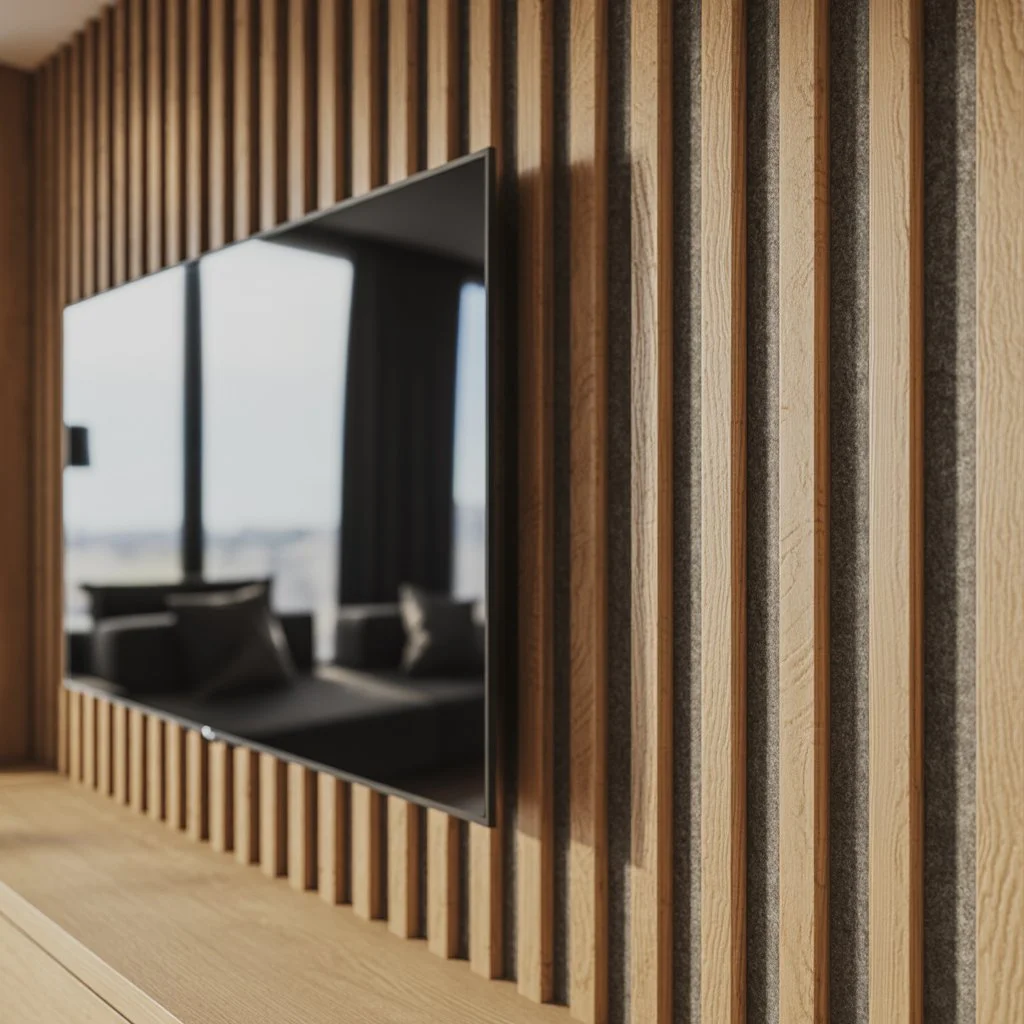
- Traditional slats – decorative walls, dividing spaces, fitting behind a TV or on the ceiling.
- Felt slats – also used as acoustic panels, in commercial spaces, offices and bedrooms.
Fact: Felt slats have a practical function, not just an aesthetic one.
Myths worth debunking.
Myth 1: Felt slats are not durable.
Not true. High-quality PET felt panels are resistant to damage, do not fray and do not fade.
Myth 2: Only traditional slats look elegant.
Not true. Felt slats paired with suitable lighting look very designer.
Myth 3: Felt gets dirty easily and is difficult to clean.
Not true. Dust can be removed with a vacuum cleaner or a lint roller. Some panels have an antistatic layer.
Myth 4: Felt slats are only for offices.
Not true. They are increasingly finding their way into homes – particularly bedrooms, children's rooms and japandi-style living rooms.
When should you choose felt slats?
- You need better acoustics in the room,
- You live in a flat and don't want to drill into the walls,
- You have children – soft panels are safer,
- You like a modern, minimalist style,
- You rent a flat – non-invasive installation.
When is it better to choose traditional slats?
- You care about natural wood and its texture,
- You want to visually divide a space (e.g. with a slatted partition),
- You are planning to install them by the TV, in the living room or on the ceiling,
- You prefer classic or industrial design.
What about care?
Traditional slats:
- Wipe off dust with a dry cloth,
- Avoid moisture in the case of MDF,
- Wood can be protected with oil or wax,
Felt slats:
- Vacuum or use a lint roller,
- Do not wipe with a damp cloth,
- Keep in a dry room,
Summary – felt slats vs traditional slats.
Choosing between felt and traditional slats depends on what you expect:
Style? Acoustics? Easy installation? Classic wood?
| Feature | Traditional slats | Felt slats |
|---|---|---|
| Material | Wood / MDF / PVC | Felt (PET) |
| Sound insulation | Low | High |
| Installation | Drilling, framework | Adhesive, tape, hook-and-loop fasteners |
| Appearance | Classic, wooden | Matt, modern |
| Care | Cloth, vacuum cleaner | Vacuum cleaner, lint roller |
There are no wrong choices – just different needs. And now you know which slats will be perfect for your interior!
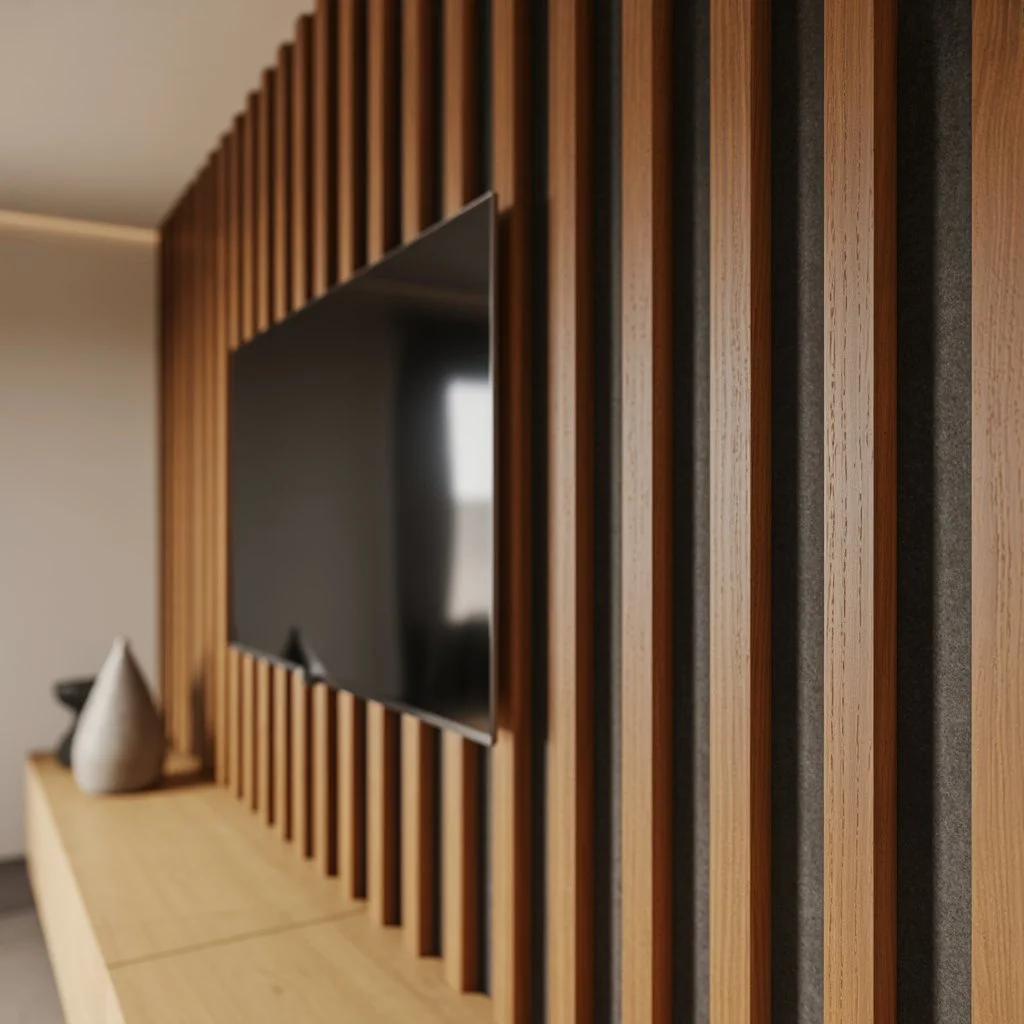
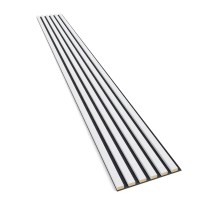
White felt-backed slats 24x300 mm decorative wall strips on felt
The price is for one slat
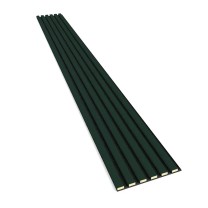
Bottle green felt-backed slats 24x300 mm decorative wall strips on felt
The price is for one slat
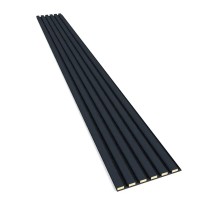
Anthracite felt-backed slats 24x300 mm decorative wall strips on felt
The price is for one slat
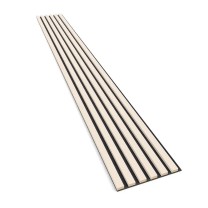
Beige felt-backed slats 24x300 mm decorative wall strips on felt
Price is for one slat