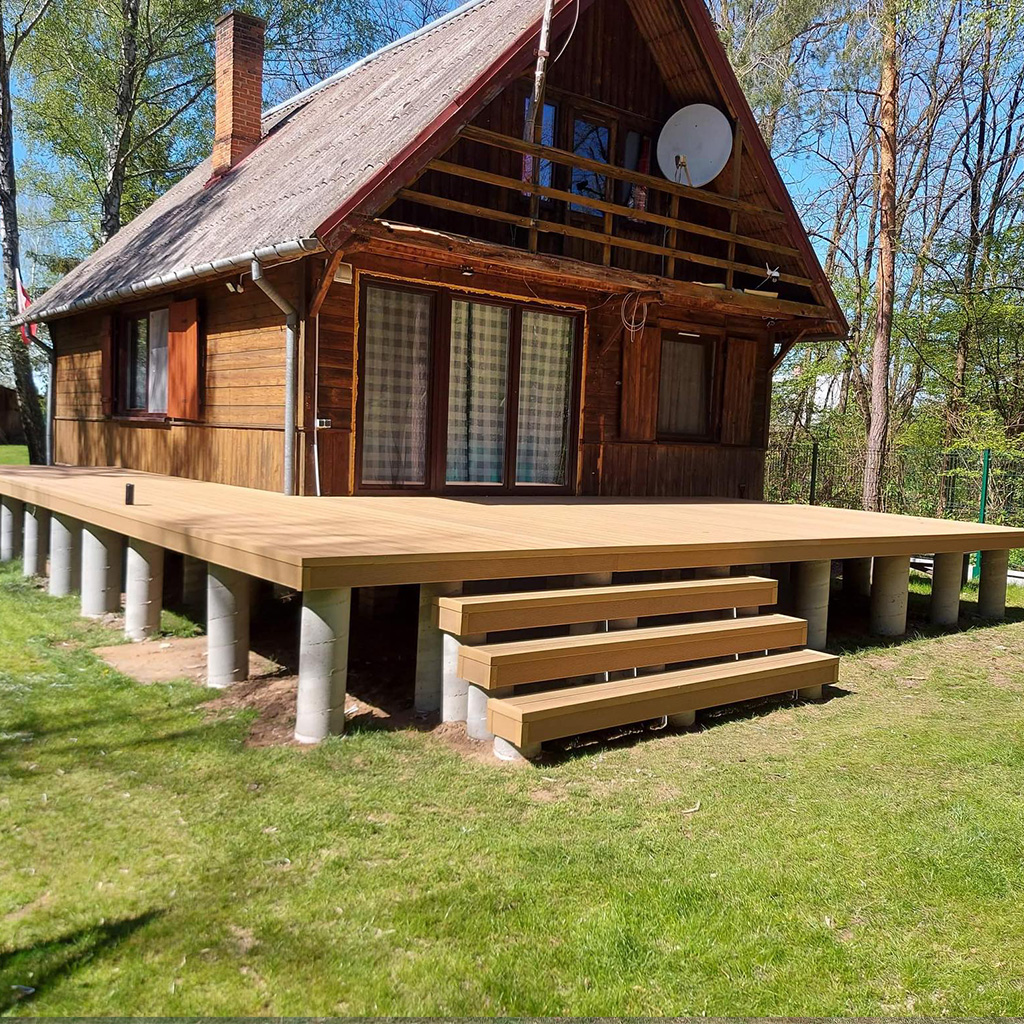
Composite decking board or natural wood – which should you choose?
Discover the ins and outs of building decking and choose the perfect decking boards in our shop. Find practical advice, interesting facts and the latest news on our blog. Visit us and get inspired!
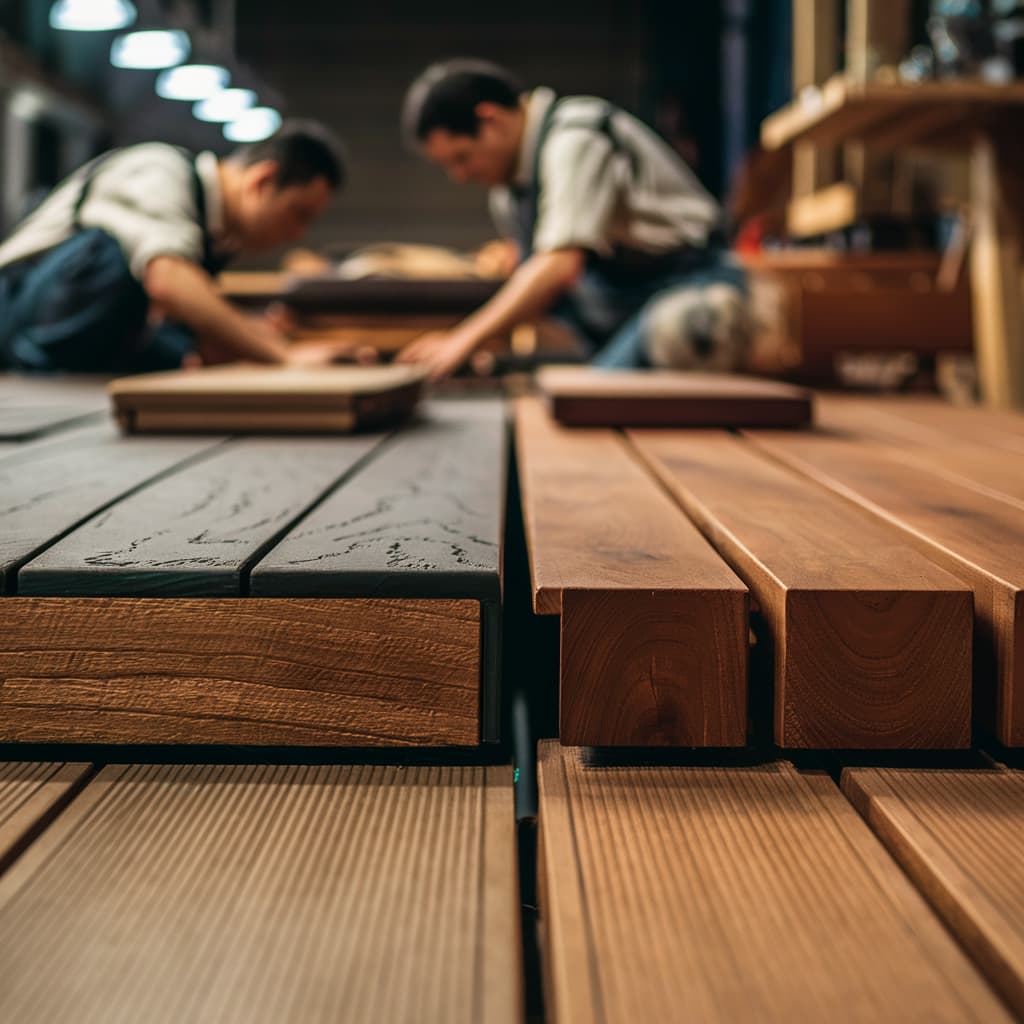
Composite decking boards and wood – a comparison of materials
Composite decking boards and wood differ in many ways. Most of the differences can be found by looking at the physical properties and the ways these products are maintained. To begin with, it is worth focusing on the materials themselves and the fundamental differences that affect the durability, appearance and care requirements of each material.
What exactly is a composite decking board, and can a wooden decking board compete with it on a terrace?
A composite decking board is a mixture of wood fibres and plastics. The plastics most commonly used are polyethylene, polypropylene and PVC. The composite decking boards in our shop contain 60% wood flour and 30% high-density polyethylene (HDPE). The remaining 10% consists of UV filters and stabilisers to help the composite retain its structure for many years.
As is widely known, wooden decking boards are natural products. The most commonly used wood species are oak, pine, spruce and larch. In recent years, boards made from exotic wood such as bangkirai or teak have grown in popularity. Exotic wood has earned its reputation thanks to its more durable physical properties.
Despite its durability, however, even exotic wood requires regular maintenance to retain its properties and appearance. Composite decking boards, on the other hand, are more resistant to weather conditions and do not require such intensive care. In addition, composite does not fade or crack when exposed to UV radiation, which is a common problem with natural wood.
Composite decking boards are also more resistant to moisture, eliminating the risk of rot and mould. Thanks to these features, composite decking boards offer better value for money and are a more practical choice for anyone looking for a durable, easy-to-maintain outdoor material.
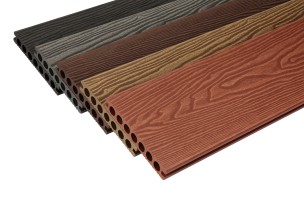
DUO composite decking board 23x148 - 5,8 m
Price per 1 linear metre of board: 21,30 zł
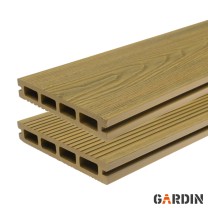
GARDIN NATUR composite decking board 23x146 - 4,0m
Price per 1 linear metre of board: 26,98 zł
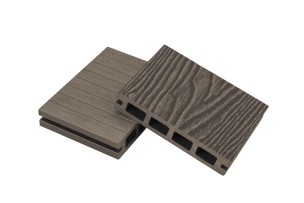
GARDPOL PREMIUM composite decking board 25x135 - 5,80m
Price per 1 linear metre of board: 25,18 zł
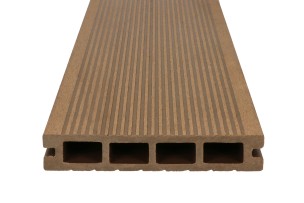
SELECT composite decking board 25x140 - 4,0 m
Price per 1mb of decking board: 17,27 zł
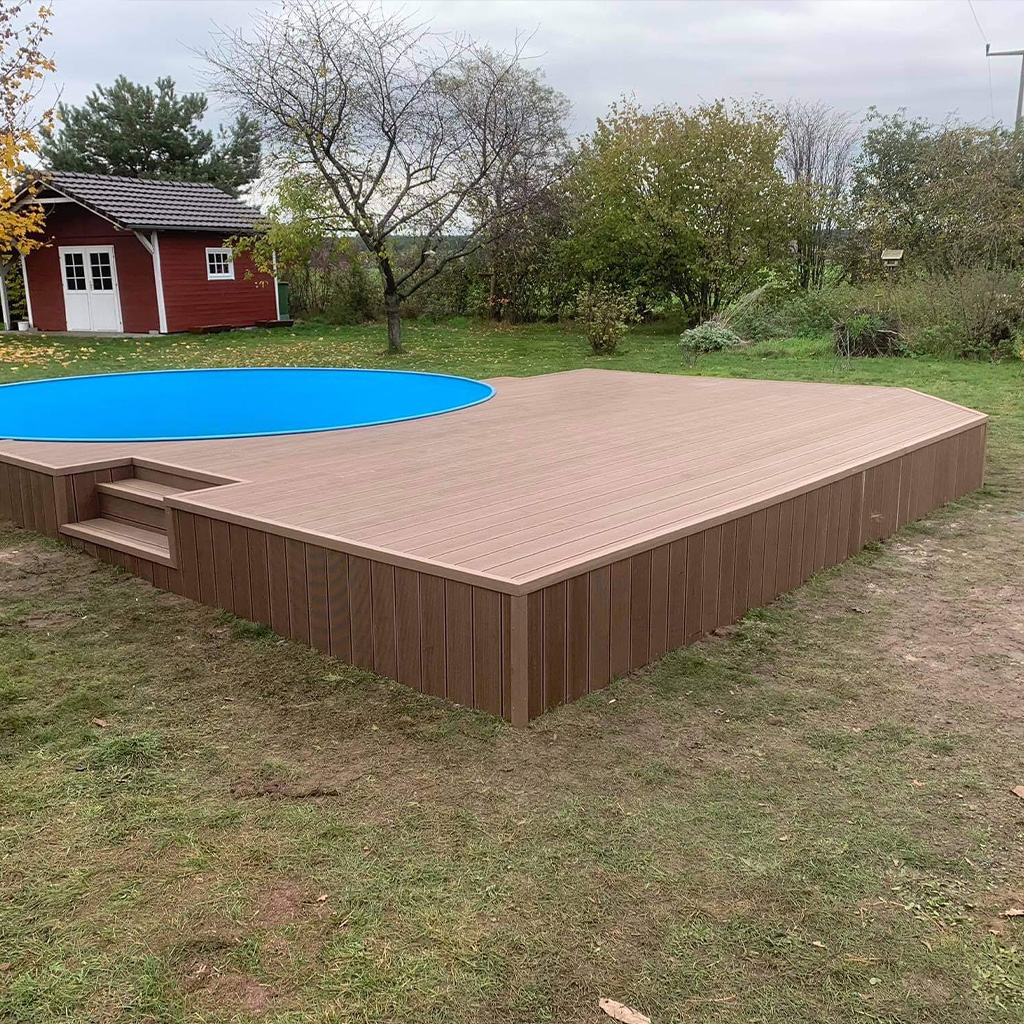
Composite versus wood – appearance
Both of the products above have several aspects that make them visually different. There is no denying that natural wood is beautiful and unique in itself, thanks to its individual structure and natural grain resulting from the cut.
With composite decking boards, in addition to standard boards with a grooved surface, we can choose the look of natural wood. Composite decking boards come in a wide range of colours and textures, so everyone can choose the aesthetic features that suit their preferences.
Natural wood requires regular care – after the boards have been treated and painted, the colour needs to be refreshed regularly.
Composite decking boards are available in specific colours, which are consistent throughout and do not need refreshing. In addition, composite decking boards retain their appearance for many years, without fading under UV radiation or changing colour as a result of exposure to the weather.
They can also imitate different types of wood, allowing them to be matched to a variety of styles and designs. Thanks to these features, composite decking boards offer the appearance of wood without the need for intensive maintenance, which is a significant advantage for many users.
Composite decking board versus natural wood – installation and cost
The popularity of composite decking boards in recent years is largely due to the ease of installing the product.
Composite decking boards have set dimensions, making it easy to calculate the amount of material needed for our project. To create a sample terrace on an existing base, we only need joists, fixing clips and the decking boards themselves.
Composite decking boards have clip-fit systems, which means that standard installation is a straightforward process that is difficult to get wrong. With wooden decking boards, precise wood processing is essential. The installation of a wooden terrace depends on the type of wood and the construction. Another aspect of working with wood is that we are exposed to splinters, which is not the case with composite decking boards.
Material costs vary. Decking boards made from local types of natural wood may be cheaper on the market. However, you should consider the higher costs of maintenance and possible replacement of damaged components. Natural wood costs more when you choose exotic wood.
The price of exotic wood is similar to composite. Composite decking boards have a higher upfront cost than most local types of wood, but in the long term a terrace made from this material does not require maintenance, so running costs are reduced almost to zero.

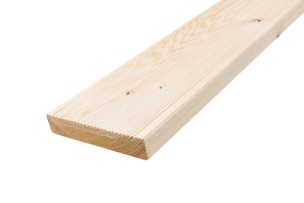
Scandinavian spruce decking board CLASS BC 28x145 fine groove/smooth 5,1 m
28 x 145 x 5100 [CLASS:BC]
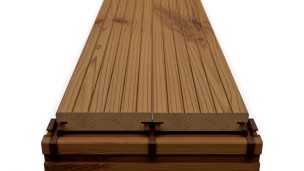
THERMO PINE CLIP decking board 26x117 GROOVED D5 - 3,90m
Price per 1mb of decking board: 25,01 zł
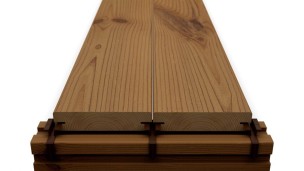
THERMO PINE CLIP decking board 26x117 CLASS NATUR SMOOTH - 3,30m
Price per 1 linear metre of decking board: 25,01 zł
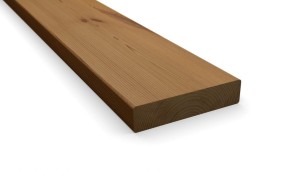
THERMO PINE S4S decking board 26x117 CLASS NATUR SMOOTH - 6,00m
Available lengths: 3,30m | 3,60m | 4,00m | 4,20m | 5,10m | 5,40m | 5,70m | 6,00m
Composite decking and natural wood – durability and resistance
When it comes to durability and resistance, composite decking boards outperform natural wood in many respects. The beauty of natural wood nevertheless comes with many factors that depend on weather conditions.
Wood is susceptible to warping, cracking and rotting. It requires regular maintenance, including frequent painting, varnishing or treatment. Natural wood can also be attacked by pests and mould – particularly in damp environments.
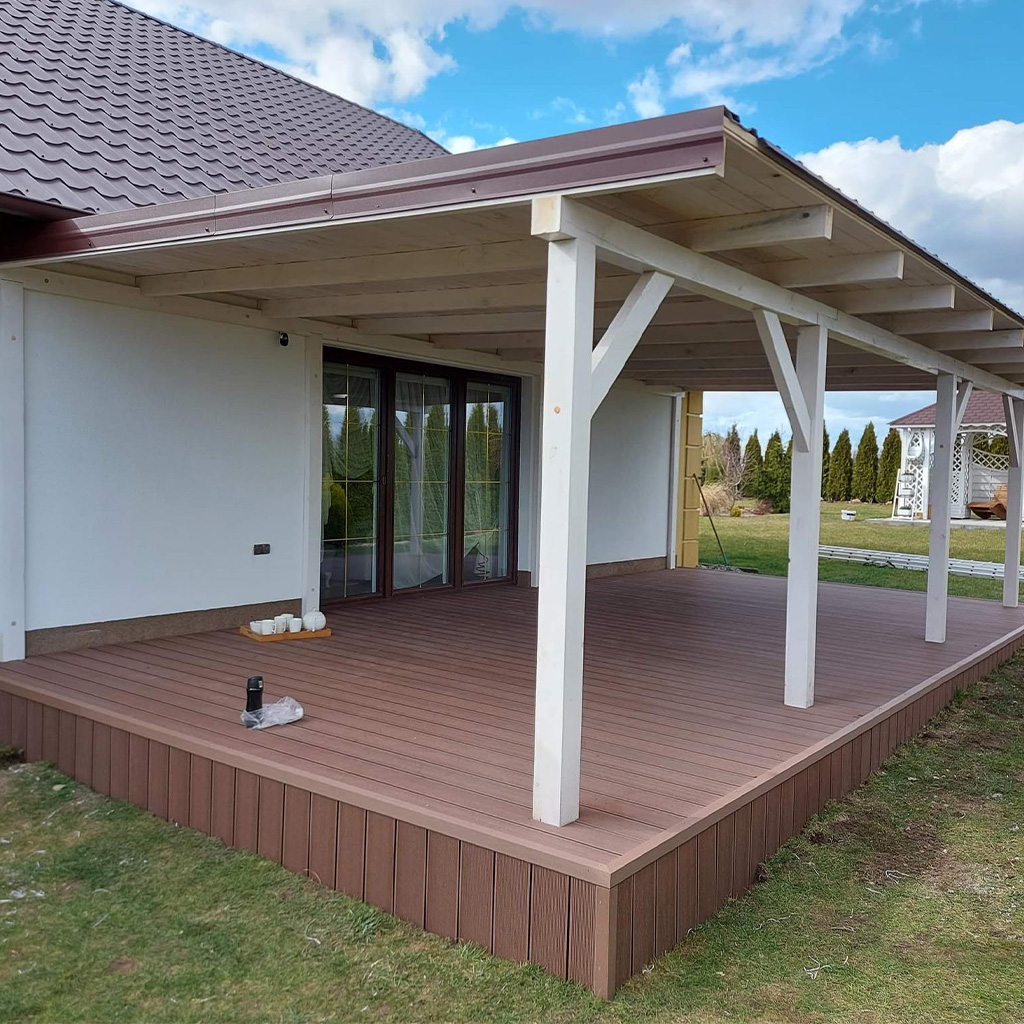
Composite decking boards are resistant to rain, snow and sunlight. The structure and physical properties of composite protect the boards from mould, moisture and pests. Composite decking boards also do not require regular maintenance – painting or treating.
Composite decking boards do not deform and retain their shape and appearance for many years, regardless of weather conditions. They are also resistant to UV radiation, which prevents colours from fading.
In addition, composite decking boards do not produce splinters, making them safer to use, especially in areas frequented by children and animals. Thanks to these features, composite is a more reliable and long-lasting material than traditional wood, making it an ideal choice for outdoor applications.
Furthermore, composite decking boards can be made from recycled materials, making them a more environmentally friendly choice than natural wood.
Their durability and resistance to weather conditions make them a popular choice not only for outdoor applications, but also for building garden furniture and fencing. Nowadays, as we care for the natural environment and look for durable solutions, composite decking boards provide an excellent alternative to natural wood.
Summary of the differences between composite and wooden decking boards
Composite decking boards outperform wood in terms of durability and low maintenance requirements, making them more resistant to weather conditions and pests.
In addition, their appearance is long-lasting, while the absence of splinters increases safety when using them. Thanks to these features, composite is a more practical and long-term choice for outdoor applications.
Composite decking boards do not require regular painting, varnishing or treatment, which significantly reduces maintenance costs. They are also easier to install thanks to clip systems and do not warp or crack like wood. Furthermore, their production often uses recycled materials, which helps to protect the environment.
Composite is available in a wide range of colours and textures, which retain their appearance for a long time without the need for renovation. These features make composite decking boards an ideal solution for people looking for durable, attractive and environmentally friendly building materials.