Composite decking boards in hot weather – how to prevent the surface from overheating?
Composite decking boards on a terrace can heat up in the sun – especially in summer! Find out how to prevent them from overheating and enjoy comfort even on hot days.
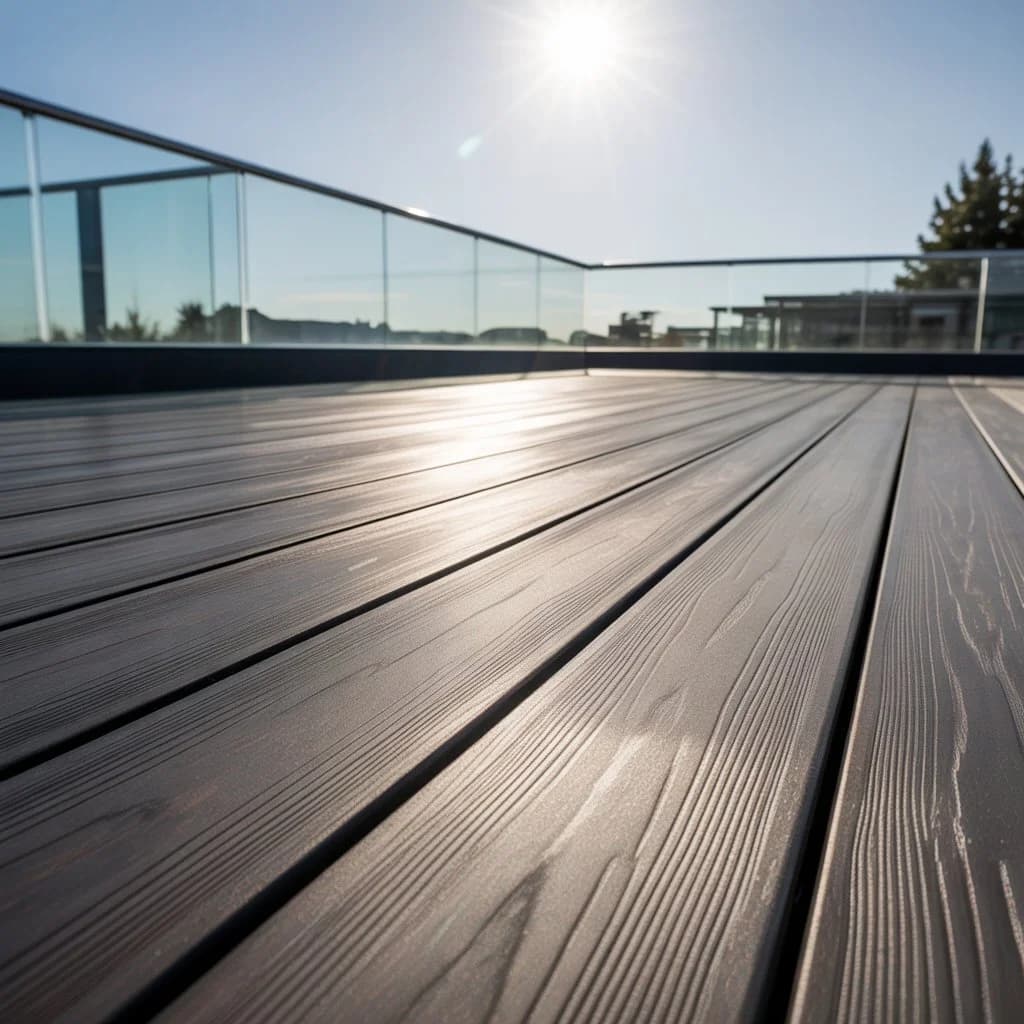
A terrace made from composite decking boards looks stylish, is durable, resistant to moisture and virtually maintenance-free. But when hot summer days arrive, many people start to wonder – could these boards get too hot?
The answer is: yes, they can get hot, especially in dark colours and in full sun. But all is not lost! There are several effective ways to reduce how hot your terrace gets and still enjoy its benefits throughout the summer.
Why does a composite decking board get hot?
Let’s start with the basics. A composite decking board is made from a mixture of:
-
wood flour,
-
plastics (most commonly PVC, HDPE or polypropylene),
-
stabilising additives and pigments.
This combination of materials makes composite decking boards durable and resistant to rot and UV radiation. On the other hand, plastics tend to heat up faster than natural wood.
When does a decking board get hottest?
The most heat build-up occurs when:
-
the terrace faces south or west,
-
the boards are dark in colour (graphite, anthracite, brown),
-
there is no shade at all – a canopy, awning or pergola,
-
the temperature exceeds 30°C,
-
the boards are made from cheaper materials without cooling additives or UV filters.
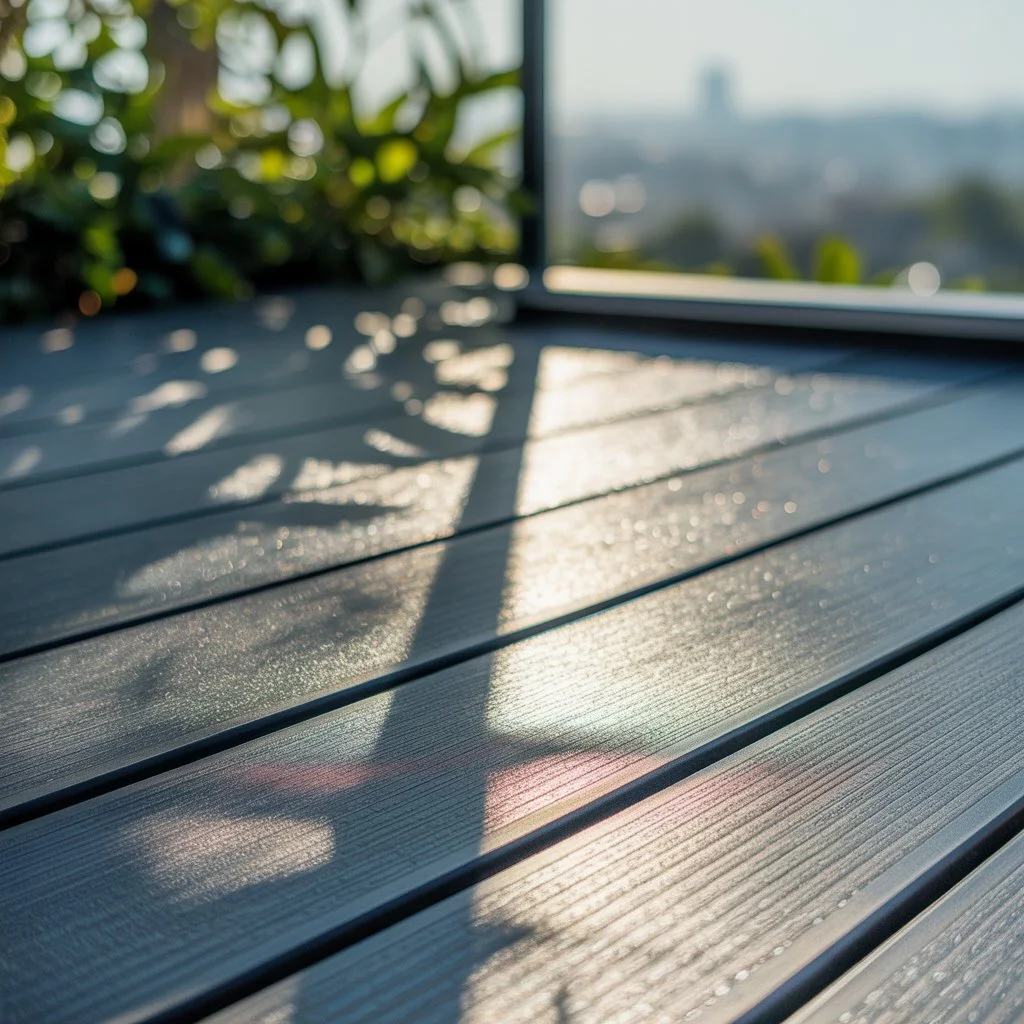
How can you prevent composite decking boards from overheating?
Fortunately, there are a few simple and effective tricks to help reduce the problem of a hot surface. Here they are:
1. Choose lighter-coloured boards.
This is the simplest option, and it makes a huge difference to how comfortable your terrace is to use in summer. Light colours:
-
reflect more sunlight,
-
heat up less,
-
feel more pleasant underfoot (even barefoot!).
Examples: beige, grey, sand, natural oak.
2. Opt for high-quality boards with cooling additives.
Not all composite decking is the same! When choosing boards, look for those that contain:
-
heat-reducing additives (so-called “cool deck technology”),
-
UV filters, which protect the surface from overheating and fading.
Tip: Reputable manufacturers (e.g. Twinson, Fiberon, TimberTech) offer cooling technologies that really work.
3. Use outdoor rugs or cooling mats.
Modern outdoor rugs made from polypropylene or vinyl:
-
do not absorb water,
-
are resistant to UV rays,
-
protect your feet from contact with hot boards.
This is a great solution, especially if children play on the terrace or you walk around barefoot.
4. Add some cover – an awning, pergola or parasol.
Creating a shaded place is an absolute game-changer. This means:
-
the boards are not exposed to direct UV rays,
-
the temperature of the terrace drops by as much as 10–15°C,
-
you gain a comfortable space to relax.
Shade options:
-
awning (manual or automatic),
-
pergola with louvres,
-
garden parasol,
-
sun-shading panels or sun sails.
5. Ensure air circulates beneath the boards.
Composite decking boards should be installed on joists, with adequate clearance from the ground. This means:
-
air circulates freely beneath the terrace,
-
the structure does not overheat,
-
the whole structure “breathes”, which affects its durability and thermal comfort.
Never install boards directly onto concrete – this shortens their lifespan and worsens thermal conditions.
6. Spraying with water? Beware of thermal shock!
Some people try to cool their terrace by pouring water over it. It works in theory, but:
-
it can cause thermal shock (a sudden temperature difference causes micro-cracks),
-
it encourages mould and fungi to grow beneath the boards,
-
it can damage the composite surface if it is low quality.
It is better to opt for shade and the right choice of material than to rely on water in hot weather.
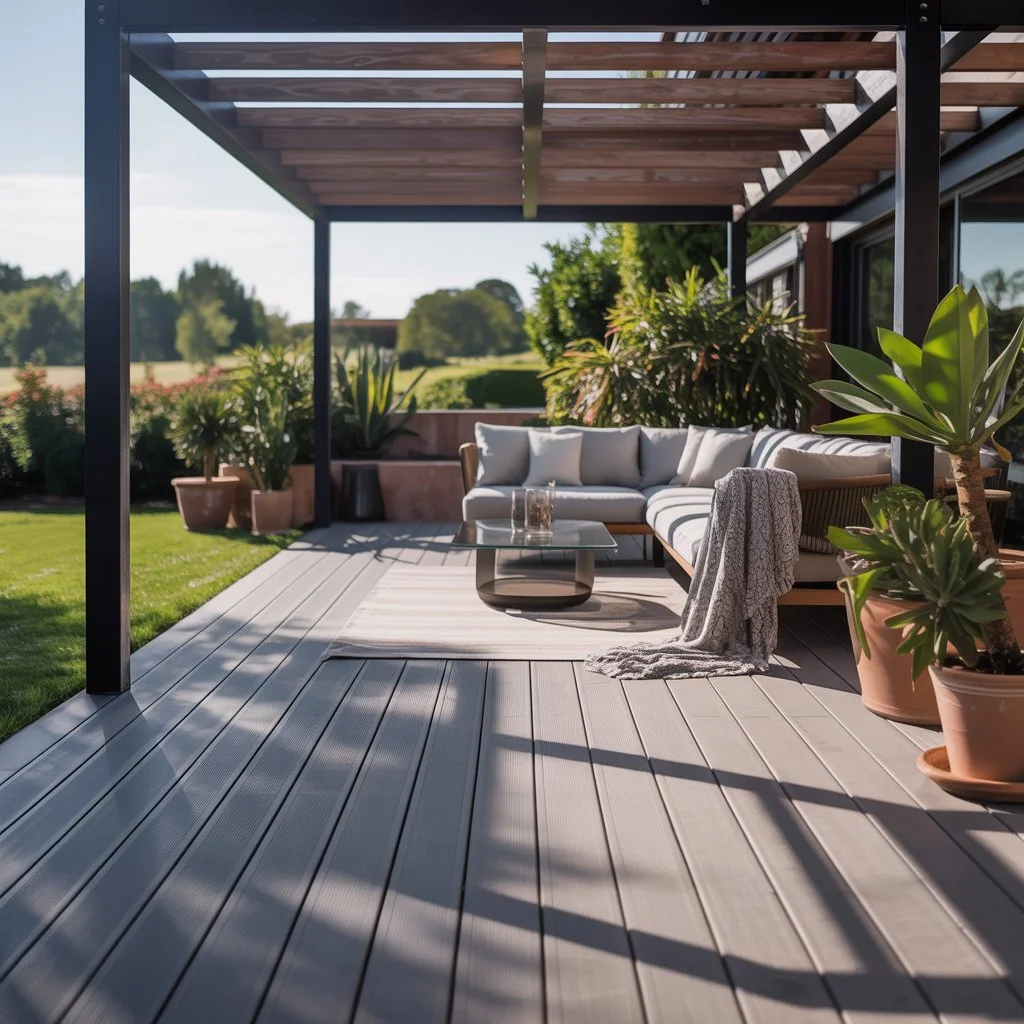
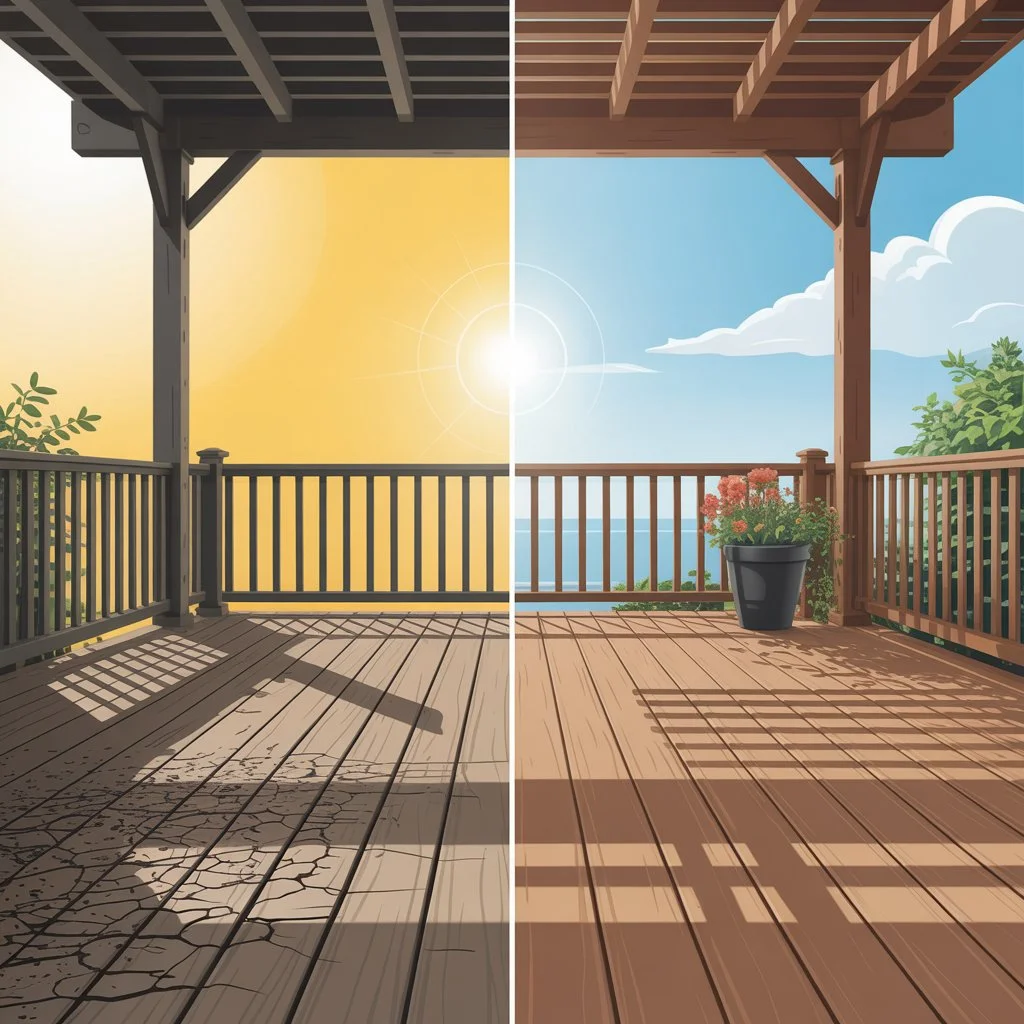
The most common mistakes that lead to decking boards overheating.
- Installing dark boards on a sunny terrace without any shade,
- No clearance or ventilation beneath the boards,
- Choosing cheap composite decking without UV additives,
- Opting not to install a roof or parasol,
- Ignoring the manufacturer's installation recommendations.
Summary – how to prevent composite decking boards from overheating?
Composite decking boards are a great choice for a terrace – provided you plan carefully. The key is:
-
the right colour and material quality,
-
shading the surface,
-
ventilation of the structure,
-
and avoiding direct contact with a heated surface.
Top tip: Invest in good boards and shade once, rather than having to deal with the “hot frying pan” effect on your terrace later.
FAQ – frequently asked questions
1. Are composite decking boards safe to walk on barefoot in summer?
Yes, if they are good quality and installed in a shaded area. Otherwise, they may be too hot.
2. Does every board heat up?
No – lighter boards with cooling additives heat up much less than dark, cheap models.
3. Which composite colours heat up the least?
Light shades: beige, grey, sand, ash grey.
4. Is there anything you can do to protect a board from the sun?
Yes, by providing shade (awning, pergola) and choosing a board with a UV filter.
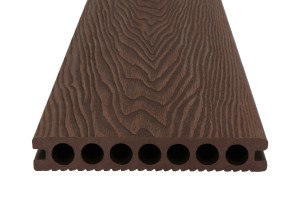
DUO composite decking board 23x148 - 3,5 m
Price per 1 linear metre of board: 21,30 zł
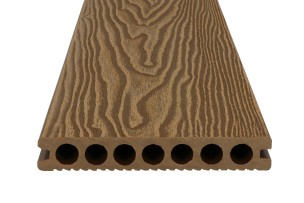
DUO composite decking board 23x148 - 4,0 m
Price per 1 linear metre of board: 21,29 zł
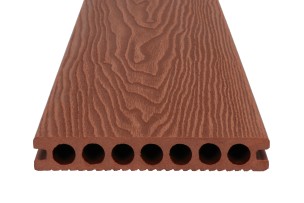
DUO composite decking board 23x148 - 4,5 m
Price per 1 linear metre of board: 21,30 zł
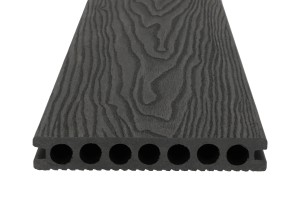
DUO composite decking board 23x148 - 5,0 m
Price per 1 linear metre of board: 21,30 zł