Is composite decking suitable for façades?
Wondering whether composite decking boards are suitable for cladding? Discover the advantages and disadvantages, along with practical advice on choosing this material for external cladding.
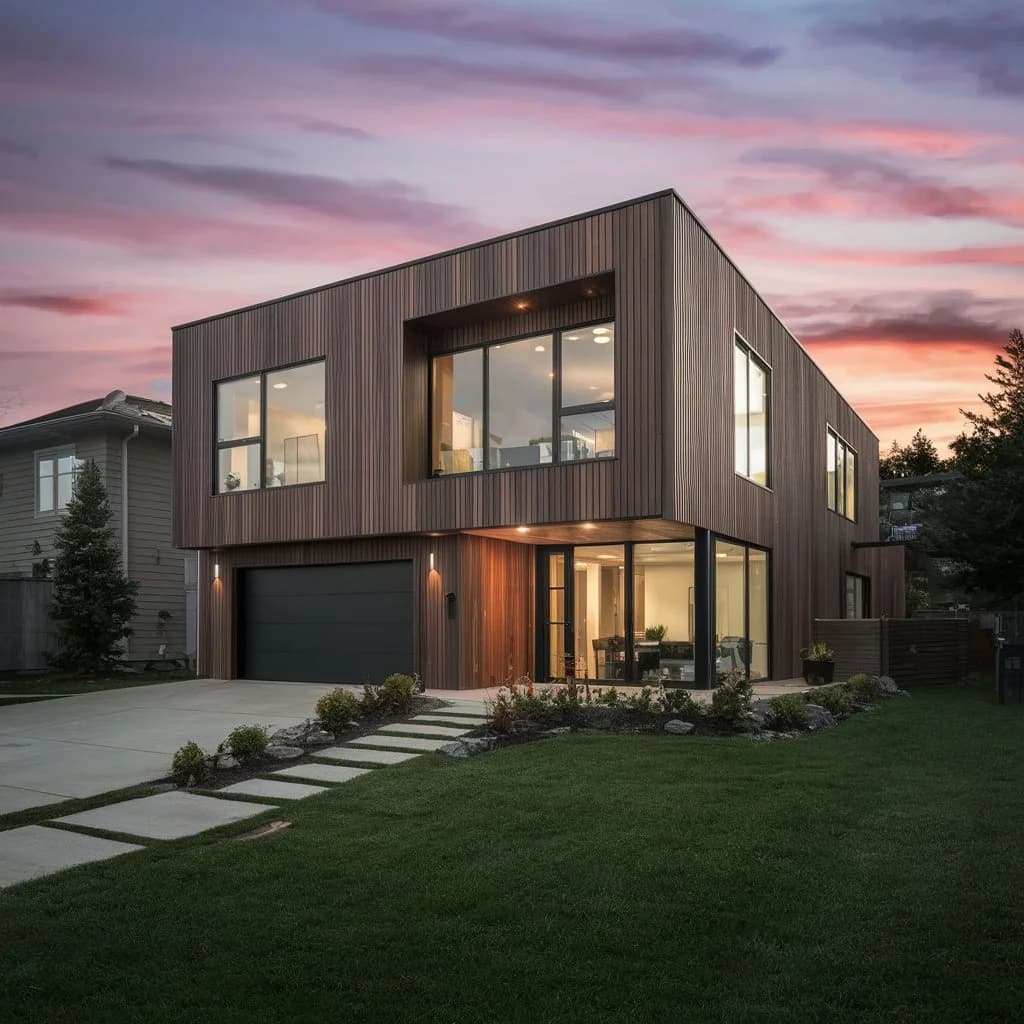
Composite decking board, also known as WPC (Wood Plastic Composite), is becoming an increasingly popular building material, used for both decking and building façades. It is made from a mixture of wood fibres and plastics, which gives it exceptional durability and aesthetic appeal. But is composite decking board really suitable for a façade? Let’s examine its advantages, disadvantages and the aspects worth considering before making a decision.
Advantages of composite decking board for façades.
- Durability and resistance to weather conditions: One of the greatest advantages of composite decking board is its high resistance to the effects of weather. This board does not absorb moisture, making it resistant to mould, fungi and rot. It also does not crack or warp when exposed to changing weather conditions, making it an ideal material for façades.
- Low maintenance costs: Unlike natural wood, composite decking board does not require regular painting, oiling or treatment with preservative. Keeping it in good condition is simple and mainly involves periodic cleaning with water and mild detergents. This is a major advantage for those who want to enjoy an attractive façade without the need for frequent maintenance.
- Appearance and variety of designs: Composite decking boards are available in a wide range of colours and designs, which can imitate the look of natural wood or have a modern, minimalist finish. This makes it possible to match the façade to any architectural style, from traditional to modern.
- Environmental benefits: Composite decking board is often chosen by people who care about the environment. This material is made from recycled plastics and wood waste, reducing the amount of waste. In addition, the durability of composite decking board means it does not need to be replaced frequently, which also helps protect the environment.
Disadvantages of composite decking board for façades.
- Higher initial cost: Although composite decking board can lead to savings in the long term, its initial cost is usually higher than that of traditional façade materials such as render or cladding. It is worth remembering, however, that this investment pays off through lower maintenance costs and longevity.
- Potential discolouration: Although composite decking boards are resistant to many factors, they may become slightly discoloured when exposed to intense UV radiation. However, products with additional UV filters are available on the market to minimise this effect.
- Limited repair options: If a composite decking board is damaged, repairing it may be more difficult than repairing natural wood. In some cases, the entire panel needs to be replaced, which may involve additional costs.

Practical advice before choosing composite decking board for a façade.
- Choosing the right manufacturer: Various types of composite decking boards are available on the market, differing in quality and durability. It is worth investing in products from reputable manufacturers who offer a warranty on their products. Make sure the material you choose is resistant to weather conditions and UV radiation, and has the necessary certificates.
- Correct installation: Composite decking boards should be installed in accordance with the manufacturer’s recommendations. It is important to leave suitable gaps between the panels, allowing the material to expand naturally with changes in temperature. Incorrect installation can lead to problems such as warping or cracking.
- Regular maintenance: Although composite decking board does not require complicated maintenance, it is worth checking its condition regularly. Periodic cleaning and removing dirt will help keep the façade looking good for longer.
Tips for installing composite decking board on a façade.
- Ensure adequate ventilation: As with other façade materials, it is important to ensure adequate ventilation in the space behind the composite decking boards. This helps prevent moisture build-up and related problems.
- Use suitable connectors: Composite decking boards can expand and contract, so it is important to use suitable connectors that allow the material to move freely.
- Pay attention to finishing details: Careful finishing of edges and corners is essential for the appearance and durability of the façade. Use special trims and profiles to conceal all joints and ends.
Summary.
Composite decking board is a modern, practical façade solution that combines the appearance of wood with the strength of plastics. Although it has some disadvantages, such as a higher cost and sensitivity to temperature changes, its advantages—including durability, low maintenance and environmental benefits—make it an option worth considering. The final choice depends on individual needs and budget, but composite decking board certainly deserves consideration as a modern façade material. If you are looking for a durable and attractive façade solution, composite decking board could be just the thing. It provides not only an appealing appearance but also long-lasting protection against external factors.
FAQ – Frequently asked questions.
- Does composite decking board require special care?
Composite decking board requires little maintenance. Simply clean it regularly with soapy water to remove dirt and grime.
- Is composite decking board fire-resistant?
Although composite decking boards are difficult to ignite, they are not completely fire-resistant. In the event of a fire, they may melt or give off smoke, so it is worth checking the product specifications before installation.
- Can composite decking boards be painted?
Composite decking boards do not need painting, but if you want to change their colour, you must use special paints designed for composite materials.

Colouring and impregnating woodstain Koopmans Cover Line XT/XT WIT 1 litre.
Colouring woodstain with an impregnating function, available in 7 colours.