Composite decking boards vs wooden decking boards – how have their prices changed over the years?
Find out how the prices of composite decking boards and wooden decking boards have changed over the years. Which option offers better value in 2025, and what accounts for the price differences?
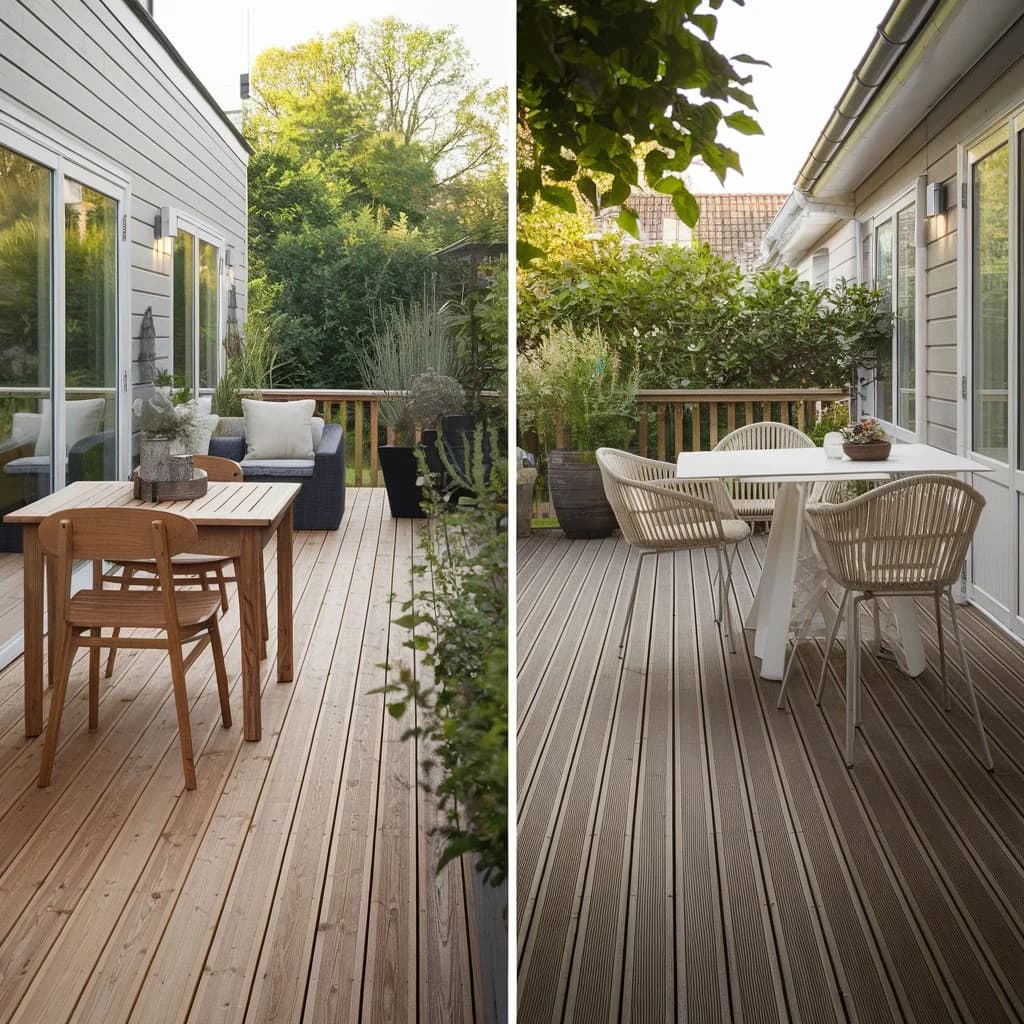
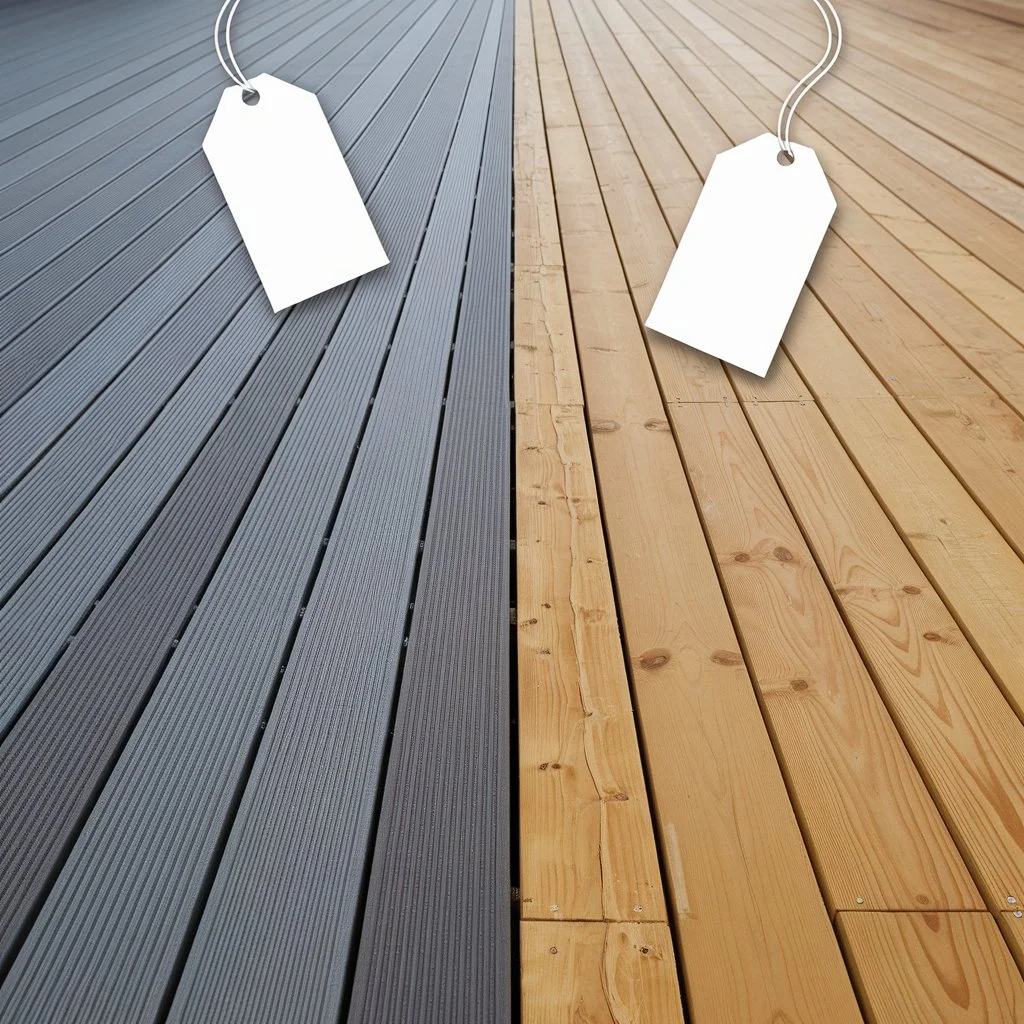
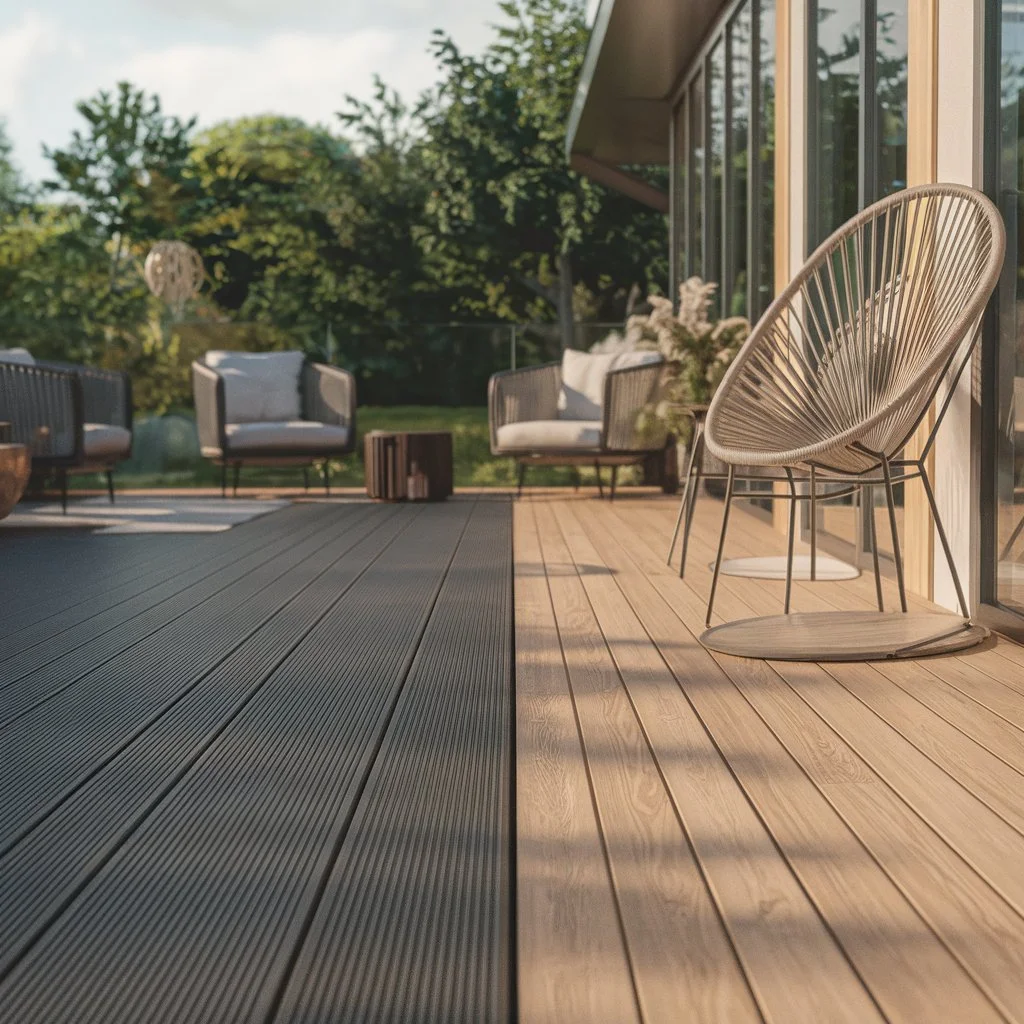
Choosing the perfect decking board has long been a source of uncertainty – composite decking or wooden decking? This question keeps coming up, especially when comparing the prices and durability of the two materials. In 2025, the topic takes on a new significance, as the market has undergone considerable change. So how have decking prices changed over the past few years? Why have some options become more expensive faster than others, while some have remained relatively stable? Let’s take a closer look and find out which is the better-value choice in 2025!
Composite vs wooden decking – what’s the difference?
Before we look at prices, it’s worth revisiting the differences between these two popular materials.
Composite decking:
- Made from a blend of wood fibres and plastic.
- Resistant to moisture, mould and insects.
- Easy to maintain – no regular oiling required.
- Available in a wide range of colours and textures.
Wooden decking:
- A natural material, most commonly made from Siberian larch, spruce or exotic species such as bangkirai.
- Requires regular maintenance (oiling and treatment).
- The look and scent of natural wood are undeniable advantages.
- Less resistant to the elements without proper care.
What affects decking prices?
Several key factors have affected price changes:
- Raw material costs: Wood has become more expensive due to restrictions on felling and transport costs. Composite decking, although partly synthetic, has also risen in price because of higher oil and energy prices.
- Transport: The pandemic and subsequent logistical disruption increased the cost of transporting raw materials and finished products.
- Inflation: The general rise in prices has also affected the construction and gardening sectors.
- Sustainability: Growing interest in sustainable products has made certified decking (FSC, PEFC) more expensive.
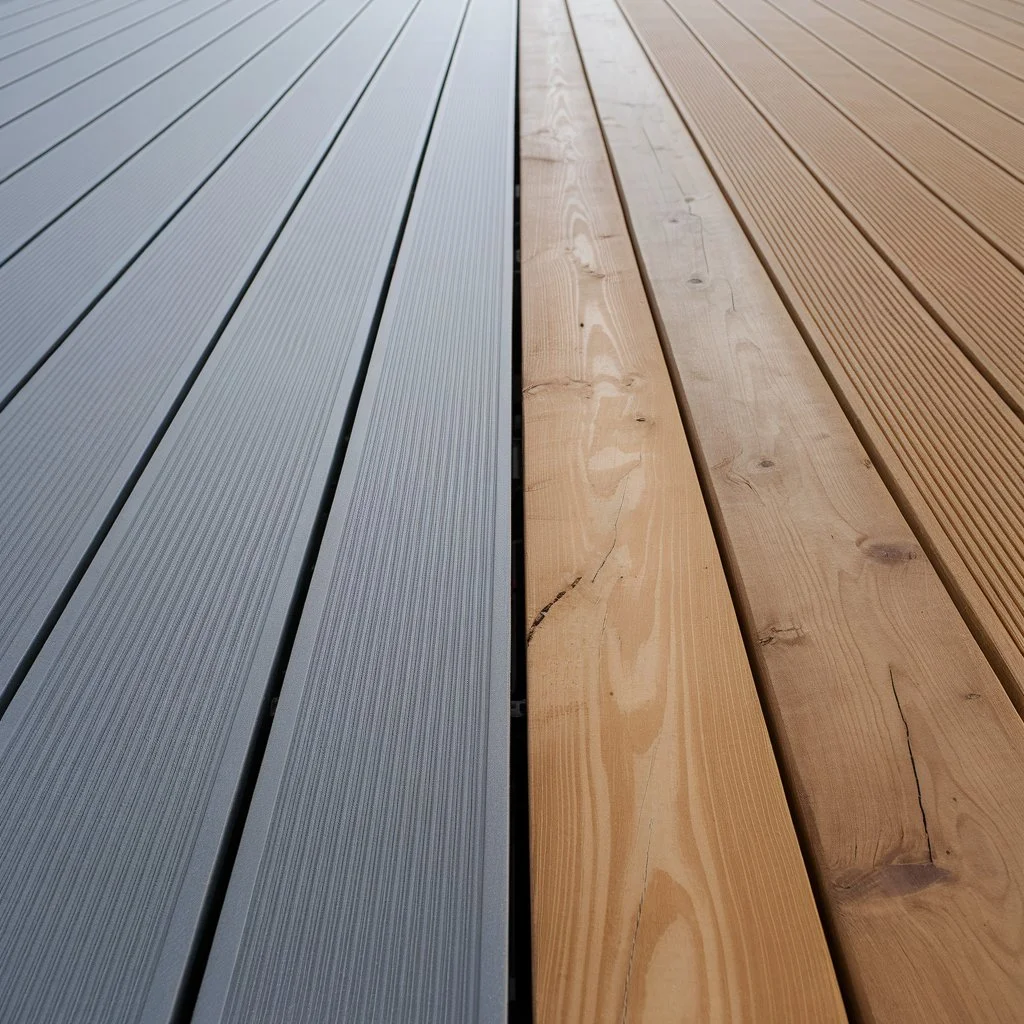
Prices of composite and wooden decking over the years.
Let’s look at how the prices of these two materials have changed over the past decade.
2015–2019: Stability and the first increases.
Between 2015 and 2019, prices for composite and wooden decking were relatively stable.
- Composite decking: 150–200 zł/m²
- Wooden decking (Siberian larch): 100–160 zł/m²
Price increases were modest and mainly due to rising production and transport costs.
2020–2022: The pandemic and a price surge.
The COVID-19 pandemic brought dramatic changes. Supply chain disruptions, limited production and rising raw material costs led to significant price increases.
- Composite decking: 200–280 zł/m²
- Wooden decking: 180–300 zł/m²
Wood was particularly affected by the pandemic. Siberian larch prices rose by as much as 80%, while exotic timber became even more expensive.
2023–2024: Stabilisation, but at a higher level.
After the pandemic, the market began to stabilise, although prices did not return to their levels before 2020.
- Composite decking: 220–300 zł/m²
- Wooden decking: 200–350 zł/m²
2025: Where are we now?
Today, in 2025, decking prices remain higher, but increases have slowed.
- Composite decking: 250–320 zł/m²
- Wooden decking: 230–380 zł/m²
Which is better value in 2025?
The choice between composite and wooden decking still depends on personal preference, but when it comes to price and durability, we can draw a few conclusions:
| Criteria | Composite decking | Wooden decking |
| Price per m² (2025) | 250–320 zł | 230–380 zł |
| Durability | 20–30 years | 10–20 years |
| Maintenance | Minimal | Regular (oiling, treatment) |
| Sustainability | Partly synthetic | Natural, but requires trees to be felled |
| Appearance | Uniform, modern | Natural, distinctive |
In summary:
- If durability and low maintenance costs matter to you, composite decking is the better choice.
- If you value a natural appearance and have time for maintenance, wooden decking may suit you better, although it will cost more in the long run.
Future outlook – what can we expect?
In 2025, the decking market appears to be stabilising, but experts predict:
- Further increases in timber prices – due to restrictions on felling and rising transport costs.
- Stable composite prices – increased production and technological advances may curb further price rises.
- Growing popularity of sustainable options – recycled or certified timber decking will be increasingly sought after.
Summary – what should you choose in 2025?
Composite and wooden decking both have their pros and cons, but in terms of price, composite decking looks more predictable and better value in 2025.
Composite decking: costs more initially, but is cheaper to maintain and more durable.
Wooden decking: is natural and attractive, but requires more money and effort.
Prices for composite and wooden decking have changed considerably over the past few years. In 2025, composite decking remains the better option for value and durability, although natural wood still has its fans. Whichever option you choose, remember that quality and correct installation are essential to the lifespan of your deck.
The final choice depends on your needs, budget and willingness to maintain your deck.
Frequently asked questions (FAQ).
1. Is composite decking really more durable than wooden decking?
Yes, composite decking can last up to 30 years without major maintenance, whereas wood requires regular treatment.
2. Why has wood become more expensive than composite?
Restrictions on felling, rising transport costs and inflation have made wood, especially exotic timber, significantly more expensive.
3. Is it worth investing in cheaper decking boards?
Cheaper boards, whether composite or wooden, are often less durable. It’s better to invest in higher quality to avoid the cost of replacement after a few years.
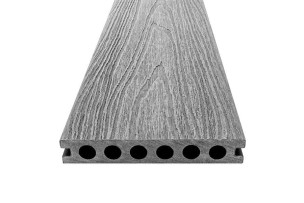
Premium Graphite Composite Decking Board 23x138 - 5.8 m (PRE-SALE)
Price per 1 linear metre board: 19.90 zł
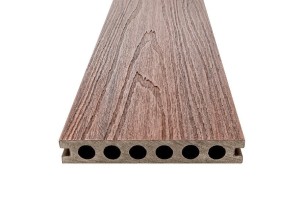
Premium Dark Brown Composite Decking Board 23x138 - 5.8 m (PRE-SALE)
Price per 1 linear metre board: 19.90 zł
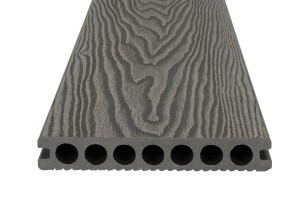
Light Grey DUO Composite Decking Board - length 5.80m (PRE-SALE)
Price per 1 linear metre board: 15.90 zł
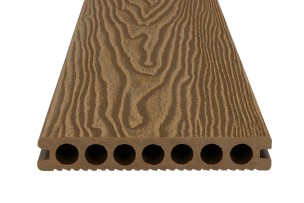
Honey DUO Composite Decking Board - length 5.80m (PRE-SALE)
Price per 1 linear metre board: 15.90 zł