Solid or Hollow Decking Board? When Is It Worth Paying More, and When Is It Not Necessary?
Wondering whether it’s worth paying extra for a solid board instead of a hollow one? Find out which option will be better for your patio, balcony or garden. Analysis, advice and practical examples.
In this post, we’ll compare solid and hollow decking boards — the two most popular types of composite decking boards used to build patios, balconies, garden paths and more. We’ll assess their durability, price, resistance to weather conditions, appearance and other practical aspects. This will help you find out when it’s worth investing more and when there’s no need to.
What exactly is the difference between solid and hollow decking boards?
Let’s start with the basics. Composite decking boards are made from a mixture of plastics and wood flour. They’re a great alternative to natural wood — they’re resistant to moisture, don’t develop mould and don’t require annual maintenance.
But there are two main types of decking boards:
-
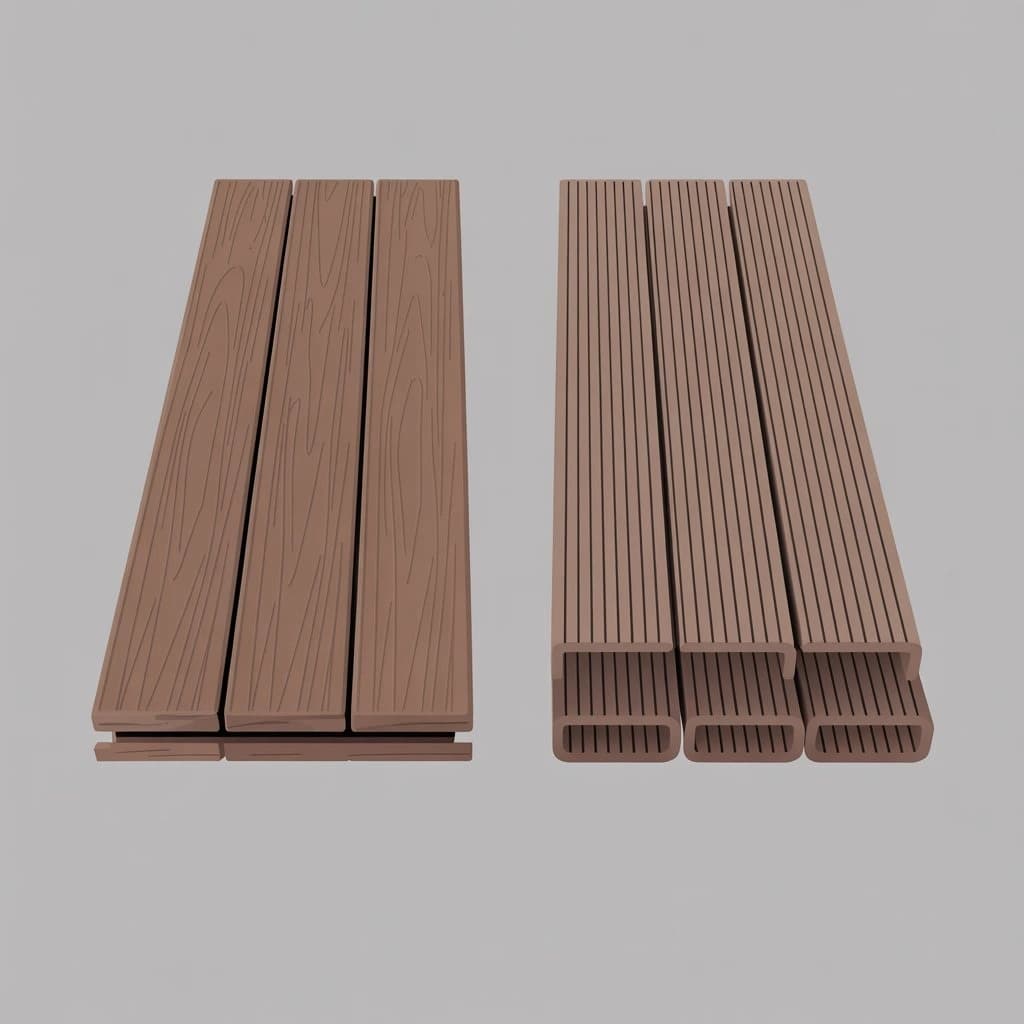
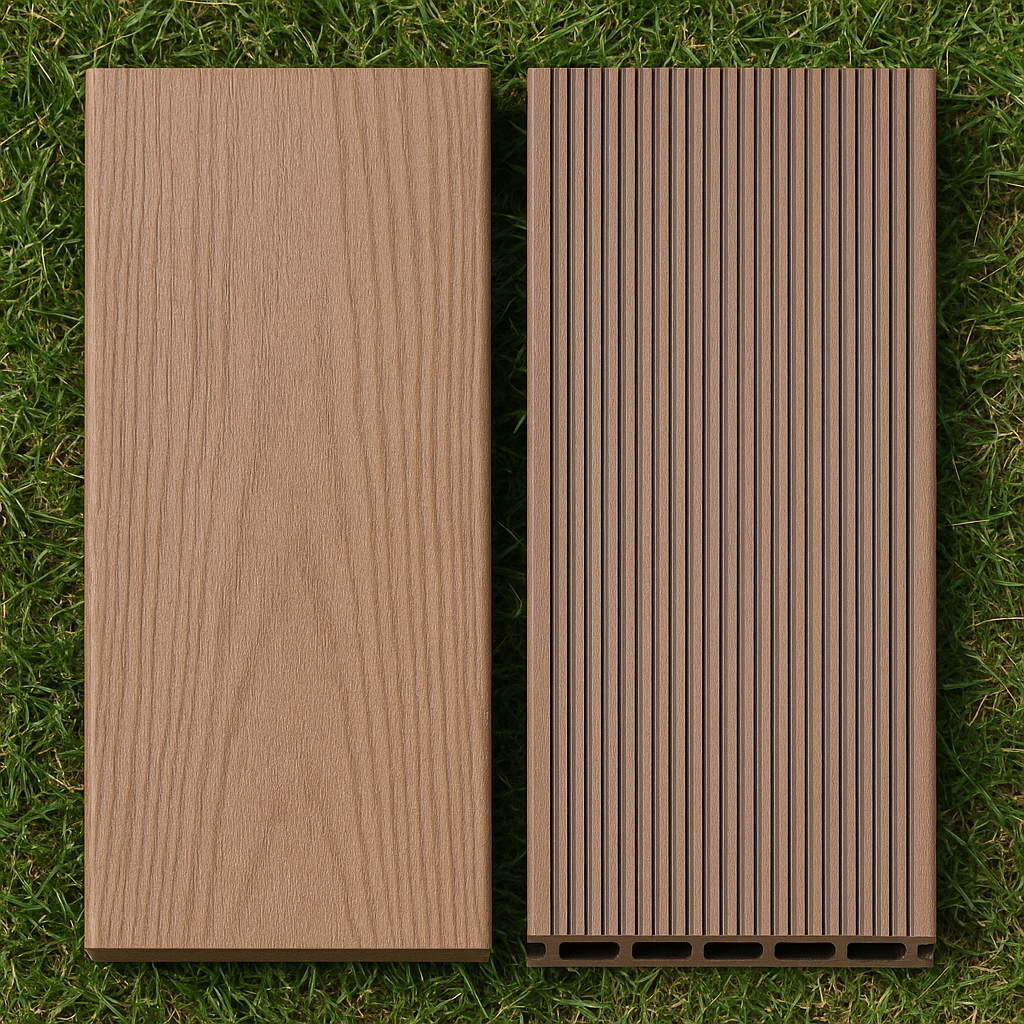
Solid decking board – as the name suggests, it has a compact, uniform structure throughout its cross-section. Heavier, more substantial and more robust.
-
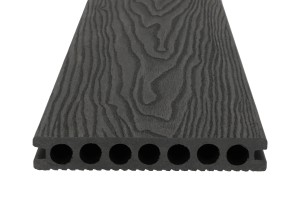
Hollow decking board – has hollow spaces (chambers) inside, making it lighter and usually cheaper.
At first glance, they may look similar, but the differences are significant. And that’s exactly what we’re going to discuss now.
Comparing solid and hollow decking boards.
1. Price.
-
Hollow decking board: Significantly cheaper. Its production requires less material, so it automatically costs less.
-
Solid decking board: More expensive – but for good reason.
The takeaway?
If you’re on a budget, a hollow board may be a better choice – BUT it’s worth reading on.
2. Strength and durability.
-
Solid decking board: More resistant to mechanical damage, heavy loads and stress. Ideal for heavily used areas, such as restaurant gardens, public jetties or large patios.
-
Hollow decking board: Less resistant – it may flex under a heavy load, particularly if installed incorrectly.
The takeaway?
A solid board is an investment in a longer lifespan. If you want to do it “once and do it right”, it’s worth paying extra.
3. Resistance to weather conditions.
-
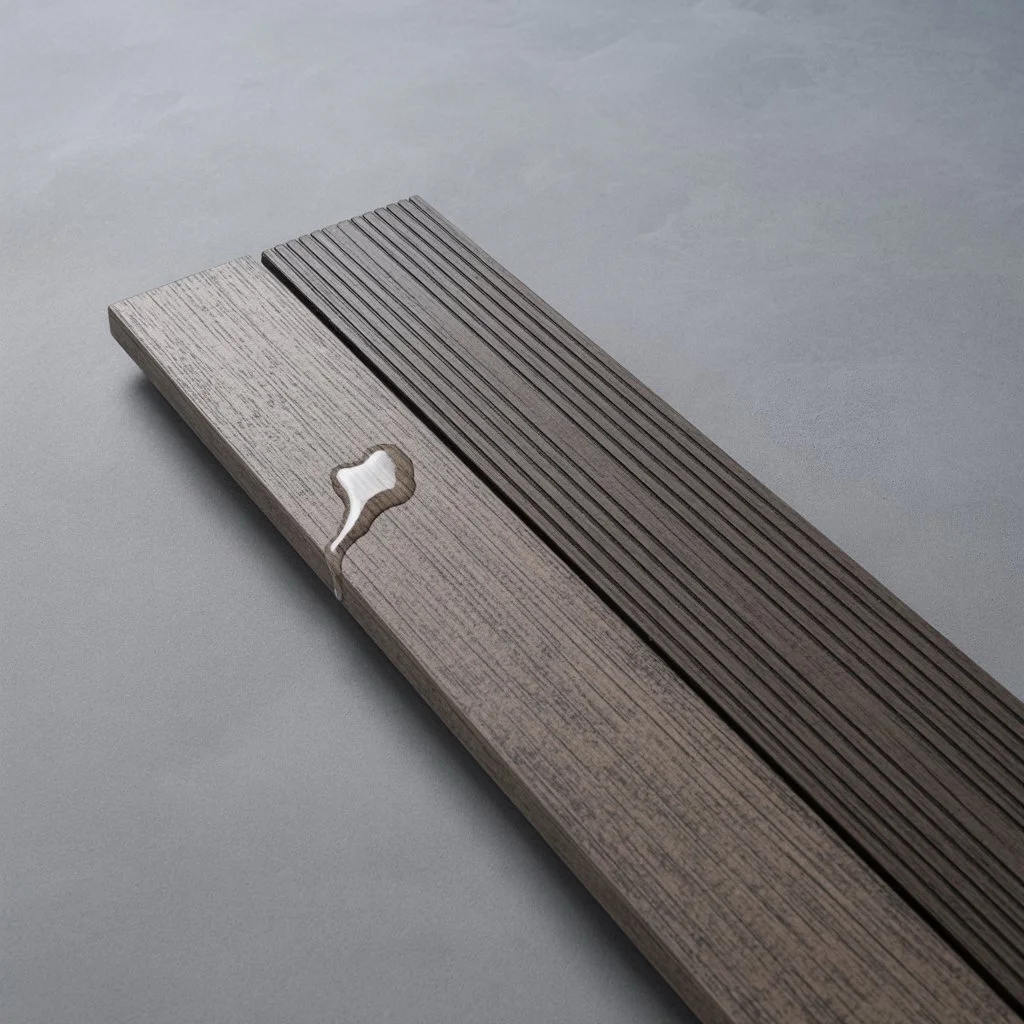
Both are resistant to rain, snow and sun.
-
Solid decking board, however, copes better with changing conditions – it doesn’t crack or warp.
-
Hollow decking board may absorb moisture through the open ends of its chambers – in that case, it’s worth using end caps or finishing profiles.
The takeaway?
A solid decking board is a better choice in areas exposed to heavy rainfall or temperature changes.
4. Installation.
-
Hollow decking board: Lighter, easier to transport and work with. It can be easily cut, carried and installed.
-
Solid decking board: Heavier – it requires a more robust supporting structure. Installation may be a little more demanding.
The takeaway?
If you’re building a patio yourself and don’t have much experience, a hollow board will be easier to install.
5. Appearance and aesthetics.
-
Both can look very similar on the outside – this mainly depends on the manufacturer and surface finish.
-
Solid decking boards more often have a more “natural” wood-like appearance – particularly brushed models.
The takeaway?
The aesthetic differences are fairly subtle, but if you’re looking for a “premium” appearance, a solid board may have the edge.
When is it worth paying extra for a solid decking board?
Here are a few situations when it is definitely worth investing in a solid decking board:
-
You’re planning a home terrace to last for years – with no compromises.
-
You’re building a deck over water – a solid decking board does not absorb water and is more stable.
-
You’re building a terrace in a sunny spot exposed to rain.
-
The decking boards will be exposed to heavy loads – e.g. furniture, a barbecue, a hot tub.
And when is a hollow decking board enough?
You don’t always have to spend more. A hollow board is ideal:
-
For small balconies and terraces, where the load will be light.
-
For garden paths, where you’re not expecting much foot traffic.
-
When your budget is limited, but you still want to enjoy the look of composite decking.
-
For temporary structures – e.g. seasonal terraces at restaurants.
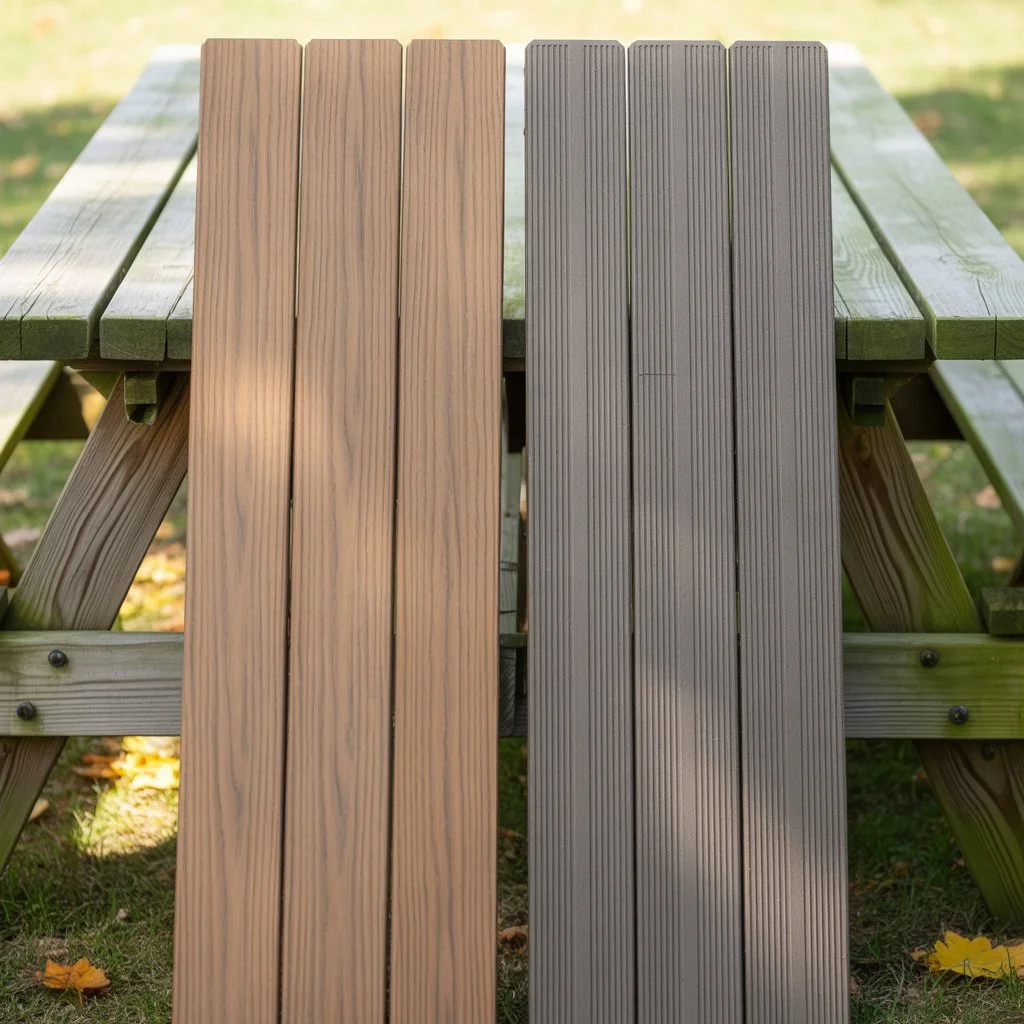
A real-life example: The neighbour’s terrace.
My neighbour Adam built a terrace with hollow decking boards 5 years ago. He was delighted because he saved quite a bit of money. After 2 years, he noticed that some boards had started to sag and warp – especially where the barbecue often stands.
A year ago, he decided to replace those sections with solid decking boards. Now he says, "I could have just paid those few hundred more straight away." A classic case of being wise after the event.
Frequently asked questions (FAQ).
1. Is a solid decking board really that much better?
Not always. It is more durable and resistant, but not everyone will need that level of sturdiness.
2. Do hollow decking boards crack in winter?
If they have no end caps or are installed incorrectly, they may. But good-quality hollow boards also cope with frost.
3. How do you care for composite decking boards?
Usually, all you need to do is wash them with water and a mild detergent. There’s no need to paint or impregnate them!
4. Is a solid decking board more environmentally friendly?
It depends on the manufacturer – but in general, composite is a recycled material, so both types are fairly environmentally friendly.
To sum up: Which should you choose?
There’s no single right answer – it all depends on your needs, where it will be installed and your budget. But to make your decision easier, here’s a quick summary:
| Criterion | Hollow decking board | Solid decking board |
|---|---|---|
| Price | Cheaper | More expensive |
| Durability | Lower | Higher |
| Installation | Easier | More difficult |
| Water resistance | Needs end caps | More resistant |
| Appearance | Good | Very good |
My advice?
-
You’re on a limited budget and doing something small? → Choose a hollow decking board.
-
Planning a long-term investment? → Pay extra for a solid decking board.
DUO composite decking board 23x148 - 3,5 m
Price per 1 linear metre of decking board: 21,30 zł
Composite decking board 2.2x14.5 cm. Gardin Deco 2.0 4.0 m.
Price per 1 linear metre of decking board: 45,90 zł
DUO composite decking board 23x148 - 5,0 m
Price per 1 linear metre of decking board: 21,30 zł
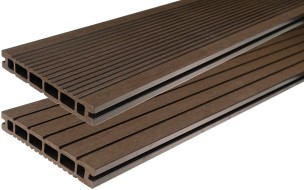
Gardin Plus 2.0 composite decking board - 4m
Price per 1 linear metre of decking board: 24,79 zł