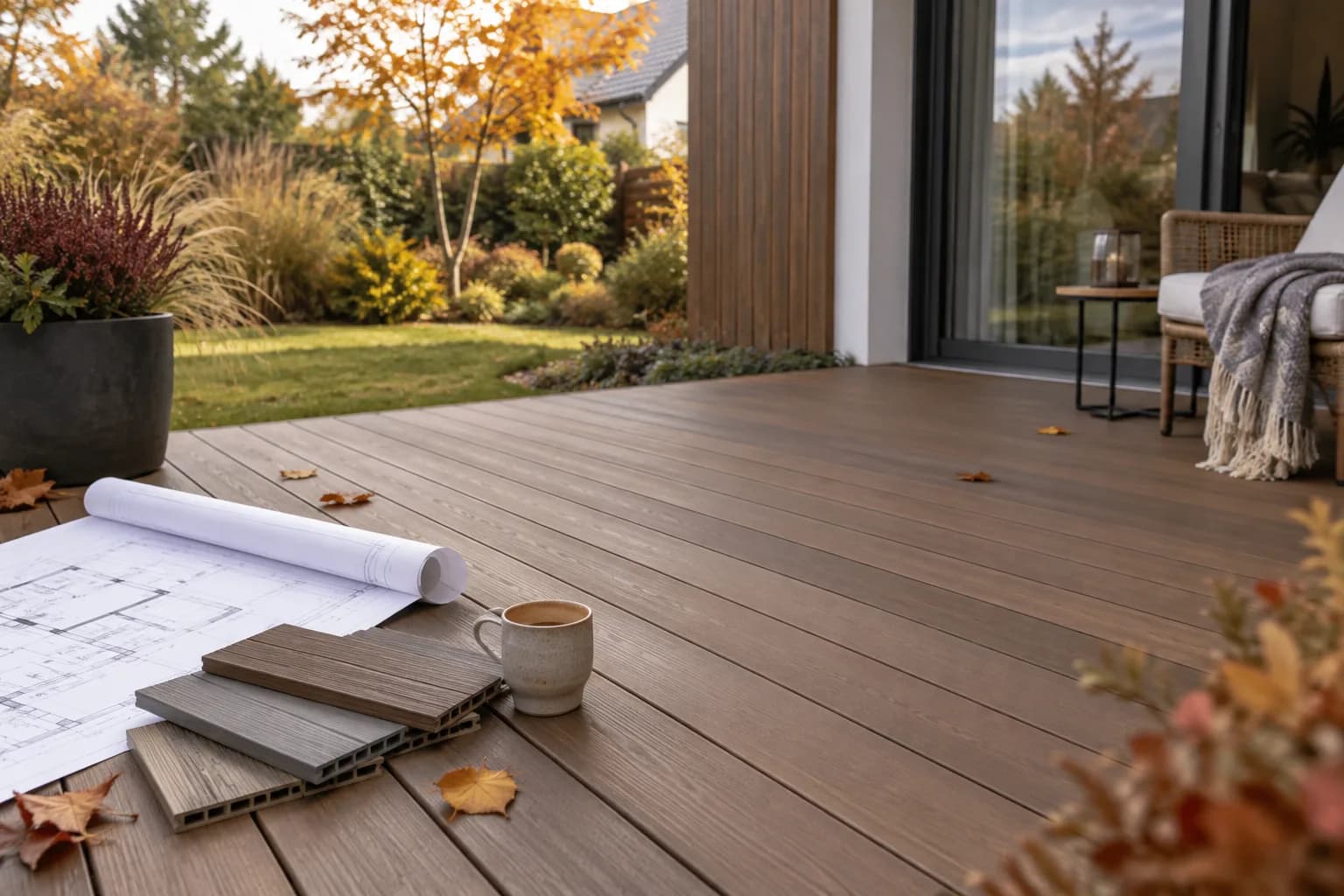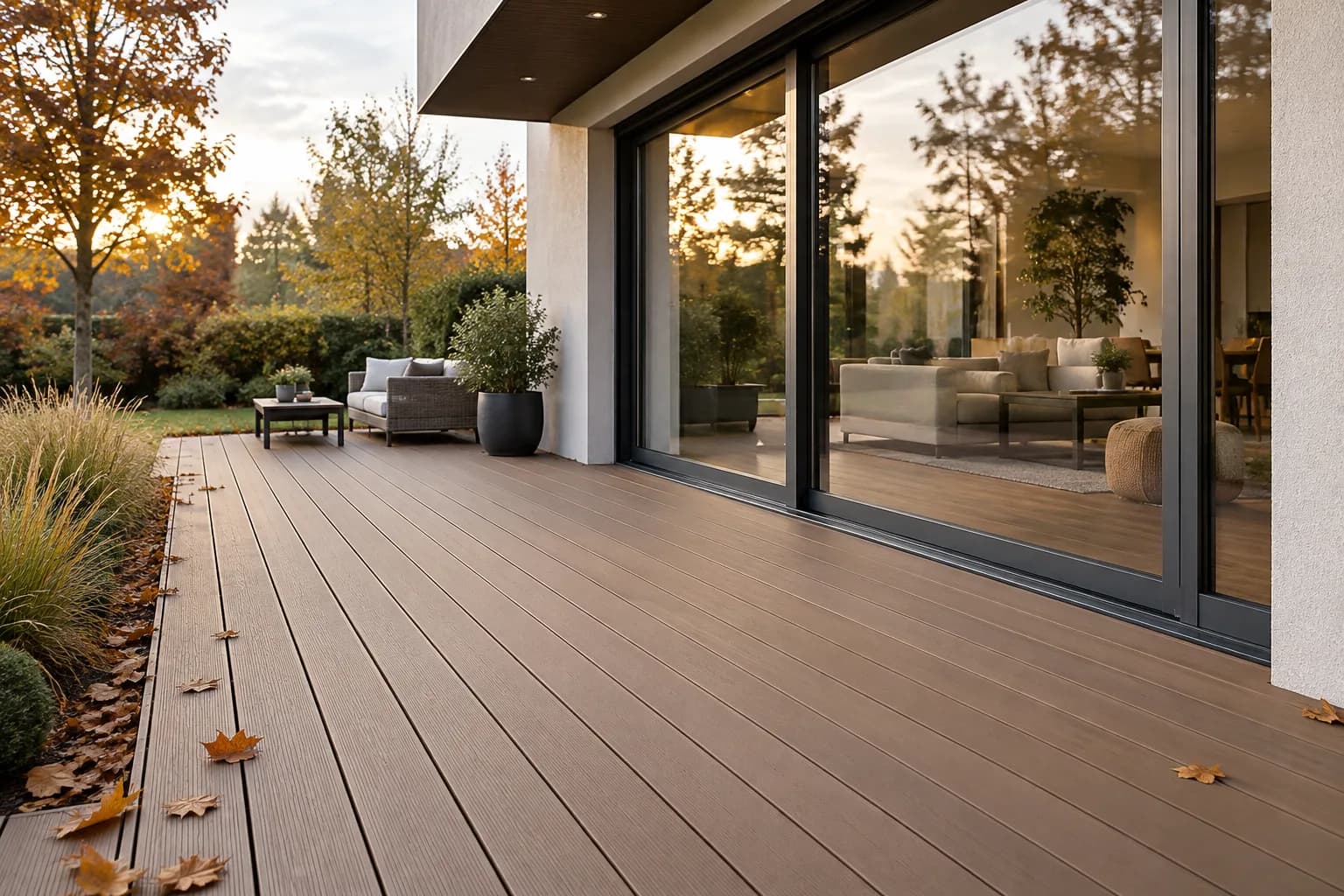
Composite decking boards for a narrow balcony – how to choose the size and colour? | Composite decking for a balcony.
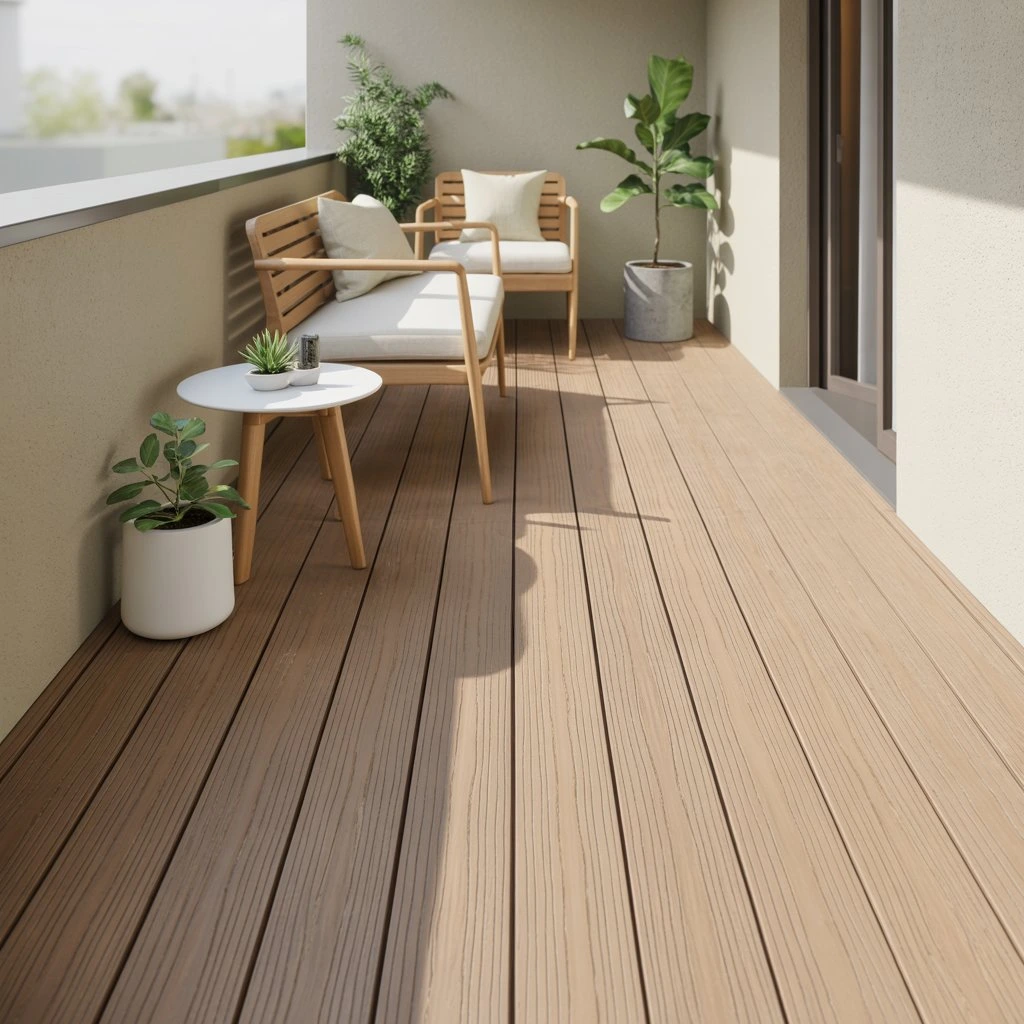
Planning to finish a small patio or narrow balcony? Find out how to choose composite decking boards – their size, colour and layout – to make the most of the space!
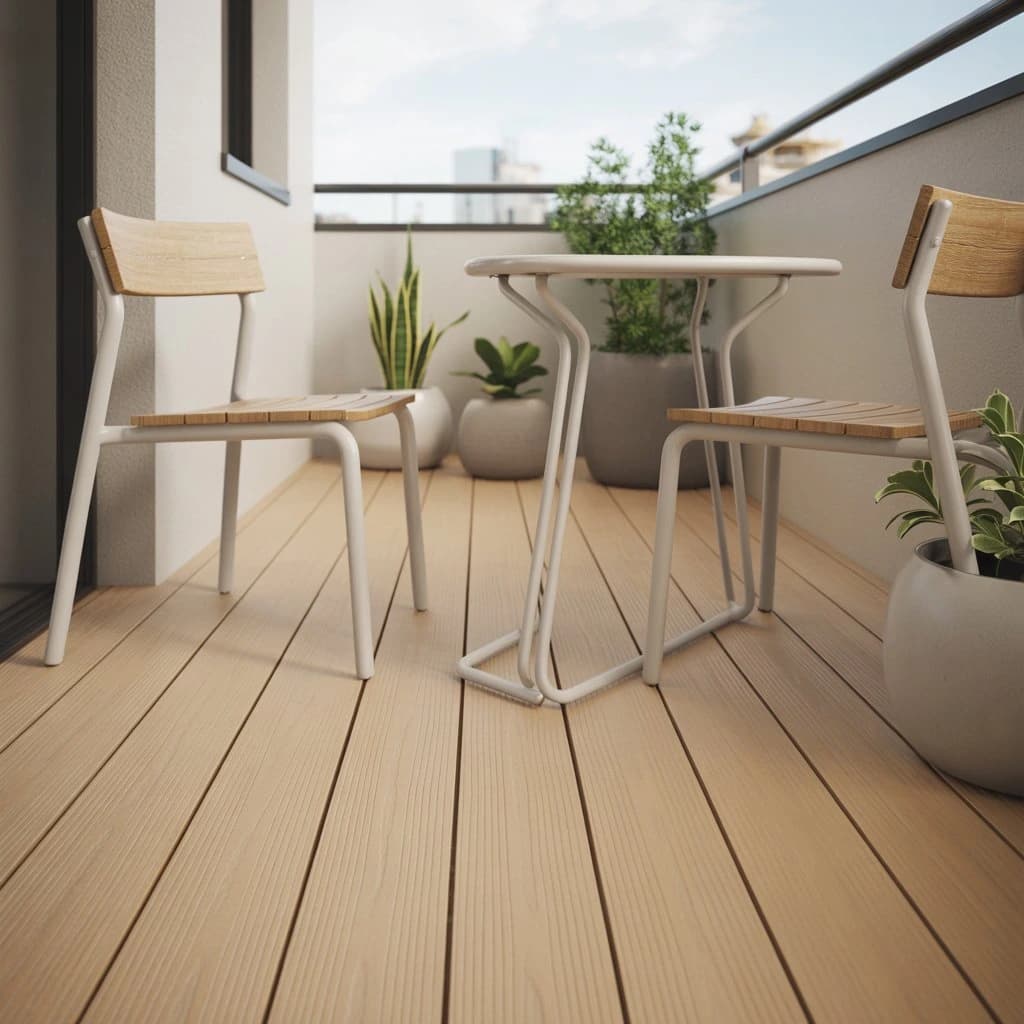
Do you know that feeling when you look at your balcony and think: “It’s too small, too narrow, nothing will fit here”? Don’t worry – even a small space can be given a new lease of life. All it takes is a little creativity… and well-chosen composite decking boards!
Composite decking for a balcony is not only a fashionable choice, but above all a practical one. Weather-resistant, easy to maintain and available in a wide range of options, it’s a material that works brilliantly in the urban jungle. But take note! In a narrow space, choosing the size and colour of the boards makes a huge difference. It determines whether your space will look even smaller… or, on the contrary, become a stylish, visually enlarged place to relax.
So, what do you say? Make yourself a coffee and come along – I’ll tell you how to choose composite decking for a small patio or balcony to get a wow effect, not a meh.
Why is composite decking the ideal choice for a balcony?
Let’s start with the basics. Why choose composite decking boards rather than traditional timber or tiles?
Here are a few reasons:
- Durability and resistance – composite decking does not rot or peel and does not need treating.
- Low maintenance – simply rinse it with water and it will look like new again.
- Appearance – available in a range of colours, textures and sizes.
- Safety – a non-slip surface is a big plus, especially when the balcony is exposed to rain.
In short: composite decking is an investment for years to come, ideal for small patios and narrow balconies, where every centimetre and every detail counts.
How do you choose the size of composite decking boards for a narrow balcony?
1. Length and width – less is more.
On narrow balconies, large boards can overwhelm the space. Instead, choose narrower models – for example, 12–14 cm wide. They will look more subtle and won’t visually eat into the space.
It’s also worth thinking carefully about the length of the boards. If possible, use boards cut to size to match the length of your balcony. This will help you avoid unattractive joins and reduce installation costs.
2. Layout – direction matters.
It’s a bit like stripes on clothing – depending on how you wear them, they can make your figure look longer or wider. The same applies to a balcony!
- Boards laid along the shorter side (that is, across the balcony) will make it look wider.
- Laid along the longer side – they will add depth and make the balcony look “longer”.
If your space is really very narrow, it’s worth experimenting with a diagonal layout, which will also add dynamism to the overall design.
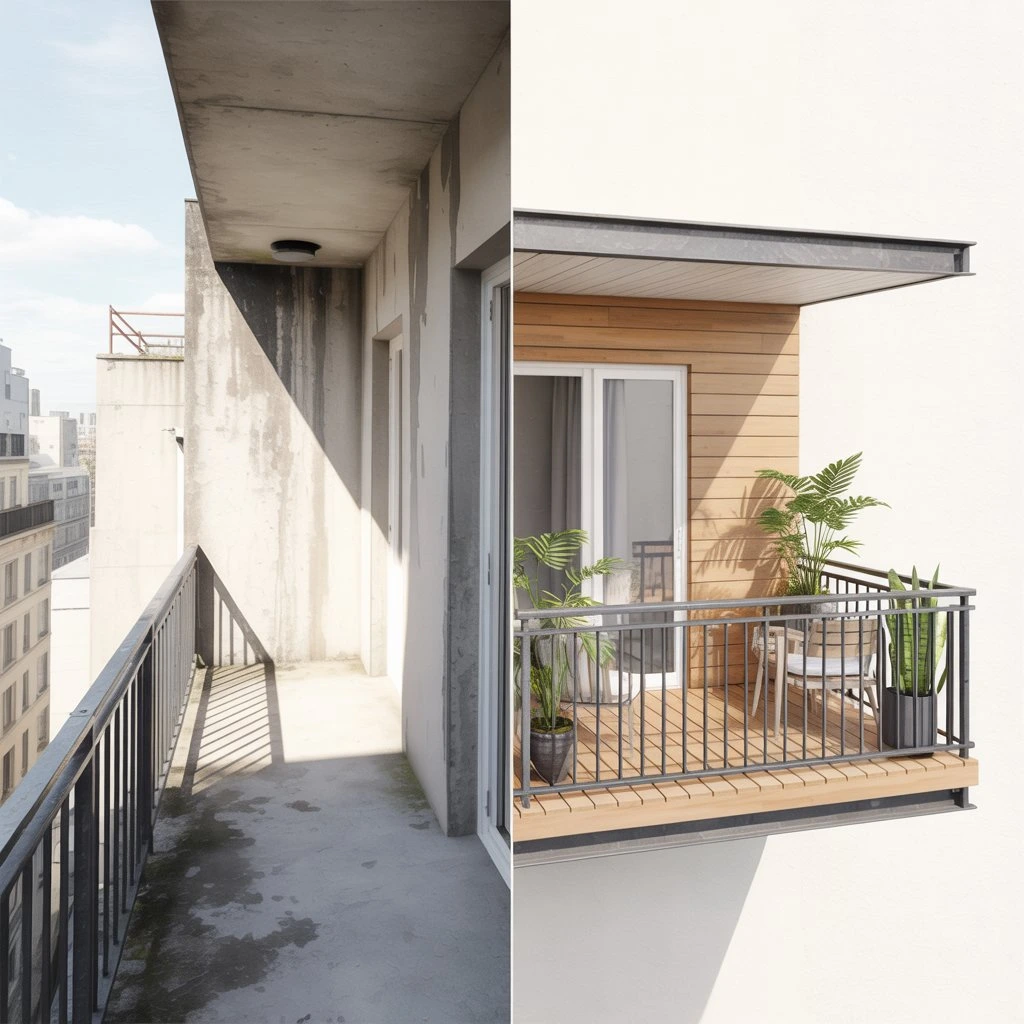
Which colour of composite decking boards should you choose for a small patio or balcony?
Colour is not just a matter of taste – it’s a powerful tool for manipulating space.
Light colours – make the space look bigger.
If your balcony is:
- shaded,
- small,
- north- or east-facing,
choose light shades: sand, light oak or grey. They will brighten the space, making the balcony look larger and more “open”.
Dark colours – elegance and contrast.
If, on the other hand, you have:
- modern, dark façades,
- a balcony with plenty of light,
- a desire to create a cosy atmosphere,
darker shades such as anthracite, wenge brown or graphite can look truly stunning – but be aware, they can also visually “take away” some of the space.
Neutral colours – a safe balance.
If you’re not sure what to choose, go for natural wood shades. They go with just about everything and don’t dominate the design.
What else is worth considering?
Gaps between the boards.
When installing, it’s worth ensuring even gaps (approx. 5 mm), which allow the material to expand and contract and water to drain away. In a confined space, this is especially important to prevent puddles and unpleasant odours.
Finishing trims.
Complete the arrangement with corner and side trims – they not only protect the edges, but also add an elegant touch to the whole space.
Furniture and accessories.
The decking boards are the foundation, but the finishing touches make all the difference: flower boxes, compact furniture, LED lighting and textiles. In a small space, less is more – choose folding or modular furniture.
Mistakes worth avoiding.
- Choosing decking boards that are too dark for a north-facing balcony – they can look gloomy.
- Installing decking boards without checking the gradient – water will collect on the surface.
- Overdoing it with accessories – a small balcony can quickly look cluttered.
- Ignoring the layout – choosing the wrong direction for the decking boards can make the space look even narrower.
To conclude – how can you make the most of a small space?
A small balcony is a challenge, but also a great opportunity to create something of your own. With well-chosen composite decking boards, and the right size, colour and layout, even the smallest space can gain character. After all, it’s not the floor area that creates the atmosphere – it’s you and your ideas! Instead of focusing on the limitations, see the potential. Even a narrow balcony can become your oasis of relaxation.
Frequently asked questions (FAQ).
1. Can composite decking boards be installed by yourself?
Yes, but it is worth having basic technical skills. Installation systems are usually straightforward, but precision is extremely important in a narrow space.
2. Does composite decking get hot?
Yes, especially dark colours in direct sunlight. Choosing lighter shades will reduce this effect.
3. Are composite decking boards expensive?
They may initially seem more expensive than timber, but over the longer term they are more cost-effective because they do not need to be treated with preservative.
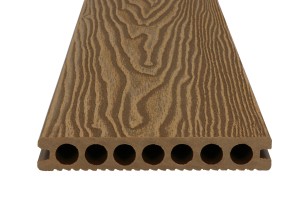
DUO composite decking board 23x148 - 2.9 m
Price per 1 linear metre of decking board: 21,30 zł
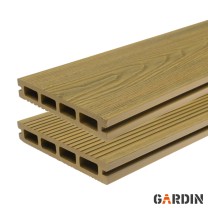
GARDIN NATUR composite decking board 23x146 - 4,0m
Price per 1 linear metre of decking board: 26,98 zł
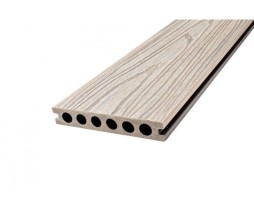
PREMIUM composite decking board 23x138 - 5,0 m
Price per 1 linear metre of decking board: 24,85 zł
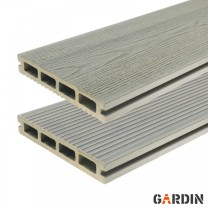
GARDIN NATUR composite decking board 23x146 - 1,5m
Price per 1 linear metre of decking board: 26,98 zł