Composite Decking Boards on Sunlit Terraces: Key Considerations and Advice.
Discover why composite decking boards are the ideal choice for sun-drenched terraces. Read our guide to learn more about their benefits, installation and maintenance.
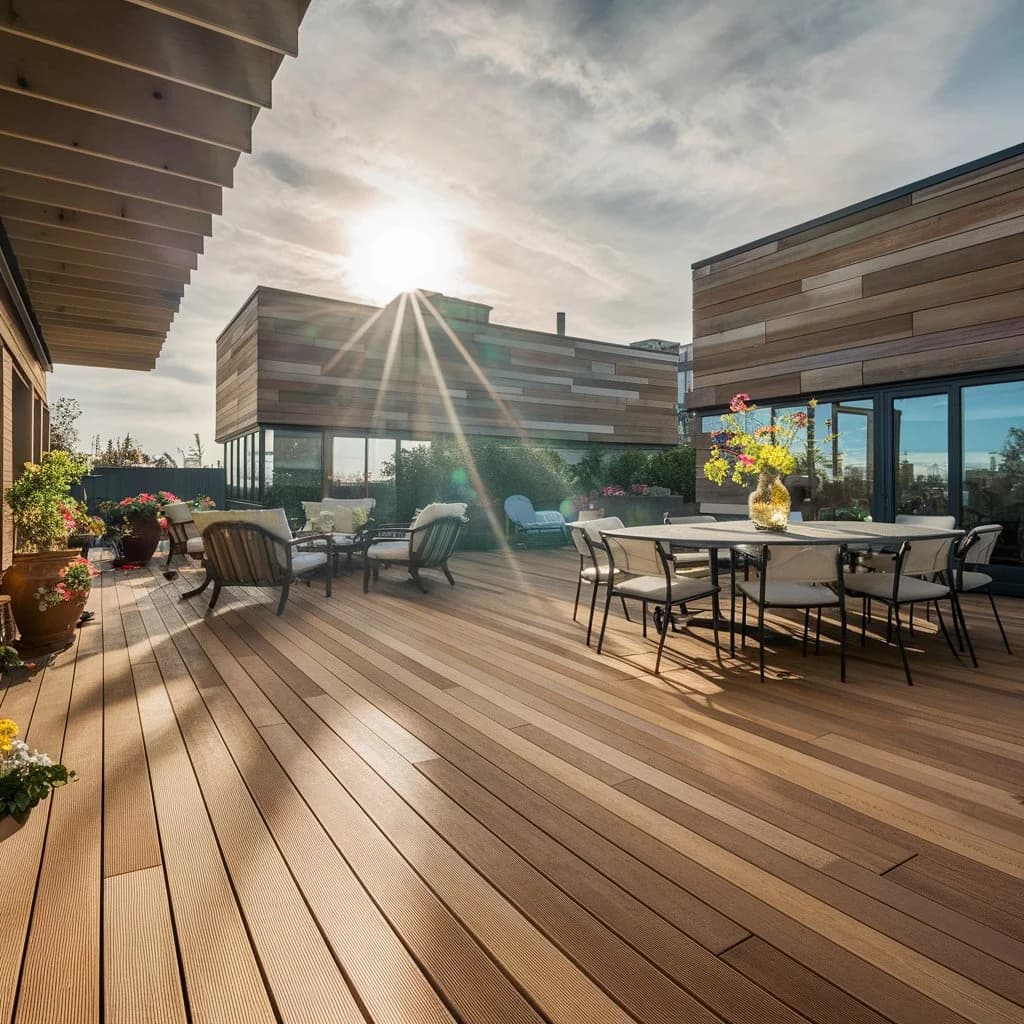
A sun-drenched terrace is a dream for many people. Spending time outdoors, enjoying the sun's rays, is an ideal way to relax. However, choosing the right finishing materials for such a space can be a challenge. Intense sunlight affects the durability and appearance of a terrace, so it is important to choose suitable materials that can withstand harsh weather conditions. Composite decking boards have become one of the most popular materials for terraces because of their durability, resistance to external factors and minimal maintenance requirements. In this article, we will discuss how composite decking boards perform on sun-drenched terraces and outline the key factors to consider when choosing and using them.
What are composite decking boards?
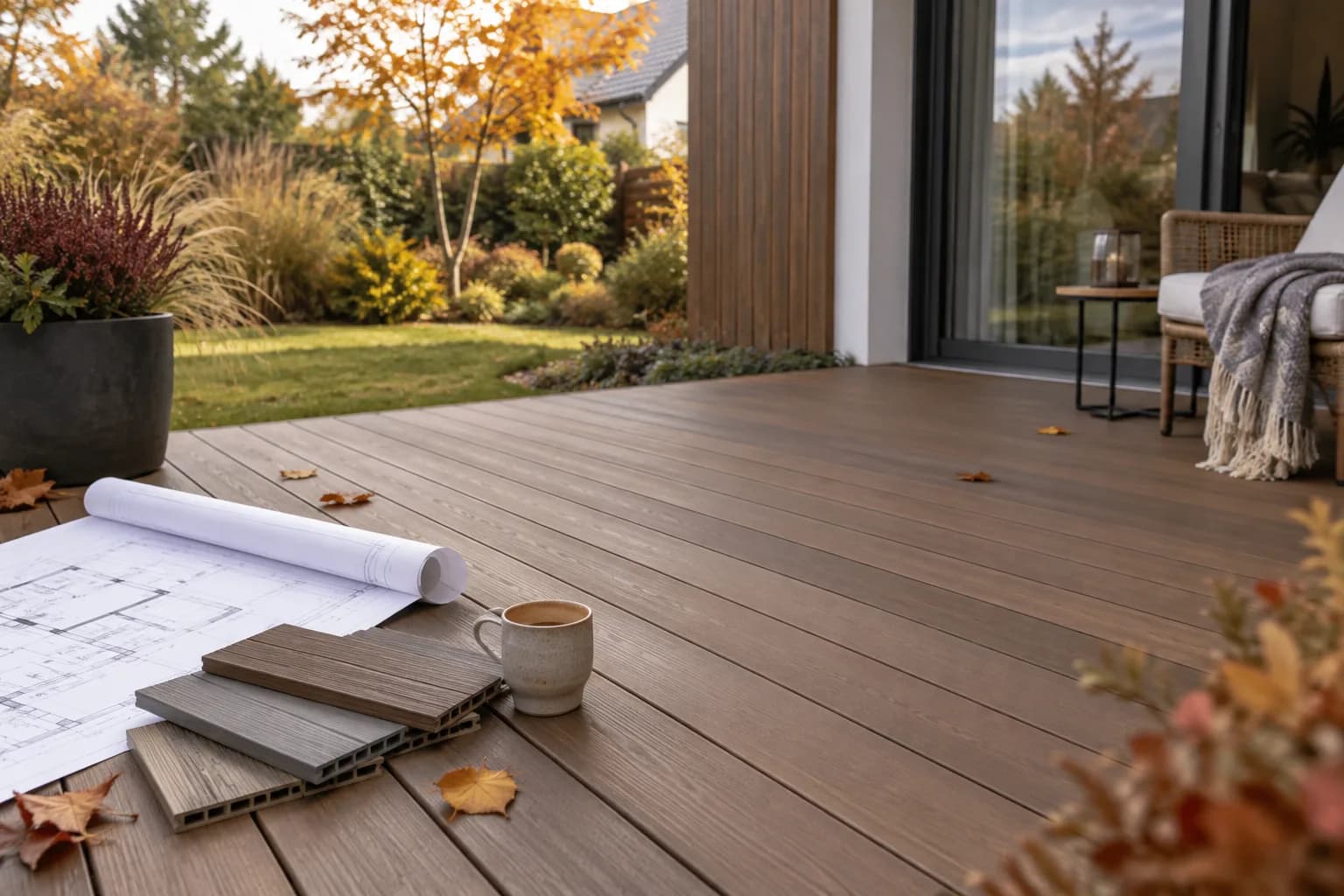
Composite decking boards are building materials made from a mixture of wood and plastics. They are designed to combine the appearance of natural wood with the durability and low maintenance requirements of plastics. They are ideal for terraces, especially those exposed to sunlight, where traditional wood can quickly become damaged.
Advantages of composite decking boards on a terrace.
- Weather resistance: Composite decking boards are extremely resistant to UV radiation, which prevents them from fading and deteriorating in the sun. This means that even after many years of use, they look as good as new.
- Low maintenance: Unlike wood, composite decking boards do not require regular painting, varnishing or oiling. This saves a great deal of time and money.
- Durability: They are resistant to moisture, mould and fungi, which is particularly important in places exposed to changing weather conditions. They do not warp or crack.
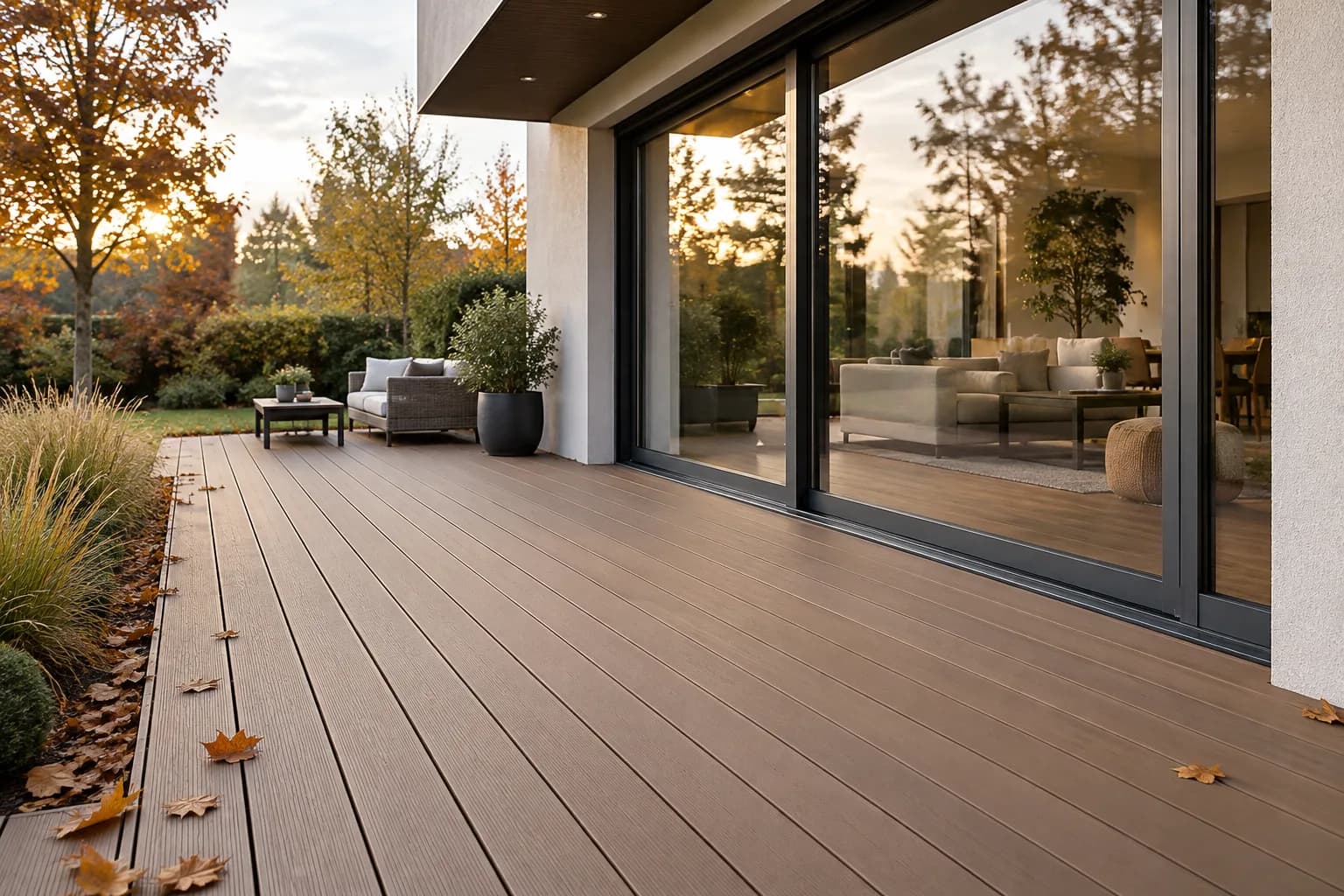
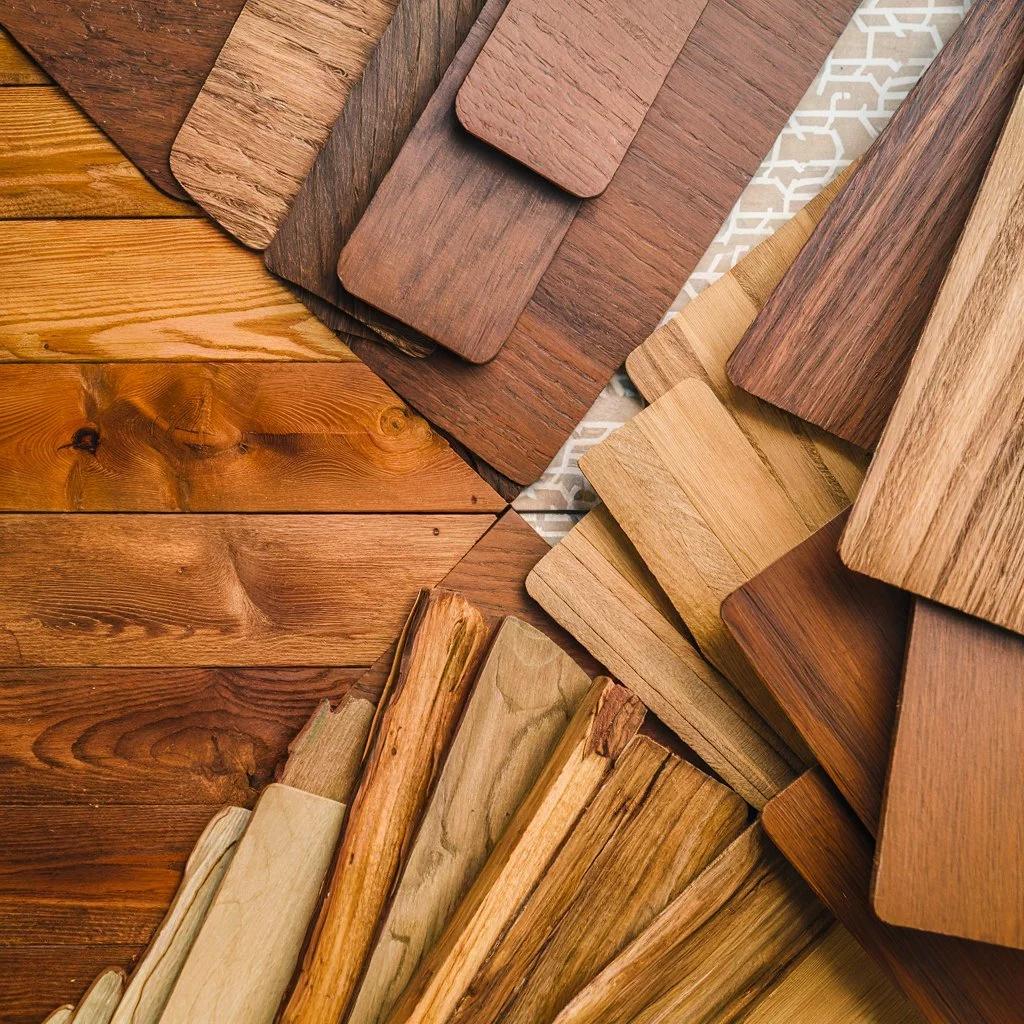
- Appearance: Modern composite decking boards are available in many colours and textures that closely imitate natural wood. This makes it possible to match them to different architectural styles and garden designs.

How sunlight affects terrace finishing materials.
Sun-drenched terraces are exposed to intense UV radiation, which can cause many problems with finishing materials. High temperatures, sunlight and extreme temperature changes throughout the year can affect the durability, appearance and comfort of using a terrace.
Here are some common problems that can occur on terraces exposed to intense sunlight:
- Fading colours – intense UV radiation causes the colours of most materials to fade, which can quickly detract from the appearance of a terrace.
- Material distortion – extreme temperatures can cause materials to expand and contract. In the case of some materials, such as wood, this can result in cracks or deformation.
- Higher surface temperature – materials that heat up in the sun can be uncomfortable or even unsafe to walk on barefoot.
This is why choosing the right decking boards is crucial for the durability and comfort of a terrace.
How do composite decking boards perform on sun-drenched terraces?
Choosing composite decking boards for a terrace exposed to intense sunlight is a good solution, provided that we pay attention to a few key factors.
1. Resistance to UV radiation.
However, not all composite decking boards are equally resistant to UV radiation. This radiation, especially in large amounts, can cause colour fading and material deterioration. Therefore, when choosing decking boards for a sun-drenched terrace, it is worth looking for ones that have been protected against UV radiation. Boards coated with special protective coatings are more resistant to colour loss, helping them retain their appearance for many years. Some cheaper versions of composite decking boards may lose colour intensity more quickly in the sun, so it is worth investing in boards from reputable manufacturers that offer a guarantee of their UV resistance.
2. Surface temperature of the decking boards.
Sun-drenched terraces can become very hot, which affects comfort. Composite decking boards, especially darker ones, tend to heat up more quickly. This is worth bearing in mind, particularly if you plan to walk barefoot on the terrace often. How can you reduce the problem of the decking boards heating up?
- Choose lighter-coloured decking boards – dark shades may look elegant, but they heat up more quickly. Lighter colours absorb less sunlight, making the terrace surface more comfortable to the touch.
- Use a roof covering or pergola – if your terrace is particularly exposed to the sun, consider installing a pergola, roof covering or awning to protect the decking boards from direct sunlight and make spending time on the terrace more comfortable.
3. Durability of composite decking boards on a sun-drenched terrace.
Composite decking boards are much more resistant to weather conditions than traditional wood. Thanks to the addition of plastic, they do not deform as a result of extreme temperatures, moisture or UV radiation. This means that on a terrace exposed to plenty of sunlight, composite decking will retain its properties and appearance for many years without the need for regular maintenance.
Key aspects to consider.
When choosing composite decking boards for a terrace exposed to intense sunlight, it is worth considering several key factors that affect durability and comfort of use.
1. Board quality. Not all composite decking boards are of the same quality. It is worth investing in boards from reputable manufacturers that offer products resistant to UV radiation and harsh weather conditions. Cheap composite decking boards may lose their colour, warp or crack more quickly, which in the long term means higher costs associated with replacing them.
2. Board colour. As mentioned earlier, colour is very important when it comes to how hot a terrace gets. Lighter shades of composite decking boards absorb less solar radiation, which means their surface will feel cooler to the touch. Therefore, if your terrace is exposed to strong sunlight, consider choosing light-coloured boards, such as beige, grey or light brown.
3. Terrace ventilation. Sunlit terraces are exposed to heating not only on the surface, but also in the structure beneath the terrace. It is therefore important to ensure adequate ventilation beneath the boards, which will prevent heat and moisture from building up.
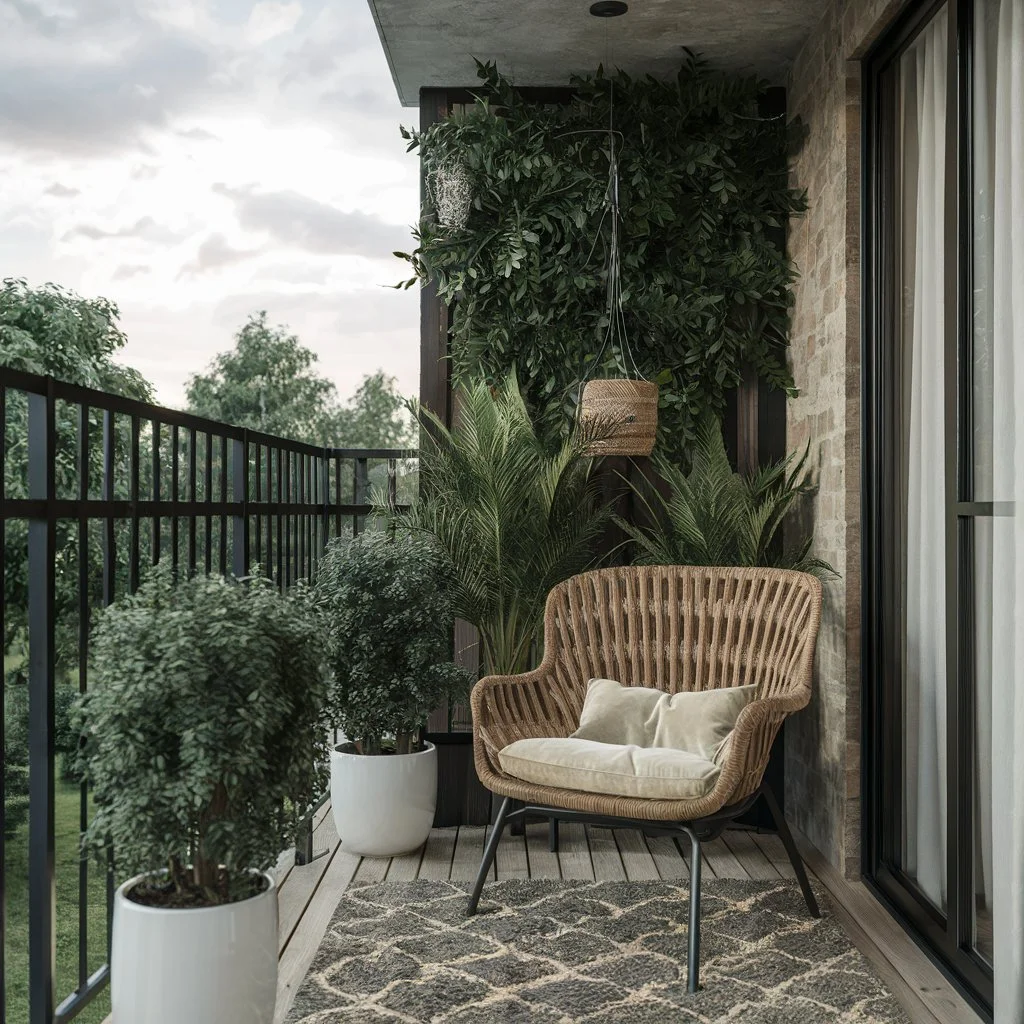
4. Canopy or plants. To protect the terrace from direct sunlight, consider installing a canopy or pergola. Alternatively, planting climbing plants, shrubs or trees around the terrace to provide shade can also improve comfort of use.
Care tips for a sunlit terrace.
Composite decking boards are much easier to maintain than wood, but even they require minimal care, especially on sunlit terraces.
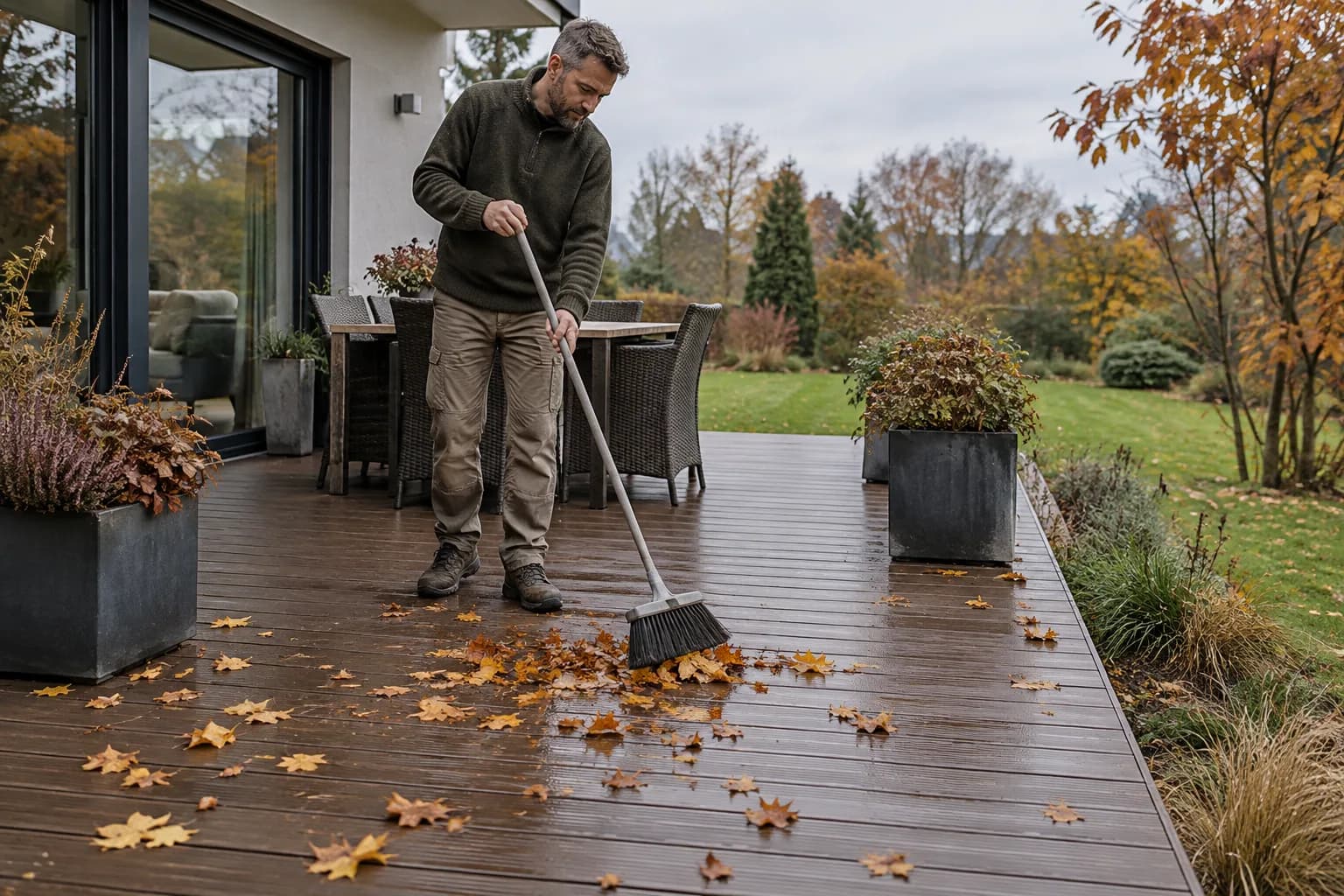
- Regular cleaning – to keep the terrace looking attractive, it is worth regularly removing dirt such as leaves, sand and dust. All you need is water and a soft brush.
- Cleaning with specialist products – if more stubborn dirt appears on the terrace, you can use mild cleaning products designed for composite decking boards.
- Avoiding sharp tools – although composite decking boards are durable, they can be scratched by sharp tools. It is worth avoiding moving heavy furniture without protective pads.
Summary
Composite decking boards are an excellent solution for sunlit terraces, provided you choose the right type of material and take care of several key aspects, such as UV resistance and the colour of the boards. High-quality composite decking boards will provide durability, comfort of use and an attractive appearance for years, without the need for regular maintenance. Remember, however, to choose a product from a reputable manufacturer and consider additional features such as a canopy or lighter colours, which will improve comfort of use on the terrace even on the hottest days.