
Composite decking boards: durability, resistance and sustainability in one material
WPC composite decking boards are a durable, low-maintenance material for patios and balconies. Find out why they resist moisture, UV and damage for years.
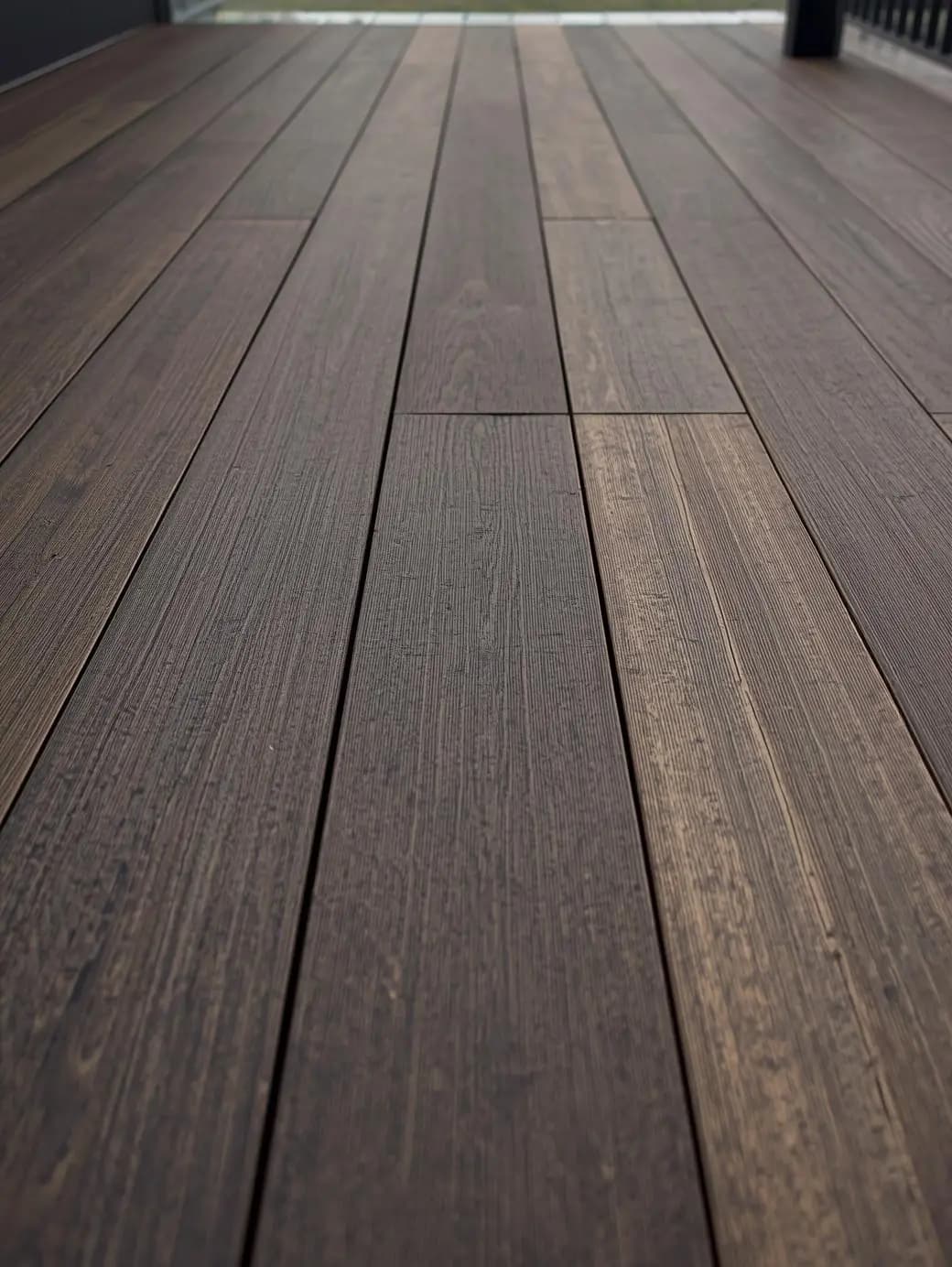
Composite decking boards are becoming increasingly popular among homeowners and garden owners looking for durable, attractive and easy-to-maintain materials. Although natural timber remains a popular choice for its natural appearance, it is the composite decking board that stands out for its unique combination of durability, resistance to weather conditions and virtually maintenance-free nature. In this article, we take a closer look at these properties, examining both the benefits and the practical aspects of using it.
1. What exactly is a composite decking board?
A composite decking board, also known as WPC (Wood Plastic Composite), is a material made from a combination of wood fibres and plastics. This mixture retains the appearance of timber while significantly improving its technical properties. Composite decking boards are used on patios, balconies, around swimming pools and in gardens, as an alternative to traditional exotic timber.
The most important properties of composite decking are:
-
Resistance to moisture and water, eliminating the problem of rot and cracking.
-
Resistance to UV radiation, helping the colour remain stable for many years.
-
No splinters and easy care, making it safer to use.
2. Completely maintenance-free
One of the main reasons homeowners choose composite decking boards is their virtually maintenance-free nature. Unlike natural timber, which requires regular oiling, varnishing or treatment, composite decking boards require minimal care.
No need for treatment or oiling
Composite decking boards are factory-protected against water and UV radiation, so there is no need to oil or varnish them. Regular maintenance is limited to cleaning the surface with water and a mild detergent, which in practice means a few minutes' work a few times a year.
Resistance to weather conditions
Composite decking stands up well to both strong sunlight and frost and rain. It does not crack, shrink or expand excessively as a result of temperature changes, meaning the boards can be used in almost any climate.
Resistance to mould and fungi
Natural timber is susceptible to mould and fungal growth, especially in damp environments. Composite decking boards are resistant to microorganisms, helping their surface to remain clean and safe for many years.
Easy to clean
For dirt and stains, all you need is soapy water or an ordinary detergent for outdoor surfaces. There is no need to use specialist chemicals, saving time and maintenance costs. In addition, the absence of splinters makes vacuuming and washing the surface easier, which is particularly important on patios used by children or older people.
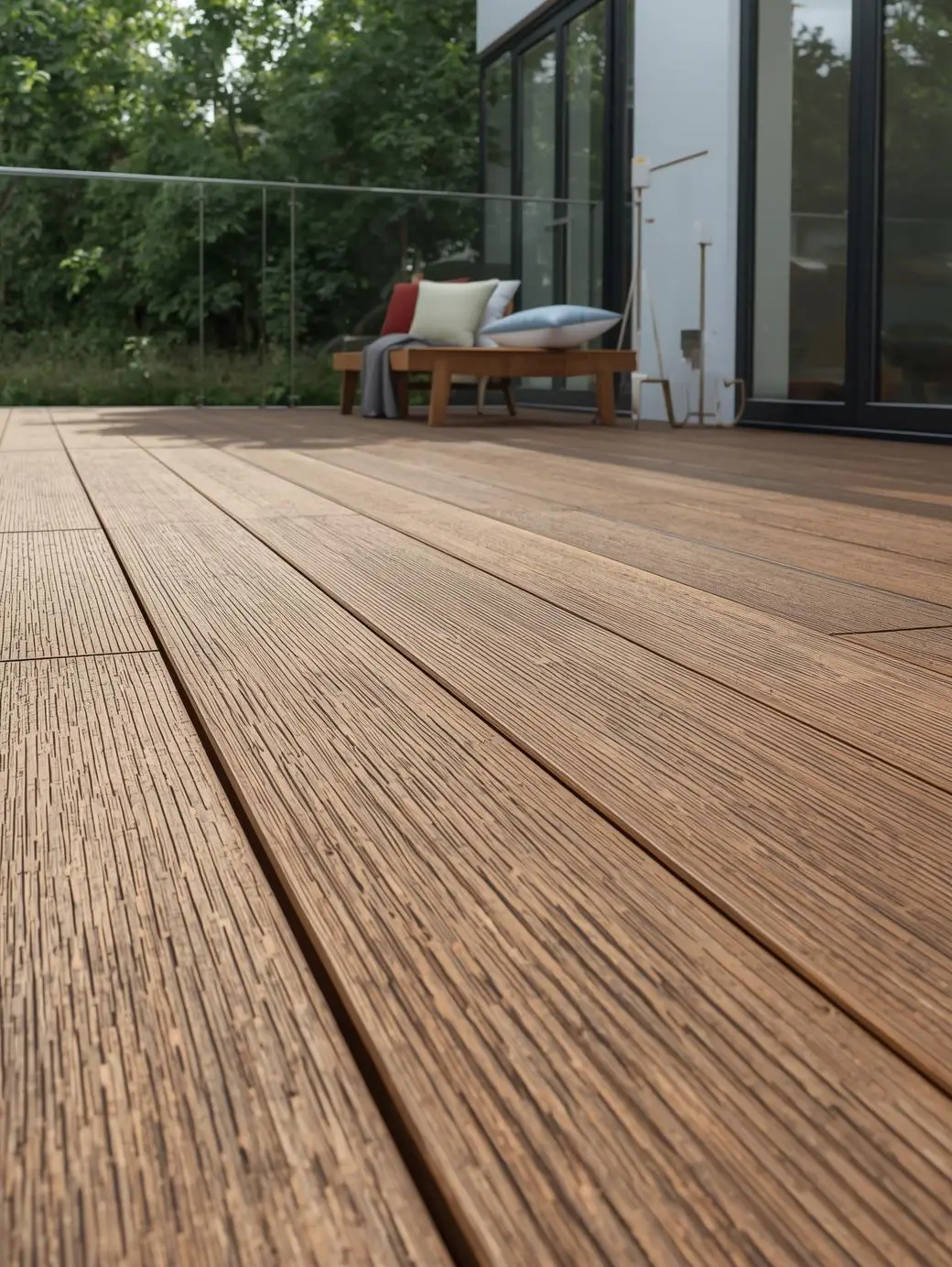
3. The lifespan of composite decking boards
The second key advantage of composite decking boards is their long lifespan. Thanks to the use of wood fibres combined with plastic, the material is exceptionally durable and resistant to mechanical damage.
Resistance to mechanical damage
Composite decking boards are less prone to scratches and dents than natural timber. Although minor signs of use may appear, they do not affect the appearance or functionality of the surface. In addition, composite decking does not require sanding or local repairs, which extends its lifespan.
Dimensional stability
Unlike timber, which responds to moisture and temperature by shrinking or swelling, composite decking boards remain dimensionally stable throughout their service life. This means that laying the boards is easier, and the risk of gaps and warping is minimal.
Resistance to UV radiation
High-quality composite decking boards have a UV filter, which protects them from fading and losing colour even after many years of exposure to the sun. This means that patios, balconies and gardens maintain an attractive appearance for a long time without the need for painting or staining.
Warranty and durability
Most manufacturers offer a warranty of 15 to 25 years, confirming the material’s high quality and durability. In practice, this means that an investment in composite decking boards can last for decades without the need for replacement or major refurbishment.
4. A patio ready for spring and summer
One of the less obvious, yet very important, advantages of composite decking boards is their resistance to insects and wood pests. Natural wood, especially when used outdoors, is often targeted by termites, beetles and other insects, which can weaken the structure of a patio, balcony or boardwalk. In practice, this means costly repairs and regular checks of the wood’s condition are needed to avoid serious structural damage.
Composite decking boards attract pests very rarely, helping them to maintain their structural integrity for many years. Users can rest assured that their patio will not deteriorate because of insects, even in humid or tropical conditions. What’s more, not having to use chemical protective treatments protects the environment and the health of household members, including children and allergy sufferers.
5. Environment and recycling
Modern composite decking boards are often made from recycled materials, including wood and plastic waste that might otherwise have been thrown away. As a result, the manufacturing process uses fewer natural resources than in the case of exotic timber, and the material itself can be recycled again at the end of its service life.
The combination of durability and an environmentally friendly approach makes composite decking boards suitable for people who care about the environment and are aware of the impact their choices have on the planet. In addition, the long service life of the material reduces the need for frequent replacement or refurbishment, which in practice limits construction waste and the user’s carbon footprint.
It is also worth noting that many brands offer certified products containing a permitted proportion of renewable raw materials, which increases the environmental value of a patio. Composite decking boards can therefore be not only a durable, low-maintenance solution, but also a considered choice for people seeking sustainable building materials.
6. Resistance to very high temperatures and fire
Composite decking boards are characterised by greater resistance to fire and high temperatures than natural wood. The material does not catch fire easily and, with the appropriate fire rating selected, can be used in areas exposed to heat, such as patios next to barbecues or outdoor fireplaces, or boardwalks over water.
Resistance to high temperatures increases safety in use, particularly in public or heavily used spaces. The composite does not deform when its surface heats up, ensuring a stable surface and an attractive appearance even on hot days.
In addition, the material is resistant to sudden temperature changes – it does not crack, shrink or warp, which is a common problem with natural wood exposed to sun and moisture. Thanks to these properties, patios and balconies made from composite decking boards can be used practically all year round, regardless of the weather, without the risk of damage to the material.
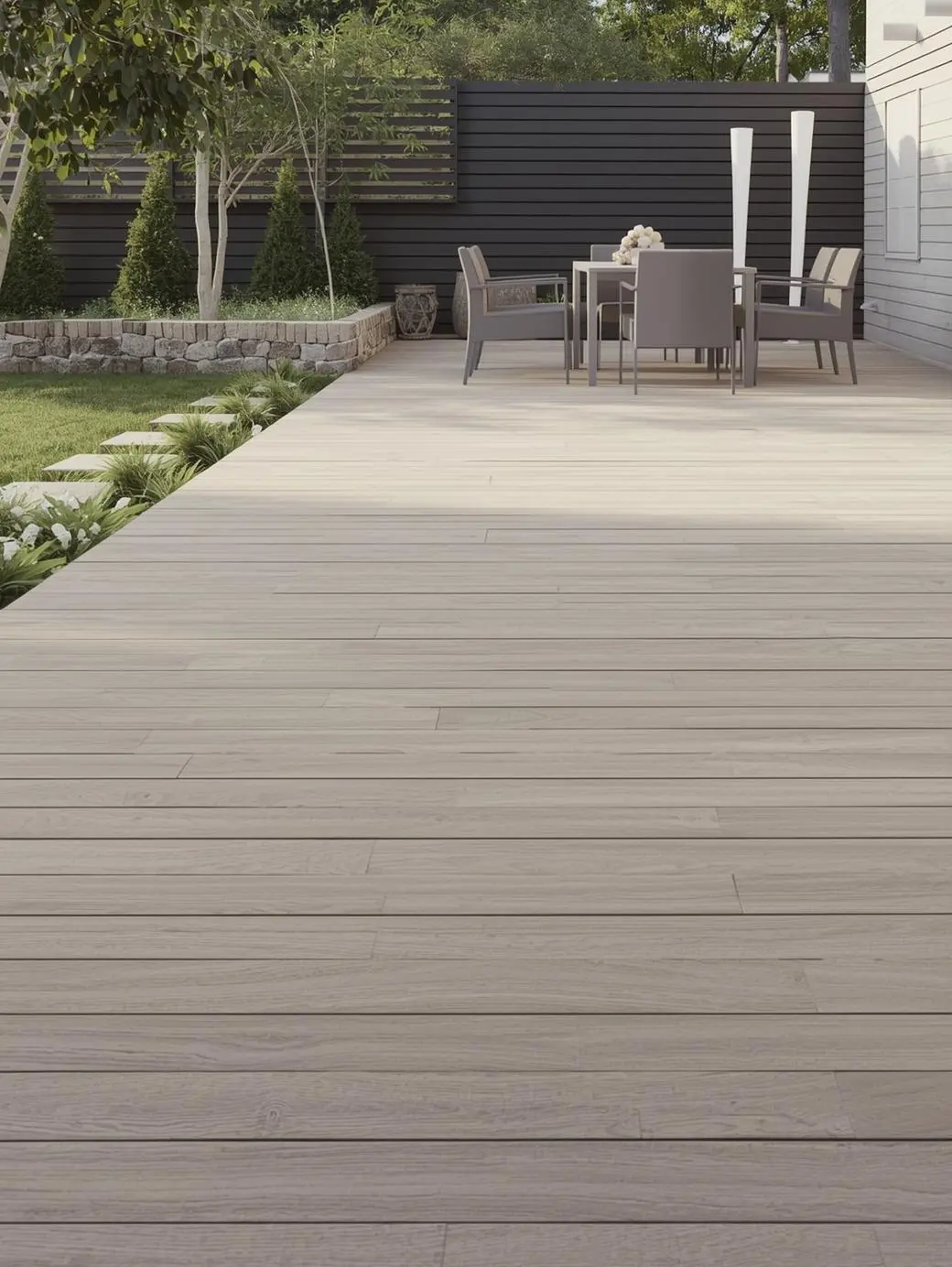
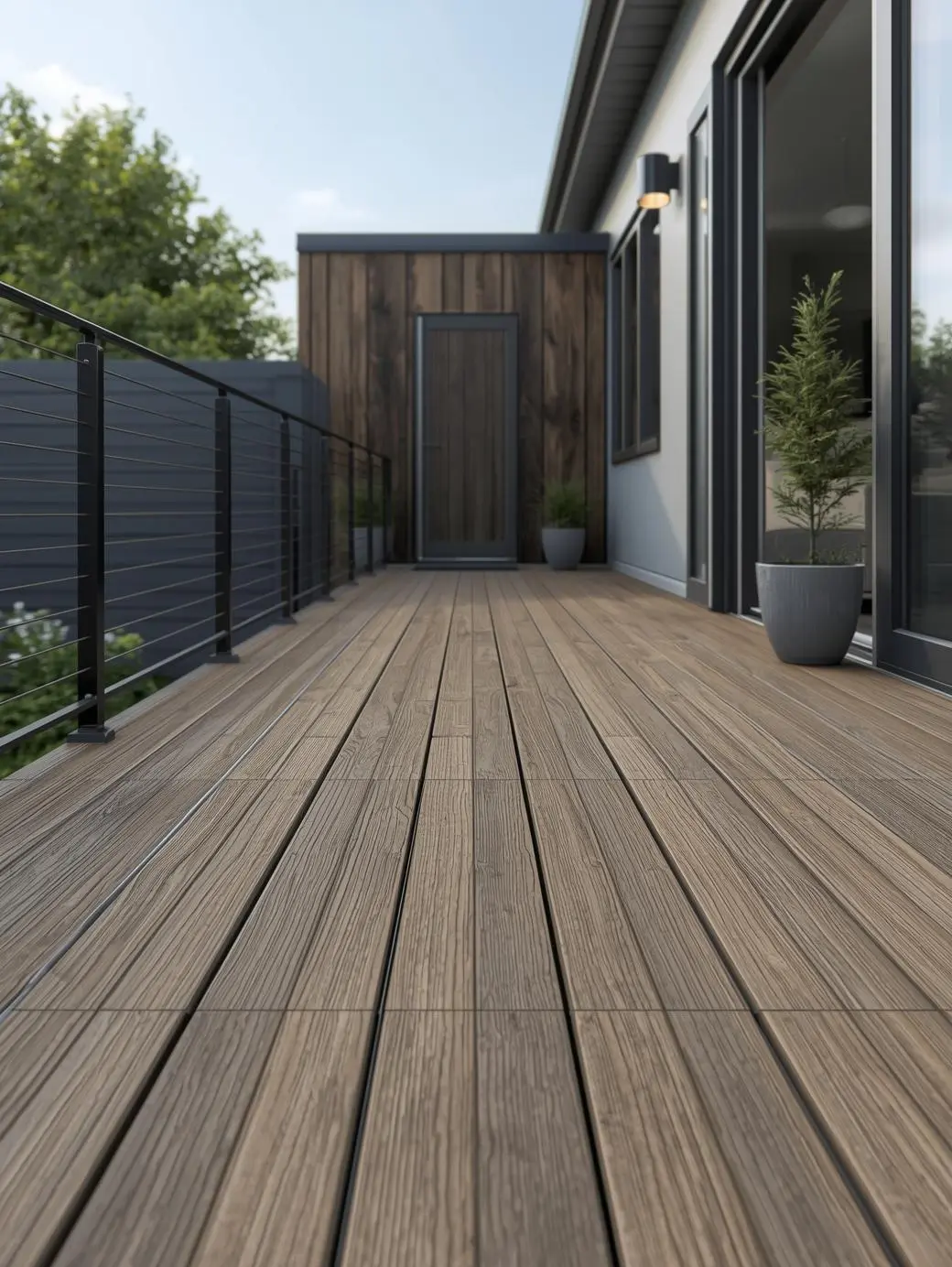
7. Versatility and wide range of applications
Composite decking boards stand out for their remarkable versatility. They can be used not only on patios and balconies at private homes, but also around swimming pools, in gardens, on boardwalks, footbridges and in public spaces. A wide range of colours, textures and finishes makes it possible to match them to almost any design style – from modern, minimalist spaces to classic, rustic patios.
Most importantly, the material is virtually maintenance-free, making the space more comfortable to use. Even with intensive use, it does not require regular maintenance, and its attractive appearance is retained for many years. This makes composite decking boards an ideal solution for both private homeowners and commercial investors who need durable, easy-to-maintain surfaces with a high-quality appearance.
Another advantage is that composite components can be easily matched to patio and balcony structures, making installation, upgrades and any extensions to the surface easier. The material’s versatility makes it not only a durable investment, but also a flexible one in terms of design.
8. Practical tips for use
To help composite decking boards retain their properties for many years, it is worth following a few guidelines:
-
Regular cleaning – water and detergent a few times a year are sufficient.
-
Avoiding standing water – although the boards are moisture-resistant, ensure that water can drain away to prevent puddles from forming.
-
Protection from sharp tools – using garden furniture with soft pads reduces the risk of scratches.
-
Checking joints and fixings – checking any screws or clips before each season extends the service life of the structure.
Summary:
A composite decking board is a material that combines the appearance of wood with the durability and low-maintenance qualities of plastics. Thanks to their resistance to water, moisture, UV radiation and microorganisms, users can enjoy a beautiful patio or balcony without the need for time-consuming maintenance or refurbishment. Their dimensional stability, resistance to mechanical damage and long-term warranty make them a worthwhile and practical investment.
For those who value comfort, durability and aesthetics, composite decking is a solution that combines convenience with reliability for many years. Its maintenance-free nature and long lifespan make it an ideal choice for gardens, terraces, balconies and even public spaces.



