Composite decking boards in urban developments – a new trend in urban architecture?
Does composite decking have a place in the city? We analyse the use of composite decking boards in urban developments, on rooftop terraces and in modern urban architecture.

When we think of urban development, the first things that usually come to mind are glass, steel, concrete and... even more concrete. Fortunately, though, contemporary architecture is increasingly embracing materials that combine durability with good looks and an eco-friendly approach. And this is where composite decking comes in. Until recently, we mainly associated it with garden decking and outdoor spaces at home.
Today, composite materials in the city are no longer a novelty, but a genuine alternative to traditional materials. Used for rooftop terraces, façades, urban relaxation areas and elements of street furniture, they show that urban architecture can be both functional and easy on the eye.
Is composite decking a good choice for urban spaces? Can it cope with everyday city life, changeable weather, heavy footfall and users’ needs? Read on to find out – we explore the topic from A to Z!
Composite materials in the city – a new dimension in urban design.
Once mainly reserved for private terraces and gardens, today composite materials in the city feature in increasingly ambitious architectural projects. Why? Because they combine the durability of industrial materials with the look of natural wood, and they also:
- are weather-resistant,
- require no maintenance,
- fit perfectly with the trend towards sustainable construction.
Cities in the twenty-first century need materials that not only look good, but also stand up to the pressures of time, people and the climate. And composite seems to be the ideal candidate.
Rooftop terraces – composite takes things to new heights.
Rooftop terraces are an increasingly popular trend in large cities. Instead of empty spaces above office blocks and flats, they are being transformed into green spaces for relaxation, cafés and even small gardens. And this is where composite plays a key role:
Why?
- It is lightweight, so it does not put the same strain on the roof structure as traditional concrete slabs.
- Its resistance to rain, frost and sunshine makes it ideal for outdoor spaces.
- A non-slip surface helps keep it safe, even after rain.
- It looks attractive and does not need painting or varnishing – helping to keep maintenance costs down.
In many projects, composite is the main finishing material for rooftop terraces, showing that urban architecture is focused on both function and style.
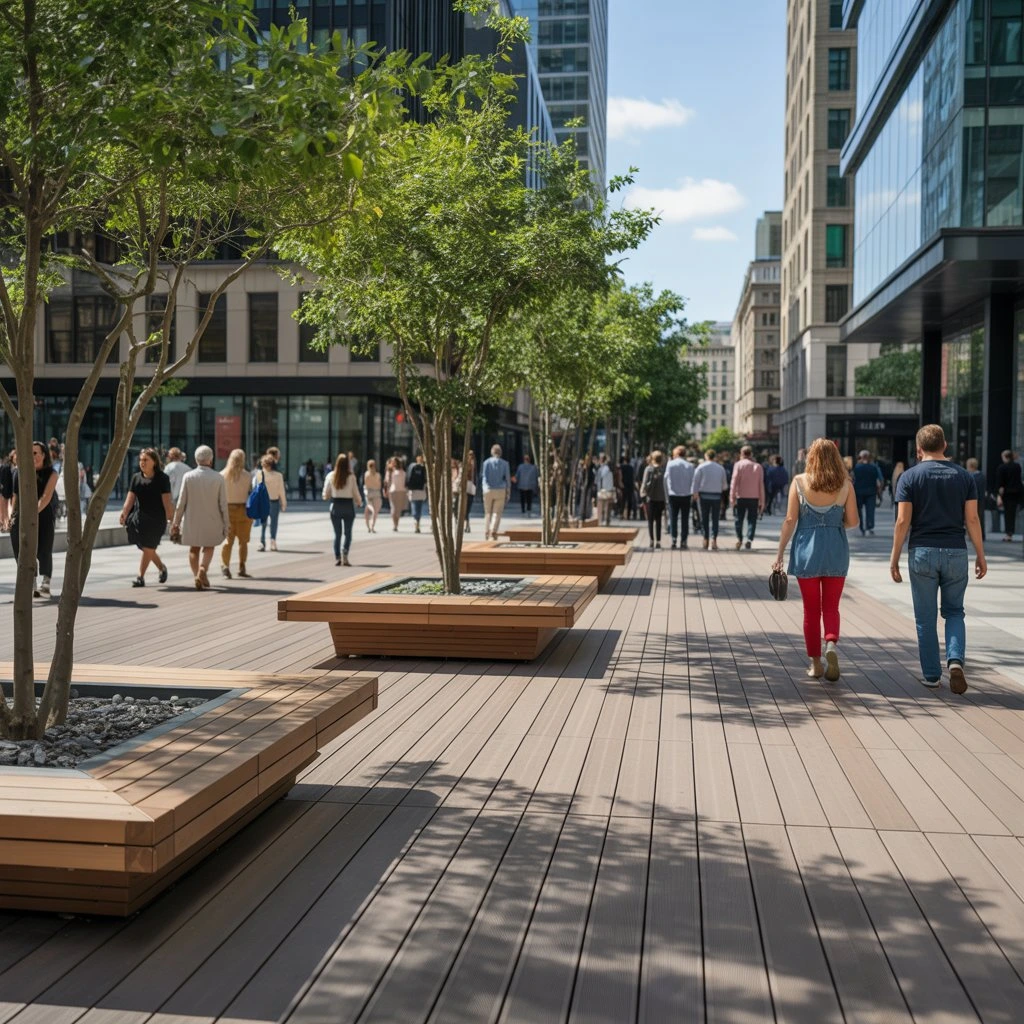
Façades and public spaces – composite as a modern alternative.
Composite decking is not just for flooring. It is increasingly being used as:
- façade cladding,
- wall panels in public spaces,
- street furniture (benches, planters, fencing and platforms).
Its use in urban architecture is based on several key advantages:
- High resistance to vandalism – it is difficult to damage, scratch or stain permanently.
- Easy to install and remove – an important benefit for temporary and event projects.
- A neutral, elegant appearance – it works just as well with glass and steel as it does with urban greenery.
Examples of uses:
- composite decking used as wall cladding in shopping centres,
- seating and benches in urban parks,
- surfacing for walking paths and dog runs,
- chill-out areas in office blocks and coworking spaces.
Urban architecture on the same basis – what does that mean?
A city is a system. Everything in it needs to work on the basis of efficiency, durability and good looks. Composite fits this approach perfectly:
- Functionality – it stands up to urban conditions: rain, snow, pollution and wear.
- Moisture resistance – it does not go mouldy or rot, and it does not absorb water.
- Easy maintenance – simply rinse it with a pressure washer.
- Long service life – even 25–30 years without replacement.
- Eco-friendliness – many manufacturers make decking from recycled materials.
Architects are increasingly designing rooftop terraces, outdoor offices, urban squares and relaxation areas using composite, because they know it works on the same principles as other modern solutions: good looks + practicality + durability.
Advantages of composite in urban spaces.
In short, here is what makes composite materials in the city such a good choice:
- weather-resistant (UV, rain and frost),
- an attractive wood-like appearance,
- no need for painting or treatment,
- easy to install and remove,
- a safe, non-slip surface,
- suitable for use on roofs and floor slabs,
- eco-friendly production using recycled materials.
FAQs – questions from urban planners and investors.
Are composite decking boards suitable for public spaces?
Yes – they are durable, resistant to vandalism and easy to clean.
Can composite be used on the roof of an office block or block of flats?
Absolutely – provided the substrate is prepared correctly, composite is a lightweight and attractive alternative to heavy surfacing.
Does composite fade in the sun?
High-quality boards have UV filters that protect the colour from fading.
How long will decking last in urban conditions?
Up to 25–30 years without needing replacement, with minimal maintenance.
Instead of a summary – the city of the future is being built today.
A city is about more than functionality – it is also about atmosphere, looks and lifestyle. Composite decking in urban development is not a passing fad, but an answer to the real needs of modern cities: durability, safety and visual appeal.
If you are planning an architectural project, public space, rooftop garden or terrace, composite should be on your list of options. Because today, we build not for ‘the short term’, but ‘for years to come’.
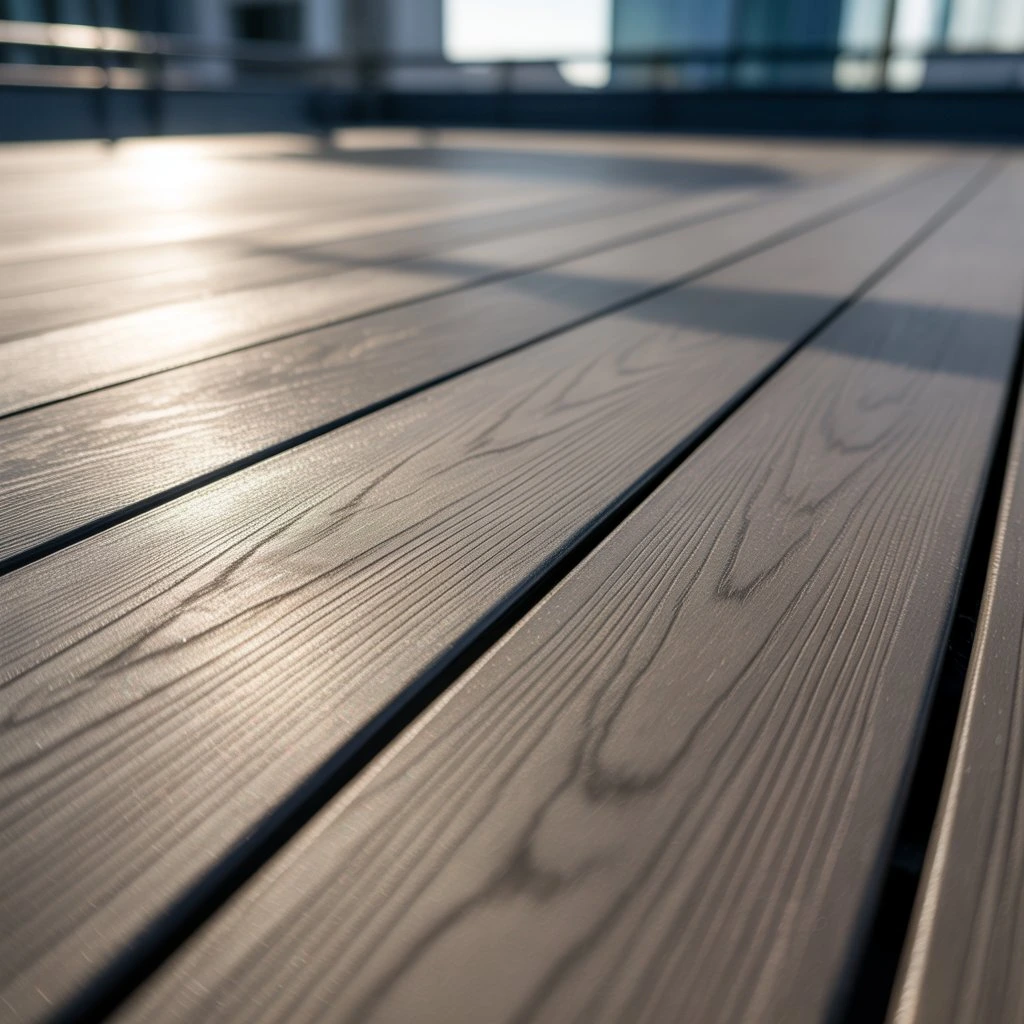
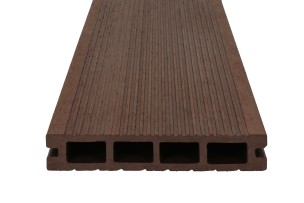
SELECT composite decking board 25x140 - 1.8 m
Price per 1 linear metre board: 17.27 zł
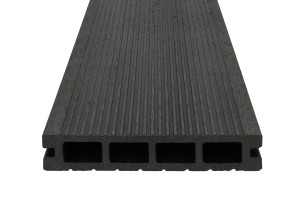
SELECT composite decking board 25x140 - 2.25 m
Price per 1 linear metre board: 17.27 zł
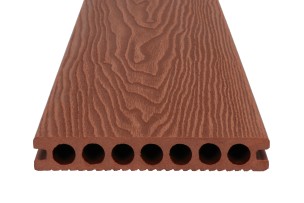
DUO composite decking board 23x148 - 4.5 m
Price per 1 linear metre board: 21.30 zł
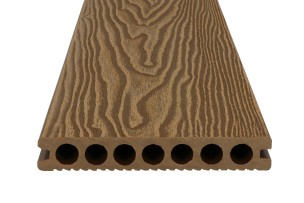
DUO composite decking board 23x148 - 4.0 m
Price per 1 linear metre board: 21.29 zł