
Why Does Composite Decking Crack? Causes, Installation Mistakes and How to Prevent Them.
A composite decking board that cracks may be the result of installation errors, weather conditions or poor-quality material. Find out how to prevent this!
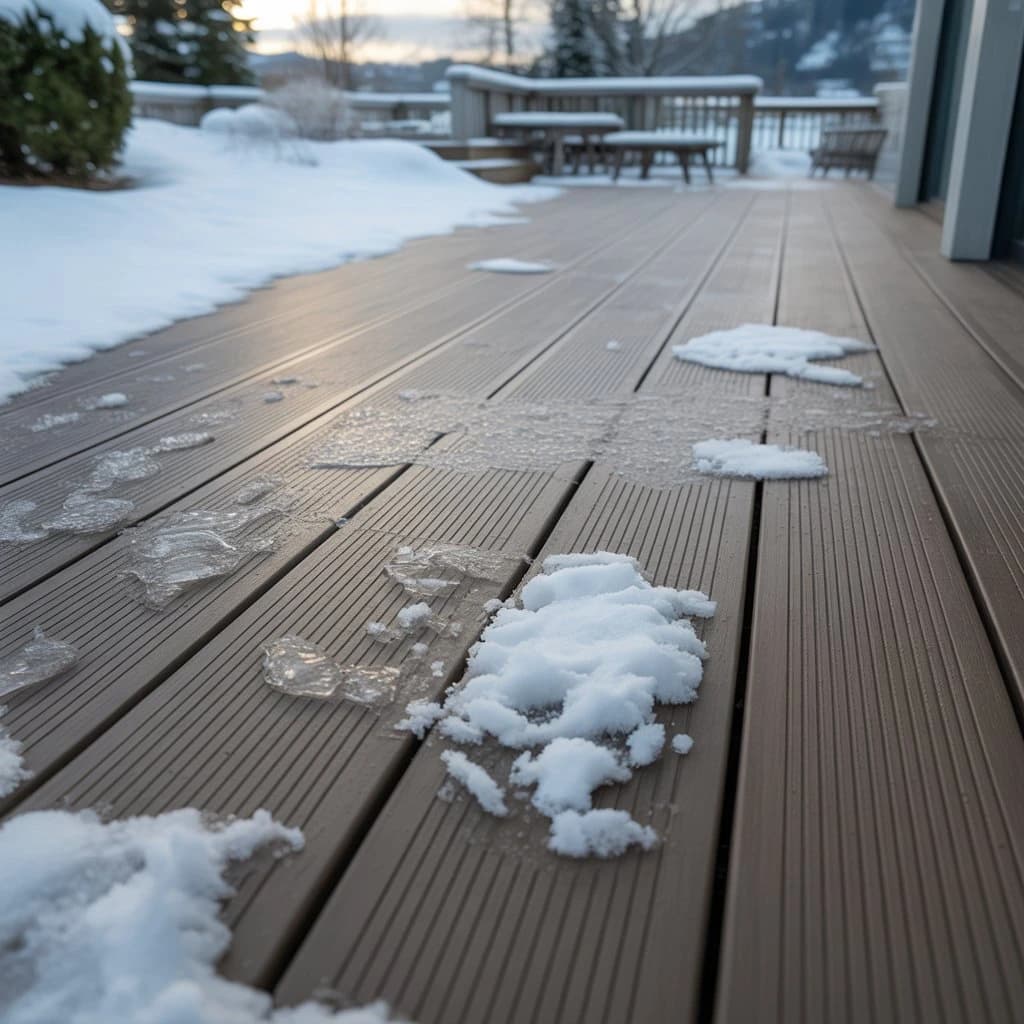
Composite decking boards have become hugely popular as an alternative to traditional timber – particularly for building terraces, facades and even fences. They are attractive, resistant to moisture, do not require annual oiling and… in theory, are meant to last for many years. Unfortunately, in practice, things can be different. It can happen that after just the first winter, a terrace owner notices cracks on the surface of the boards or in their structure. What then? Replacement? A complaint? Or could it have been prevented? In this article, we break the subject down – why does a composite decking board crack, and what can you do to avoid common mistakes?
What are composite decking boards made of?
Before looking at the causes of cracking, it is worth understanding what a composite decking board actually is. It usually consists of two main components:
- wood flour (e.g. from pine or bamboo)
- plastic (e.g. PVC, HDPE or PP)
This mix of materials creates a uniform structure that resembles timber but offers better resistance to water, mould and insects. There are two main types:
- Hollow boards (with empty spaces inside) – lighter and cheaper
- Solid boards (solid throughout) – heavier and more durable
Despite these advantages, composite material is still susceptible to external influences – and is not indestructible.
The most common causes of composite decking board cracking.
1. Installation errors.
This is the most common culprit. Even the best board will not last if it has been installed incorrectly. What exactly can go wrong?
- No expansion gaps – Composite material “moves” – expanding and contracting with changes in temperature. If no expansion gaps have been left between the boards and walls, the material has no room to move and cracks.
- Fixing that is too rigid – Boards should be installed using flexible fixing clips, not screwed rigidly through the surface.
- Unsuitable base – The terrace should have adequate ventilation and water drainage. No gaps between the joists or installation on a damp base causes rotting and deformation.
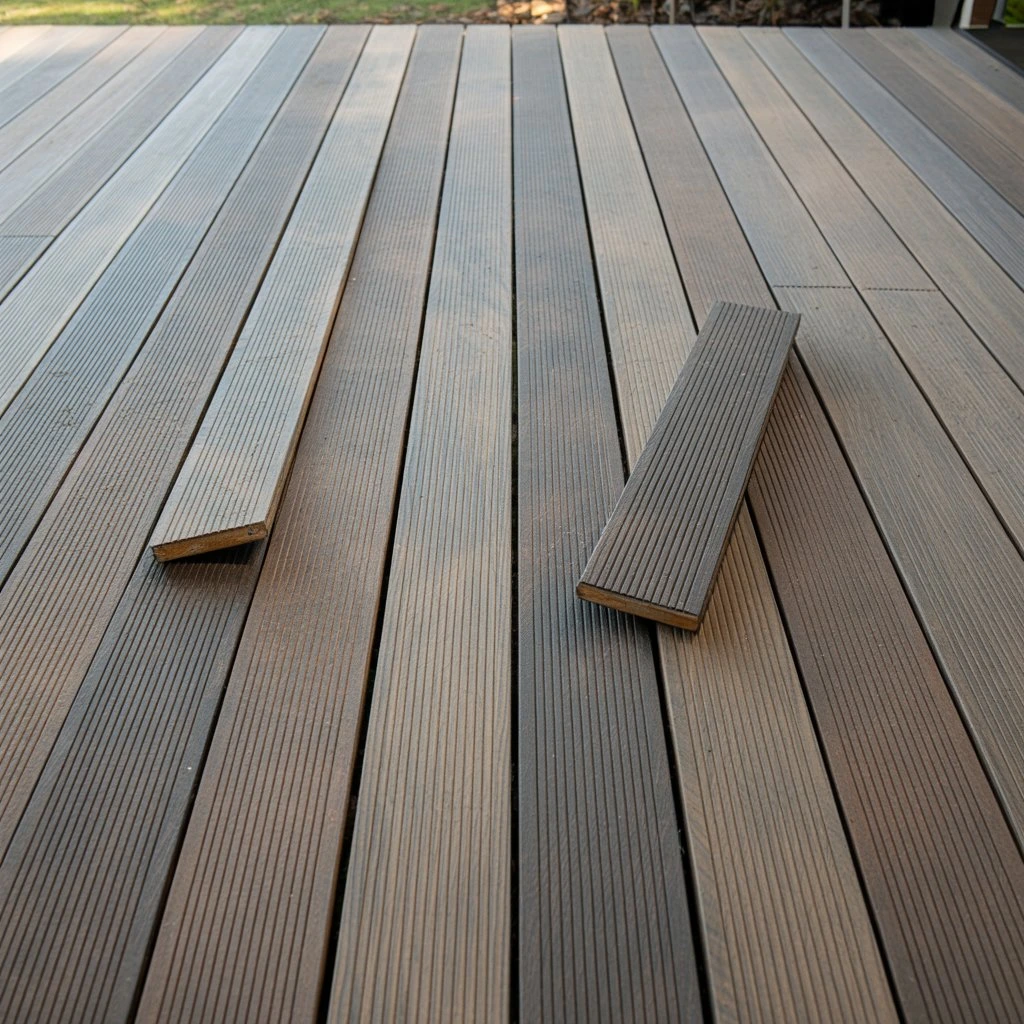
2. Extreme weather conditions.
The Polish climate can be surprising. 35°C in summer, -20°C in winter. This temperature range causes the material to contract and expand by as much as a few millimetres. After several cycles, internal stresses can develop, resulting in microcracks. Add to this:
- Frost and standing water,
- UV radiation,
- Moisture freezing and thawing in the pores of the board.
The result? Surface cracks and a weakened structure.
3. Poor-quality material.
Not all composite decking boards are created equal. DIY stores may offer products at tempting prices, but often this is merely… a false economy. Cheap boards have:
- a lower proportion of plastic (making them less resistant to moisture),
- unstable bonding between components,
- no UV-protective layer.
After a year of use, they may already have microcracks, which deepen over time.
4. Damage during transport or storage.
Composite decking boards should be stored flat, in a dry place, with adequate support. If they have been left tilted for a long time or exposed to changing conditions, they may lose their original shape and crack more easily during installation.
How can you prevent composite decking boards from cracking?
1. Professional installation.
Do not skimp on professional installers. Correct installation is essential for durability. Remember to:
- leave expansion gaps,
- ensure ventilation beneath the terrace,
- use original fixing clips,
- space the joists correctly (too far apart = greater risk of deflection and cracking).
2. Choose reputable manufacturers.
Choose companies with quality certificates and positive customer reviews. Avoid cheap alternatives without a warranty. Check whether the board has UV protection and is suitable for our climate.
3. Proper care.
Composite decking boards do not require oiling, but it is worth:
- washing them once a season (e.g. with a pressure washer up to 100 bar),
- removing accumulated snow in winter,
- avoiding placing heavy pots on them without pads.
Frequently asked questions (FAQ).
1. Can cracks in a composite decking board be the subject of a complaint?
Yes, but only if they are caused by a manufacturing defect and not by installation errors. It is worth keeping photographic documentation of the installation.
2. Can a cracked composite decking board be repaired?In most cases, it is best to replace it. You can try using a repair compound, but this is only a temporary solution.
3. What should you do if only the ends of the boards are cracking?This may indicate a lack of expansion gaps or inadequate support at the ends. It is worth asking a professional to assess the situation.
Summary – how to avoid a composite decking terrace that cracks?
A composite decking board that cracks is not necessarily a bad product – it is often the result of poorly planned or carried out installation. Proper installation, good materials and regular care will ensure that your composite terrace lasts for many seasons – without cracks or problems.
If you are planning to build a composite terrace, do it once and do it right. You will save yourself stress, frustration and… money.
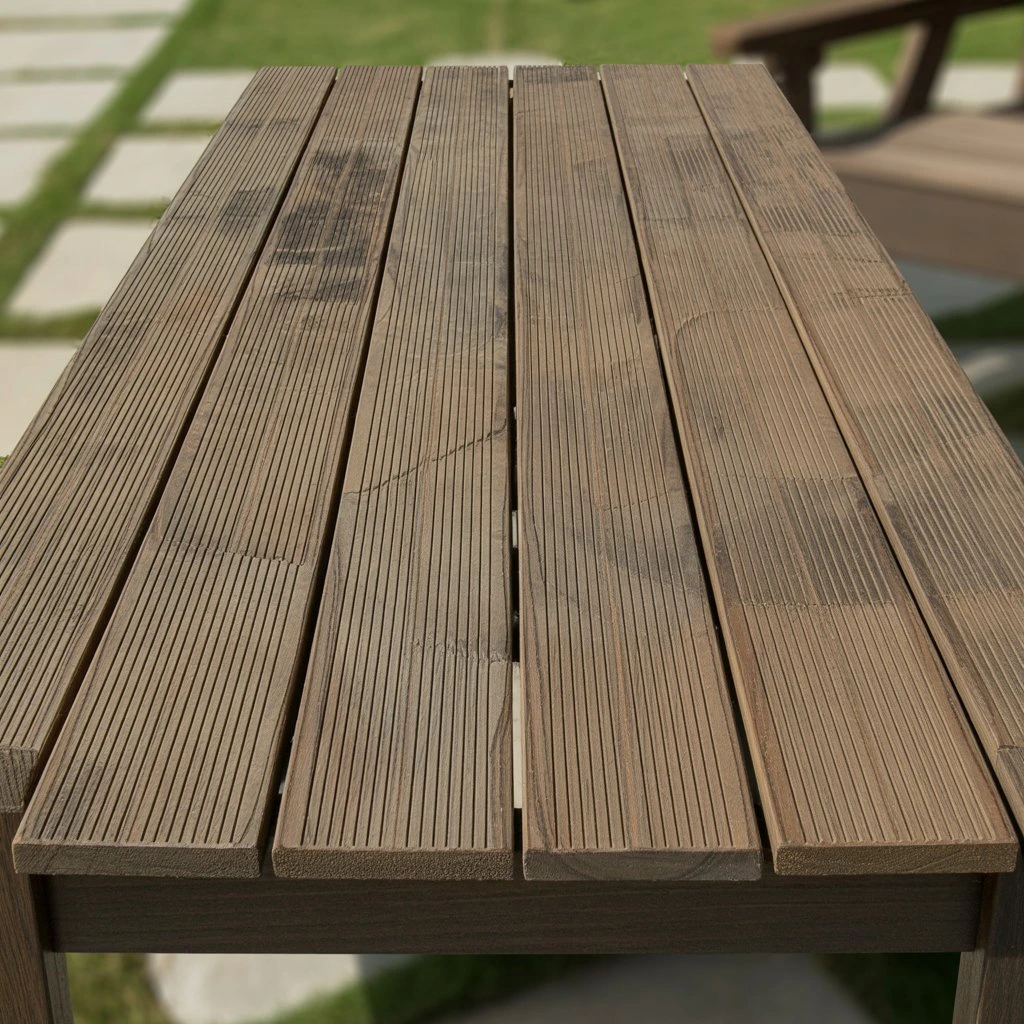
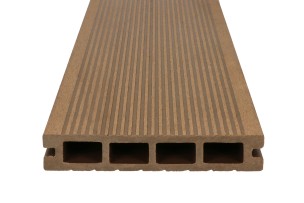
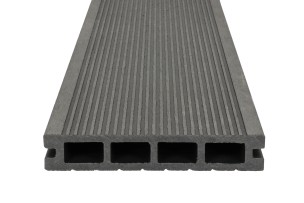
SELECT composite decking board 25x140 - 4,0 m
Price per 1 linear metre of board: 17,27 zł
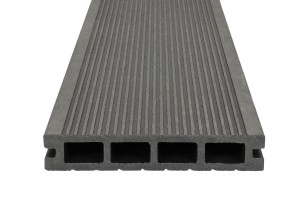
SELECT composite decking board 25x140 - 5,0 m
Price per 1 linear metre of board: 17.27 zł
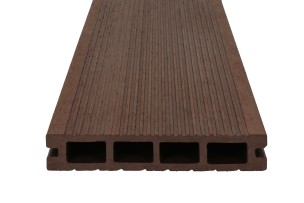
SELECT composite decking board 25x140 - 2,9 m
Price per 1 linear metre of board: 17,27 zł
SELECT composite decking board 25x140 - 1,8 m
Price per 1 linear metre of board: 17,27 zł



