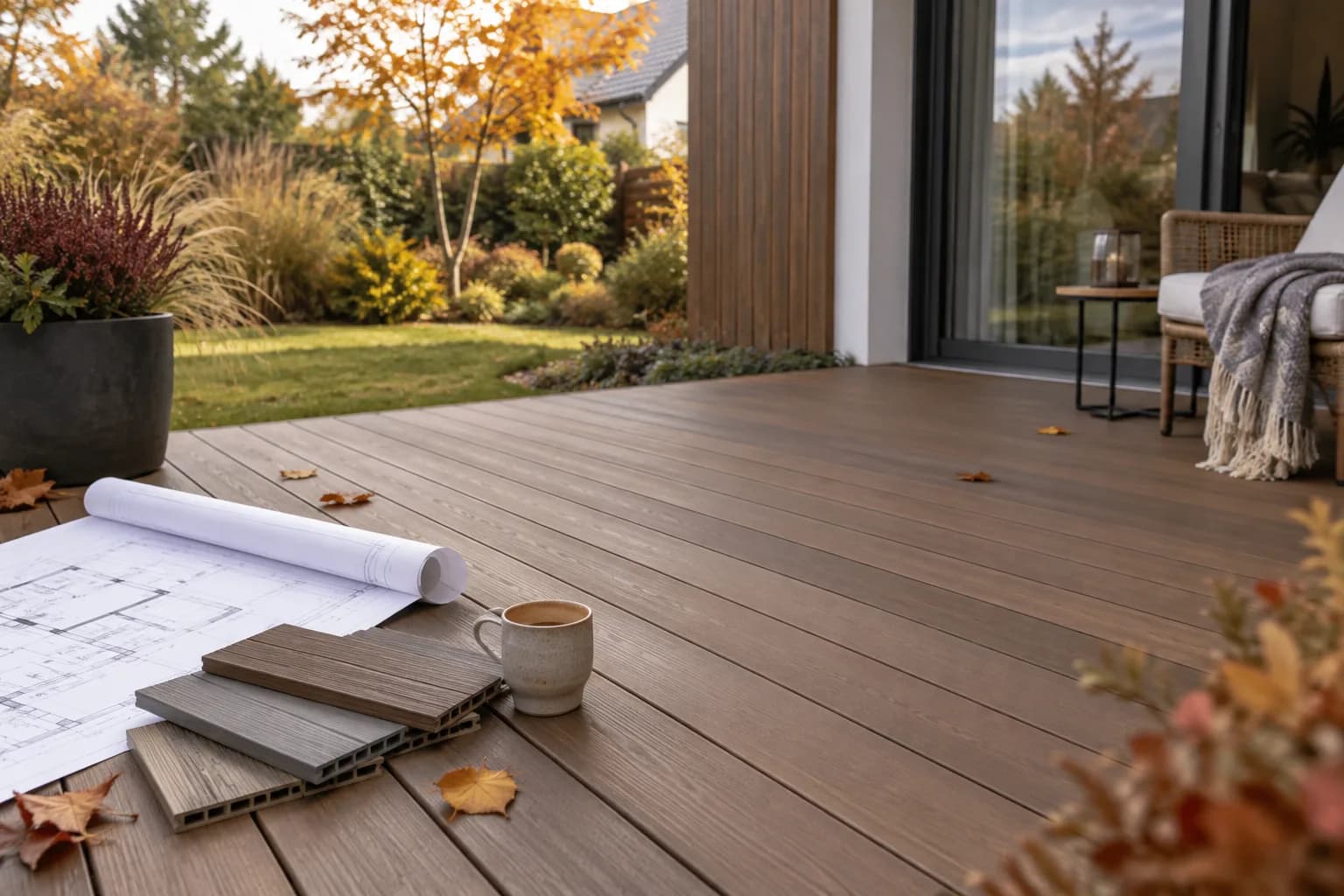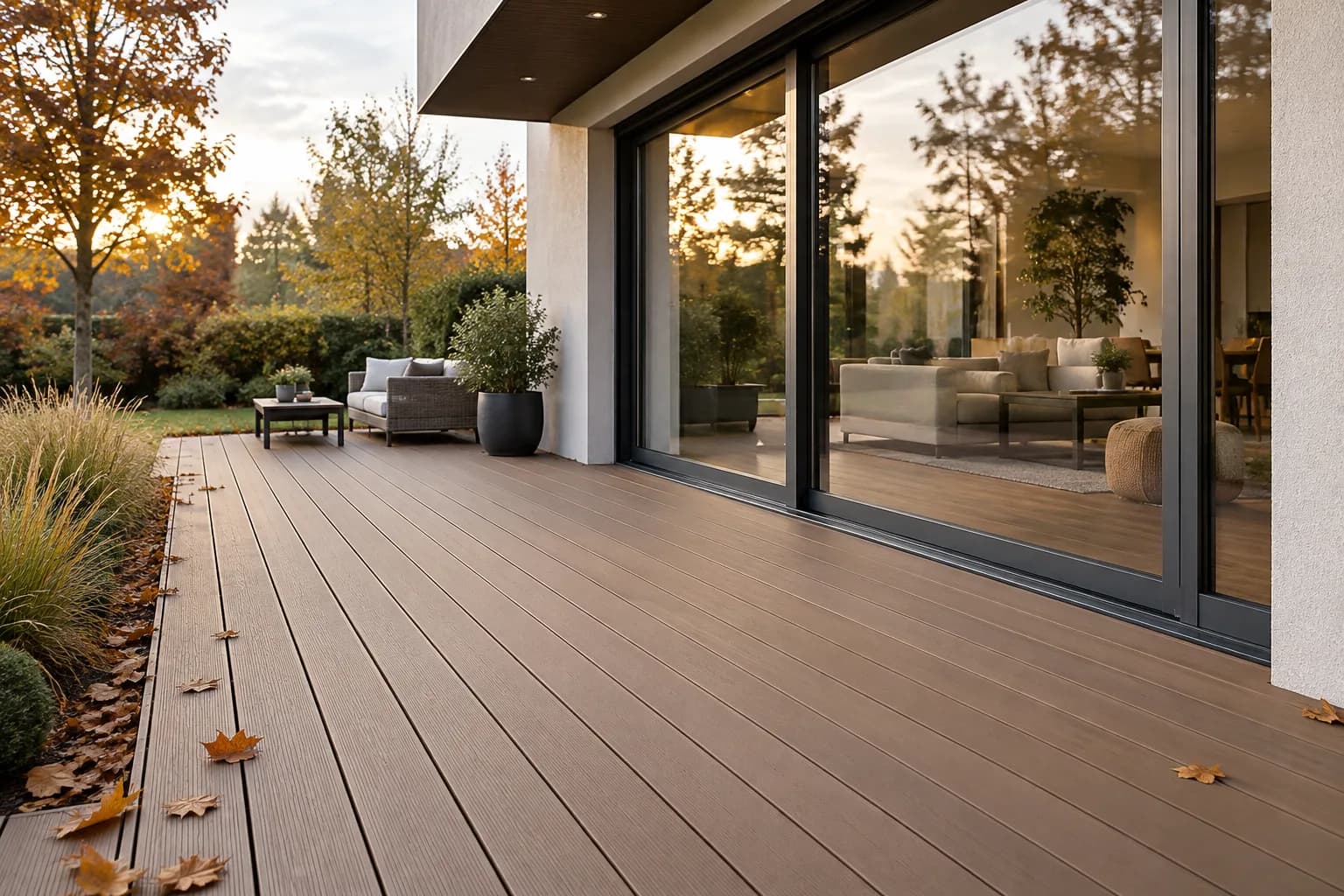
How to prepare your composite decking for a heatwave: 10 practical tips.
Do high temperatures damage composite decking boards? Discover 10 practical tips for protecting and preparing your composite decking for a heatwave.

The coming summer is set to be exceptionally hot, and weather forecasts are increasingly warning us of days when temperatures will exceed 30 degrees Celsius. For many of us, the patio becomes a second outdoor living room at this time of year. If you have a modern relaxation area made with composite decking boards (WPC), you probably appreciate how low-maintenance it is. However, it is worth remembering that extreme weather conditions – including prolonged, direct UV exposure and intense heat – call for a little extra attention.
Although high-quality composite material is much more resistant to sunlight than traditional timber, the laws of physics still apply. Decking boards can get very hot, and inadequate preparation can make the patio less comfortable to use or, in extreme cases, lead to micro-damage. So how can you prepare a composite patio for a heatwave? Here are 10 practical, tried-and-tested tips to help you enjoy a beautiful outdoor space all summer long.
1. Give it a thorough clean before the African heat arrives.
Before the sun starts beating down at full strength, your patio needs a thorough clean. Why is this so important before a heatwave? Any grains of sand, plant pollen, greasy barbecue stains or leaf debris can literally "melt into" the decking board's surface or permanently discolour it when exposed to extreme temperatures.
Use a soft brush and lukewarm water with a mild detergent (for example, a dedicated composite cleaner or ordinary washing-up liquid). Avoid harsh chlorine-based chemicals. A clean polymer-wood surface layer withstands sunlight much better, and removing dirt minimises the risk of unsightly photochemical stains.
2. Keep the expansion gaps clear.
Composite decking boards move – that is a fact. When heated, composite material (which contains plastics such as HDPE, PVC or PP) expands due to thermal expansion. At the height of a heatwave, decking boards can lengthen by as much as a few millimetres.
Before a heatwave arrives, make sure the gaps between the decking boards and the spaces alongside the building walls are completely clear. Dirt, pebbles or dried mud collected there can prevent the material from moving naturally. If the decking boards do not have room to expand, they will start pushing against one another, which in extreme cases can cause the surface to warp, the fixing clips to break and even the joists to suffer permanent damage.
3. Invest in mobile or permanent shade.
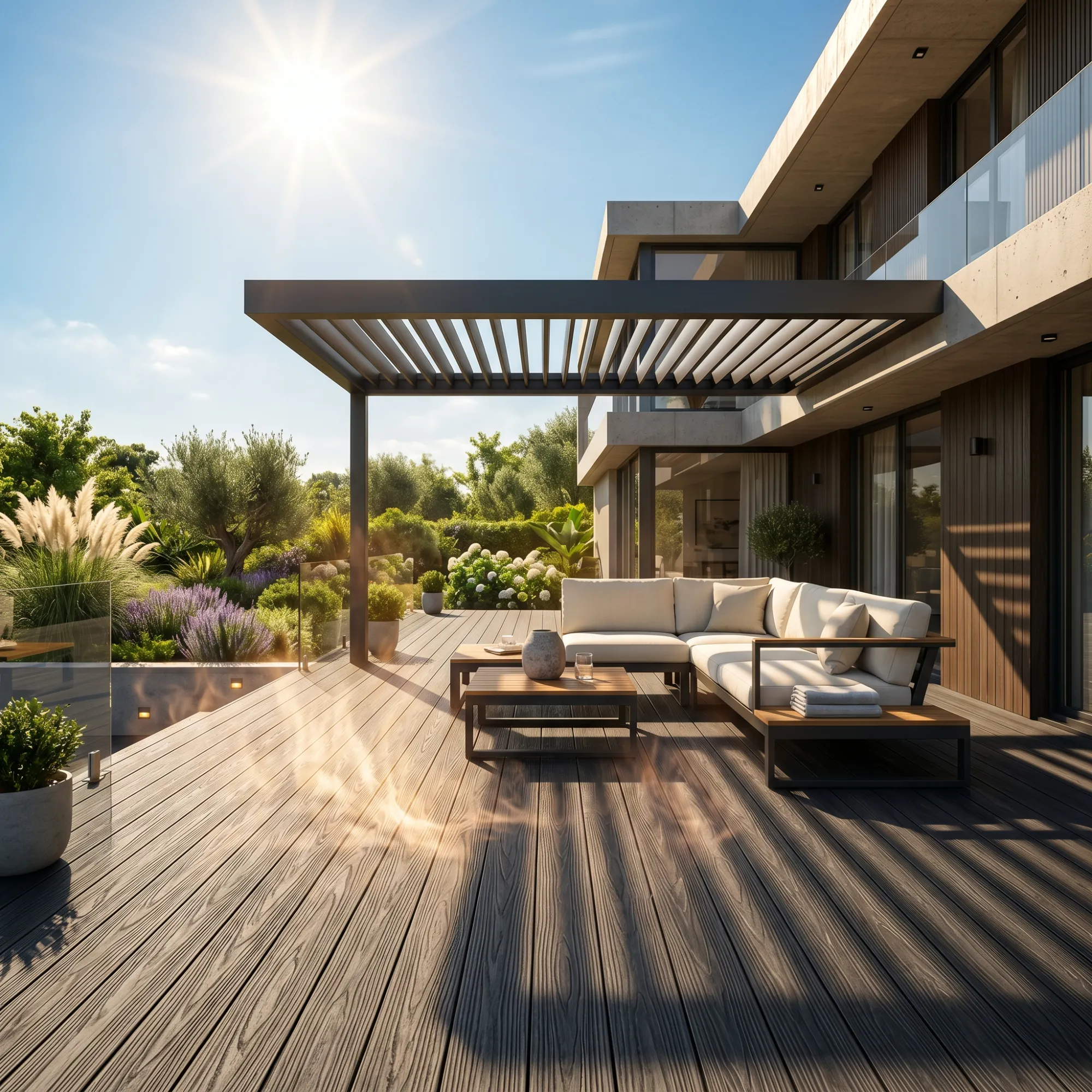
One of the biggest drawbacks of darker composite decking boards is that they can heat up to temperatures that make it impossible to walk on them barefoot. To prevent this, it is essential to block direct sunlight.
Consider installing a modern pergola or a patio awning with UV protection, or simply invest in a large, sturdy garden parasol. Shading the patio will not only lower the temperature of the decking boards by a dozen or more degrees, but, above all, create a pleasant microclimate for you and your family.
4. Protect the surface from sun cream and barbecue stains.
Hot weather encourages us to spend evenings by the barbecue and relax on a sun lounger with sun cream on our skin. Unfortunately, food grease and sun oils are composite decking's biggest summer enemies. On a hot surface, greasy substances quickly penetrate the wood flour in the composite.
- Place a special protective mat under the barbecue.
- If sun oil or fat from a pork neck steak drips onto a decking board, clean it immediately. Use warm water, washing-up liquid and a sponge. If the stain sits in the sun for several hours, it can be extremely difficult to remove.
5. Pay attention to plant pots and garden furniture (the "shadow effect").
Did you know that leaving heavy plant pots or furniture in one place for a long time during hot weather can cause marks on the patio? This is due to uneven ageing and fading of the material under UV exposure. The area beneath a pot will retain its original, darker shade, while the rest of the patio gradually becomes lighter in the sun (this is a natural process for first-generation composites during the first months of use).
In addition, moisture collects beneath pots without saucers which, combined with the heat, creates ideal conditions for hard-to-remove rings to form. During the hottest weather, it is worth gently moving furniture and plant pots every dozen or so days or using pots on risers/feet that allow air to circulate.
6. Avoid cooling the patio with icy water in direct sunlight.
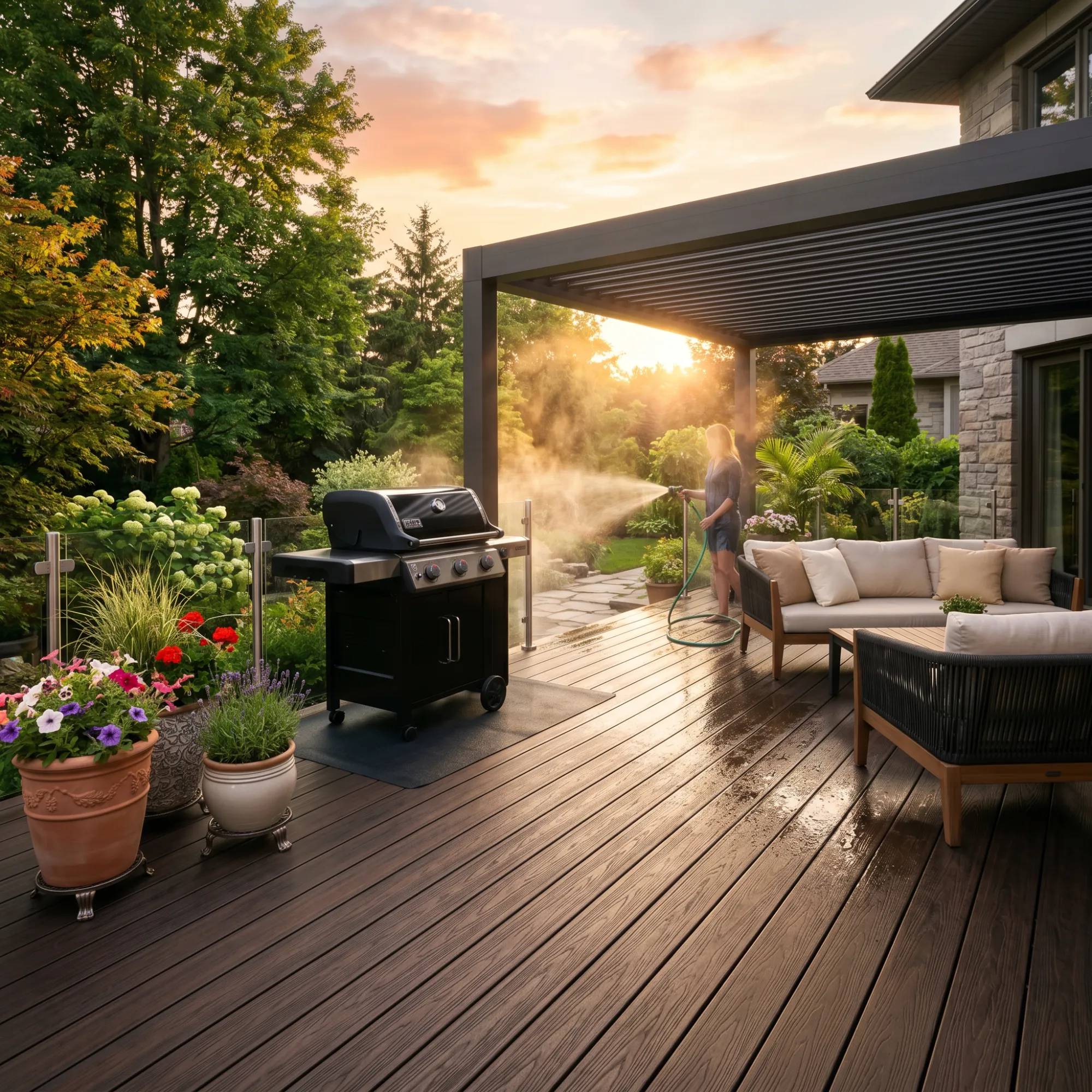
When the sun is blazing, our instinct is to spray the hot patio with cold water from a garden hose to cool it down. This is a big mistake! A sudden change in temperature (thermal shock) negatively affects the structure of the composite.
A board heated to 50°C and treated with water at a temperature of 10°C may be subject to localised stress, which weakens the polymer bonds. If you want to freshen up the terrace with water, do so early in the morning (before the sun starts beating down) or late in the evening, when the boards will naturally have released most of the heat they have built up.
7. Outdoor rugs – a hit or a hazard?
Plastic or rope outdoor rugs have become very fashionable, laid in the relaxation area on the terrace. Although they look beautiful and protect your feet from hot composite decking, during a heatwave they can do more harm than good.
Cheap rugs made from synthetic, dark-coloured materials can retain heat and act as an insulator, raising the temperature underneath to dangerous levels. They may also discolour the terrace. If you decide to use a rug, choose light-coloured, open-weave models that allow air to pass through and are designed exclusively for outdoor use.
8. Protection from strong sunlight: renovation and treatment (where applicable).
Most modern second-generation composite decking boards (covered with a special polymer coating, known as co-extrusion) do not require any treatment. However, if you have an older-style terrace (brushed composite, uniform throughout), after several years of intense sunlight it may look dried out and faded.
Before the hot season, it is worth using a special composite decking refresher or a dedicated treatment with a UV filter. This not only restores the depth of the colour, but also creates a microscopic protective layer on the terrace surface, limiting sun damage to the material.
9. Check the installation components.
Hot weather is when the entire terrace structure is subjected to the greatest tensile and compressive forces. Before the heatwave arrives, walk around the terrace and check its technical condition.
Are any boards lifting? Have the screws securing the joists or the fixing clips come loose? Loose components combined with the material's thermal movement can deform the terrace's geometry, which will be difficult to correct without dismantling it later, once the boards have cooled and contracted.

10. Child and pet safety: the "5-second" test.
The last, but most important, tip concerns using the terrace directly on hot days. Composite materials, especially those in anthracite, wenge or dark brown, absorb much more heat than natural wood.
Before letting children or pets (dogs, cats) out onto the terrace, carry out the 5-second test. Place the inside of your hand on a board and hold it there for five seconds. If the heat burns and causes discomfort, the terrace is too hot for delicate children's feet and your pet's paw pads. At such times, the shade mats mentioned earlier or wetting the terrace will prove invaluable (but remember – only in the evening or morning!).
Summary.
A composite terrace is an excellent, long-lasting investment that is ideal for modern buildings. However, to get through summer heatwaves without any problems, it needs a little help from its owner. Clear expansion gaps, suitable shading, avoiding thermal shock and responding quickly to stains are essential. By following these 10 tips, you can be sure that your terrace will withstand even the most intense heatwaves, retaining its impeccable appearance for many years.
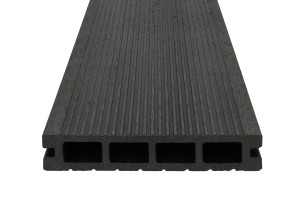
SELECT composite decking board 25x140 - 2,25 m
Price per 1 linear metre of board: 17.27 zł
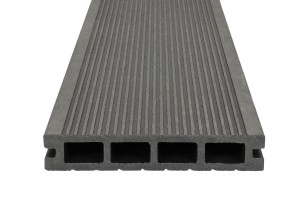
SELECT composite decking board 25x140 - 2,9 m
Price per 1 linear metre of board: 17,27 zł
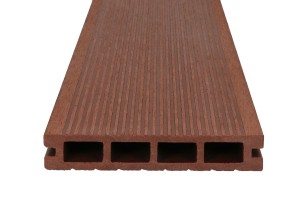
SELECT composite decking board 25x140 - 4,5 m
Price per 1 linear metre of board: 17.27 zł
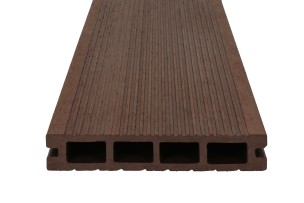
SELECT composite decking board 25x140 - 1,8 m
Price per 1 linear metre of decking board: 17,27 zł