How to install LED lighting in a composite decking board: a step-by-step guide.
Find out how to safely install LED lighting in a composite decking board. Practical tips on choosing light fittings, drilling, routing cables and achieving the best results on your terrace.
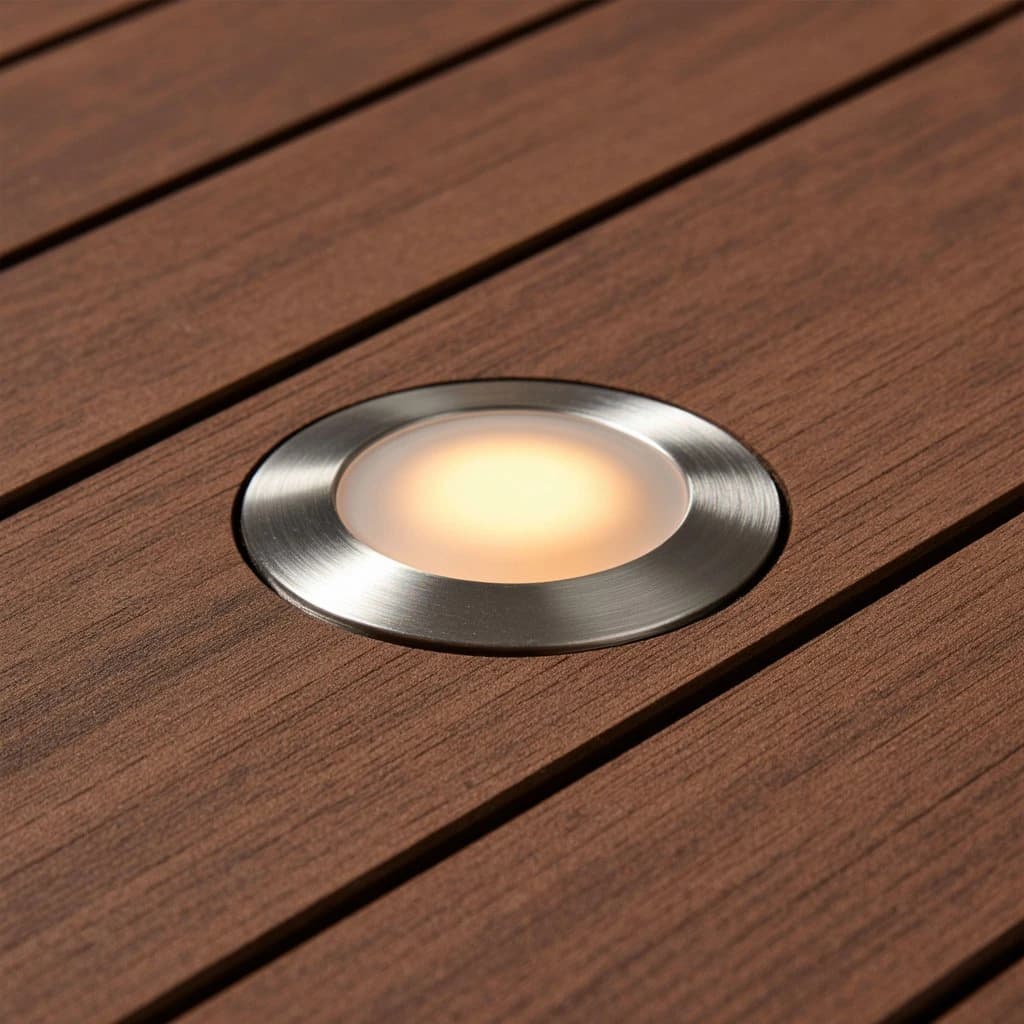
A composite decking board terrace can look great during the day, but it is after dark that it truly comes into its own. Well-planned LED lighting not only improves safety, but also creates atmosphere, highlights the lines of the terrace and brings out the elegant look of WPC decking boards. However, installing LEDs in composite decking boards differs from installing them in natural timber. Composite material expands and contracts with temperature changes, has a different structure and requires greater precision when drilling and fitting the lights. Fortunately, with the right preparation, this is a project within reach of any DIY enthusiast.
In this guide, we will show you how to install LED lighting in a composite decking board step by step, how to choose the lights, how to prevent the material from overheating and how to route the wiring neatly beneath the terrace.
Why install LED lighting in a composite decking board?
LED lighting for a composite decking terrace combines functionality with aesthetics. It improves the comfort of using the terrace and makes the space more welcoming after dark. The main benefits are clear.
- Greater safety - Illuminated steps, terrace edges and walkways significantly reduce the risk of tripping after dark. This is particularly important if the terrace has several levels or leads into the garden.
- Low energy consumption - LED diodes use very little electricity, so you can use the lighting for many hours without a major impact on your energy bills.
- Long service life - Good-quality LED lights for composite decking boards are durable, moisture-resistant and designed for outdoor use. In practice, this means fewer failures and fewer replacements.
- Visual effect - Subtle points of light in the decking boards or beside the steps create an elegant, modern effect. Even a simple terrace gains a more luxurious and refined look.
Planning terrace lighting – where it all begins.
Before you reach for the drill, plan the entire installation carefully. This is the stage at which it is easiest to avoid mistakes that will be difficult to fix later. The most commonly used solutions are:
- spot lighting along the edges of the terrace,
- LEDs by the steps and risers,
- lighting for entrance areas,
- lights marking the outline of the terrace,
- decorative lighting by the railings.
It is worth thinking about a few things straight away:
- how many light points will be needed,
- where the power supply will be located,
- how to route the cables beneath the decking boards,
- whether the lights are intended to be decorative or practical as well.
A good rule of thumb is to keep equal spacing between lights. In many projects, spacing them 100–150 cm apart works well, although for steps and edges it is worth adapting the layout to the specific design.
Composite decking board and LED lighting – what should you bear in mind?
Composite decking board, or WPC, reacts to temperature and can expand or contract, so lights should not be fitted too tightly. A tight fit can cause stress, cracks and deformation of the material, so it is worth leaving a small installation clearance. Also bear in mind that composite material does not tolerate excessive heat, so it is best to use low-voltage LED lights that emit little heat.
Which LED lights should you choose for composite decking boards?
This is one of the most important stages. Not every light is suitable for recessing into WPC. When choosing, pay attention to several specifications.
1. Ingress protection rating - For outdoor use, it is best to choose lights with an ingress protection rating of at least IP67. This makes them resistant to moisture, rain and dust.
2. Voltage - It is best to choose low-voltage 12V or 24V lights, which are safe and well suited to terrace lighting.
3. Power - For decorative terrace lighting, diodes with a power rating of 0.5 W to 1.5 W are usually sufficient, as they create a pleasant effect without the lights overheating.
4. Light colour - Much depends on the style of the terrace.
- 2700K–3000K – warm light, cosy and elegant, ideal for relaxation areas,
- 4000K – neutral, more technical and versatile,
- 6000K – cool light, suited to modern designs in grey and graphite tones.
5. Installation depth - Before buying, make sure the light will fit in the decking board and that there is enough space beneath it. This is especially important with hollow decking boards and a low terrace structure.
How do you drill holes in a composite decking board?
Drilling into a composite decking board is usually easier than drilling into hard exotic timber, but it requires care. Rushing can result in chipped edges or melted plastic.
Which tools should you use?
- a hole saw matched to the diameter of the light,
- a drill with speed control,
- a pencil or marker for markings,
- tape measure and spirit level.
What drill speed should you use?
It is safest to drill at a medium speed. A speed that is too high may heat the material and spoil the appearance of the hole. If the composite starts to melt or builds up on the tool, it is a sign that you are working too fast.
Where is best to drill?
It is best to plan the holes in the spaces between the joists. If you drill a hole directly above a joist, there may not be enough room for the fitting or cable. An exception is when the design allows for a passage through the joist from the outset. After drilling, it is worth thoroughly removing dust and shavings. This helps the fitting sit better and gives the whole installation a neater appearance.
How do you route the wiring beneath the decking?
In practice, this is the stage that determines the durability of the entire installation. Fitting the lights is one thing, but poorly routed cables can quickly spoil the overall effect. Cables should not lie directly on the ground or concrete, or in places where water may collect. Instead, it is best to secure them to the sides of the joists using:
- cable ties,
- cable clips,
- system fixing clips.
This keeps the cables suspended, better protected and less exposed to moisture. If a cable needs to pass through a joist, make a small hole in a position that will not weaken the structure. However, do not drill large holes at random in load-bearing elements.
A bus system or parallel connections?
Many ready-made LED kits for decking use plug & play solutions. They are convenient because the lights have quick connectors, making installation easier even for less experienced users. You will most often come across two options:
- a ready-made bus system with dedicated connectors,
- parallel connections used in more bespoke installations.
For most home users, a system kit is the better choice. It is simpler, quicker and usually less troublesome to service later on.
Installing LED lighting in a composite decking board, step by step.
Here is a simple guide that works for most standard installations.
- Mark the installation points - Use a pencil to mark where the fittings will go. Check the symmetry, spacing and route of the cables beneath the decking.
- Drill the holes - Use a hole saw to drill holes with diameters that match the light manufacturer's instructions. After drilling, remove the dust and check that the edges are even.
- Route the cables - Run the cables beneath the boards and bring the ends out at the points prepared for the fittings.
- Connect the lights - Connect the fittings to the main cable or system bus. Do not press the lights firmly into place yet.
- Test the installation - This is a very important step. First, connect the installation to the power supply and check that all the lights work correctly. This will help you avoid having to dismantle components later.
- Fit the fittings - Once everything is working, carefully fit the lights into the holes. If the fittings have springs, make sure they hold securely without applying excessive pressure to the board.
- Install the power supply - Connect everything to a power supply with a transformer, usually 12V or 24V. It is best to place the power supply in a dry, sheltered location or in a suitably protected electrical junction box.
The most common mistakes when installing LED lighting in a composite decking board
Although installing LED lighting in a composite decking board is not particularly difficult, a few seemingly minor mistakes can affect both the durability of the installation and the final appearance. The most common include:
- Fitting the lights too tightly – composite decking boards expand and contract with temperature changes, so failing to leave a small fitting clearance can cause stress, distortion and even damage to the material.
- Choosing lights that are too powerful – fittings with too much power may cause the housing to overheat, which is not good for the installation itself or the durability of the composite.
- Running cables along the ground – cables exposed to direct contact with moisture and dirt wear out more quickly, so it is much better to route them in a protected way, for example alongside the joists.
- Not testing before final installation – failing to check that the whole installation works before fitting the lights may mean having to dismantle them later and carry out time-consuming repairs.
- Choosing the wrong ingress protection rating – only use fittings on the decking that are designed for outdoor use and resistant to rain, moisture and changing weather conditions.
What effects can you achieve on your decking?
Well-designed LED lighting can completely transform the appearance of composite decking. Even a simple installation can make the space more functional, safer and more inviting after dark. Some of the most interesting effects you can achieve include:
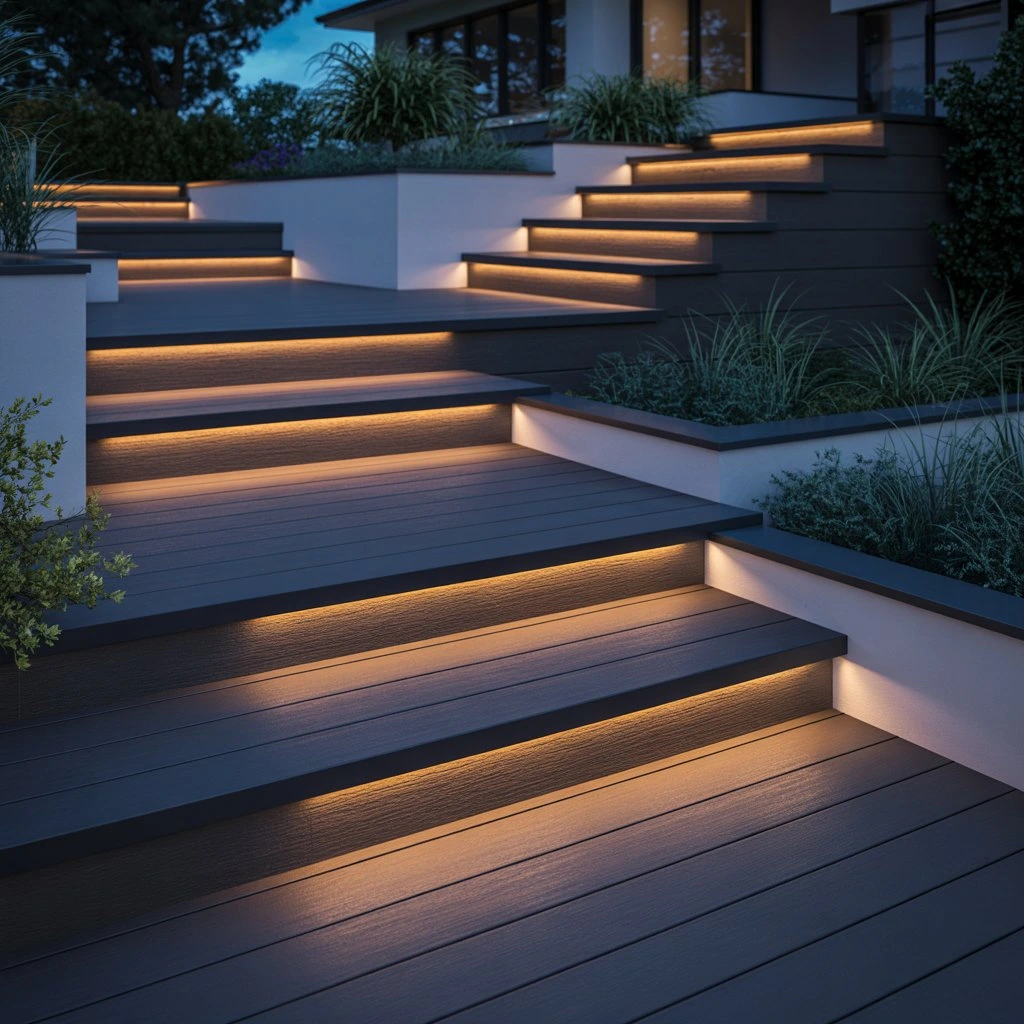
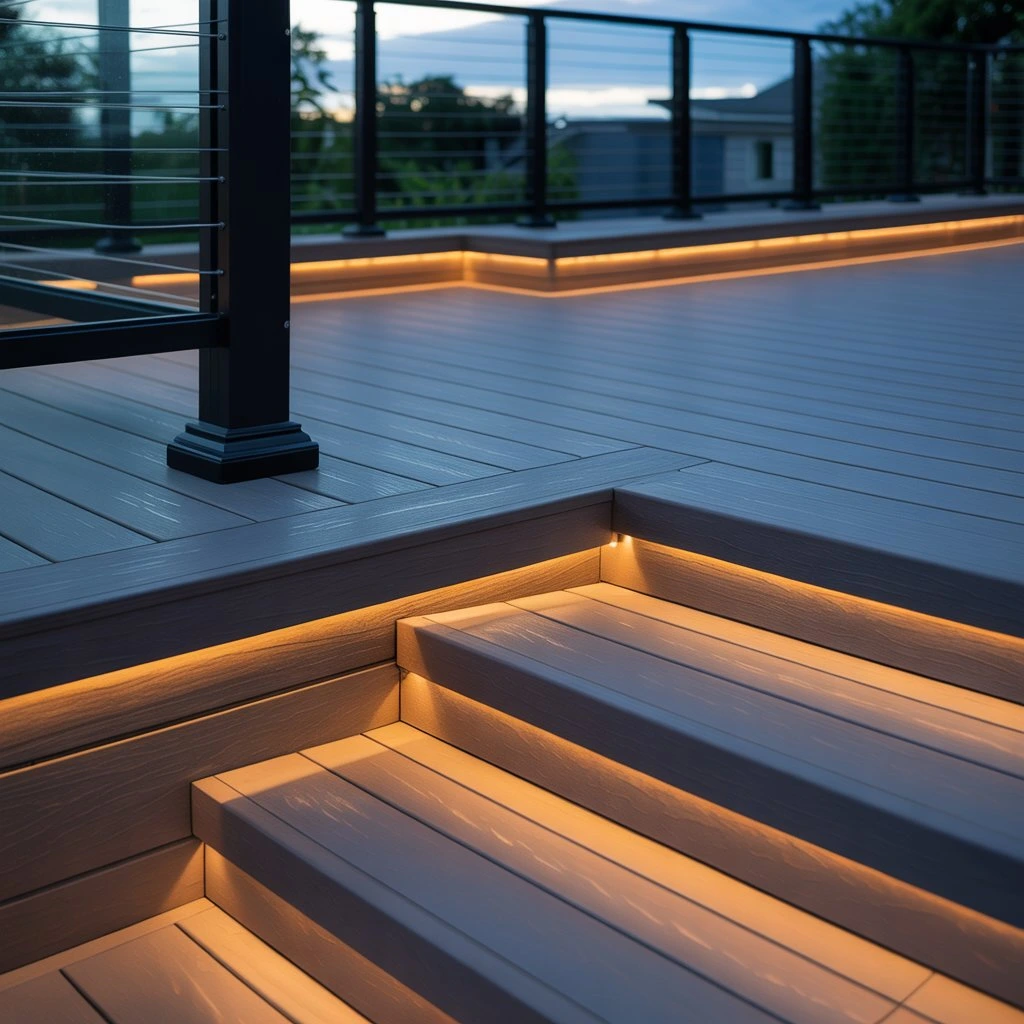
- Lighting for steps – one of the most practical and striking solutions, as it not only gives the decking a modern look but, above all, makes it safer to move around after dark.
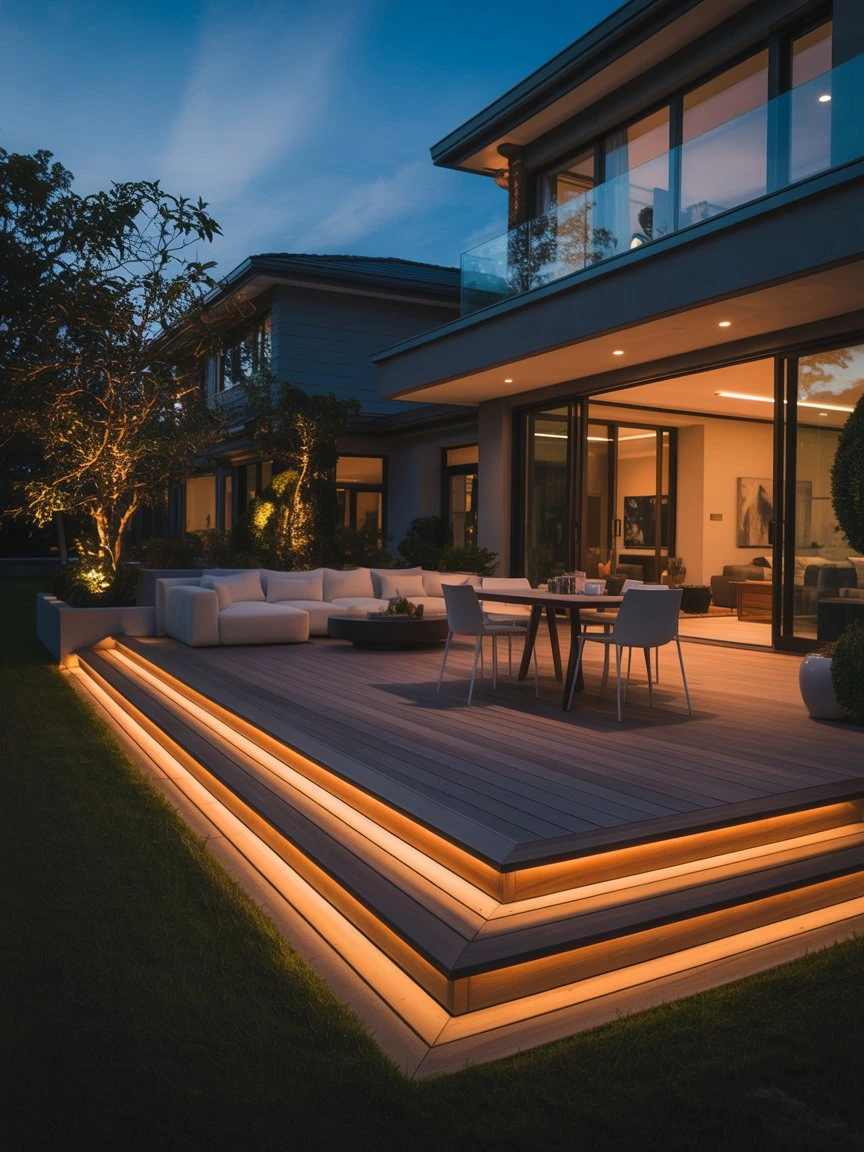
- Highlighting the edge of the decking – lights installed along the edge clearly define the outline of the whole structure, help organise the space and give it a more polished character.
- Subtle decorative lighting – discreetly positioned lights in the boards create a calm, elegant atmosphere that is ideal for relaxing in the evening and spending time on the decking.
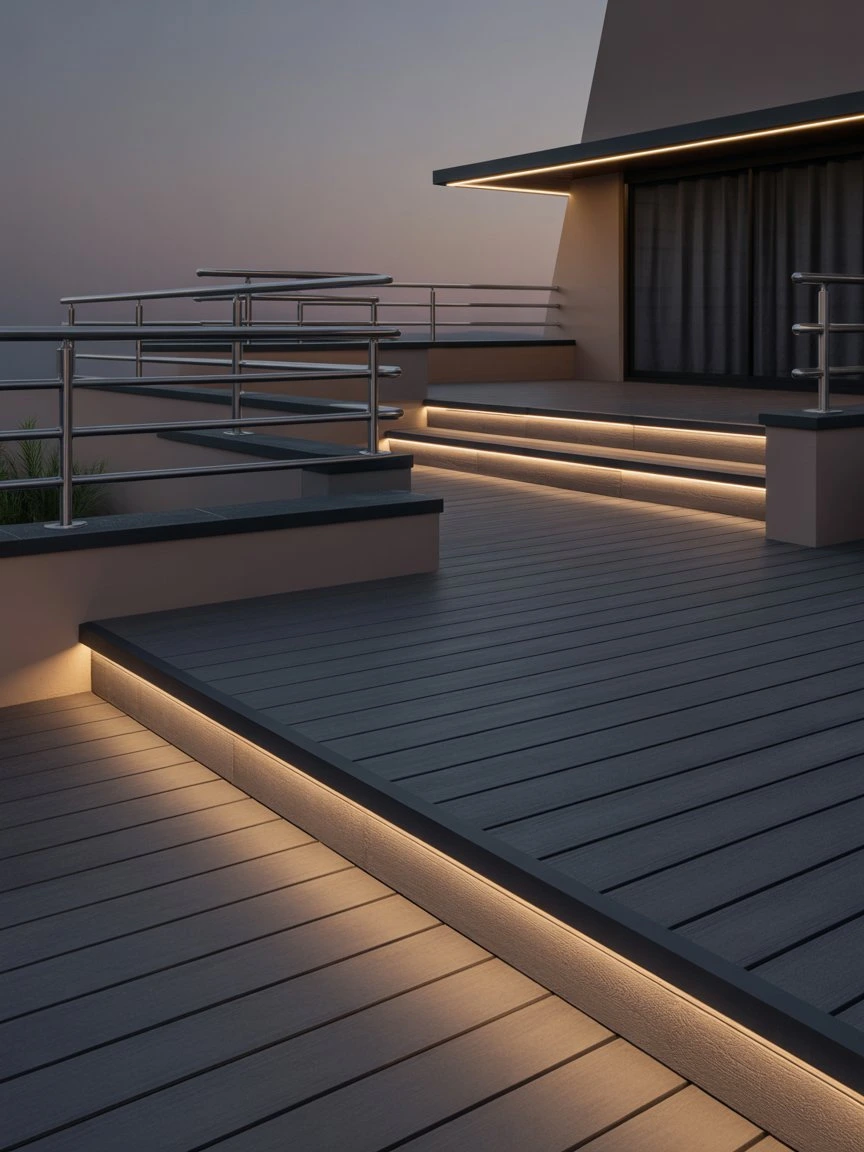
- A modern, minimalist effect – cooler-coloured lights work particularly well with grey, anthracite or graphite boards, accentuating the modern style of the design and giving it a more distinctive look.
Is it worth installing LED lighting yourself?
Yes, provided you work carefully and use the right components. The mechanical installation itself is usually quite straightforward. More attention needs to be paid to planning, wiring and protecting the power supply.
If the installation is extensive or requires unusual electrical connections, consider consulting a professional. This is especially worth doing if the lighting will be part of a larger garden system.
What should you remember?
Installing LED lighting in a composite decking board is not complicated, but it does require a sensible approach. The most important things are careful planning, choosing the right fittings, drilling carefully and routing the cables safely beneath the decking. If you make sure you have:
- low-voltage 12V or 24V fittings,
- a high ingress protection rating,
- low-power lights,
- fitting clearance in the board,
- cables suspended from the joists,
the result will be not only attractive, but also durable and safe.
Well-designed LED lighting can transform an ordinary terrace into a functional and atmospheric place to relax. And that’s the whole point — so that after dark, the terrace doesn’t disappear, but really comes to life.
FAQ – frequently asked questions.
1. Can you install LED lights in a composite decking board yourself?
Yes, in many cases this is possible. However, you need to plan the positioning of the light fittings carefully, use the right tools and choose lights designed for outdoor use.
2. Which LED lights should you choose for a composite decking terrace?
Low-voltage fittings rated at 12V or 24V, with an ingress protection rating of at least IP67 and low heat emission, work best.
3. Can lights cause a composite decking board to deform?
Yes, if the fitting gets too hot or has been installed without clearance. That’s why you need to choose suitable lights and install them in accordance with the manufacturer’s recommendations.
4. How do you conceal cables under the terrace?
It’s best to fasten them to the sides of the joists using cable ties or clips. They should not lie directly on the ground or in places exposed to water.
5. Which colour temperature is best for a terrace?
Warm light at 2700K–3000K works best for cosy designs. Neutral or cool light is a good choice for modern designs.
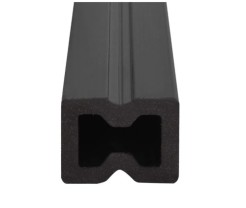
SELECT composite decking joist 30x40 (graphite) - 4m
30 x 40 x 4000
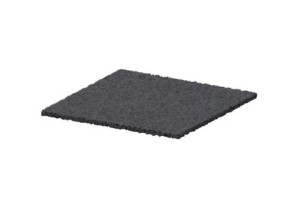
SBR rubber pads for joists 100x100x3 mm SBR100/3 104161
Sound-insulating and protective pad for insulation and surfaces, for DDP002 and DDP008 supports.
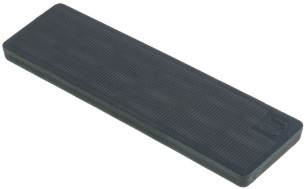
Pads for terrace joists (PLASTIC) 6x30x100
Available in packs of: 500 pcs. | 1000 pcs.
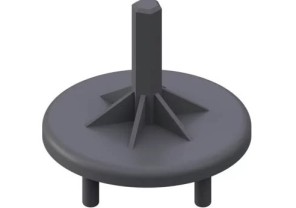
Screwdriver bit for faster tightening and height adjustment of PPK 107471 supports
Screwdriver bit designed for supports from the STANDARD and MAX series, for quickly adjusting the support height.