
How to dismantle and store composite decking out of season – A practical guide.
Find out how to safely dismantle and store composite decking after the season. Learn how to protect it from winter weather and extend its lifespan.

When the summer season comes to an end and the weather becomes less inviting for spending time on the terrace, the question arises: what should you do with composite decking tiles? Do they need to be dismantled? If so, how can you do it without damaging them? And most importantly: how should you store composite decking tiles so they retain their appearance and functionality?
This article answers all these questions. We’ll guide you through the process of dismantling, cleaning, protecting and, finally, storing WPC decking tiles (made from a wood-plastic composite), step by step. That way, your decking tiles will be as good as new when spring returns!
Why remove composite decking tiles for winter?
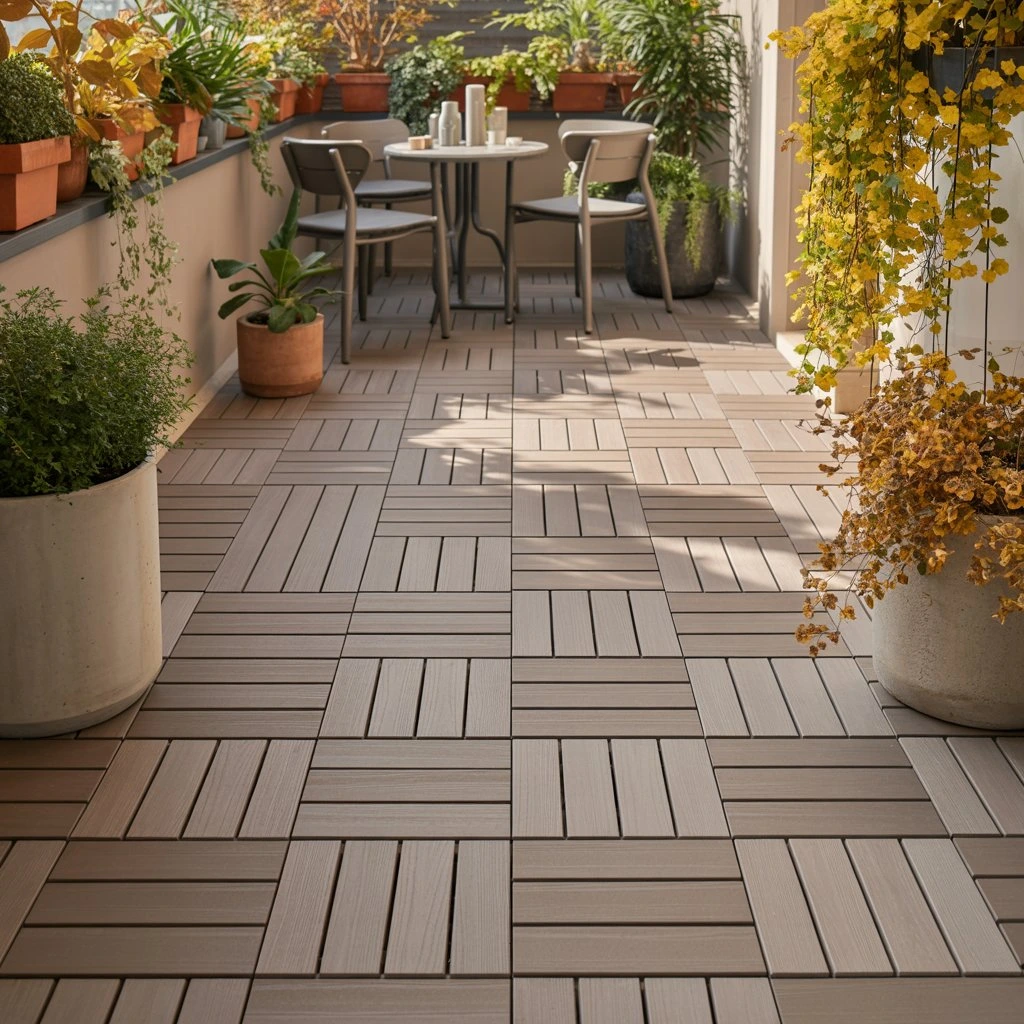
Although composite decking tiles are known for their durability and resistance to weather conditions, prolonged exposure to frost, moisture and snow can weaken them – especially if they have been laid temporarily, for example on a balcony or veranda.
The main risks are:
- Cracks and micro-damage caused by water freezing,
- Discolouration caused by frost or road salt (if they come into contact with it),
- Stains that are difficult to remove in spring,
- Mould or fungi developing in hard-to-reach gaps.
So if the decking tiles were used as a temporary surface (for example, they were not permanently fixed to a framework or support structure), it’s worth removing them and storing them somewhere safe.
When is the best time to remove composite decking tiles?
Get started before:
- the temperature falls below 5°C,
- the first frosts arrive,
- air humidity rises to the point where drying becomes difficult.
The ideal time? Late September and early October – before autumn damp sets in properly.
Common mistakes that shorten the lifespan of decking tiles.
- Leaving them on an exposed balcony all winter,
- Storing them in a damp, unventilated cellar,
- Stacking the tiles while wet and wrapping them in plastic film,
- Failing to clean them before dismantling.

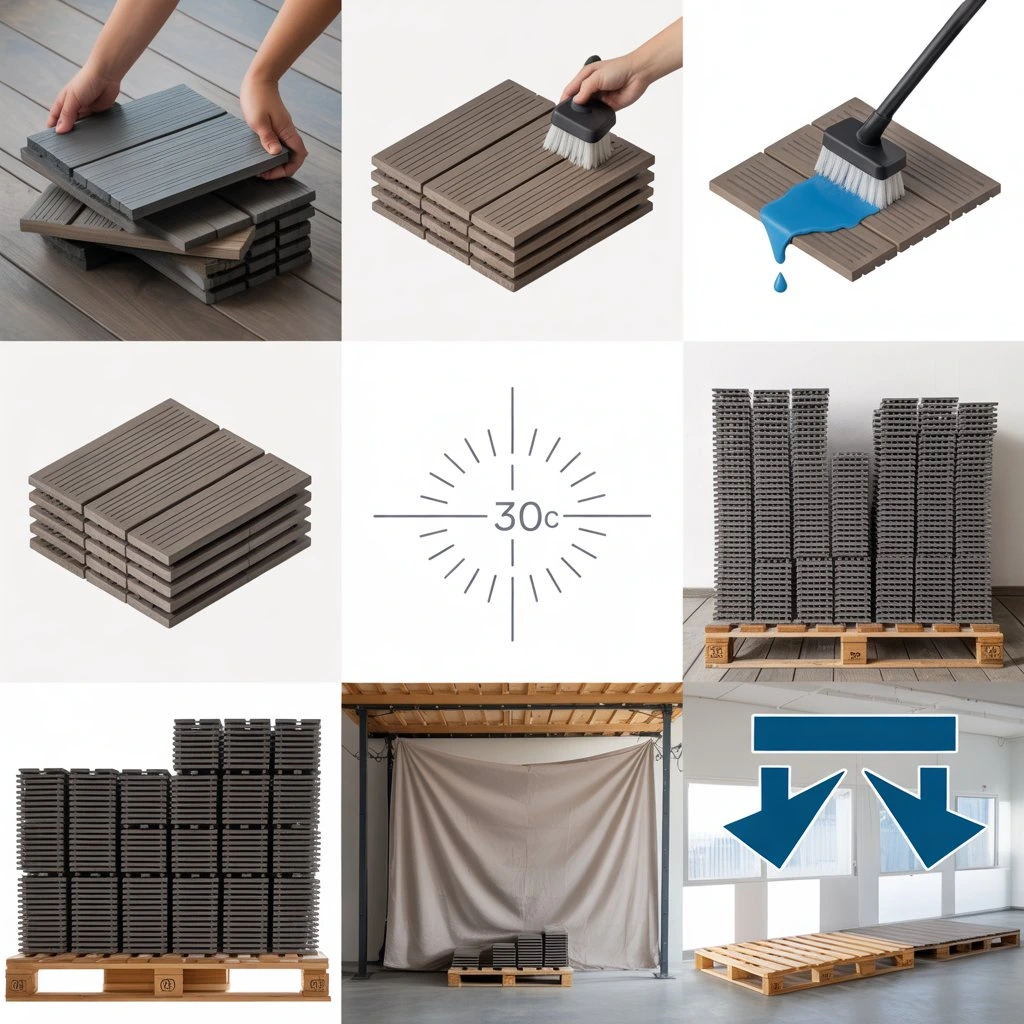
Step by step: dismantling composite decking tiles.
1. Prepare your tools.
Before you start, make sure you have the following to hand:
- Protective gloves,
- A screwdriver or drill driver (if the decking tiles are screwed down),
- Containers or bags for screws and fixing components,
- A brush or garden vacuum cleaner.
2. Remove debris from the surface.
Before unscrewing anything, thoroughly clean the decking tiles of leaves, sand and mud. Otherwise, dirt could scratch the surface during transport.
3. Carefully remove each panel.
When removing the decking tiles:
- Start at the corners,
- Try not to bend the boards – the composite may crack,
- Label each piece (e.g. A1, A2...) to make it easier to put them back together in spring.
4. Check their condition.
It’s worth checking straight away:
- Is any panel damaged?
- Are any of the fastenings loose?
- Does the surface need cleaning or maintenance?
How should you store composite decking tiles out of season?
This is a key stage – their durability depends on how they are stored. Here are some guidelines to follow.
Storage location.
Ideal conditions are:
- A covered, dry place – e.g. a garage, cellar or garden shed.
- A well-ventilated room.
- Away from water and snow.
Don’t leave them directly on the ground – moisture underneath can damage them.
How to stack them.
- Lay the panels flat on a pallet or wooden battens.
- Don’t put heavy items on the decking tiles – they may bend.
- Cover them with breathable material (e.g. horticultural fleece), not plastic – to prevent moisture building up.
Cleaning before the season.
In spring:
- Wash the boards with lukewarm water and a mild detergent,
- Dry them and leave them to air,
- Check the fixings and replace any damaged parts if necessary.
Seasonal use – what should you know?
If you decide to leave the platforms outside over winter, for example because they are permanently installed:
- Remove snow regularly (but not with a metal shovel – it scratches the surface!),
- Avoid sprinkling salt – use sand or anti-slip granules,
- Check that the water drainage is clear – standing water creates a risk of cracks.
Pro tips – what else can you do?
- Label each part with a marker or sticker – you’ll save time in spring.
- Take photos before dismantling – they’re a great guide for reassembly!
- Check the manufacturer’s instructions – different brands may have their own recommendations.
FAQ – frequently asked questions
1. Does every type of composite platform need to be dismantled for winter?
No – if you have a permanently installed system with water drainage, there’s no need. But it’s worth removing freestanding platforms.
2. Can they be left on a balcony under cover?
Yes, but they must be well protected from moisture and should not lie directly on concrete or tiles.
3. How long can composite platforms be stored?
Even several years – provided they are dry, clean and stored appropriately.
4. Do they need to be oiled before winter?
No – composite does not need oiling like wood. Cleaning is sufficient.
Summary – how to extend the life of composite platforms?
Composite platforms are certainly a sturdy and attractive investment, but only if you take proper care of them – especially off-season. Regular maintenance, careful dismantling before winter, thorough cleaning and suitable storage in a dry, ventilated place will help prevent damage and ensure they look like new again in spring. It is also essential not to leave them out in freezing conditions or place extra weight on them during storage. If you look after them now, they will certainly reward you with a long service life and trouble-free use for seasons to come.
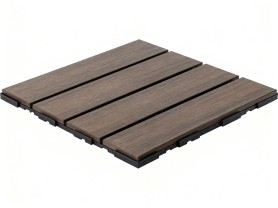
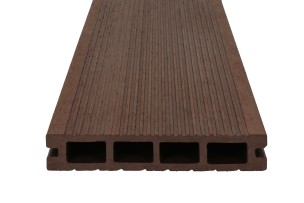
SELECT composite decking board 25x140 - 1,8 m
Price per 1 linear metre of decking board: 17,27 zł
SELECT composite decking board 25x140 - 5,0 m
Price per 1 m of decking board: 17.27 zł



