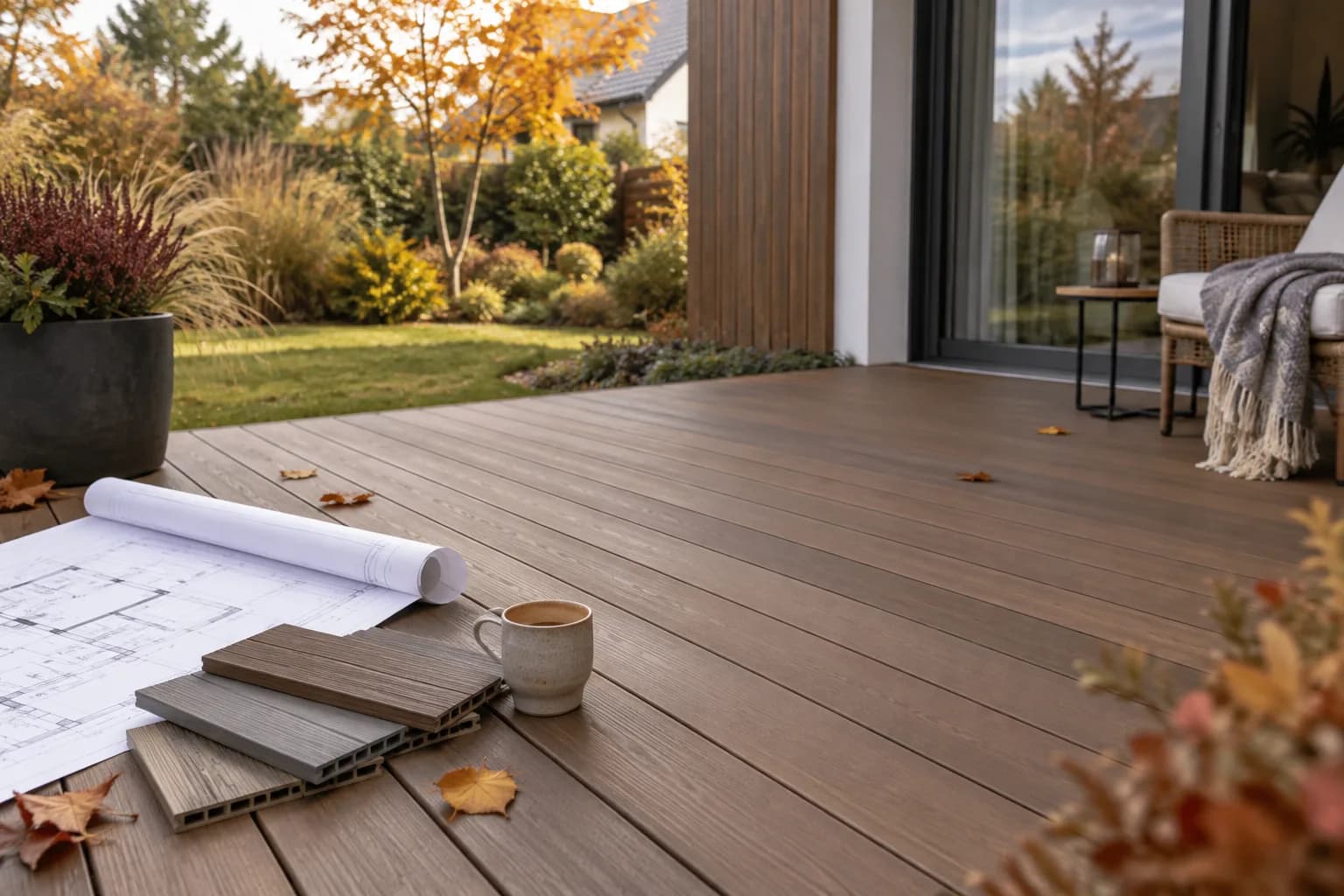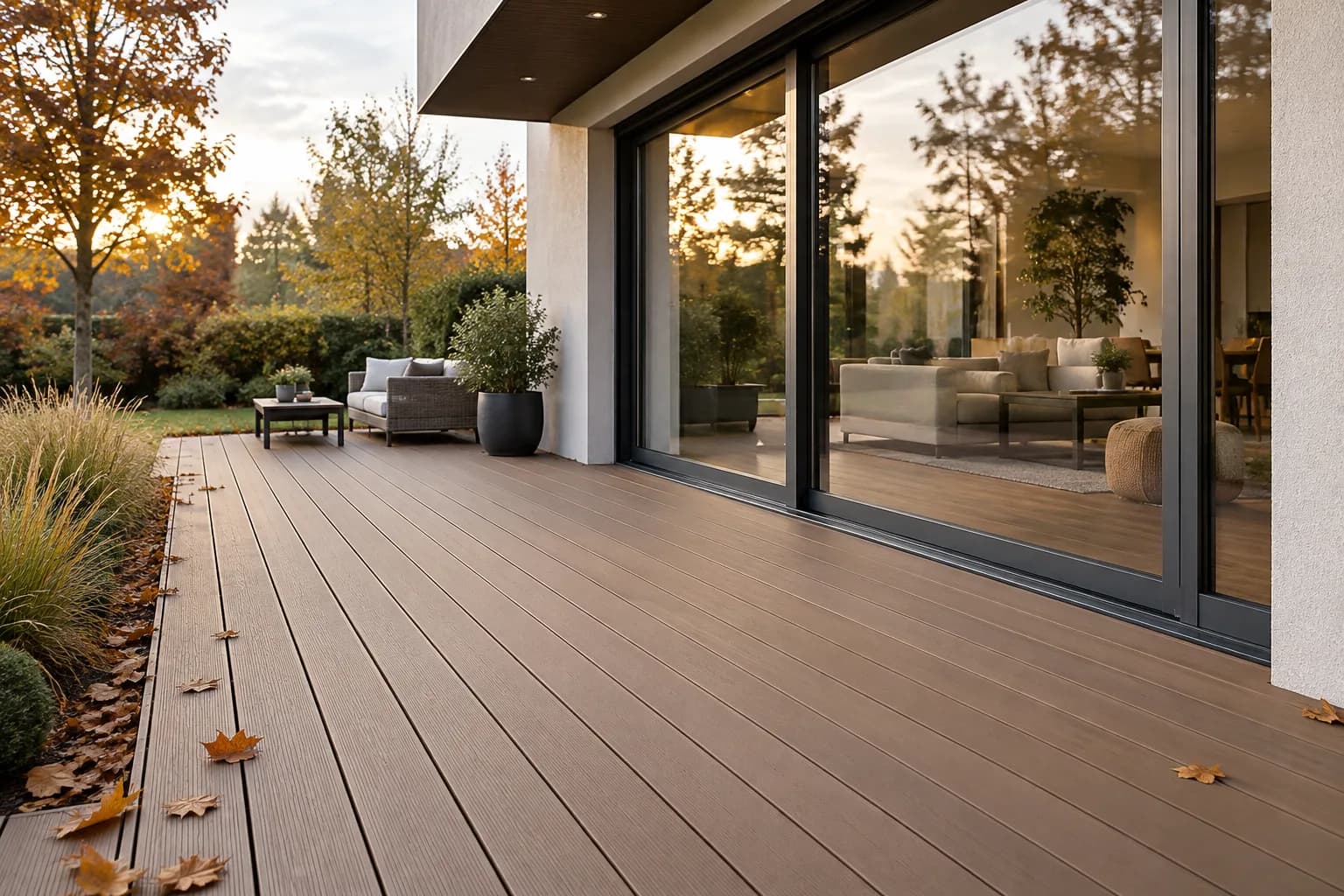
What is the best direction for laying composite decking boards? A practical guide.
Wondering which composite decking board layout to choose? Find out whether a horizontal or vertical direction is better. Make your patio look its best today!
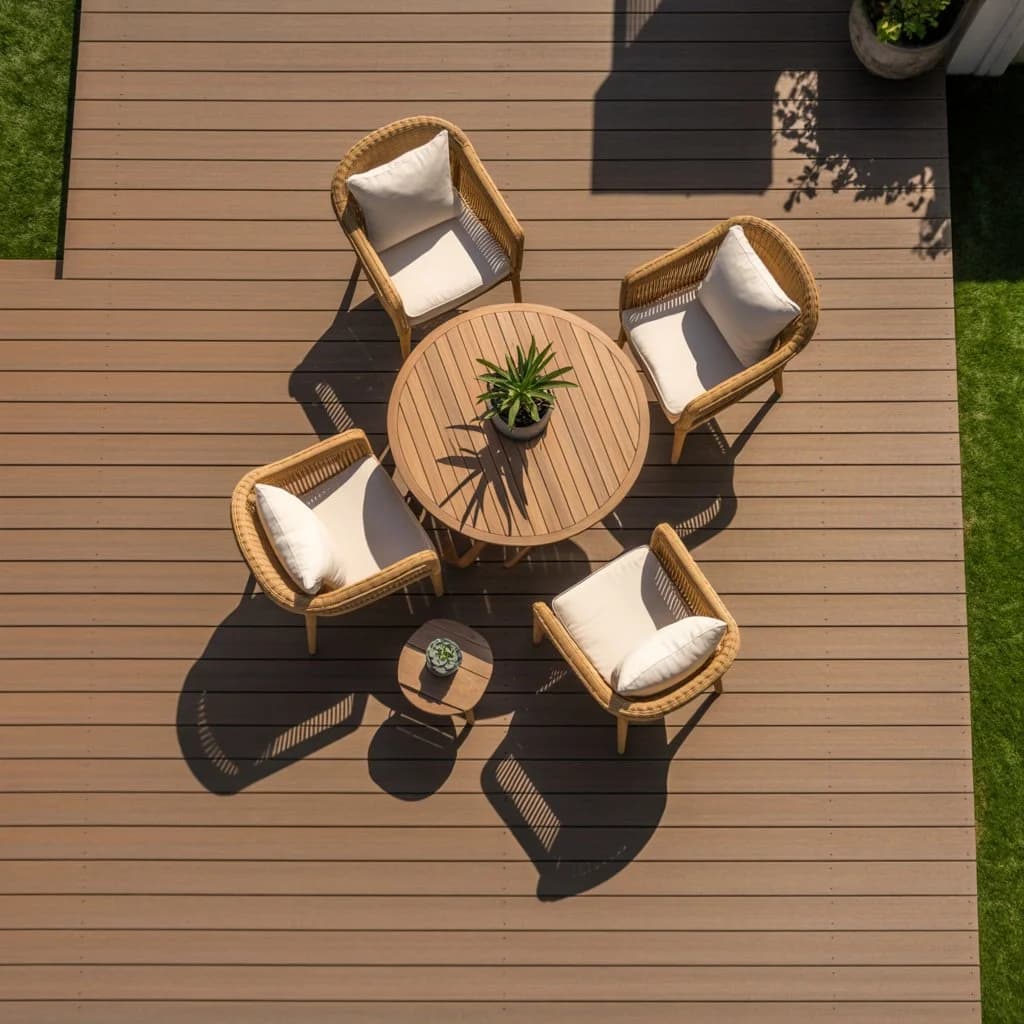
When planning a terrace made with composite decking boards, one of the key questions that arises is: which direction should the boards be laid? It may seem like a small detail, but in practice it has a huge impact on the appearance of the terrace, its durability and the comfort you experience when using it. In today's post, we'll look at the subject in detail and help you make the best decision.
Why does the direction in which the boards are laid matter?
Let's start with the basics. The direction in which you lay the composite decking boards affects several important factors:
- The appearance of the terrace – the laying pattern can make the space look larger or smaller,
- Functionality – rainwater, signs of use and ease of cleaning,
- Strength and durability – particularly when it comes to the layout of the supporting structure,
- Style and harmony with the surroundings – matching the shape of the house, the garden or the garden furniture.
But wait a moment… it's not as simple as it seems! Horizontal, vertical or perhaps diagonal? Each has its pros and cons.
When is it worth choosing a particular board layout?
Now for the specifics. Here are a few situations to help you decide:
| Situation | Recommended board layout |
|---|---|
| Small, narrow terrace | Horizontal layout – makes it look wider |
| Short, wide terrace | Vertical layout – makes it look longer |
| Modern house design | Horizontal layout – minimalist style |
| Terrace in the garden, far from the house | Any layout – depending on the surroundings |
| Terrace with a large slope | Layout in the direction of water run-off |
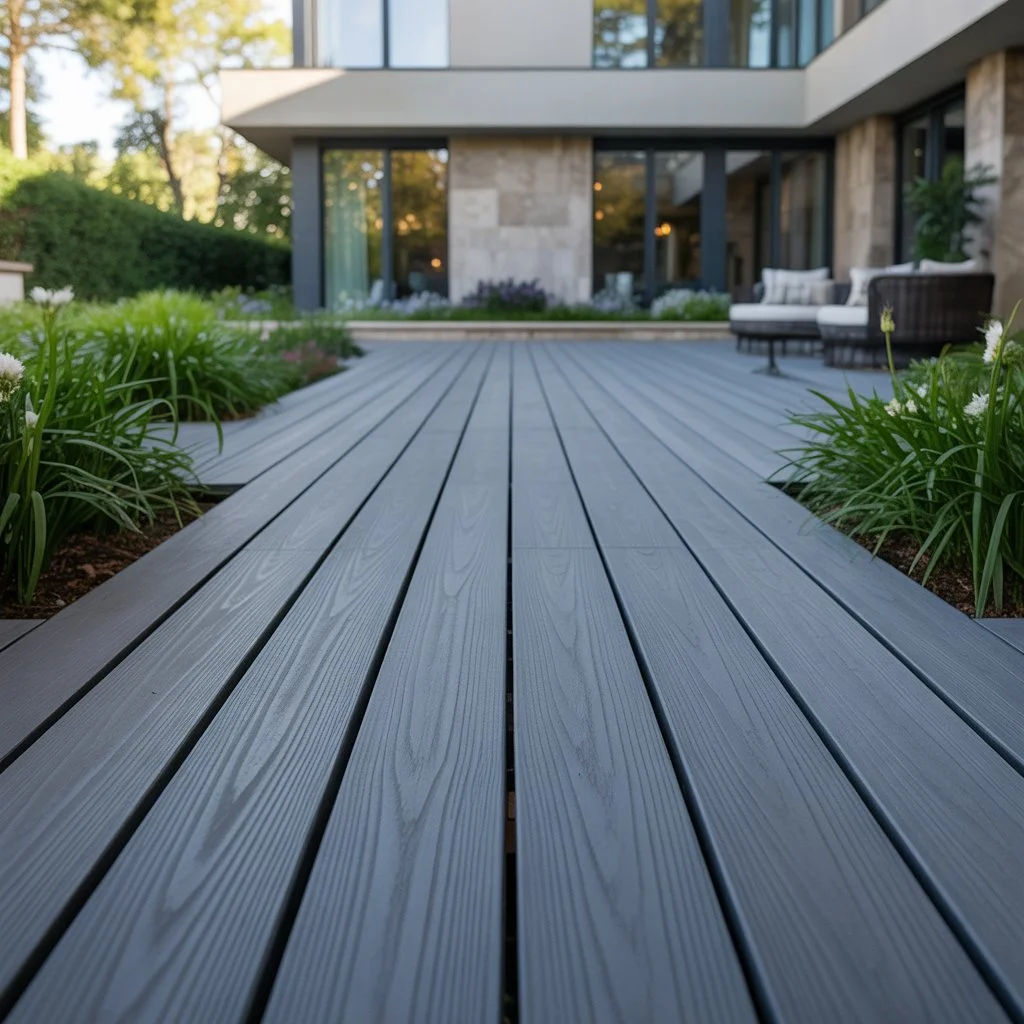
Composite decking boards – horizontal or vertical?
Below, you'll find a comparison of the most commonly used laying methods:
1. Horizontal layout (parallel to the façade).
This is one of the most popular layouts. Why?
Advantages:
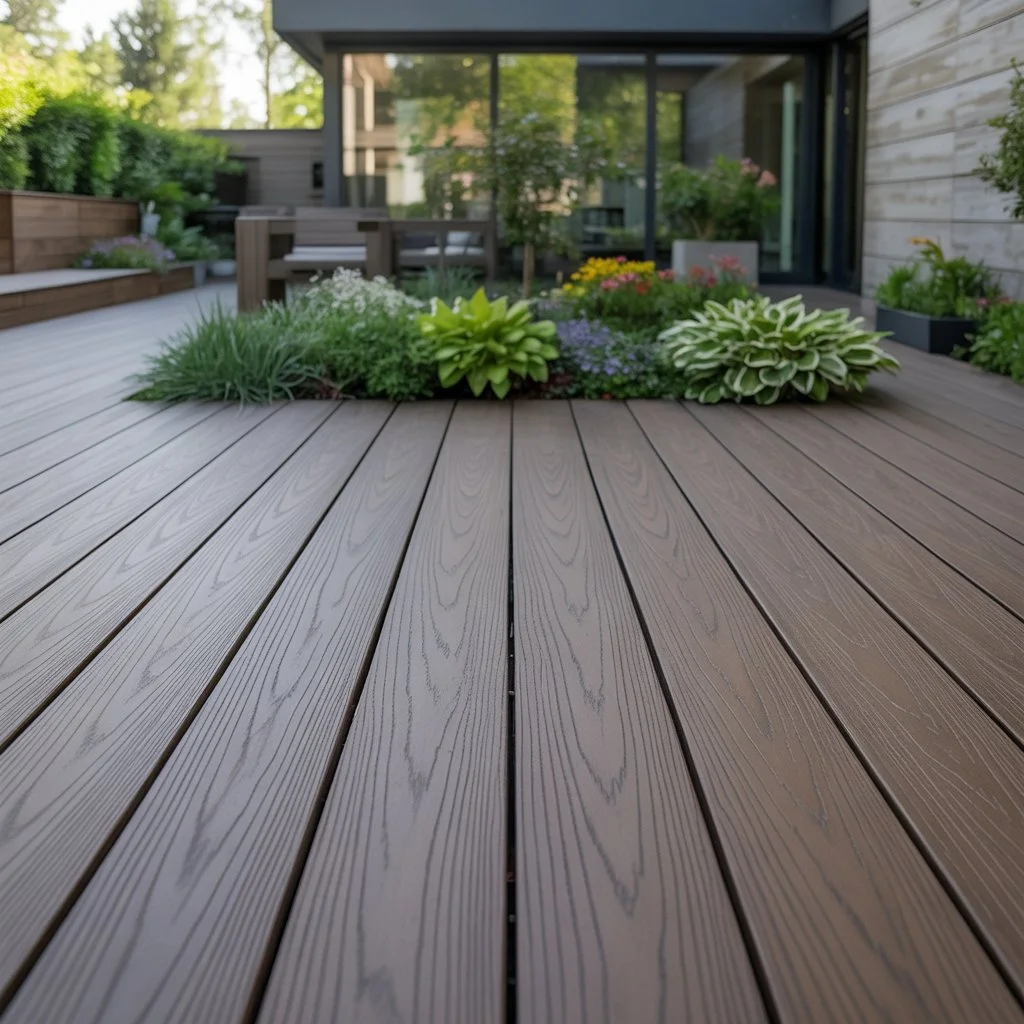
- The appearance of the terrace: boards laid parallel to the house make the space look wider.
- A modern look: a minimalist, orderly appearance suits contemporary architecture.
- Better water drainage, if the terrace has a cross-fall.
Disadvantages:
- It can make the terrace look shorter if you have a narrow space.
- Laying the boards is more difficult on terraces with irregular shapes.
2. Vertical layout (perpendicular to the façade).
Boards running from the wall of the building towards the garden? Yes, that makes sense too!
Advantages:
- Makes the terrace look longer, an ideal solution for shorter spaces.
- Often easier to install if the joists are laid crosswise to the building.
- Emphasises the direction of movement – creating a good effect that draws the eye towards the garden.
Disadvantages:
- It may seem less modern than a horizontal layout.
- Water drainage is more difficult if the terrace slope has not been planned properly.
How about something in between? Diagonal and unconventional layouts.
If you want to be bold and make your terrace stand out, you could consider some more creative approaches:
Diagonal layout (e.g. at a 45° angle).
- Adds dynamism, originality and elegance.
- Looks great on large terraces.
- Requires more work and cutting of the material (more waste).
Patterns such as herringbone or chequerboard.
- An outstanding visual effect.
- More complicated installation – requires experience.
- Ideal for statement terraces or restaurant gardens.
What else should you consider when choosing the layout of your decking boards?
Right, we’ve discussed the layout of composite decking boards, but there are a few other details worth considering:
Joist construction.
The joist layout (that is, the supporting beams) should be perpendicular to the direction of the boards – this is key to stability. If you already have joists, they may effectively dictate the direction of the boards.
Decking slope.
The decking must have a slight slope (1-2%) towards the water outlet. The direction of the boards should follow this slope – this will help water drain away and prevent moisture from collecting.
Sun exposure.
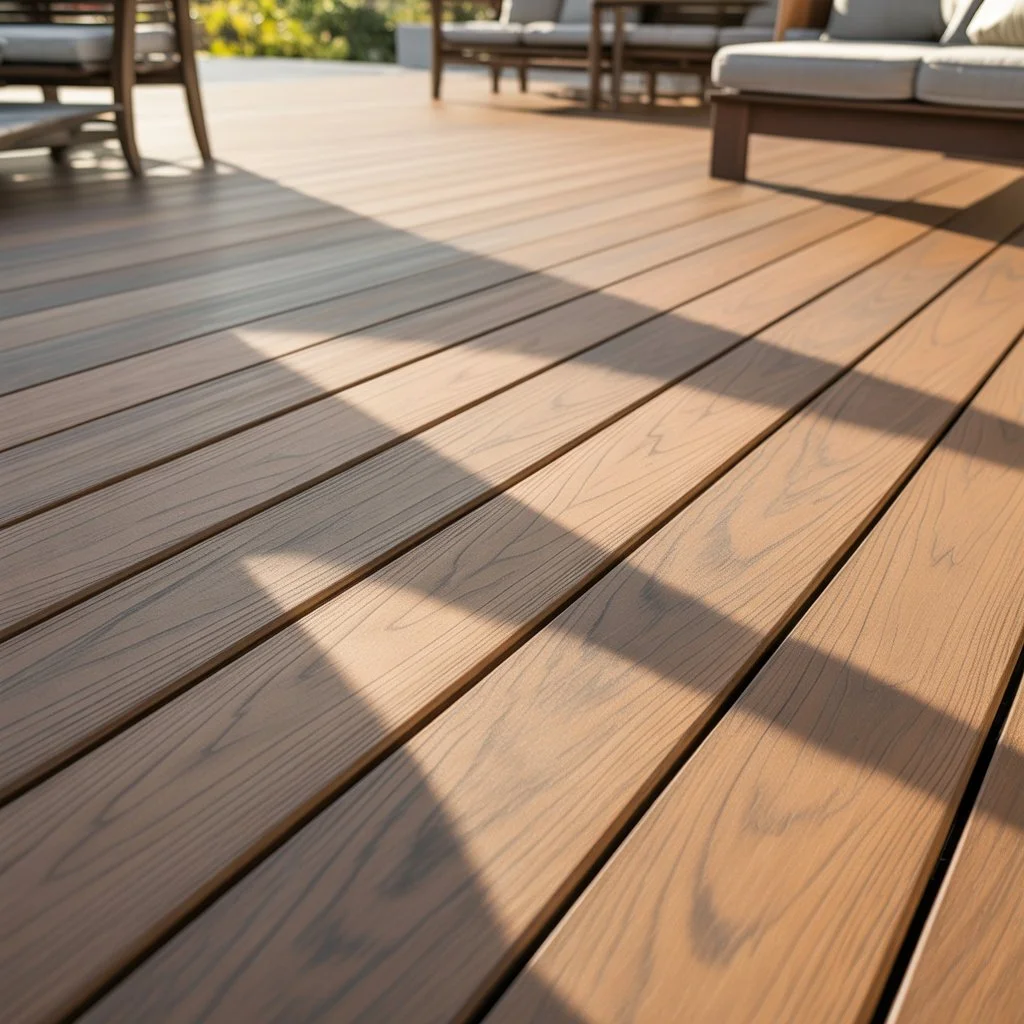
Composite decking boards can heat up. Depending on their direction, the layout may affect comfort when using the decking in full sun.
Decking aesthetics – is direction the only thing that matters?
Exactly! Although the layout of the boards is important, don’t forget about elements such as:
- Board colour and texture – darker colours heat up faster,
- Decking edging – a frame around it can add elegance,
- Concealing screws and joins – the installation system affects the appearance.
Well-designed decking combines functionality and appearance. The direction in which the boards are laid is just one piece of the puzzle.
FAQ – Frequently asked questions.
Can you mix different board-laying directions?
Yes! Especially in large spaces – you can, for example, create zones with different layouts. However, this requires a well-thought-out design concept.
Does the direction of the boards affect the durability of the decking?
Indirectly, yes. For example, if you plan the water drainage poorly, this may shorten the material’s lifespan. The layout should therefore work with the structure and its surroundings.
Does horizontal always mean better?
No. Although it’s a popular choice, it won’t always be the best one. It all depends on the dimensions of the decking, its location and the desired visual effect.
Before we wrap up – how do you decide?
All right, theory is one thing, but what about putting it into practice? Here’s a quick checklist to help you choose the ideal board layout:
- Check the dimensions and shape of the decking,
- Consider which way you want to “lead the eye”,
- Pay attention to the slope and drainage,
- Decide whether you want a classic look or a “wow” effect,
- Consult a professional or designer.
Remember – the layout of composite decking boards is not just a technical choice. It’s a decision that will affect how you feel on your decking for many years to come.
DUO composite decking board 23x148 - 3,5 m
Price per 1 linear metre of decking board: 21,30 zł
Composite decking board 2,2x14,5 cm. Gardin Deco 2.0 4,0 m.
Price per 1 linear metre of decking board: 45,90 zł
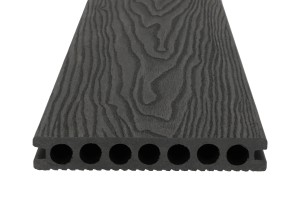
DUO composite decking board 23x148 - 5,0 m
Price per 1 linear metre of decking board: 21,30 zł
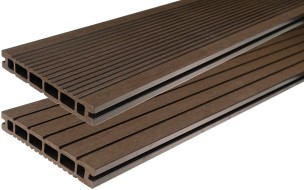
Gardin Plus 2.0 composite decking board - 4m
Price per 1 linear metre of decking board: 24,79 zł