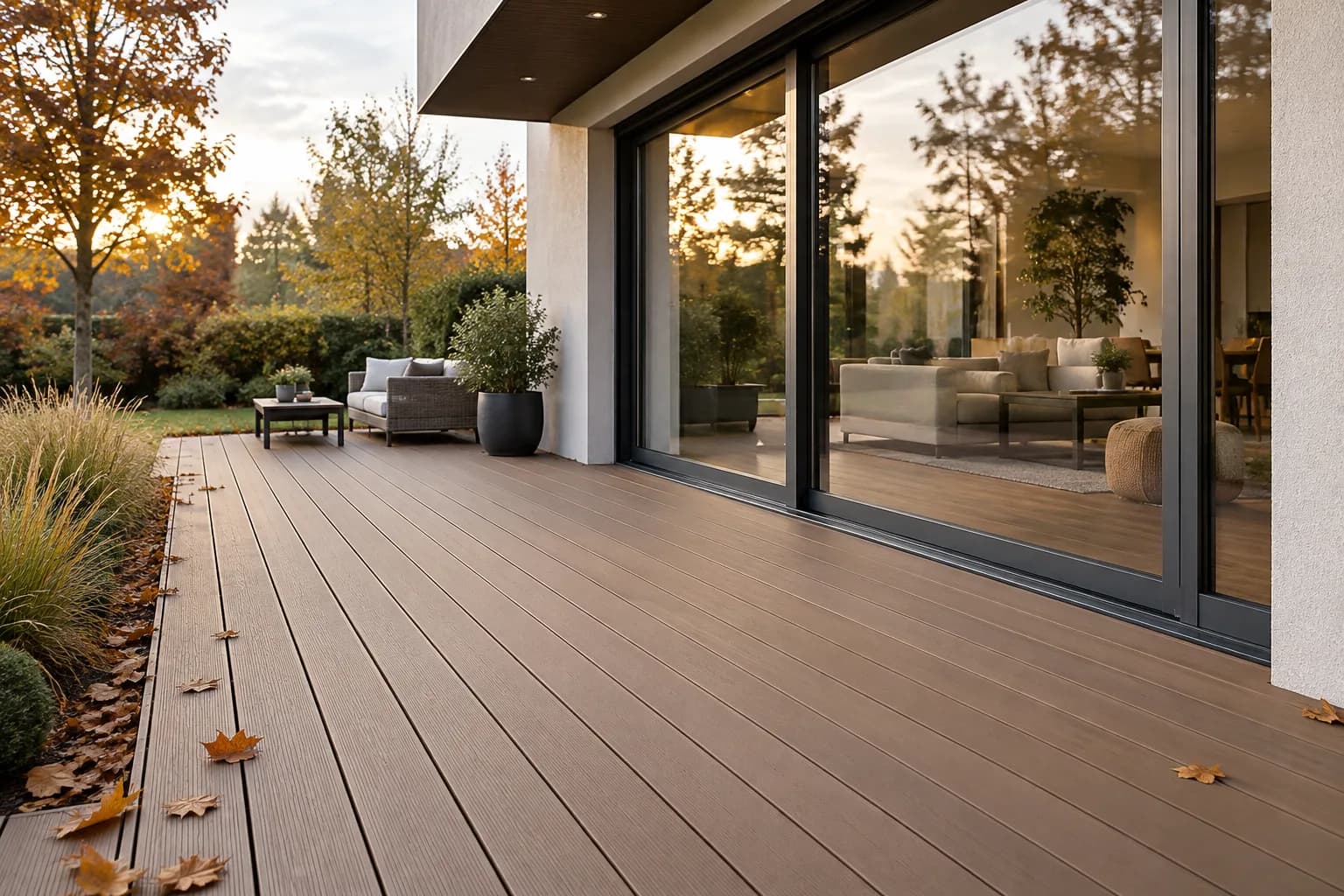
What slope should a composite decking terrace have?
Find out what slope is best for a composite decking board terrace. Learn how to avoid installation errors and ensure your terrace lasts for years.
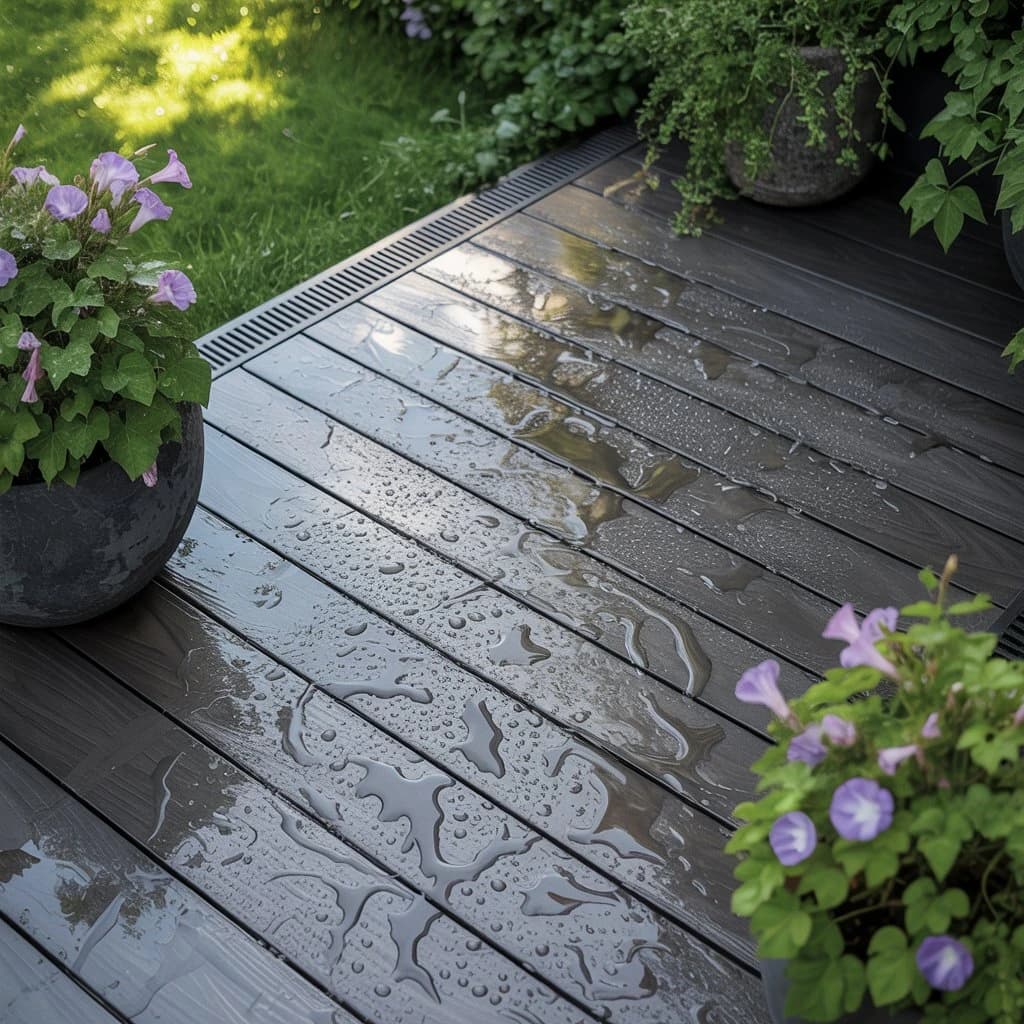
Building a composite decking terrace is an investment for years to come, but to enjoy its durability and functionality, you need to remember a few basic installation principles. One of them is ensuring the surface has the right gradient, known as the fall. This is what allows rainwater to drain properly and protects the structure from moisture.
Many people planning a project ask: what fall should composite decking have to make the terrace safe, attractive and resistant to the weather? In this article, you’ll find practical tips and tried-and-tested installation guidelines.
Why is the fall on a terrace so important?
Composite decking for terraces is highly resistant to moisture, but the terrace structure itself needs adequate drainage. Without a fall, you may get:
-
water collecting on the terrace surface,
-
faster wear to the boards and substructure,
-
algae and deposits that detract from its appearance,
-
a risk of slipping when walking on a wet terrace.
The right fall prevents these problems and allows water to run naturally off the composite decking surface.
What fall should you use?
In line with generally accepted building guidelines:
-
the recommended fall for a composite decking terrace is approx. 1–2%,
-
this means a gradient of 1–2 cm for every metre of terrace length,
-
the fall should be directed away from the building so that water can drain away freely.
This will prevent water from pooling on the surface and protect the terrace’s supporting structure.
The fall and the installation system.
When laying composite decking it is very important to install the joists (the substructure components) at the right angle. They determine the gradient of the entire surface.
In practice, this means that:
-
the joists should be fitted parallel to one another, with the recommended spacing (usually 30–40 cm),
-
the whole structure should be set at an angle to maintain the fall,
-
never install boards without expansion gaps, as water has nowhere to drain if there are no gaps.
How do you check the fall is correct?
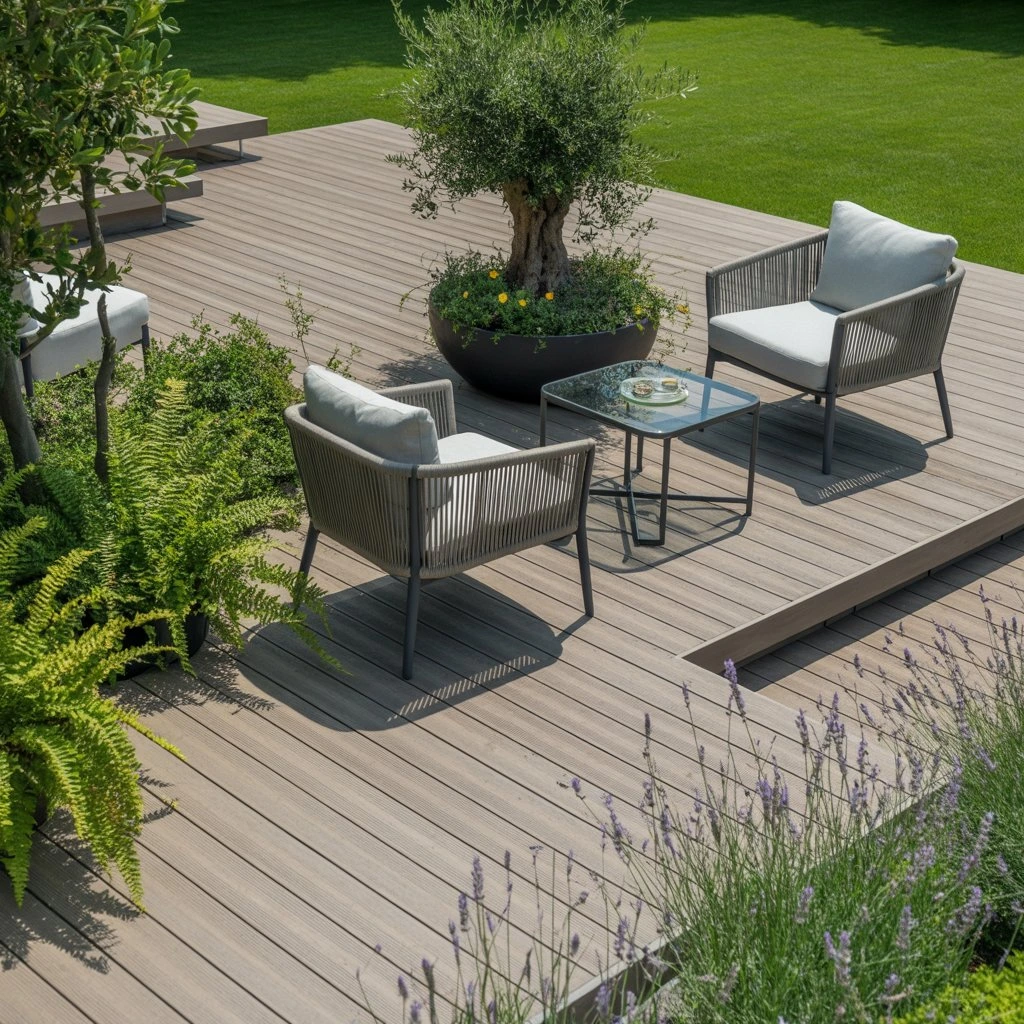
The easiest way is to use a spirit level and spacer shims. These let you set the gradient of the structure precisely. Bear in mind that the fall should not be too steep—a terrace that is too steep will be impractical and may be uncomfortable to use.
Problems caused by a lack of fall on a terrace
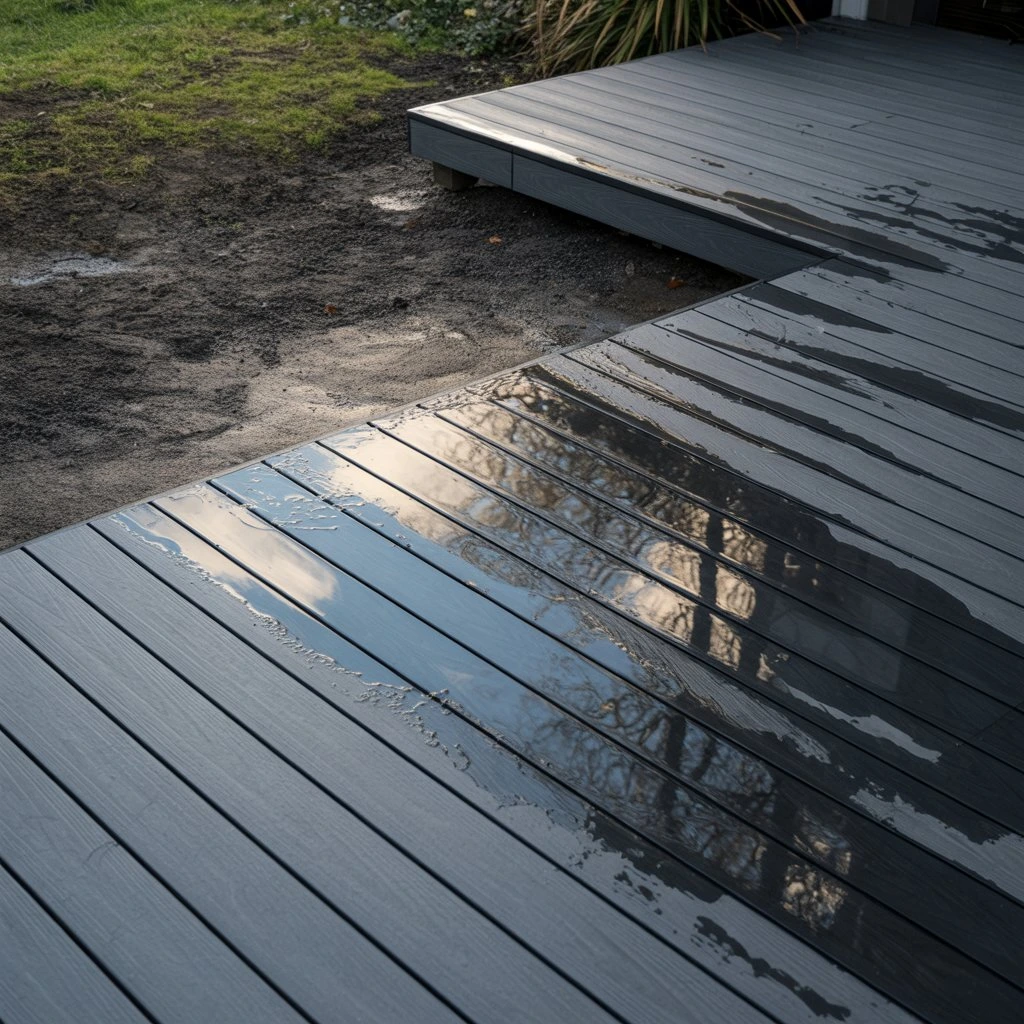
A lack of adequate fall is one of the most common mistakes when installing composite decking. It can lead to:
-
puddles forming on the terrace surface,
-
faster deterioration of the joists,
-
weakening of the entire structure,
-
problems with cleaning and keeping the terrace looking good.
That’s why you should plan the gradient and choose suitable installation materials from the outset.
Additional tips for installing composite decking
-
Leave expansion gaps – expansion gaps between the boards and next to the walls of the building allow the terrace to expand and contract and let water drain away.
-
Use composite or aluminium joists – they are moisture-resistant and work better with composite decking.
-
Avoid installing directly on bare ground – always use a sub-base or concrete screed with an adequate fall.
-
Remember ventilation – air circulation beneath the terrace helps prevent moisture from building up.
Do you always need a fall on a composite decking terrace?
A common question is whether composite decking for terraces needs a fall in every case. Some manufacturers offer joist systems and substructures that allow installation virtually flat, but in practice it is still worth adding a slight gradient. This prevents water from pooling on the surface and makes the terrace easier to keep clean. A fall also matters in the Polish climate, where frequent rain and snow can lead to moisture build-up. Even if the manufacturer says its boards are water-resistant, proper drainage will extend the life of the entire structure.
The fall and comfort when using the terrace.
The right gradient is not just a technical consideration; it is practical too. A terrace with too little fall can develop pools of standing water and dangerous ice in winter. On the other hand, too much fall can make the floor feel sloped, which is uncomfortable when arranging garden furniture. That’s why it is so important to maintain an optimal gradient of 1–2%. This angle is practically invisible to the eye while still draining water effectively. It is the ideal balance, making a terrace made from composite decking functional, safe and comfortable to use all year round.
Summary
If you’re wondering what fall is best for a composite decking terrace the answer is: from 1 to 2%. This gradient ensures proper drainage, protects the structure from damage and extends the life of the terrace.
With correct installation and by following the manufacturer’s guidelines, you’ll have a terrace that stays attractive, safe and comfortable to use for years to come.
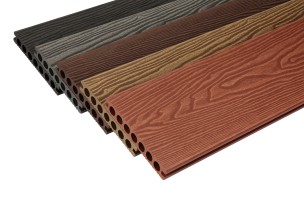
DUO composite decking board 23x148 - 5.8 m
Price per board: 1 linear metre 21.30 PLN
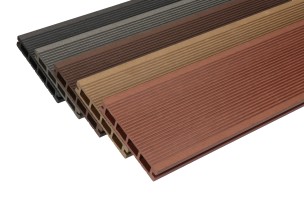
SELECT composite decking board 25x140 - 5.8 m
Price per board: 1 linear metre 17.27 PLN
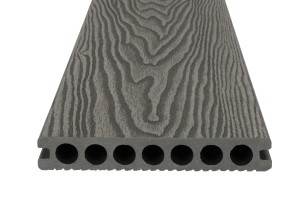
DUO composite decking board 23x148 - 1.8 m
Price per board: 1 linear metre 21.30 PLN
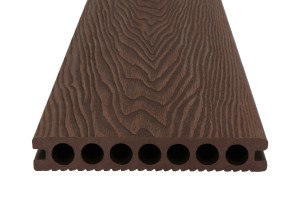
DUO composite decking board 23x148 - 3.5 m
Price per board: 1 linear metre 21.30 PLN