What are the three disadvantages of composite materials?
Discover the three main disadvantages of composite materials. Find out what limitations composites have and in which situations they may not be the best choice.
What are composite materials?
Before looking at their drawbacks, it is worth understanding what composite materials actually are. Put simply, they are a combination of two or more materials with different physical and chemical properties, which together form a new product. Most commonly, these are:
-
matrix – a binder (e.g. polymer resin),
-
reinforcing fibre – e.g. glass, carbon or aramid fibre.
This combination gives us a material with unique properties: it is lightweight yet very strong. It is no wonder, then, that composites are used in the aerospace and automotive industries, wind energy and sport.
But are composites always the best choice? Let’s find out.
Drawback 1: High production and purchase costs.
One of the biggest problems associated with composite materials is cost.
Why are composites expensive?
-
The production process requires specialist technologies, such as autoclaves or vacuum infusion.
-
High-quality fibres (e.g. carbon fibre) are costly to produce.
-
Small-scale production does not offer the same savings as in the case of steel or aluminium.
The effects of high costs:
-
Higher prices for finished products – for example, carbon-fibre bicycles can cost several times more than aluminium ones.
-
Limited access for the average consumer.
-
They are not economically viable for simple structures – for example, in housebuilding, cheaper steel or concrete often perform better.
This means that although composite materials have excellent properties, their use is still limited by the investor’s budget.
Drawback 2: Difficulties with recycling and environmental impact
Another significant drawback is recycling problems.
Why are composites difficult to recycle?
-
They are multi-component materials – separating the matrix and the reinforcing fibre is complicated.
-
Recovering the fibres requires large amounts of energy and advanced technologies.
-
Not all fibres retain their properties after recycling.
Environmental consequences:
-
Used composite components often end up in landfill.
-
Production involves the use of synthetic resins, which are not biodegradable.
-
Industries such as aerospace and wind energy (turbine blades) generate huge quantities of waste that is difficult to manage.
At a time of growing environmental awareness, this is a serious drawback that may limit the development of some applications.
Drawback 3: Brittleness and specific types of damage
Although composites are known for their strength, they also have weak points when it comes to mechanical damage.
Nature of the problem:
-
Brittleness – composite materials do not deform plastically like steel. Instead of bending, they suddenly crack.
-
Delamination – separation of the structure under impact or excessive load.
-
Hidden damage – microcracks may be invisible to the naked eye while significantly weakening the material.
Real-life examples:
-
In sport, bicycles or carbon-fibre sticks can suddenly break under heavy overload.
-
In aviation, even a minor bird strike can cause microdamage requiring costly non-destructive testing.
-
In construction, the use of composites requires very rigorous quality control.
The lack of a ‘warning’ before failure is a real problem – steel will bend and warn the user, whereas a composite may break suddenly.
Additional limitations of composite materials
In addition to the three main drawbacks, it is worth mentioning some further challenges:
-
Sensitivity to high temperatures – some resins lose their properties at 200–300°C.
-
Processing difficulties – cutting and drilling require specialist tools.
-
The need for regular inspections – particularly in aviation and the automotive industry.
Comparison – composites and traditional materials.
| Feature | Composites | Steel/Aluminium |
|---|---|---|
| Strength-to-weight ratio | Very high | Average |
| Price | High | Lower |
| Recycling | Difficult | Easy |
| Corrosion resistance | High | Dependent on coating |
| Behaviour when damaged | Brittleness, cracking | Plastic deformation |

Frequently asked questions (FAQ)
1. Are composite materials safe?
Yes, but they require regular inspections because damage can be difficult to spot.
2. Will composites replace steel and aluminium?
Not in every industry – steel and aluminium are cheaper and easier to recycle.
3. Why use composites despite their drawbacks?
Because they offer a unique combination of light weight and strength that is not available in other materials.
Summary.
Composite materials are a symbol of modernity and innovation, but they are not without drawbacks. The main limitations are:
-
High production and purchase costs,
-
Recycling and environmental issues,
-
Brittleness and specific types of mechanical damage.
Despite these drawbacks, composites continue to play a huge role in industry, sport and construction. Their future depends, however, on whether costs can be reduced, recycling improved and ways found to minimise the risk of sudden failures.
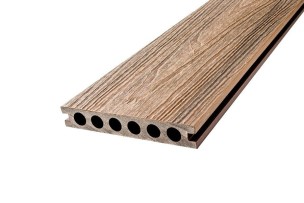
PREMIUM composite decking board 23x138 - 3.5 m
Price per 1 linear metre of board: 24,85 zł
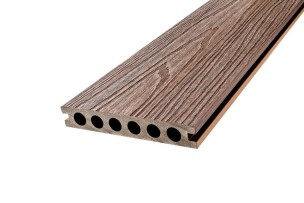
PREMIUM composite decking board 23x138 - 4.0 m
Price per 1 linear metre of board: 24,85 zł
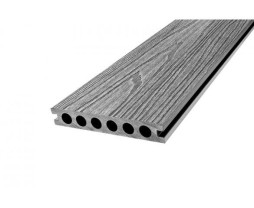
PREMIUM composite decking board 23x138 - 4.5 m
Price per 1 linear metre of board: 24,85 zł
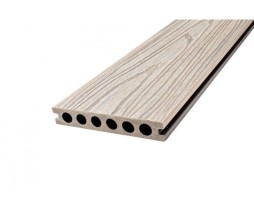
PREMIUM composite decking board 23x138 - 5.0 m
Price per 1 linear metre of board: 24,85 zł