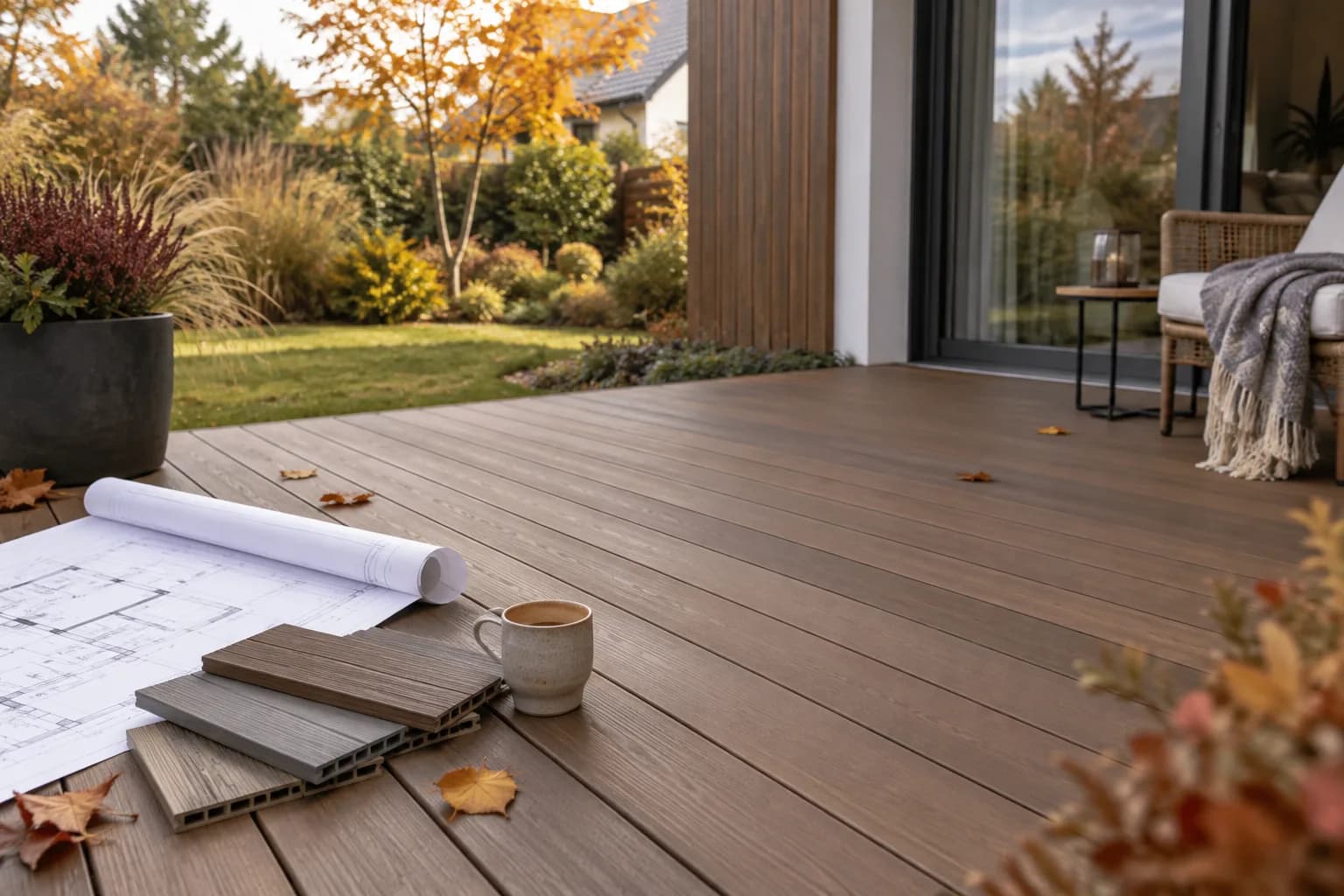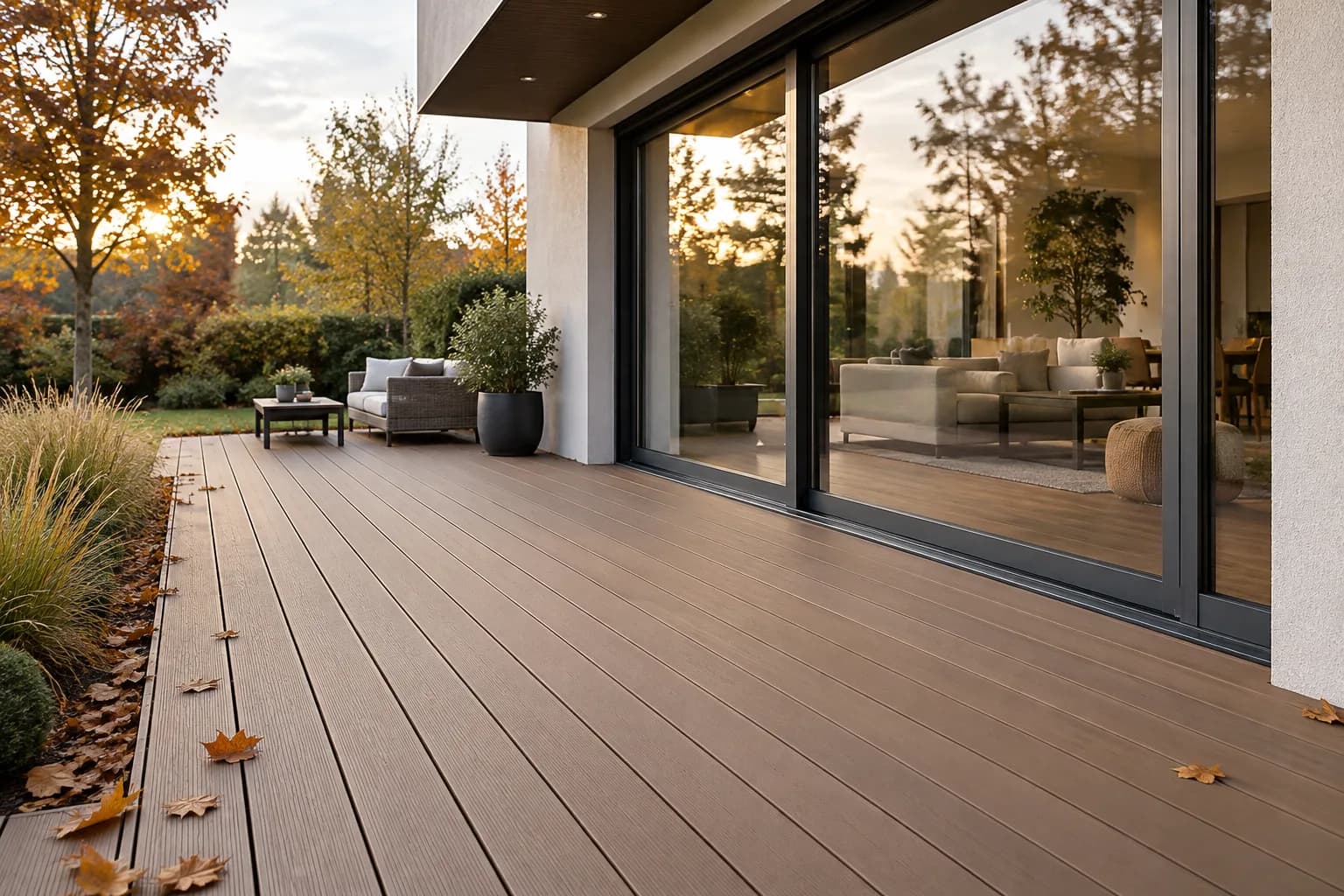
Light composite decking boards versus dark ones – which heat up less?
Does composite decking get very hot on a patio? Find out how light and dark composite decking compare. Choose the best option for a sunny patio!

Dreaming of a modern composite deck that is not only attractive but also comfortable to use, even during the hottest summer weather? Choosing the right surface is a decision that will last for years. One of the key dilemmas facing customers in the 2026 season is the choice of colour. Light or dark composite decking? This question comes around every spring. Colour has a huge impact not only on the design of the whole garden, but above all on how the material behaves physically.
In this article, we take an in-depth look at the phenomenon of composite decking heating up. We check how different shades perform in full sun and which composite decking is best for a sunny patio, offering safe use without the risk of burning your feet.
Does composite decking heat up? Let’s look at the facts.
Before comparing the colours directly, let’s answer a basic question: does composite decking heat up? The short, honest answer is: yes, it does.
It is worth understanding why. Composite decking is a hybrid material. It consists of varying proportions of wood flour (or bamboo flour), plastics (such as PVC, HDPE or PP), and additives and colourants.
The presence of polymers means that composite decking absorbs solar heat differently from natural wood. Plastic quickly takes on the temperature of its surroundings and, in full sun, can heat up to very high temperatures. However, this depends to a great extent on the manufacturing technology and the finish selected.
Why is composite decking heating up an important topic?
- Thermal comfort: Walking barefoot on the deck is one of summer’s greatest pleasures. If composite decking gets too hot, this may no longer be possible.
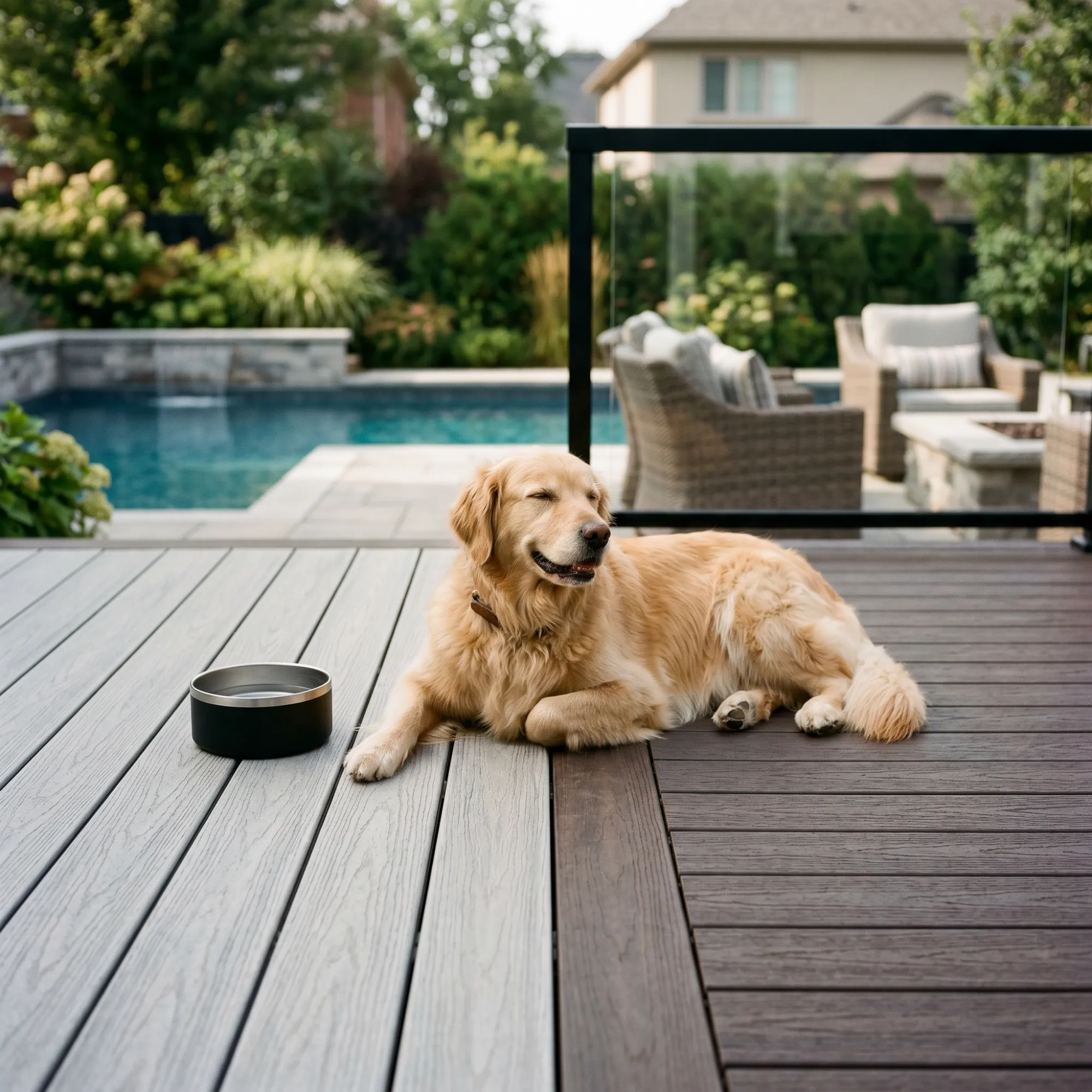
- Children’s and pets’ safety: Young children’s skin and the paws of pets are particularly sensitive to hot surfaces.
- Material durability: Although modern composite materials can withstand high temperatures, extreme overheating and sudden cooling (for example, during a summer storm) place considerable structural demands on the material.
Light-coloured composite decking – the ideal choice for summer?
In recent years, and particularly in the 2026 season, light-coloured composite decking has made a real comeback. Shades of light grey, beige and ecru, along with the fashionable sandy teak colour, dominate modern minimalist and Scandinavian designs.
From a physics perspective, light colours reflect a significant proportion of solar radiation. As a result, light-coloured composite decking heats up much more slowly and does not reach extreme temperatures.

Advantages of light-coloured composite decking on a sunny patio:
- Lower surface temperature: The temperature difference compared with dark models can be as much as a dozen or so degrees Celsius.
- You can walk on it barefoot: Even on a hot July afternoon, a light-coloured composite deck remains pleasant underfoot.
- Makes the space look larger: Light shades make the deck appear bigger and more spacious.
- Dust and dirt are less noticeable: Garden debris, such as pollen, is less noticeable on light-coloured surfaces.
Dark composite decking – elegance that attracts the sun.
Anthracite, graphite, dark brown and even deep carbon black – dark composite decking is the very definition of elegance. Architects love the way it contrasts beautifully with the greenery of the garden and the modern lines of the building. It gives the outdoor living area a luxurious, exclusive feel.
Unfortunately, a dark surface acts as a natural absorber of solar energy. It absorbs most UV rays, causing the temperature of composite decking in dark colours to rise very quickly.
How dark composite decking performs in the sun:
- Heats up quickly and intensely: In the height of summer, a dark deck can become too hot to stand on comfortably without footwear.
- Retains heat for longer: A composite deck in a dark colour acts like a heat store. After sunset, it can keep the relaxation area pleasantly warm, which is an advantage on cooler evenings but a drawback on hot nights.
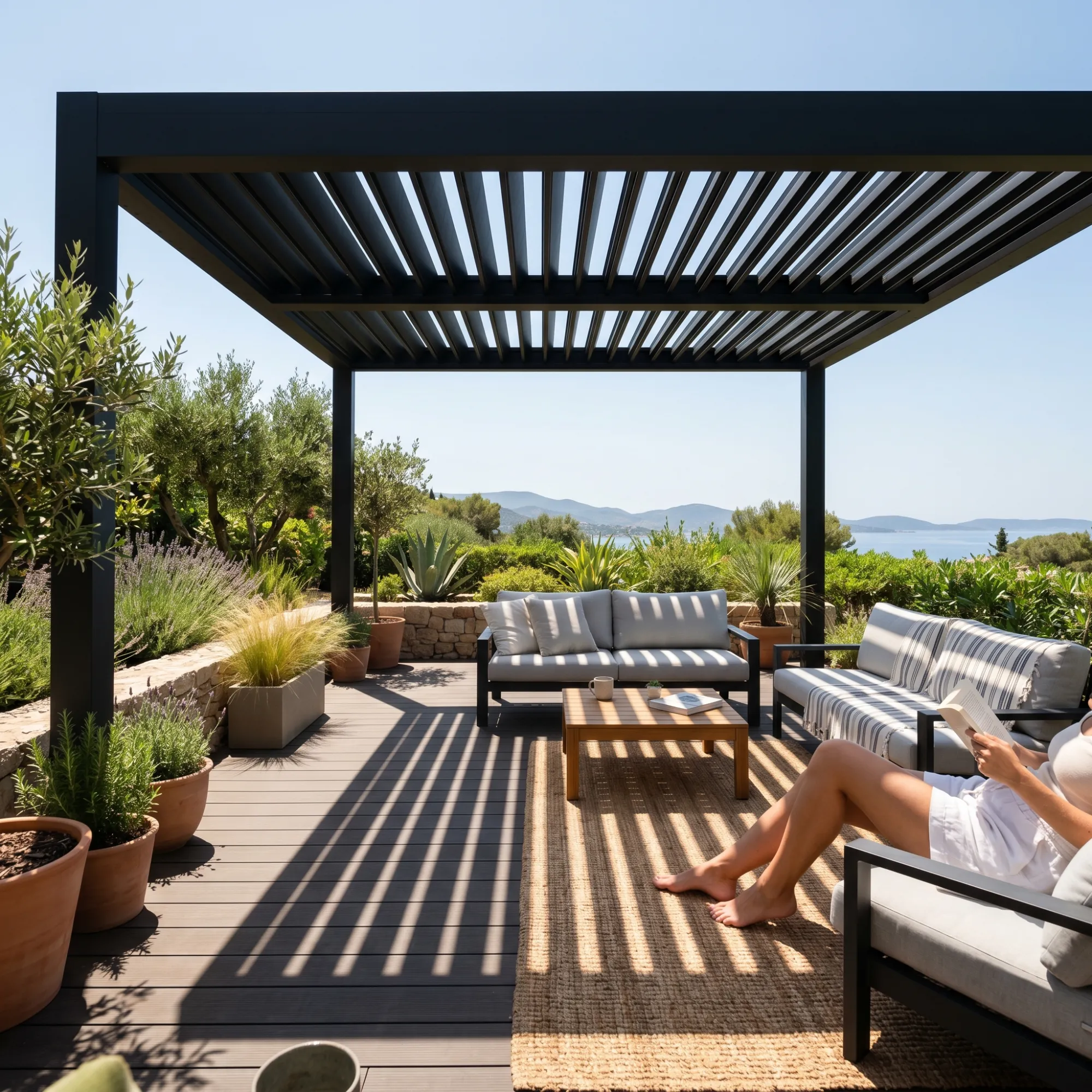
- Shade is a must: If you choose dark colours, it is worth planning for a pergola, awning or large garden parasol from the outset.
A direct comparison: light or dark composite decking in figures.
To show precisely how a deck in full sun behaves depending on the colour chosen, we have put together a comparison of the key characteristics. The table below shows average test results for standard summer conditions (air temperature of around 30°C, no wind and full sun).
| Feature / Parameter | Light-coloured composite decking (e.g. grey, beige, teak) | Dark composite decking (e.g. anthracite, wenge, graphite) |
| Average surface temperature | Approx. 40°C – 48°C | Approx. 55°C – 68°C |
| Comfort when walking barefoot | High (pleasantly warm) | Low to very low (footwear required) |
| Time taken to heat up | Slow | Very fast |
| Heat retained after dark | Short | Long (the ‘heated stone’ effect) |
| Susceptibility to UV fading | Hardly noticeable | More noticeable with low-quality stabilisers |
| Need for additional shade | Optional / recommended at midday | Strongly recommended |
Important note: A material surface temperature above 50°C may already cause painful discomfort on direct contact with the skin. In extreme cases, when dark composite decking reaches nearly 70°C, walking barefoot risks burns!
Which composite decking is best for a sunny patio? The 2026 season brings a revolution.
If your deck in full sun is going to see heavy use in summer, colour is not the only factor you need to consider. In 2026, composite material manufacturing technology has made major advances, offering solutions that minimise the problem of overheating.

This decking has a special, advanced polymer coating around the entire core. The modern coatings used in 2026 are enhanced with special pigments that reflect infrared (IR) radiation. This means that even darker premium shades can heat up 10-15% less than their traditional counterparts from a few years ago.
2. Internal structure: hollow-core vs solid decking.The board’s structure has a significant effect on heat distribution:
- Hollow-core boards: These have internal air chambers. The air inside the chambers acts as an insulator, but if it gets very hot, the board stays hot for a long time.
- Solid boards: These have a uniform structure throughout. They heat up evenly, but also release heat more efficiently into the substrate and joists, provided the construction allows for adequate ventilation.
Brushed, sanded or deeply embossed woodgrain boards (3D) feel cooler than boards with a smooth finish. This is because microscopic indentations create small areas of shade on the board itself, while the area of contact between the foot and the material is smaller.
Practical tips: How to keep your composite deck cool
Whether you choose a light or dark option, there are several tried-and-tested ways to make your modern composite deck a cool retreat on hot days.
- Ensure excellent ventilation: When installing a composite deck, always follow the recommended expansion gaps between boards and allow adequate clearance beneath the deck. Good airflow underneath helps cool the boards effectively.
- Invest in modern shade: Plant-covered pergolas, adjustable louvres, sun sails or modern awnings with wind and sun sensors are an absolute must for a deck in full sun.
- Planting around the deck: Trees, shrubs and large planters filled with greenery create a microclimate and naturally lower the surrounding temperature through water transpiration.
- Cool it regularly with water: Composite is completely moisture-resistant, does not rot and does not warp when exposed to water. Spraying the deck with cold water from a garden hose before you plan to relax will quickly lower its temperature by a dozen or so degrees.
Summary: What should you ultimately choose for the 2026 season?
The choice between a light and dark composite colour should depend not only on aesthetics, but above all on the deck’s location and how you intend to use it.
Choose light composite decking boards, if:
- Your deck faces south or south-west and you are not planning full coverage.
- You have children or pets who love running barefoot in the garden.
- You value uncompromising thermal comfort and a natural, light design.
Choose dark composite decking boards, if:
- The deck faces north or east, or is permanently shaded by trees or buildings.
- You are planning a substantial, permanent roof (e.g. an integrated pergola with a roof).
- You prioritise modern design and an elegant, luxurious contrast over being able to walk barefoot at midday in hot weather.
In the 2026 season, the market offers such technologically advanced materials that, with the space properly planned, any composite deck can become your favourite place to relax in summer. Remember to choose products from reputable manufacturers that offer a long-term guarantee and UV filter stability.
10 questions and answers (Frequently asked questions).
1. Does composite decking get hotter than natural wood?
Yes. Because it contains plastics (polymers such as PVC or HDPE), composite decking absorbs sunlight faster and more intensely than traditional wood, which has natural thermal insulation properties.
2. How many degrees hotter does dark composite decking get than light decking?
In full sun, the temperature difference between light shades (e.g. sand or light grey) and dark shades (e.g. anthracite or wenge) can range from 15°C up to 22°C. Dark surfaces can reach temperatures close to 70°C.
3. Which composite decking is best for a sunny deck?
For a deck in full sun, the best choice is light second-generation composite decking. It has a polymer outer layer with special pigments that reflect infrared (IR) radiation, significantly reducing heat build-up.
4. Can the temperature of composite decking cause it to warp?
Good-quality boards from reputable manufacturers are designed to withstand high temperatures and will not warp, provided you leave the correct expansion gaps during installation. Composite expands in the heat, so allowing for expansion is essential.
5. Is it safe to pour cold water over a hot composite deck?
Yes, absolutely. Composite is completely water-resistant and can withstand sudden temperature changes (thermal shock). Pouring cold water over the deck from a garden hose is the quickest way to immediately lower the surface temperature on a hot day.
6. Do solid boards get less hot than hollow boards?
Solid and hollow boards heat up similarly at the surface, but solid boards transfer heat to the substructure more quickly (the supporting structure). In hollow boards, the heated air inside the profiles can act like a thermos, keeping the temperature high for longer.
7. Does a brushed board surface affect how warm it feels?
Yes. Boards with a brushed or scraped surface, or a deep woodgrain texture (3D), feel cooler. This is because there is less direct contact between a bare foot and the heated material.
8. Will a dark composite deck work if I install a pergola?
Absolutely. If a modern dark-coloured composite deck is fitted with a permanent roof, Roman blinds or a pergola with adjustable louvres, the problem of excessive surface heating will be almost completely eliminated.
9. How does high temperature affect the colour durability of a board?
High temperatures combined with UV radiation naturally cause slight fading during the first few months after installation (known as weathering). Choosing light-coloured composite or second-generation boards makes this process practically unnoticeable.
10. Can pets safely spend time on hot composite decking?
During the hottest hours around midday (12:00–15:00), dark composite decking left in full sun may be too hot for the sensitive paws of dogs and cats. At these times, provide your pets with a bed in a shaded part of the deck or cool the boards with water.
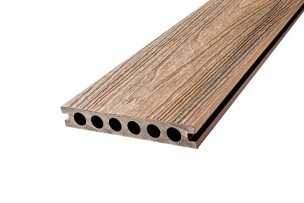
PREMIUM composite decking board 23x138 - 2.9 m
Price per 1 linear metre board: 24.85 zł
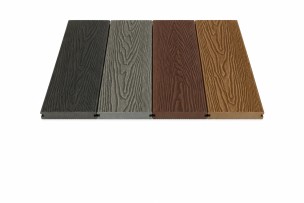
Full Premium composite decking board 20x140 - 5 m
Price per 1 linear metre board 26.75 zł
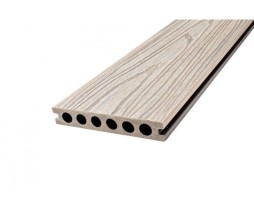
PREMIUM composite decking board 23x138 - 5.0 m
Price per 1 linear metre board: 24.85 zł
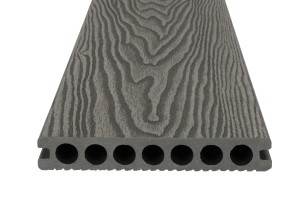
DUO composite decking board 23x148 - 1.8 m
Price per 1 linear metre board: 21.30 zł