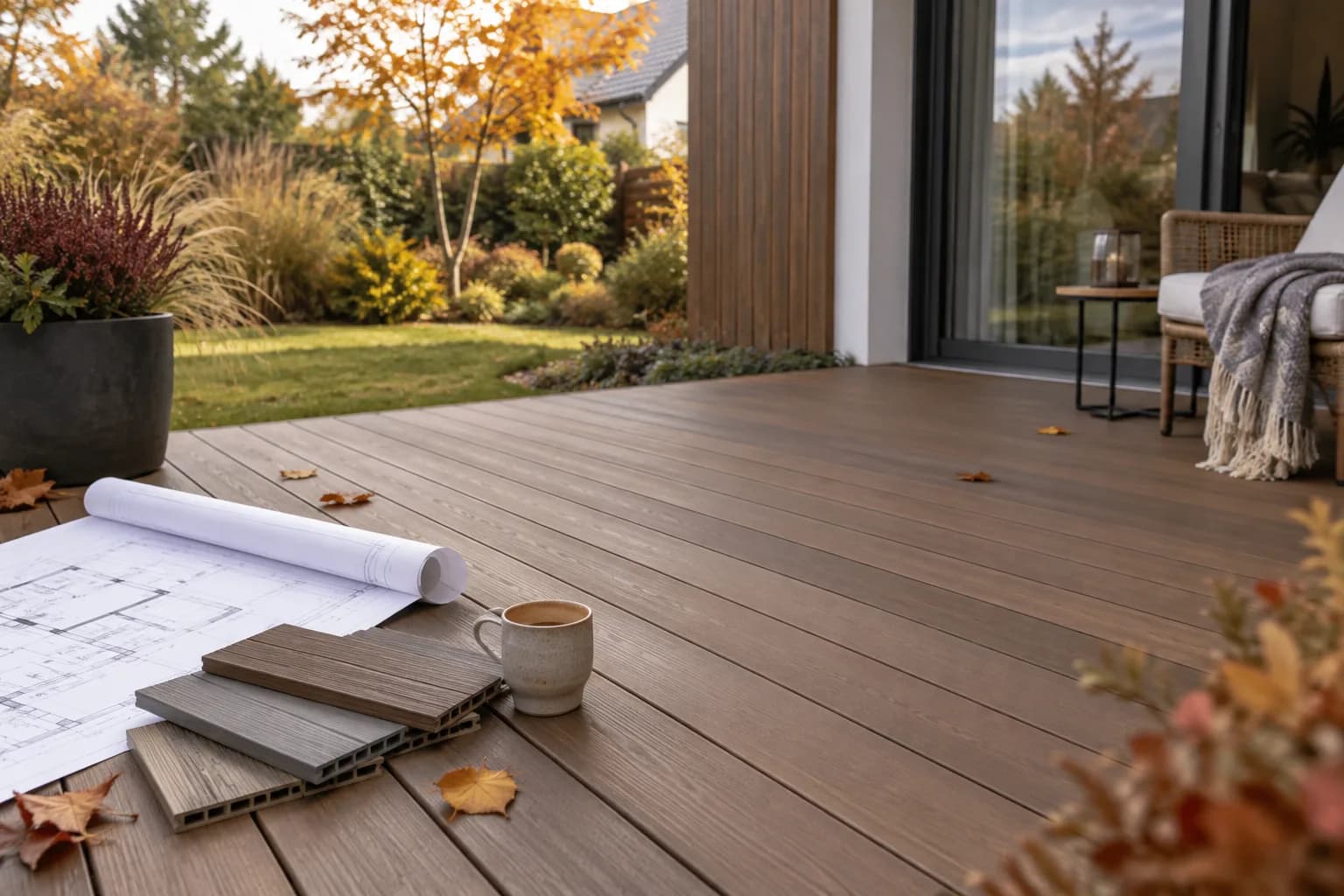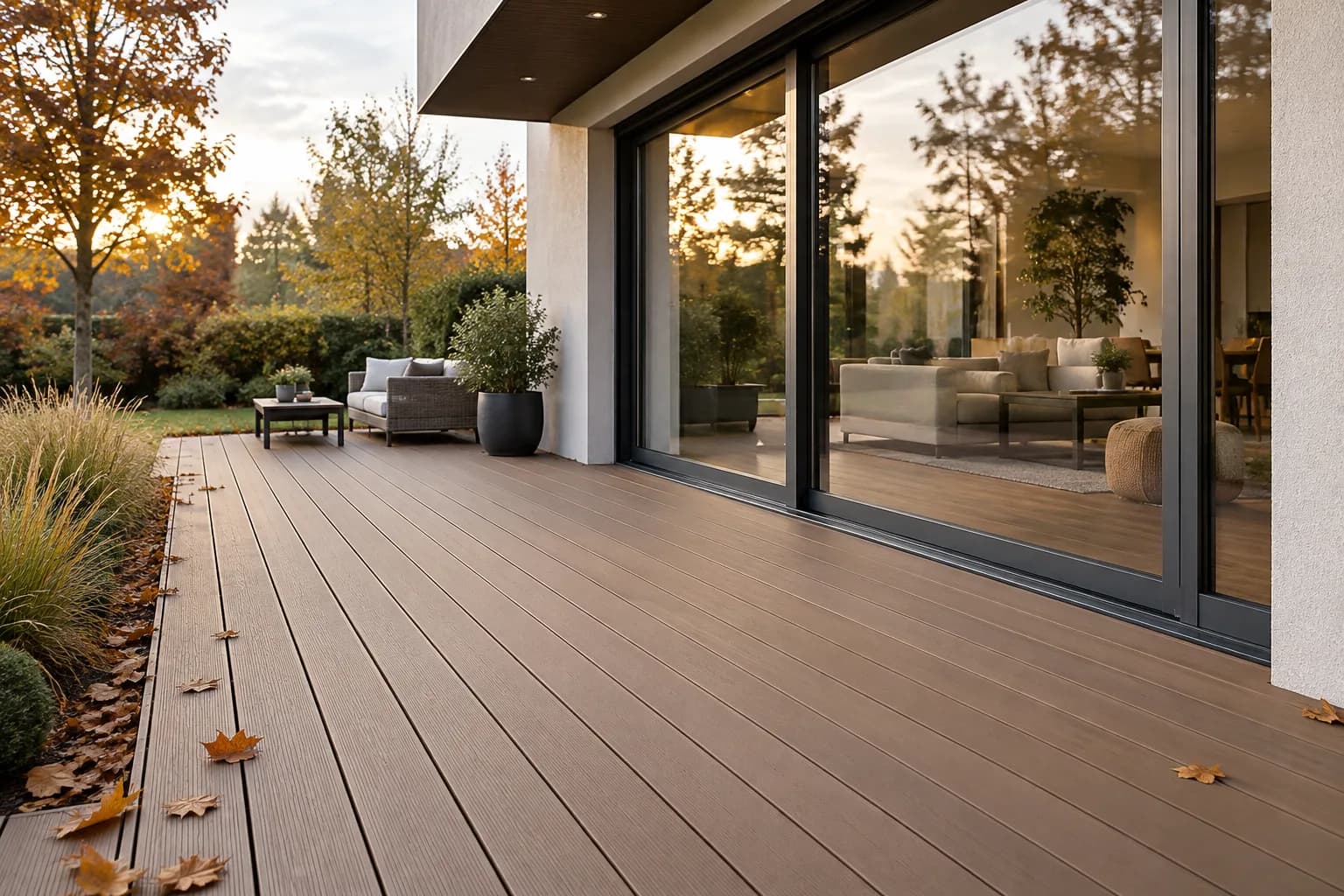
Composite decking in catering – Is it a good choice for a café terrace?
Find out whether composite decking is the ideal material for a restaurant or café terrace. Discover its durability, appearance and resistance to foot traffic in the hospitality sector!
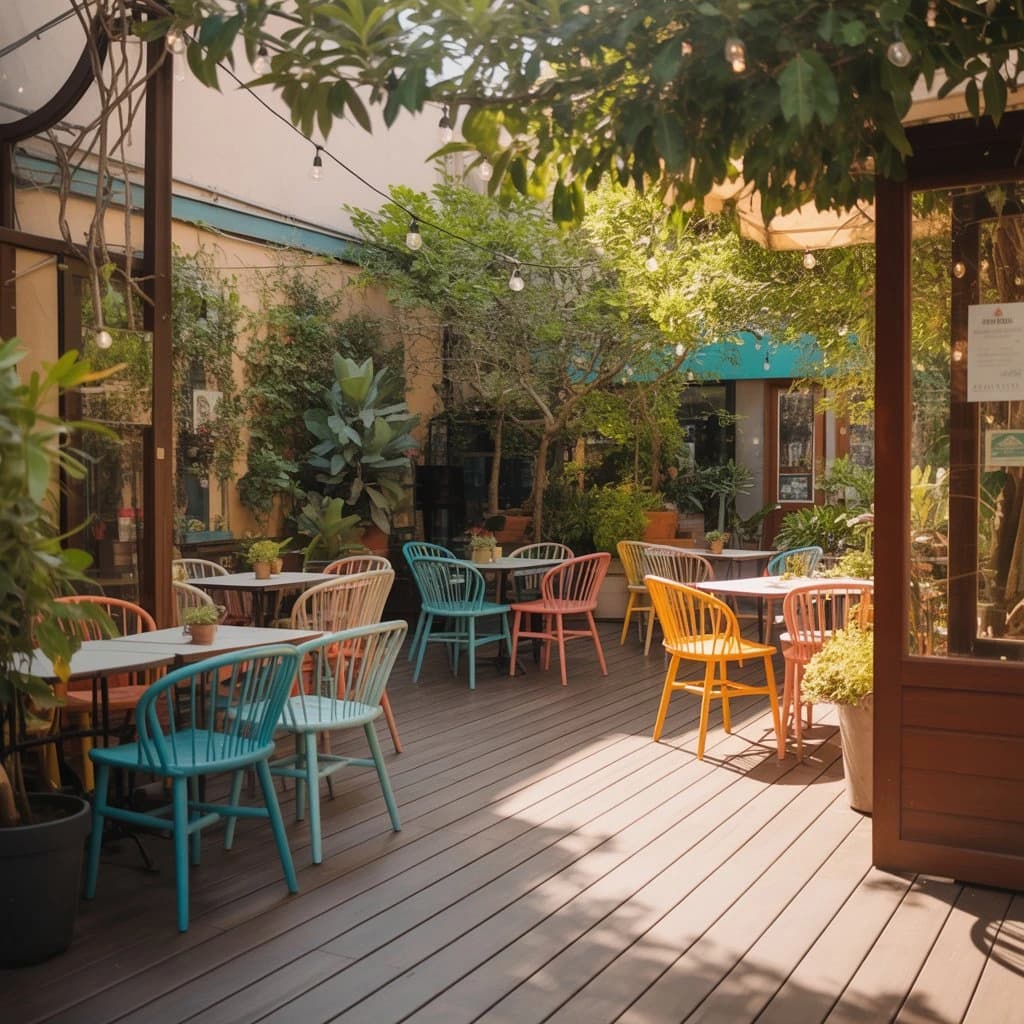
Planning to create an atmospheric café garden or refresh the terrace at your restaurant? You’ve come to the right place! Choosing the right flooring material is not just a matter of appearance, but above all of durability and comfort for your guests. In this context, composite decking in the hospitality industry is increasingly coming to the fore as a modern alternative to wood and tiles. In this article, we’ll look at whether composite decking is really a good choice for hospitality settings. We’ll check its resistance to foot traffic, durability in different weather conditions, ease of care and appearance. All so that you can make an informed decision when designing your outdoor space.
What exactly is composite decking?
Composite decking boards combine wood fibres (most commonly wood flour) with plastic. This combination gives us a material that looks like wood, but far surpasses it in terms of durability and resistance to external factors.
Composite decking boards have become extremely popular for building private terraces, but today they are also increasingly used in the hospitality industry.
Why is composite decking gaining importance in the hospitality industry?
In hospitality venues, it’s not just about design, but also practicality. Here’s why composite decking is a strong contender in the market for fitting out café and restaurant gardens:
1. Resistance to foot traffic and intensive use.
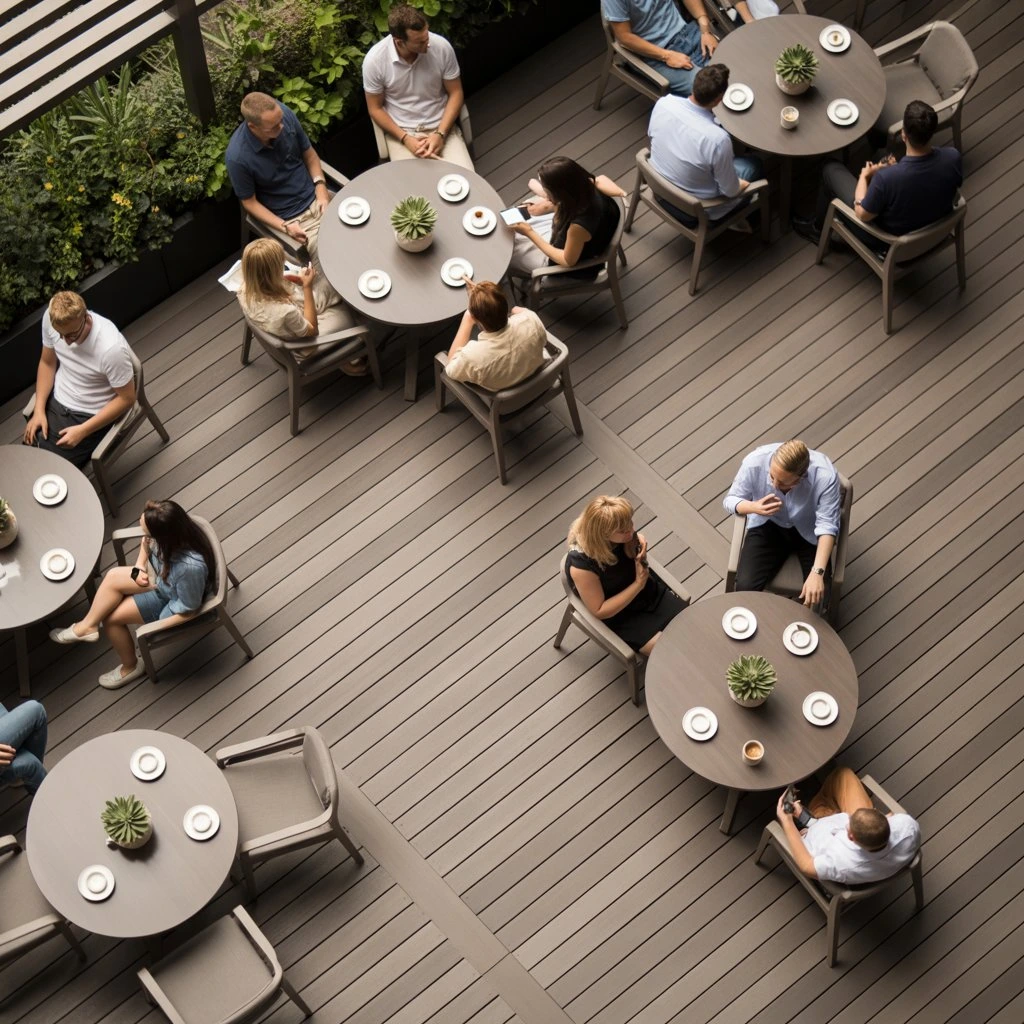
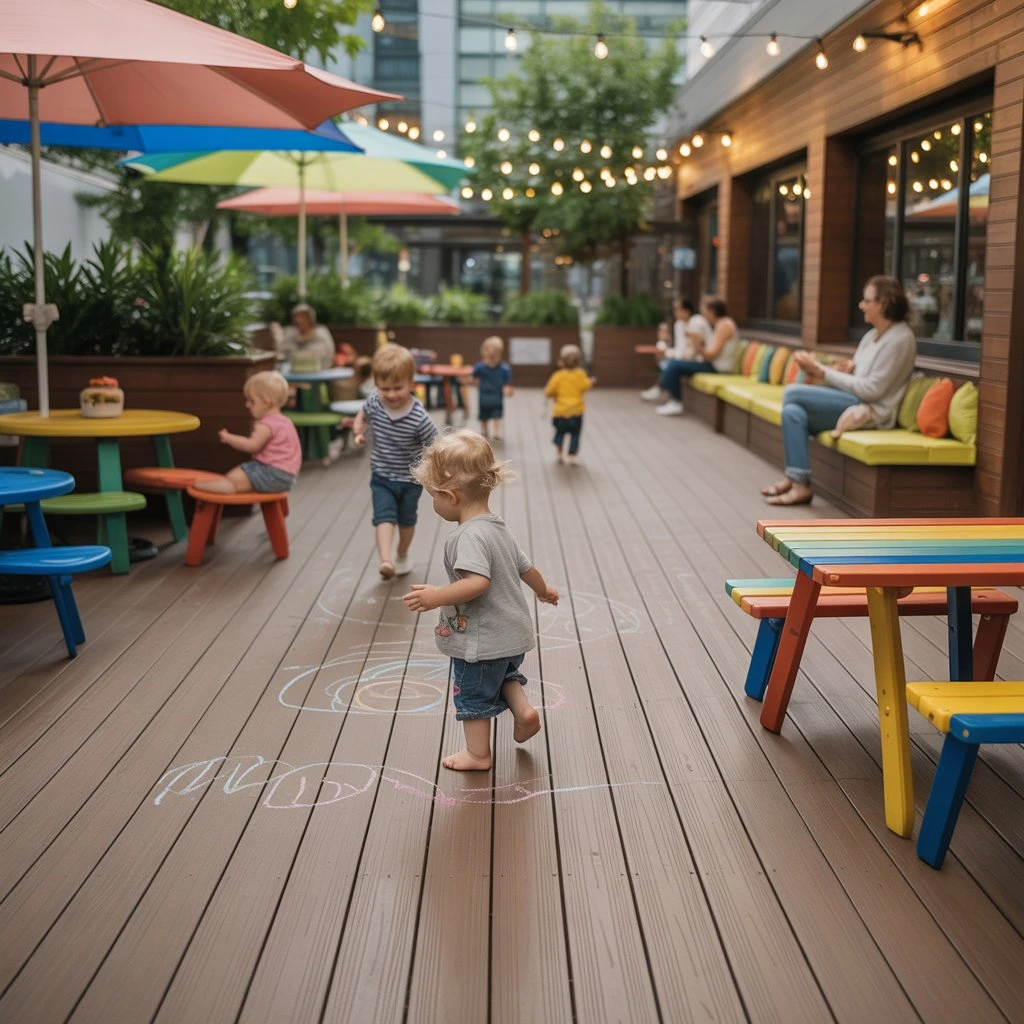
A hospitality garden is a place where lots of people pass through every day – customers, waiters and suppliers. Composite decking is highly resistant to abrasion, scratches and dents. Whether guests are moving chairs or children are running around, composite decking boards stand up to it in style.
What’s more:
- It doesn’t crack or break like natural wood.
- It doesn’t leave splinters – making it safe for children and animals.
2. Easy maintenance.
A restaurant terrace is exposed to all kinds of dirt – coffee, wine, sauces and fats. Composite decking doesn’t absorb liquids like wood, so a quick wipe with a cloth or rinse with water is enough.
You don’t have to:
- oil it every season,
- use specialist wood preservatives,
- worry about mould or fungi.
3. Resistance to weather conditions.
Composite decking boards perform well in both summer and winter. They’re not fazed by:
- intense UV rays – they don’t fade,
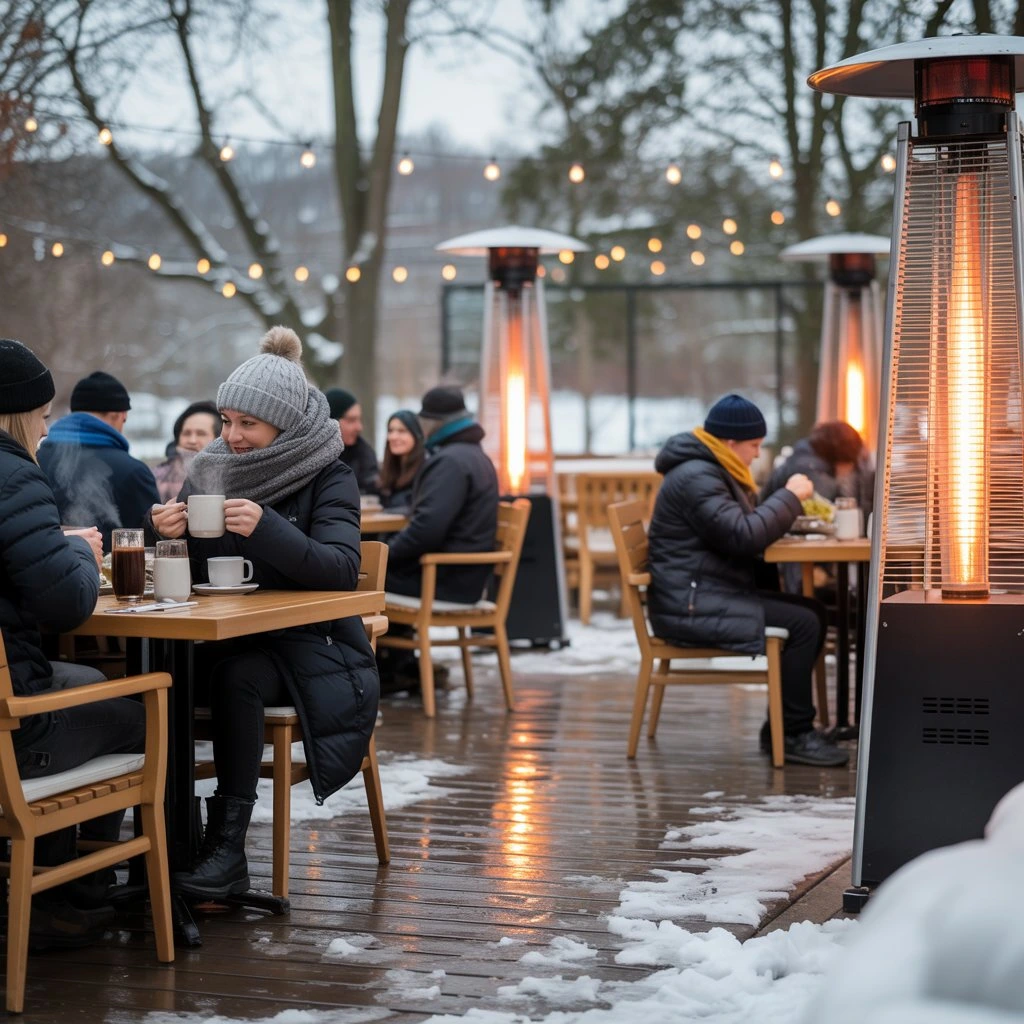
- rain and snow – they don’t rot,
- temperature changes – they don’t warp.
This is a huge advantage for venues that operate seasonally, as well as those that have a year-round garden.
4. A modern, attractive appearance.
A restaurant terrace is the venue’s calling card. Composite decking is available in many colours and textures – from classic brown to modern shades of grey. This makes it easy to match it to your interior style, from boho to industrial.
An attractive space = more customers!
Where can composite decking be used in the hospitality industry?
Composite decking is a versatile material – and not just for outdoor use! Here are a few examples:
- Restaurant terrace: durable and easy to keep clean.
- Café garden: pleasant to the touch and safe for children.
- Chill-out area by the bar: creates a modern atmosphere.
- Dining areas in hotels and holiday resorts: cohesive design and lasting durability.
What about the costs?
You’re probably thinking, “Sounds great, but how much does it cost?” It’s true that composite decking boards are more expensive than some options (e.g. concrete tiles), but...
In the long run:
- No maintenance costs, treatment or replacement of damaged components.
- Time savings – less work involved in cleaning and maintenance.
- Lower risk of customer complaints (e.g. because of splinters or a slippery surface).
Investing in composite decking simply pays off.
Are there any drawbacks?
All right, so as not to make it sound too good to be true – composite decking has some drawbacks too:
- Starting price – higher than traditional wood or tiles.
- May heat up in the sun – although there are models with “cool deck” technology.
- The material’s artificial character does not appeal to everyone – although visually it really does resemble wood.
Composite vs. wood – a comparison.
| Feature | Composite | Wood |
|---|---|---|
| Appearance | Modern, wood-effect | Natural, warm |
| Durability | High, up to 25 years | Average, requires maintenance |
| Maintenance | None required | Regular (oiling, impregnation) |
| Weather resistance | Very good | Average |
| Safety | Splinter-free, non-slip | Risk of slipping, splinters |
| Starting price | Higher | Lower |
What should you avoid when installing composite decking?
For composite decking to serve you well for many years, correct installation is important. Avoid:
- Insufficient expansion gaps between decking boards (they may warp).
- Not using a substructure (the decking boards need to “breathe”).
- Using metal screws instead of dedicated fixing clips (this affects appearance and durability).
It is best to hire a team with experience in installing composite decking – this is not the place to cut costs.
Summary: Composite decking – is it worth it?
Absolutely! If you value:
- durability,
- resistance to foot traffic and weather,
- appearance,
- safety,
- and low maintenance costs,
then composite decking in the hospitality sector is an excellent choice.
This is a modern solution that is winning the hearts of venue owners across Poland year after year.
Frequently asked questions (FAQ).
1. Is composite decking safe for children and pets?
Yes, it is splinter-free, non-slip and pleasant to the touch.
2. How long does a composite deck last?
The average lifespan is 20–25 years with correct installation and use.
3. Can it be used in winter?
Yes! Composite decking is frost-resistant and does not warp like wood.
4. Does composite decking heat up?
Yes, but there are models with technology that reduces surface heating.
5. Does composite decking suit a vintage or rustic style?
Of course! Just choose the right colour and texture – there are even models styled to look like aged wood.
To conclude.
Creating a stylish, durable and functional outdoor dining area is quite a challenge. But by choosing composite decking, you really can combine appearance with practicality. It may seem like a slightly more expensive option at first, but in the long run it is an investment that pays off.
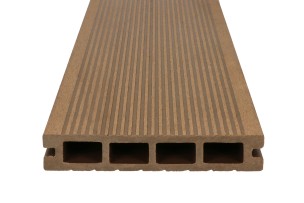
SELECT composite decking board 25x140 - 4,0 m
Price per 1 linear metre of decking board: 17,27 zł
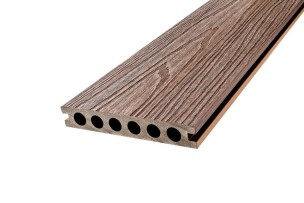
PREMIUM composite decking board 23x138 - 4,0 m
Price per 1 linear metre of decking board: 24,85 zł
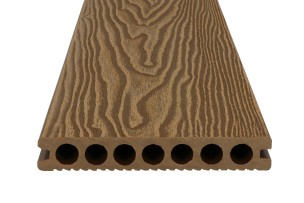
DUO composite decking board 23x148 - 4,0 m
Price per 1 linear metre of decking board: 21,29 zł
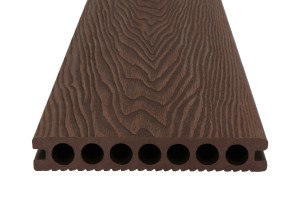
DUO composite decking board 23x148 - 3,5 m
Price per 1 linear metre of decking board: 21,30 zł