
Wall slats or wood panelling? Find out which to choose for a modern interior.
Wondering what would suit your interior better – wall slats or classic panelling? Read our comparison and discover the benefits of modern wall slats!
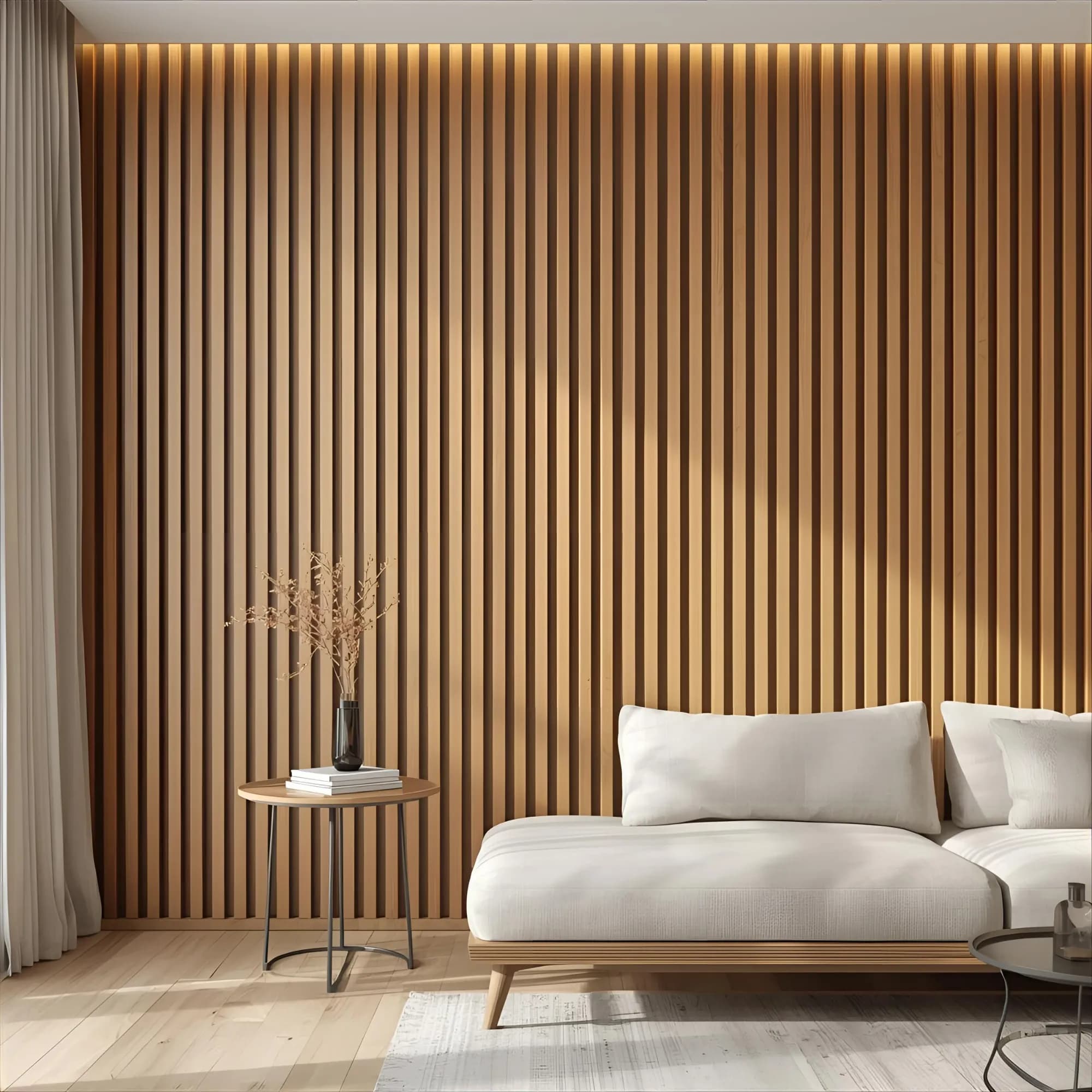
If you're planning to refresh the walls in your living room, bedroom or hallway, you're probably asking yourself: wall slats or wall panelling? Both options have their supporters, but they differ not only in appearance, but also in functionality, durability and the way they affect how a space feels.
In this article, you'll find a detailed comparison of wall slats and wall panelling to help you make an informed decision when designing your modern interior.
What are wall slats?
Wall slats are decorative vertical or horizontal strips fitted to walls to give a space a modern, three-dimensional effect. They are usually made from MDF, wood or plastic, and can be quick and clean to install – even without the need to drill.
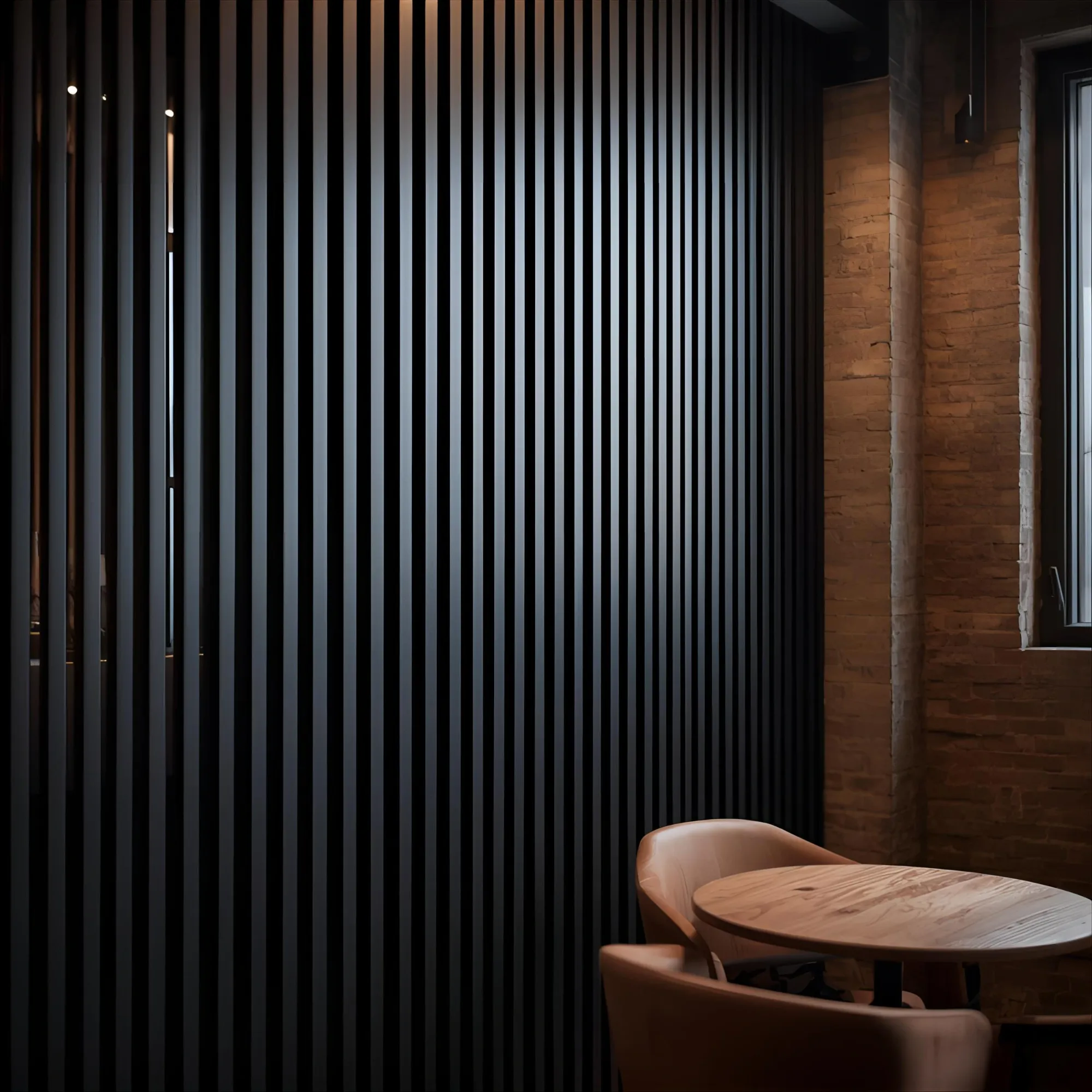
Wall slats are available in a range of colours and finishes – from natural wood tones to anthracite, as well as white and black. They are ideal for interiors in the following styles:
-
modern
-
Scandinavian
-
industrial
-
Japandi
-
minimalist
What is traditional wall panelling?
Wall panelling is a traditional form of wall finish that involves covering walls with panels made from wood or wood-based materials. Most popular in the PRL era, it is now making a comeback in a refreshed form, particularly in retro, rustic and vintage interiors.
Modern wall panelling may be lacquered white, grey or even another colour and fitted not across the full height of the wall, but, for example, only halfway up, often with a decorative trim along the top.
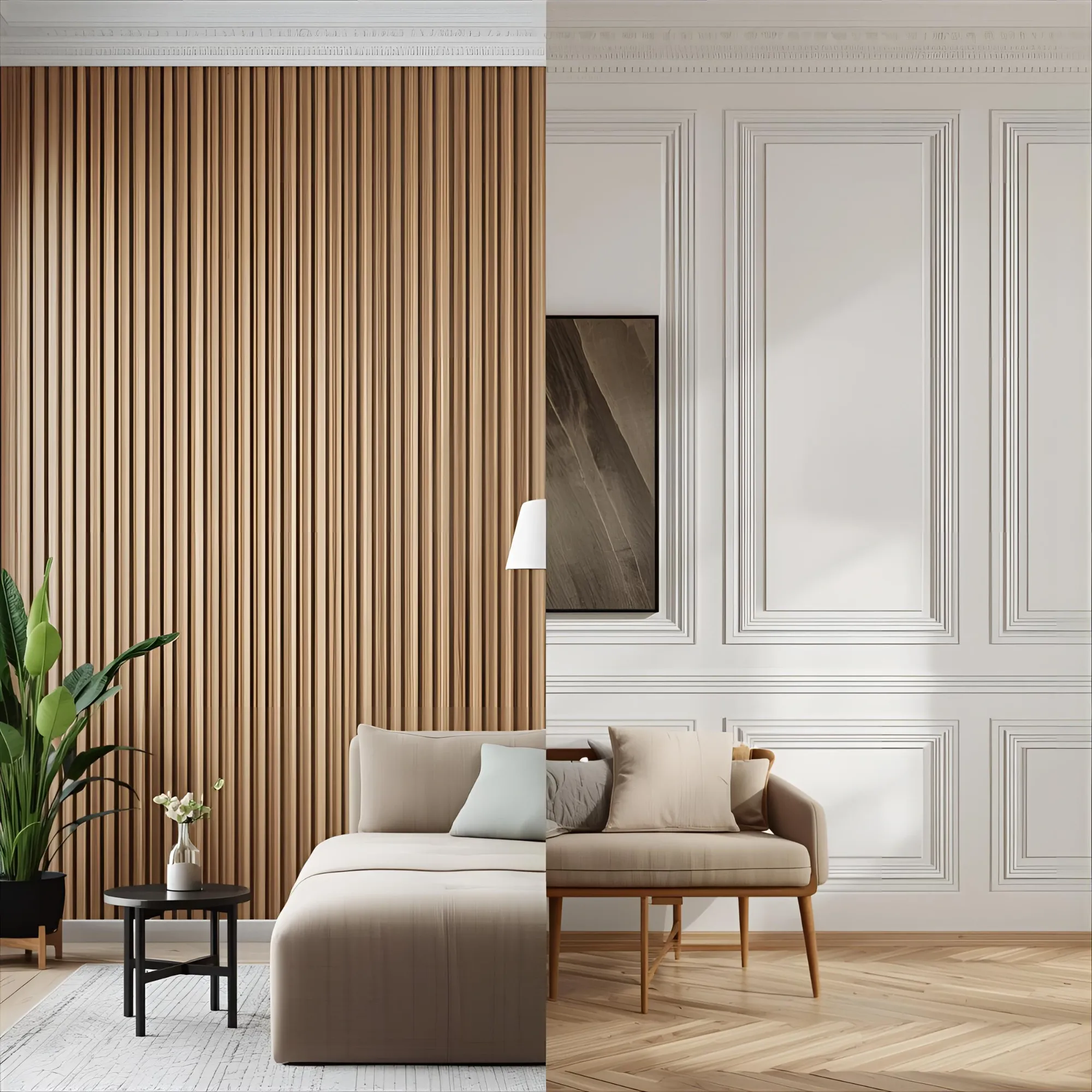
Comparison: wall slats vs wall panelling.
| Feature | Wall slats | Wall panelling |
|---|---|---|
| Appearance | Modern, geometric | Classic, traditional |
| Interior style | Minimalist, modern, loft | Retro, rustic, classic |
| Installation | Easy, often non-invasive | Requires precise fitting |
| Materials | MDF, wood, PVC | Mainly wood and plywood |
| Care | Easy – simply wipe clean | Wood requires maintenance |
| Acoustic effect | Better sound absorption | Weaker acoustic properties |
| Price | Mid-range to higher | Depends on the quality of the wood |
| Adaptability | Can be combined with LED lighting, ceilings and TV units | Less flexible for interior design |
Why do wall slats come out on top in modern interiors?
1. A three-dimensional effect and depth
Wall slats create a sense of space – they break up flat surfaces and give an interior rhythm and texture. This adds character even to a plain wall.
2. Versatility
Wall slats work both as a focal feature (e.g. on one living room wall) and as an accent (e.g. as a backdrop behind the TV, a headboard or a panel by the front door).
3. Acoustics
Not everyone knows this, but wall slats improve the acoustics in a room – they absorb echoes and sound waves, which is particularly appreciated by flat-dwellers and owners of large, open-plan spaces.
4. Option to add lighting
Want a ‘WOW’ effect? Install LED lighting between the slats. It's an easy way to create a modern and cosy atmosphere.
Or perhaps wall panelling?
Although wall panelling is associated with the 80s, it can also look stylish if it is well designed. Classic white wainscoting covering half the wall can give an interior elegance and cosiness, especially in an English or glamorous style.
But… wall panelling requires more work and maintenance, and not everyone will like its aesthetic. Some still find it visually “heavy”.
Installation: which is easier to fit?
Wall slats:
-
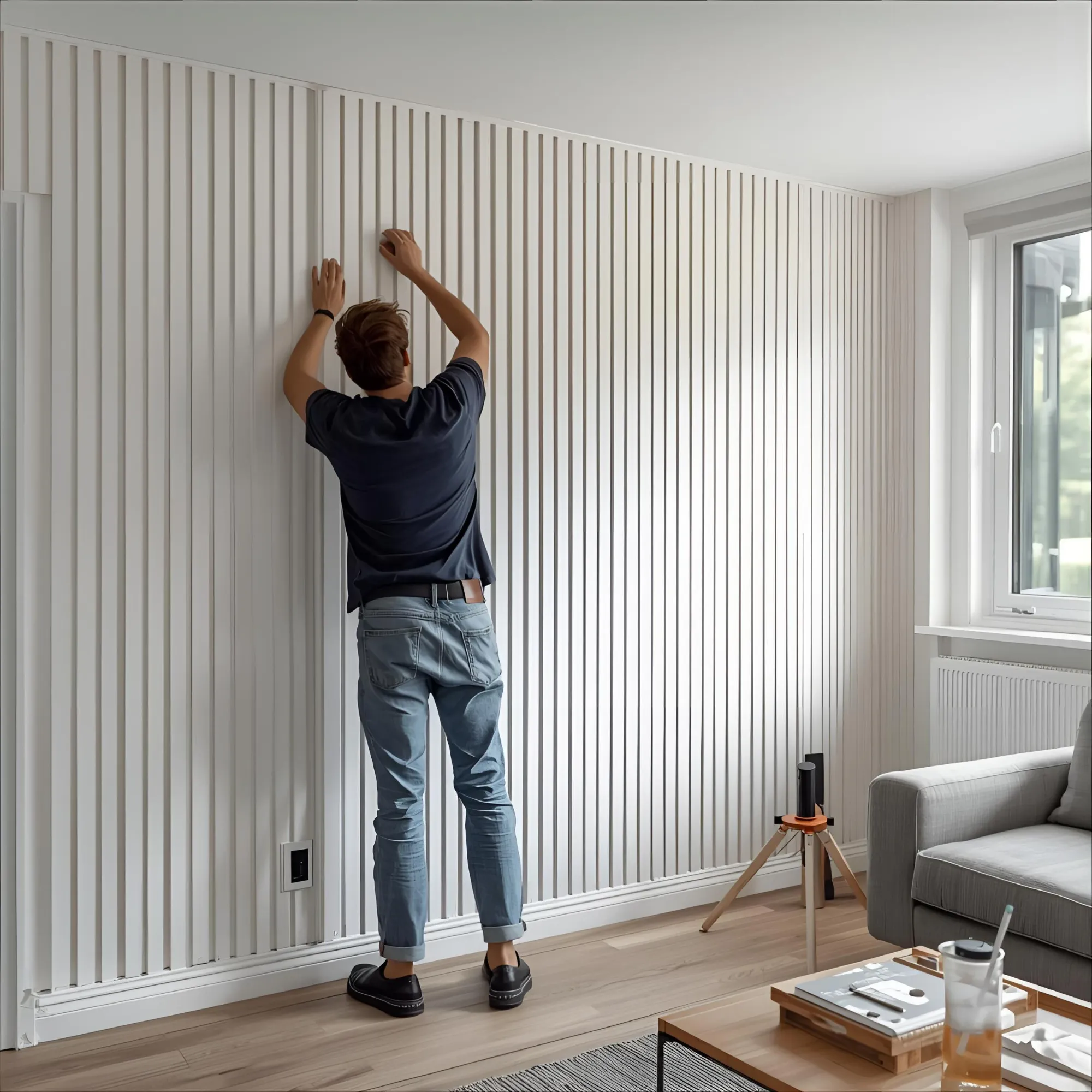
Can be fitted with adhesive or special mounting panels
-
No chiselling or drilling required
-
Suitable even for uneven walls
-
Suitable for DIY installation (DIY-friendly)
Wall panelling:
-
Requires cutting, fitting and accurate measurements
-
The wall may need to be levelled
-
With wood, precision is needed to avoid damaging the material
What about the price?
Prices for both wall panelling and wall slats can vary considerably depending on the material and quality of workmanship. But generally speaking:
-
Cheap wall panelling = plywood or wood imitation
-
More expensive wall panelling = solid wood, routed panels
-
MDF wall slats = reasonable price and a wide choice
-
Natural wood slats = higher cost, but a top-quality effect
What should you choose?
If you are looking for modernity, simplicity, functionality and lightness, then wall slats are definitely the better choice.
If, however, you are decorating an interior in a classic, retro or rustic style and value natural wood, wall panelling can be an interesting addition, provided it is well integrated.
Summary – wall slats vs wall panelling.
| If you value... | Choose |
|---|---|
| A modern look | Wall slats |
| Minimalist aesthetics | Wall slats |
| Retro, rustic style | Wall panelling |
| Easy installation | Wall slats |
| Natural wood | Wall panelling |
| Lighting effects | Wall slats |
| Elegance in an English style | Wall panelling |
| Acoustics and functionality | Wall slats |
Final thoughts.
Wall slats are currently one of the most versatile and design-led solutions for decorating walls. They offer huge design possibilities, are easy to install, look great and – importantly – do not overwhelm a room.
Wall panelling has its advantages, but is more niche and limited in style. So, if you are looking for a modern, practical and eye-catching wall finish, opt for wall slats – and enjoy an interior straight from a catalogue!
If you want to avoid making a mistake when installing slats, read our blog:
| Top 5 mistakes when installing wall slats – How to avoid them, step by step. |
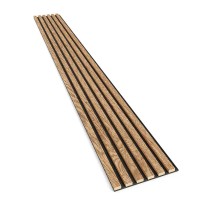
Oak veneer slats on felt 24x300 mm decorative wall strips on felt
Price is for one slat
Oak veneer wall slats 30x40 mm – decorative wall strips
Price is for one slat
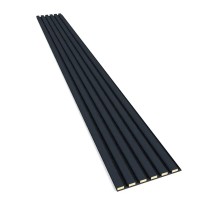
Anthracite slats on felt 24x300 mm decorative wall strips on felt
Price is for one slat
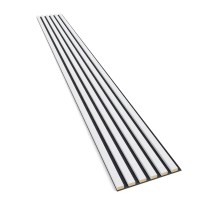
White slats on felt 24x300 mm decorative wall strips on felt
Price is for one slat



