Slats in a Small Bathroom – Which Moisture-Resistant Materials Should You Choose?
Dreaming of adding slats to your bathroom, but worried about moisture? Find out which materials are moisture-resistant and how to choose protection for slats in a small bathroom.
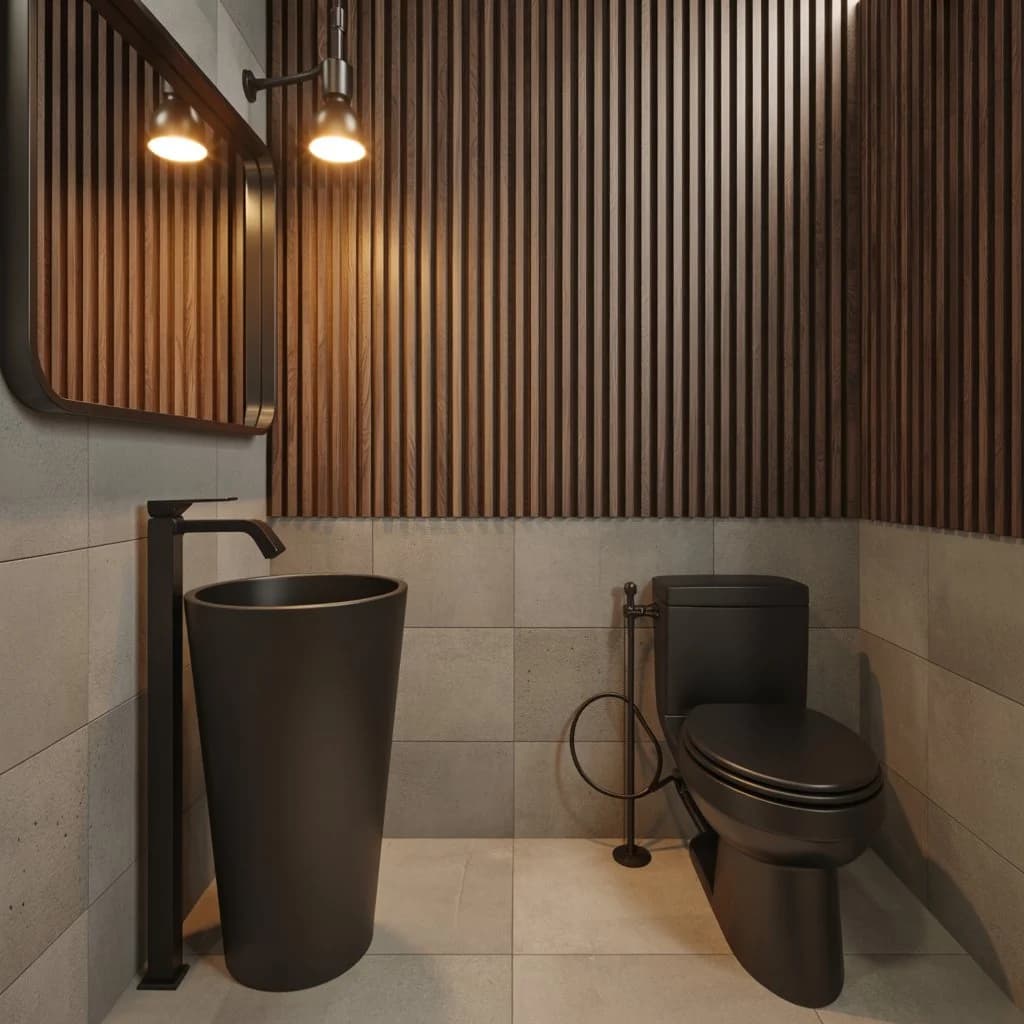
A small bathroom is a space that calls for clever solutions – both practical and aesthetically pleasing. More and more people are looking for ways to transform this room without a major renovation, and one of the hottest interior design trends of recent years is decorative slatted panels. They add cosiness, style and elegance, even to the smallest bathrooms. But wait – after all, the bathroom is a place full of moisture, steam and changing temperatures. Is this really a good idea?
That’s exactly what this post is about! We’ll suggest which slatted panels work best in the bathroom, which materials are moisture-resistant, and which protective measures to use to keep that ‘wow’ effect for years to come. If you’re planning a small bathroom makeover and dreaming of a stylish yet durable design, read on!
Why are slatted panels a good idea in the bathroom?
Slatted panels have taken the interior design world by storm – and it’s easy to see why! They create a great 3D effect, warm up a space and can give an interior a modern, industrial or even spa-like feel. But in a bathroom – especially a small one – you need to be careful.
What do you gain by installing slatted panels in the bathroom?
- highlighting an area, such as the basin or bath,
- visually warming up cold tiles,
- a wow effect without a major renovation,
- improved acoustics (less echo),
- a fashionable and cosy atmosphere.
Which slatted panel materials work well in humid conditions?
Okay – we all know that the bathroom is one of the most demanding rooms when it comes to the conditions that finishing materials must withstand. Moisture hangs in the air, water vapour condenses on the walls, and changing temperatures only make matters worse. That’s why choosing the right slatted panels for the bathroom is about more than just appearance – it’s also about functionality. And durability. Let’s see which materials can cope best.
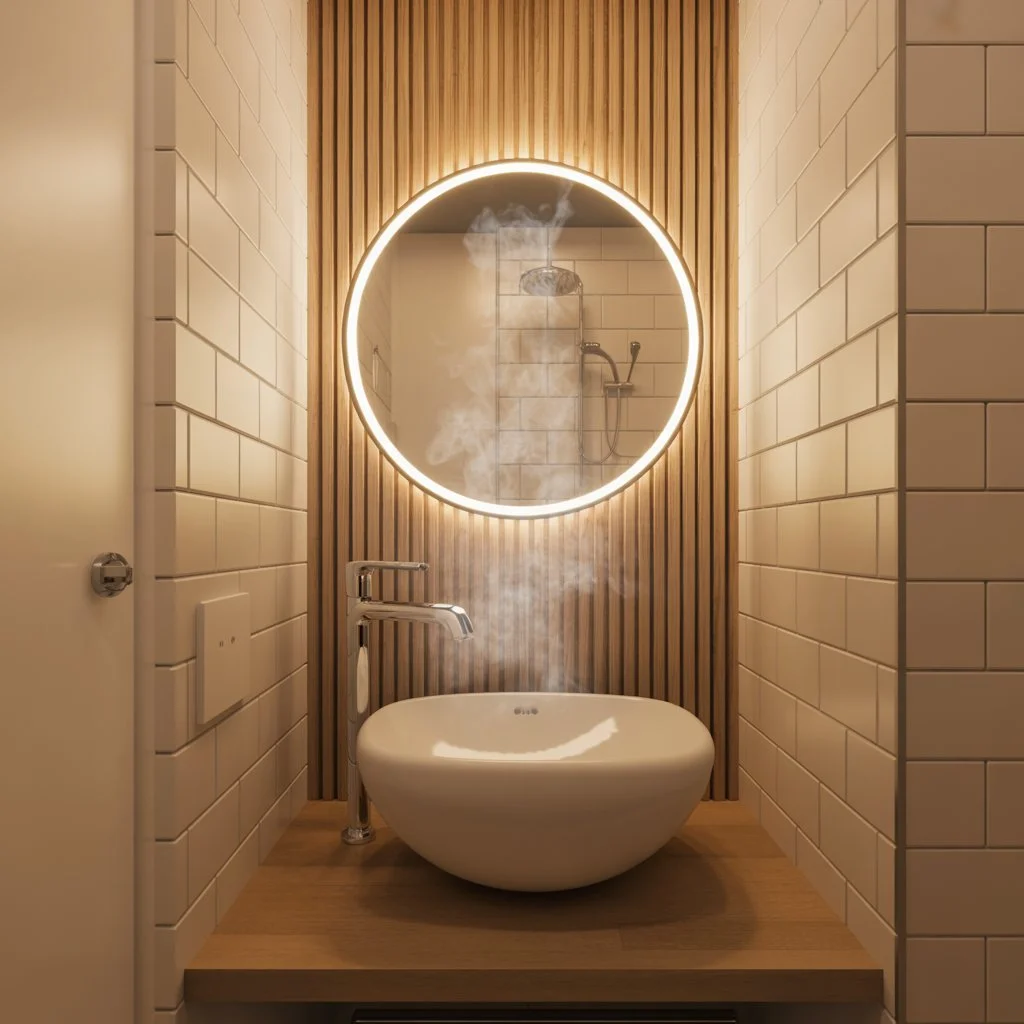
1. MDF slatted panels with waterproof (PVC) film.
This is the most popular choice for bathrooms. Slatted panels made from MDF covered with PVC film are resistant to moisture and water vapour. They work well, for example, on the wall by the basin or mirror. However, they are not recommended for areas exposed to direct contact with water, such as the area beneath a shower without an enclosure.
This is a good solution for those looking for a compromise between appearance and price – they are available in many designs (from light oak to matt black), easy to install and readily available.
2. Plastic – composite or PVC.
This material is made for challenging conditions. Slatted panels made from PVC or composite (a mixture of plastics) are completely waterproof and can even be installed in what is known as the wet zone – for example, in the shower. They are also lightweight and very easy to install – often all you need is assembly adhesive or self-adhesive tape.
They look a little less like real wood, but are durable and maintenance-free – there is no need to impregnate, varnish or protect them.
3. Aluminium slatted panels with a wood-effect finish.
This is a solution for those looking for modernity, durability and elegance all in one. Aluminium stands up to moisture very well, does not warp or rust, and requires no protective treatment. Thanks to special wood-effect coverings, the slats can look like wood.
They are ideal for bathrooms with an industrial or minimalist style. The higher price may be a drawback, but their durability and resistance make up for the cost.
4. Natural wood – only with protective treatment.
Wood in the bathroom? Yes, but only for those with patience. It requires thorough impregnation and regular care. Moisture-resistant species (such as teak or bamboo) will fare better, but even these can crack, swell or change shape without suitable protection.
Wood needs to be regularly oiled or varnished with special moisture-resistant products. It is not suitable for poorly ventilated bathrooms or areas exposed to splashes.
How do you protect slatted panels in the bathroom?
This is crucial. Even the best material will fail if you don’t ensure adequate protection.
1. Ventilation, ventilation and more ventilation.It may sound obvious, but it’s essential. Good ventilation (mechanical or natural) protects not only the slatted panels, but the entire bathroom from mould.
2. Keep away from the wet zone.Do not install slats where they will come into direct contact with water (unless they are made of PVC). Glass or tiles are a better choice in the shower.
3. Treating the wood.If you opt for natural wood, you must impregnate it. It is best to use bathroom oil or polyurethane varnish.
4. Sealing the gaps with silicone.It is worth applying sanitary silicone along the floor and ceiling to prevent moisture from penetrating vulnerable areas.
5. Aluminium framework or waterproof adhesives.Do not install slats using ordinary wood glue. Use waterproof mounting adhesives or an aluminium framework.
Design ideas – how to use slats in a small bathroom?
A small bathroom is no reason to despair – quite the opposite! Well-chosen slats in the bathroom can work wonders. Here are a few ideas:
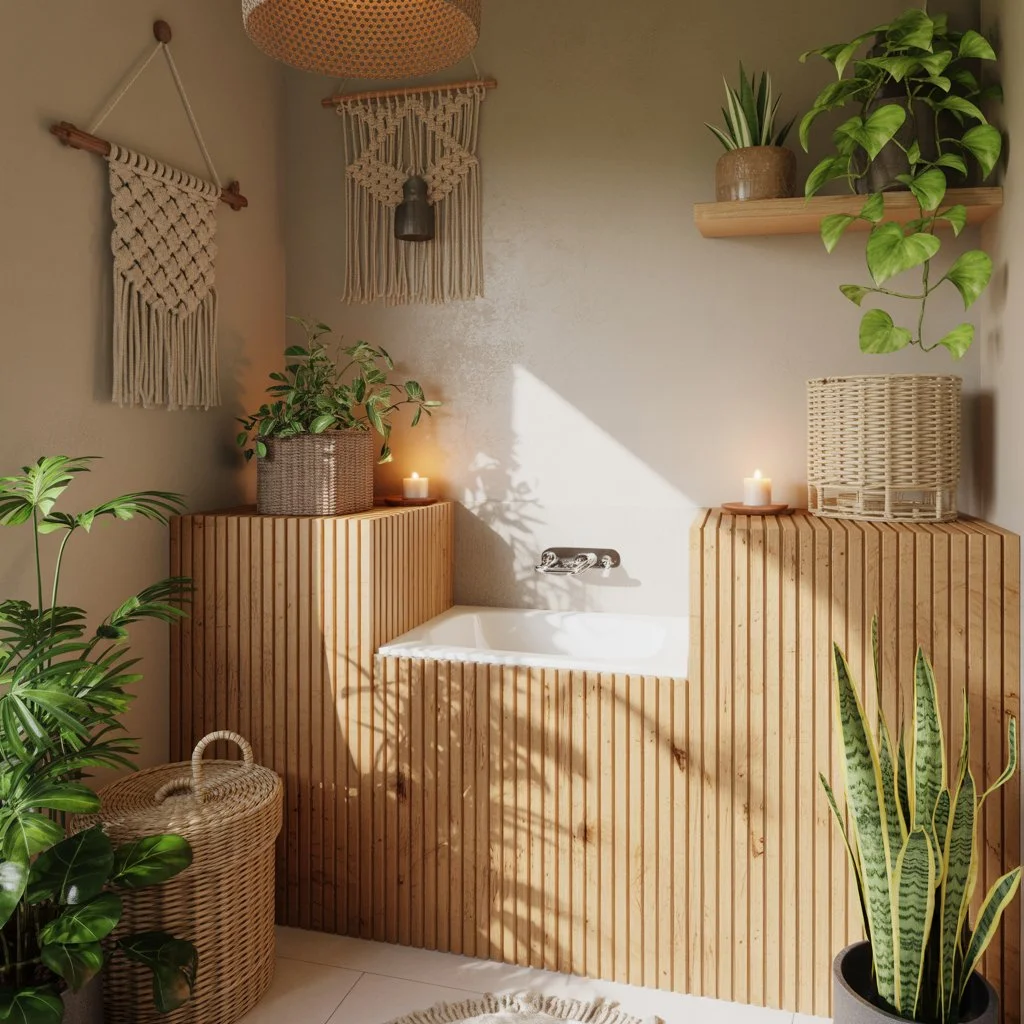
- A feature wall - The perfect spot? Above the bath, behind the mirror or by the toilet area. It does not overwhelm the room, but adds character.
- Slats as a “partition” - They separate the shower area from the toilet or washbasin. Light, modern and practical.
- Vertical slats on the ceiling - Surprising? Yes, but it works! Vertical strips on the ceiling make the room look longer.
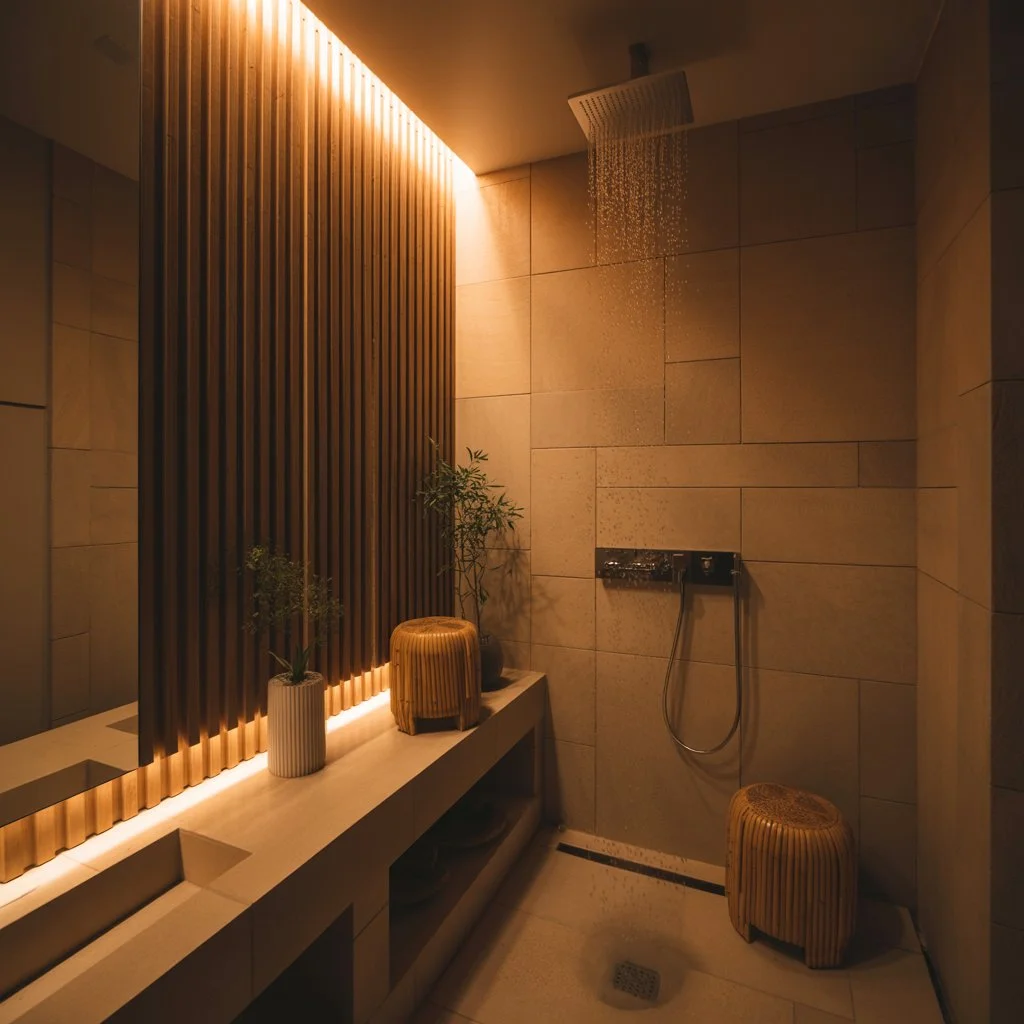
- Slats with LED lighting - An Instagram-worthy effect – warm light brings out the texture of the slats and creates a spa-like atmosphere.
Slats in the bathroom – what to choose to suit your interior style?
Not every bathroom has a Scandinavian minimalist style. Find out how to match slats to different styles:
| Bathroom style | Type of slats | Colour scheme |
|---|---|---|
| Modern | PVC, aluminium | Black, graphite, natural oak |
| Scandinavian | Veneered MDF, wood | Light oak, white, pine |
| Industrial | Composite, aluminium | Dark brown, black slats |
| Glamorous | Glossy slats, LED | White, gold, silver |
| Eco/boho | Natural wood, bamboo | Beige, caramel, natural tones |
FAQ – frequently asked questions.
Will bathroom slats deteriorate after a year?
If you choose waterproof materials and install them properly, they can last for even a dozen or so years!
Can slats be cleaned?
Yes, just use a damp cloth. Avoid harsh chemicals and scrubbing.
Which slats are safest for a bathroom?
Definitely composite or PVC – 100% moisture-resistant and ideal for wet areas.
Can I install slats myself?
Yes – especially self-adhesive ones. But if you want them to last “for years”, it is better to consult a professional.
In summary…
Slats in the bathroom? Absolutely! Even in a small space, they can completely transform the interior – you just need to think carefully about your choice of material and ensure it is properly protected against moisture. Composite PVC slats work particularly well: they are water-resistant and easy to install. Veneered MDF with a waterproof finish is another good option, offering a wide choice of colours and textures. If you want a natural look, you can choose wood – provided it is carefully treated. Aluminium slats are also an excellent, though more expensive, option, combining durability with elegant design. Add suitable ventilation, an imaginative design and attention to detail, and even the smallest bathroom will take on a modern, cosy and stylish look.
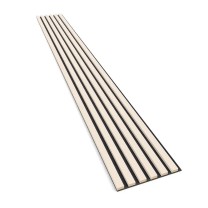
Beige slats on felt 24x300 mm decorative wall strips on felt
Price is for one slat
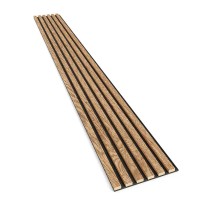
Oak veneer slats on felt 24x300 mm decorative wall strips on felt
Price is for one slat
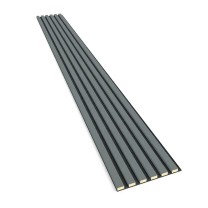
Scandinavian grey felt-backed slats 24x300 mm decorative wall strips on felt
Price is for one slat
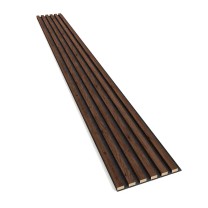
Walnut felt-backed slats 24x300 mm decorative wall strips on felt
Price is for one slat