
Skirting trim or angle trim – which should you choose to finish your decking?
Wondering whether to choose a skirting board or corner trim to finish your terrace? Discover the differences, advantages and uses of both options, and choose the best finish for your composite decking.

Building a terrace with composite decking boards does not end with installing the boards and supporting structure. An equally important stage is finishing the edges neatly, which affects both the appearance and durability of the entire structure. It is at this stage that many investors ask themselves: would a skirting trim or an angle trim be the better choice? Both components serve as finishing elements, but they differ in their design, installation method and application. Choosing the right one not only creates an elegant visual effect, but also protects the terrace edges from mechanical damage and the effects of weather. In this guide, we explain how the two solutions differ, when it is worth using a skirting trim, and when an angle trim is the better choice.
Why is finishing the edges of a terrace so important?
When designing a terrace, many people focus primarily on choosing the composite decking boards. However, properly finishing the sides of the structure is just as important. Correctly selected trims:
- improve the appearance of the terrace,
- conceal structural components,
- protect the edges of the boards from damage,
- help prevent dirt from getting under the terrace,
- increase the durability of the entire structure.
A well-finished terrace looks like an integral part of the home's architecture, rather than simply a platform made of boards.
What is a skirting trim?
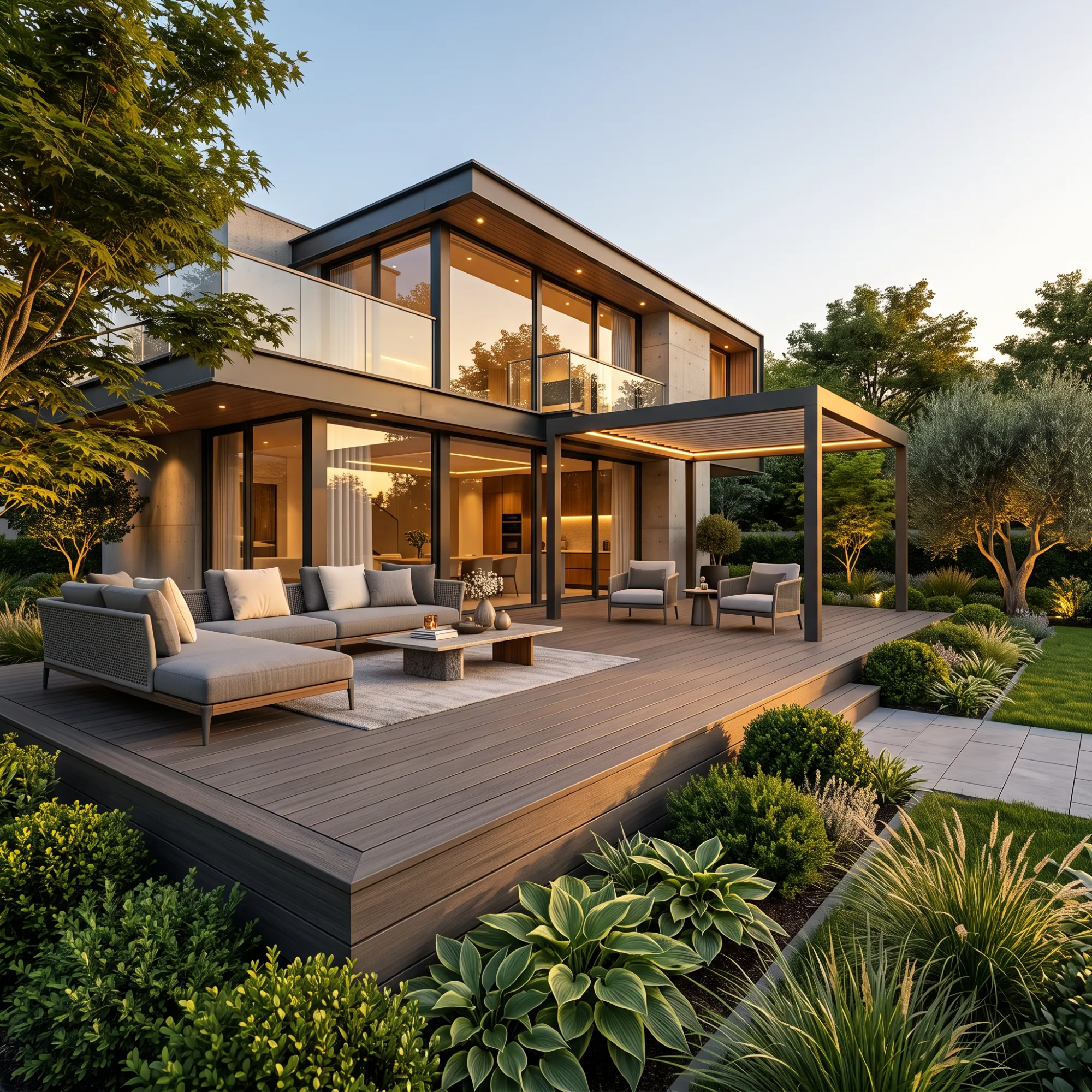
A skirting trim is a finishing component installed vertically along the sides of a terrace. Its main purpose is to cover the visible joists, supports and the space beneath the composite decking boards. It is most often made from the same material as the composite decking boards, giving the whole structure a very neat and uniform appearance. Skirting trims are particularly popular for raised terraces, where the supporting structure remains visible from the side.
Advantages of a skirting trim.
The main advantages of a skirting trim include:
- neatly concealing the structure,
- a modern-looking terrace,
- protection against dirt,
- the option to match the colour to the boards,
- a neat finish for raised terraces.
In contemporary architectural projects, skirting trims create the effect of a unified structure, significantly enhancing the visual appeal of the entire property.
What is an angle trim?
An angle trim, also known as a corner profile, is primarily used to protect the corners and edges of a terrace. It has a distinctive L-shaped cross-section, which effectively covers the edges of the composite decking boards. It is relatively easy to install and gives a very neat finish. An angle trim works well on both simple terraces and more complex projects.
Key advantages of an angle trim.
The main benefits of using an angle trim include:
- protecting corners from damage,
- a neat finish to the edges,
- quick installation,
- the option to use it on terraces of different shapes,
- high resistance to weather conditions.
This solution is particularly popular when the terrace structure does not need its sides to be fully enclosed.
Skirting trim or angle trim – the key differences.
Although both solutions are used to finish a terrace, they have entirely different applications. Skirting trim primarily conceals the space beneath the terrace and gives the structure an elegant appearance. It is the ideal solution for terraces raised above ground level. Angle trim, on the other hand, focuses on protecting the corners and edges of decking boards. It does not cover the entire structure, but effectively protects the areas most exposed to damage. In practice, both components are very often used together. Skirting trim provides an attractive finish to the sides of the terrace, while angle trim finishes the corners and areas particularly exposed to impact.
When should you choose skirting trim?
Skirting trim is the best choice when:
- the terrace is raised above ground level,
- you want to conceal the supporting structure,
- you want to achieve a modern look,
- you are planning an elegant finish for the entire façade.
This solution works perfectly for detached houses, apartments and modern developments, where every detail matters aesthetically.
When is angle trim a better choice?
Angle trim is a good choice if:
- you want quick installation,
- the terrace is close to ground level,
- you want to protect the edges from damage,
- the structure does not require full enclosure.
This is a practical solution that effectively increases the durability of the terrace without the need for additional finishing work.
How do you match the colour of the trims to composite decking boards?
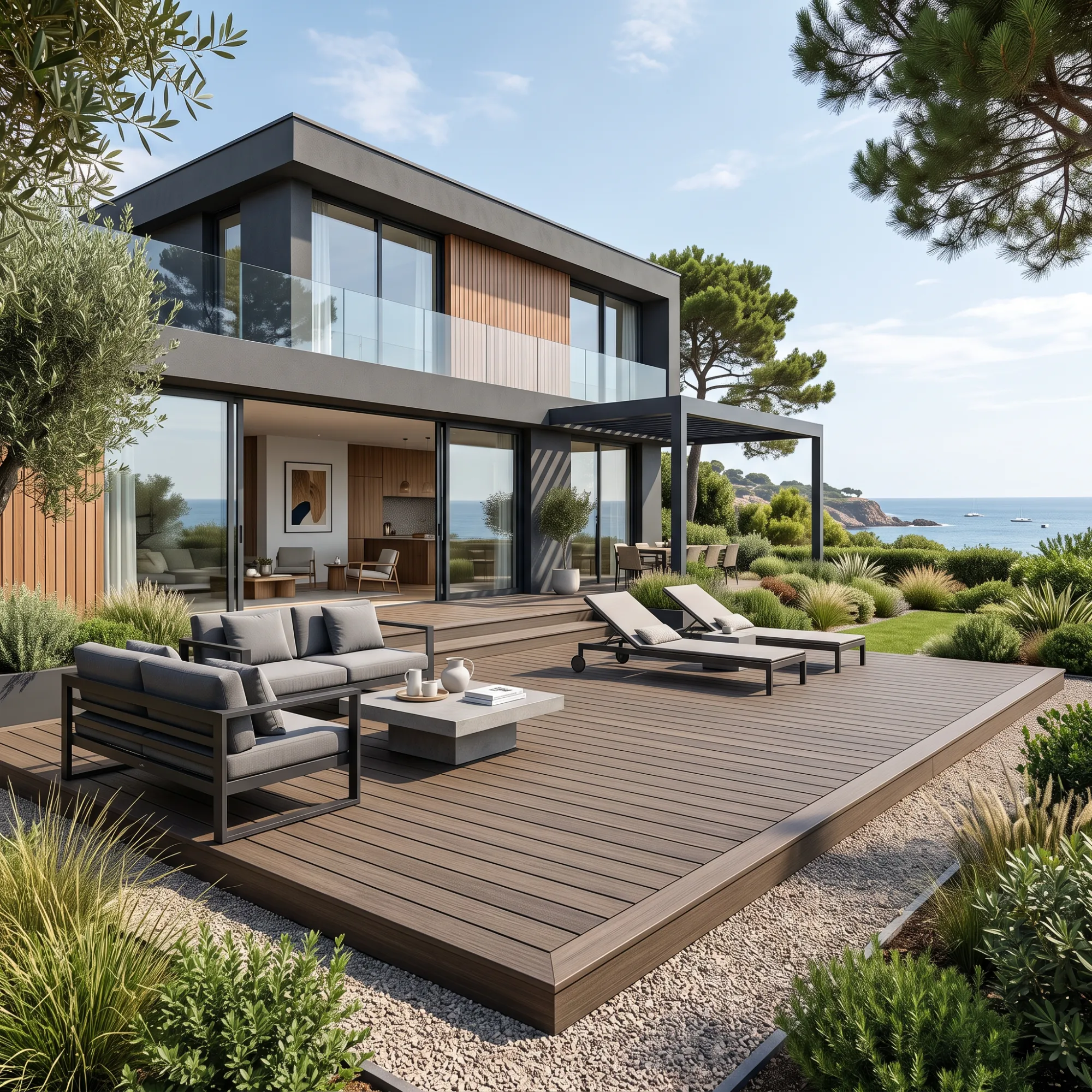
The best visual effect is achieved when the finishing trims are colour-matched to the composite decking boards. Manufacturers most often offer trims in the same shades as the boards, giving the entire structure a cohesive and elegant appearance. Contrasting combinations are also becoming increasingly popular, for example graphite trims with light-coloured boards or anthracite profiles with boards in a natural wood colour. These combinations give the terrace a modern, designer look.

What should you bear in mind during installation?
Even the best trim will not do its job if it is installed incorrectly. During installation, it is worth remembering to:
- use the manufacturer's original accessories,
- maintain the appropriate expansion gaps,
- level the structure correctly,
- use stainless steel fixings,
- ensure adequate ventilation beneath the terrace.
Professional installation helps preserve the appearance and durability of the finish for many years.
The most common mistakes when finishing a terrace.
One of the most common mistakes is choosing trims based solely on price. Cheaper alternatives may differ in colour, build quality and resistance to UV radiation. Other common mistakes include:
- choosing trims that are not properly matched to the terrace system,
- using unsuitable screws,
- not allowing for expansion gaps,
- overtightening the components,
- installing without ensuring adequate ventilation.
Avoiding these mistakes helps you enjoy an attractive-looking terrace for many years.
Summary.
The choice between skirting trim and angle trim depends primarily on the terrace structure and the desired visual effect. If you want to conceal the supporting elements and give the terrace an elegant, modern look, skirting trim is the best solution. If, on the other hand, your main priority is protecting the corners and neatly finishing the edges, angle trim is an excellent choice.
In many cases, the best results come from using both components together. This gives a composite decking terrace not only an attractive appearance, but also greater resistance to damage and the effects of weather. By choosing original finishing trims and compatible installation accessories, you are investing in the durability, safety and appearance of your outdoor space for many years to come.
FAQ - Frequently asked questions.
Is skirting trim essential?
Not always. If the terrace structure is not visible or the owner does not want to enclose it, angle trim alone can be used. However, in many projects skirting trim significantly improves the appearance of the finish.
Can both types of trim be used at the same time?
Yes. This is a very popular solution. Skirting trim conceals the structure, while angle trim protects the corners and edges.
Which solution is more durable?
Both products are durable if they come from a reputable manufacturer and have been installed correctly. The quality of the material and compatibility with the terrace system are key.
How do you match trims to the colour of the terrace?
It is best to choose trims from the same collection as the composite decking boards. This gives you a cohesive look and a perfect colour match.
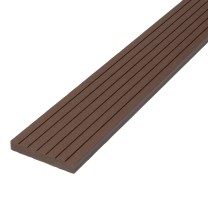
STANDARD DUO composite skirting trim 10x70x4000
Trims available in 5 colours
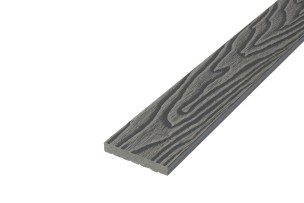
DUO composite decking skirting trim 10x70x4000
Trim available in 5 colours
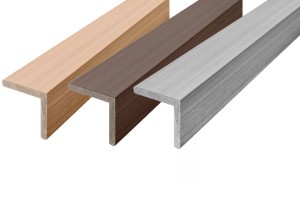
PREMIUM composite corner trim 50x50x4000
Trim available in 4 colours
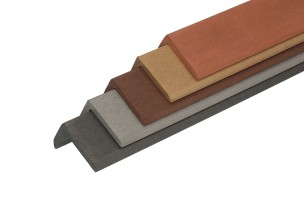
DUO composite corner trim 60x40x4000
Trim available in 5 colours



