Trims – types, prices and uses in the home and garden
Find out which types of trim to choose for your home and garden. Skirting board, corner trim or composite trim – discover the prices, benefits and practical uses.

We often see trims as a detail, but in practice they are a key element in finishing and protecting interiors and garden spaces. They can be used both to conceal gaps and to protect corners, or to give planters, patios and stairs an attractive finish.
A well-chosen trim combines functionality and design. There is now a huge choice available – from traditional wooden trims, through MDF and PVC, to modern composite trims, which stand out for their exceptional durability.
Types of trims and their characteristics
Trims can be considered from several perspectives – their shape, function and the material they are made from. Each type has a different use and is suited to different conditions. It is worth getting to know them, as this makes it easier to choose the right solution for your home, patio or garden.
1. Skirting boards (plinths).
These are the most popular type of trim used indoors. They are fitted where the wall meets the floor. Their main purpose is to conceal expansion gaps that form when laying laminate flooring, parquet or boards. They also provide protection – guarding the wall against dirt, for example during cleaning, as well as against mechanical damage. Plinths are available in many options: wood, MDF, PVC and modern composite, which is moisture-resistant and requires no additional maintenance.
2. Corner trims (angle trims).
Corner trim is a solution with both practical and aesthetic benefits. Its role is to protect corners – for example, on stairs, patios, façades or garden planters – from knocks, cracks and damage. On composite patios and façades, corner trims provide a neat finish to the structure, giving it an elegant and cohesive appearance. In homes, they are often used to reinforce wall edges, which are most vulnerable to impact.
3. Cover and finishing trims.
This type of trim is primarily used to improve appearance. They conceal gaps and joints created when fitting windows, doors, wall panels or fitted furniture. They make all imperfections invisible, leaving the interior looking neat and professional. In modern interiors, they also serve a decorative purpose – contrasting trims are often used to emphasise the character of a room.
4. Patio and garden trims (composite).
Trims made from wood-polymer composite are ideal for outdoor spaces. They resist exposure to sun, rain and frost, so they do not need treating. They are used, among other things, to finish patios, edge flower beds and planters, and clad façades. They give gardens and patios a cohesive, modern look, while ensuring all the details are properly protected from the weather.
Composite trims – types and uses.
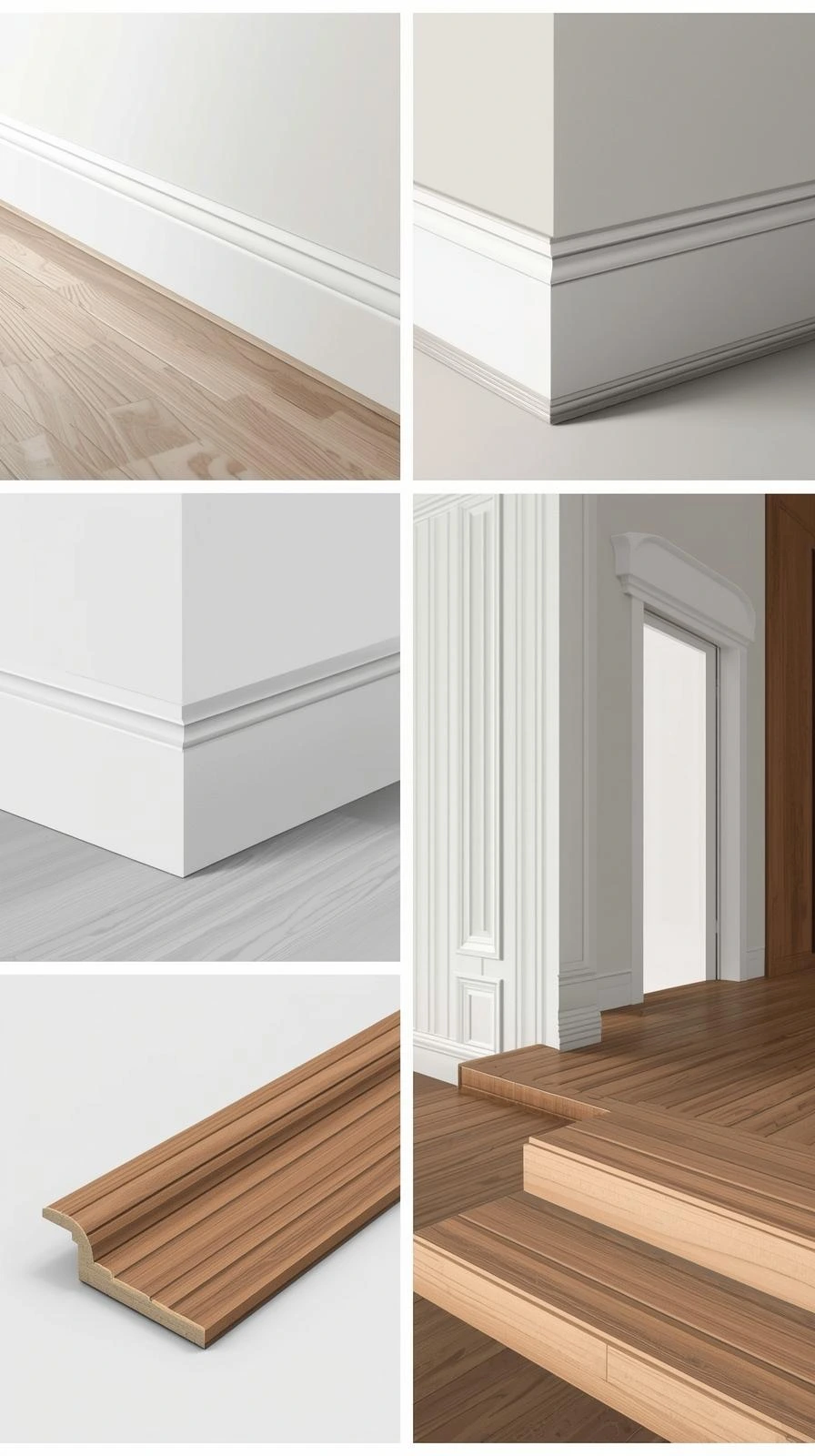
Composite trims are finishing elements made from composite materials that combine wood and plastics. This makes them durable, weather-resistant and easy to maintain. They are used both indoors and outdoors, from floors to patios, façades and decorative garden details. Below, we present the different types of composite trims and their uses.
1. Composite skirting boards.
-
Composite skirting boards are mainly used to finish floors, patios and stairs, giving interiors and outdoor spaces an attractive, modern appearance.
Features and benefits:-
Moisture resistance – so they can be used in kitchens, bathrooms and outdoors, even in areas exposed to rain and snow.
-
Easy to clean – simply use a damp cloth to remove dirt.
-
Durable – they do not warp or crack, making them a long-term investment.
Examples of use:
-
Finishing floors in living rooms and hallways, where skirting boards protect walls from dirt.
-
Finishing home patios – skirting boards can conceal gaps between the decking boards and the building wall.
-
Use on garden or indoor stairs for an elegant finishing touch.
-
2. Composite angle trims.
-
Angle trims are used mainly where two surfaces meet at a right angle. They are not only decorative but also functional.
Features and benefits:-
They protect corners against water and dirt ingress, increasing the durability of decking and façades.
-
They give the whole structure a cohesive, modern look – neatly finished corners make the structure look tidy and professional.
-
Versatile – they can be used both indoors and outdoors.
Examples of use:
-
Finishing the corners of patios, balconies or façades.
-
Finishing garden planters made from composite decking boards, giving them an elegant look.
-
Protecting wall corners in rooms exposed to moisture.
-
3. Composite cover trims
-
Cover trims are products designed to conceal cuts and joins in structures made from composite decking boards, significantly improving the finish.
Features and benefits:-
They neatly conceal cut edges of boards, which is particularly important for decking and façades.
-
Available in various colours and finishes – easy to match to the overall design.
-
Weather-resistant, like other composite trims, ensuring durability.
Examples of use:
-
Finishing joins between boards on patios and balconies.
-
Concealing gaps in façades made from composite decking boards.
-
Creating neat edges on garden furniture made from composite material.
-
What can trims be used for?
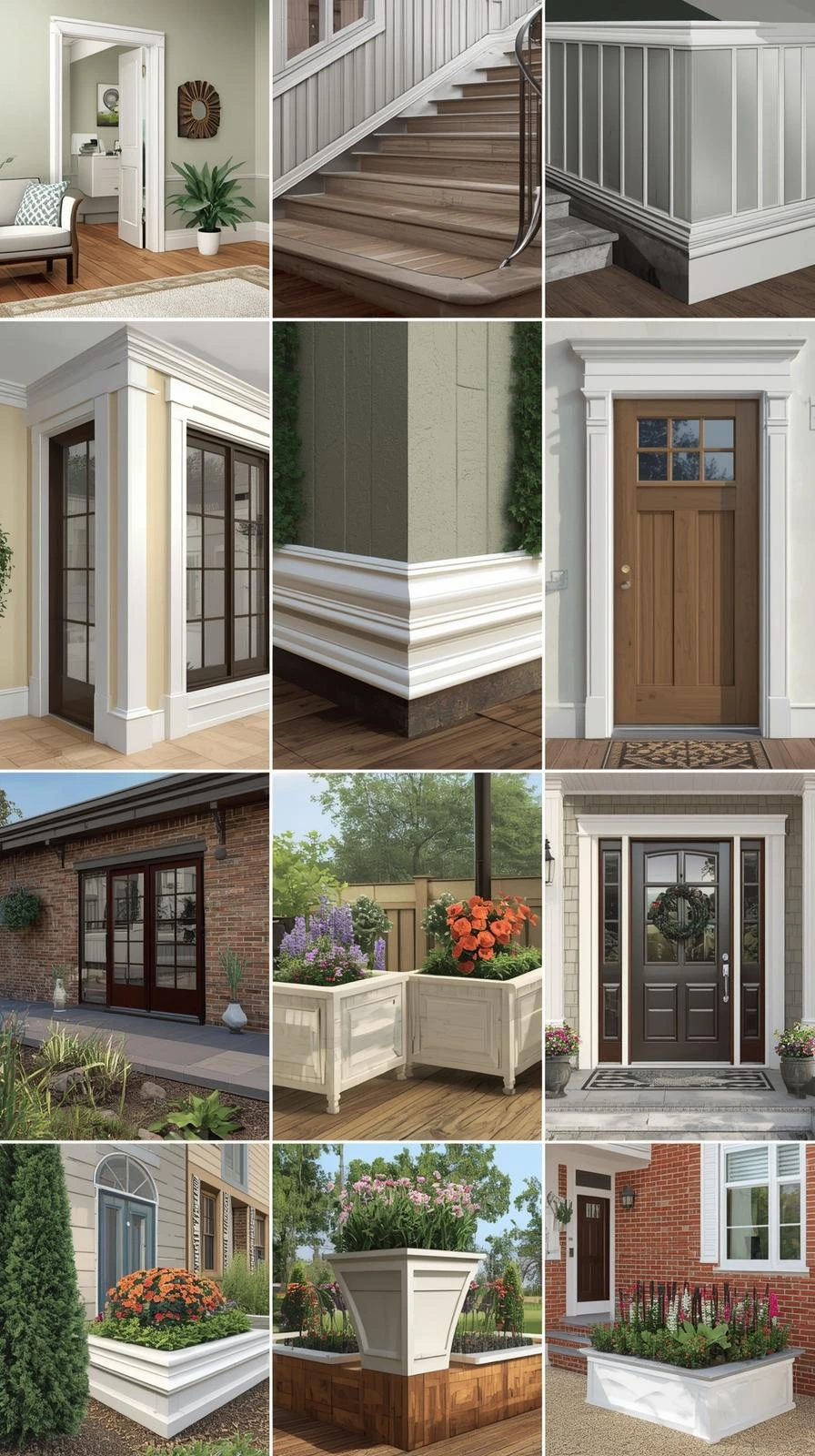
Composite trims are highly versatile finishing elements that work well in many places – both inside the home and outdoors. Thanks to their moisture resistance, durability and attractive appearance, they have a very wide range of uses.
At home.
-
Finishing floors
-
Composite skirting boards are ideal for finishing floors in living rooms, kitchens and bathrooms.
-
They protect walls from dirt and moisture.
-
-
Corner protection
-
Angle trims protect wall and step corners, minimising the risk of mechanical damage.
-
They give interiors a neat, modern look.
-
-
Concealing gaps around doors and windows
-
Cover trims neatly conceal any imperfections in board cuts or construction gaps.
-
-
A neat finish for furniture and alcove units
-
Trims can be used decoratively on shelves, furniture or alcove units, adding an elegant touch to the interior.
-
In the garden.
-
Building planters
-
Angle trims and cover trims give planters made from composite decking boards or timber their finished shape, while providing durability and an attractive appearance.
-
-
Finishing flower beds and garden borders
-
Trims can separate different areas of the garden, protect the edges of flower beds and give them a neat appearance.
-
-
Decking
-
They are used to finish the sides of decking boards and protect steps and corners, increasing the durability of the decking.
-
They improve the finish, creating a cohesive visual effect.
-
-
Outdoor stairs
-
Composite trims protect steps against moisture and mechanical damage.
-
They also improve safety by preventing the edges of the boards from becoming exposed.
-
-
Façades
-
Angle trims and cover trims give façade corners an attractive finish.
-
They protect the surface from water, dirt and damage while emphasising the building’s modern character.
-
Trim prices – an overview.
Trim prices depend on the material, purpose and manufacturer.
-
MDF trims – from 10–20 zł per linear metre,
-
Wooden trims – from 20–40 zł per linear metre,
-
PVC trims – from 8–15 zł per linear metre,
-
Aluminium trims – from 30–60 zł per linear metre,
-
Composite trims (skirting, angled and cover trims) – from 15–30 zł per linear metre.
Although composite is slightly more expensive than traditional materials, in the long term it proves more cost-effective – it requires no maintenance and lasts much longer.
Summary - an investment in comfort, aesthetics and durability
A trim is a small element with a big impact. It can protect stair corners, cover gaps around windows and even add an elegant touch to garden planters or a patio.
-
Skirting trims work well with floors and stairs,
-
Angled trims are indispensable for patios, façades and planters,
-
Cover trims ensure an attractive, consistent finish.
By choosing composite trims, we opt for durability, resistance and modern design. This solution combines protective and decorative functions perfectly – and works well both in the home and in the garden.
.