Modern Composite Decking Board Colours – Trends for 2026
Discover the trendiest composite decking board colours for 2026. Explore the decking trends set to dominate modern gardens. Find out how to choose the composite decking board that’s perfect for your vision!

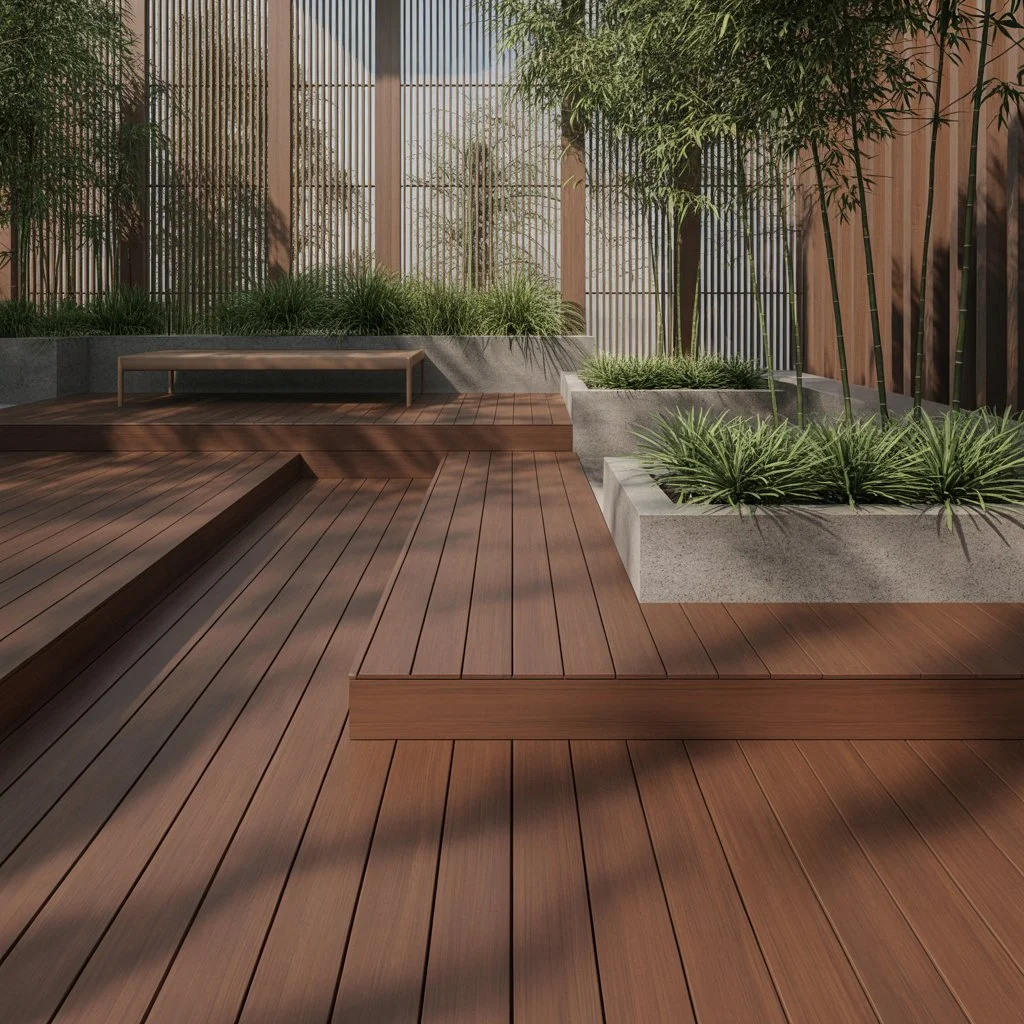
Planning your dream outdoor retreat starts with the foundations, and in modern architecture, that means the flooring. Choosing the right composite decking board is no longer just a matter of durability, but above all a statement of style. In 2026, the boundary between the interior of the home and the garden will finally blur, and composite decking board colours will play a leading role in this process. In this article, we’ll analyse the upcoming decking trends, look at the psychology of colour in the garden and suggest how to match your deck’s shade to your home’s exterior and the surrounding natural environment.
Why does colour matter? Colour psychology on the deck.
Before we look at specific combinations, it’s worth understanding why choosing the right colour is key to comfort.
- Light shades (sand, light grey): Make a space look larger. Ideal for small decks on apartment blocks or patios in densely built-up areas. They reflect more sunlight, so the decking board heats up less.
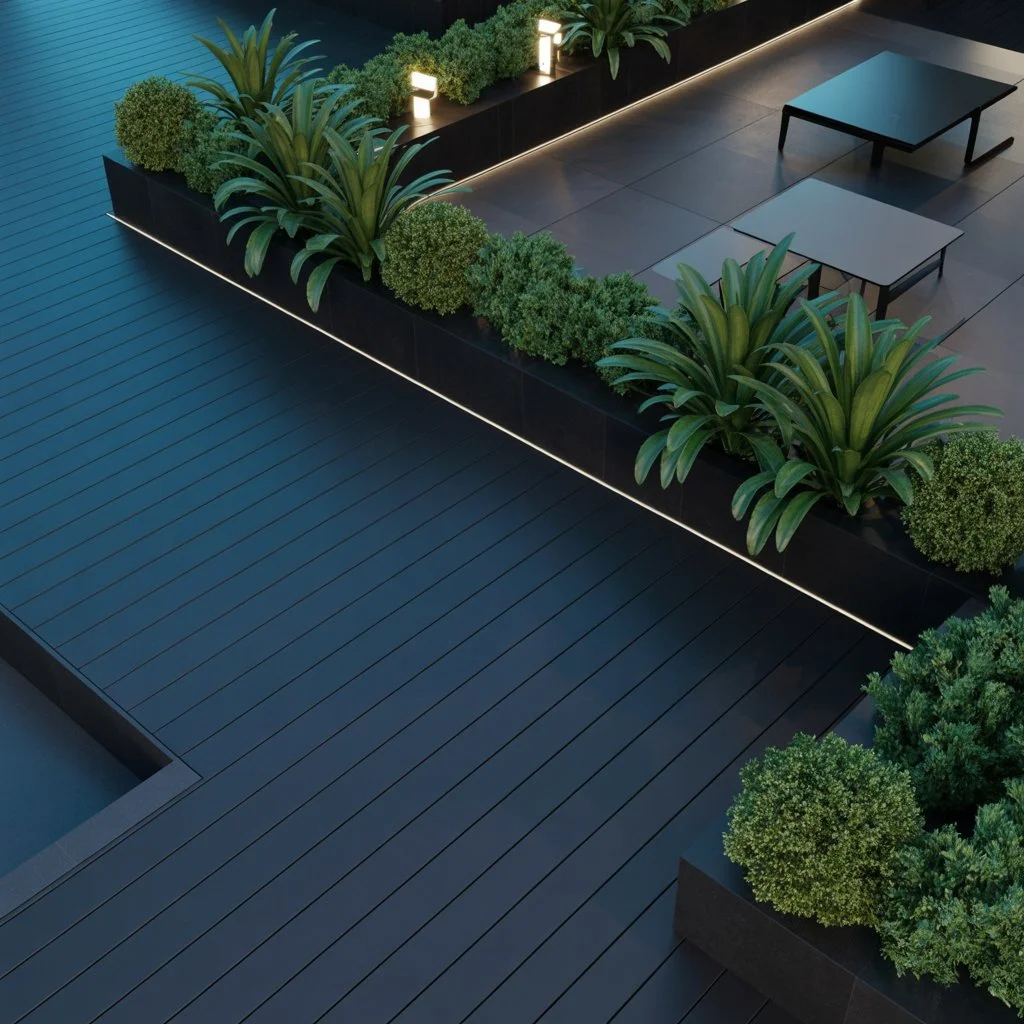
- Dark colours (anthracite, burnt wood): Add elegance and prestige. They create a striking contrast with green plants, but require carefully planned lighting so that after dark the deck doesn’t become a “black hole”.
Decking trends 2026: A return to nature (Biophilic Design).
2026 is the year of “authenticity”. We’re moving away from unnaturally smooth, plastic-looking surfaces in favour of 3D textures and varied colours.
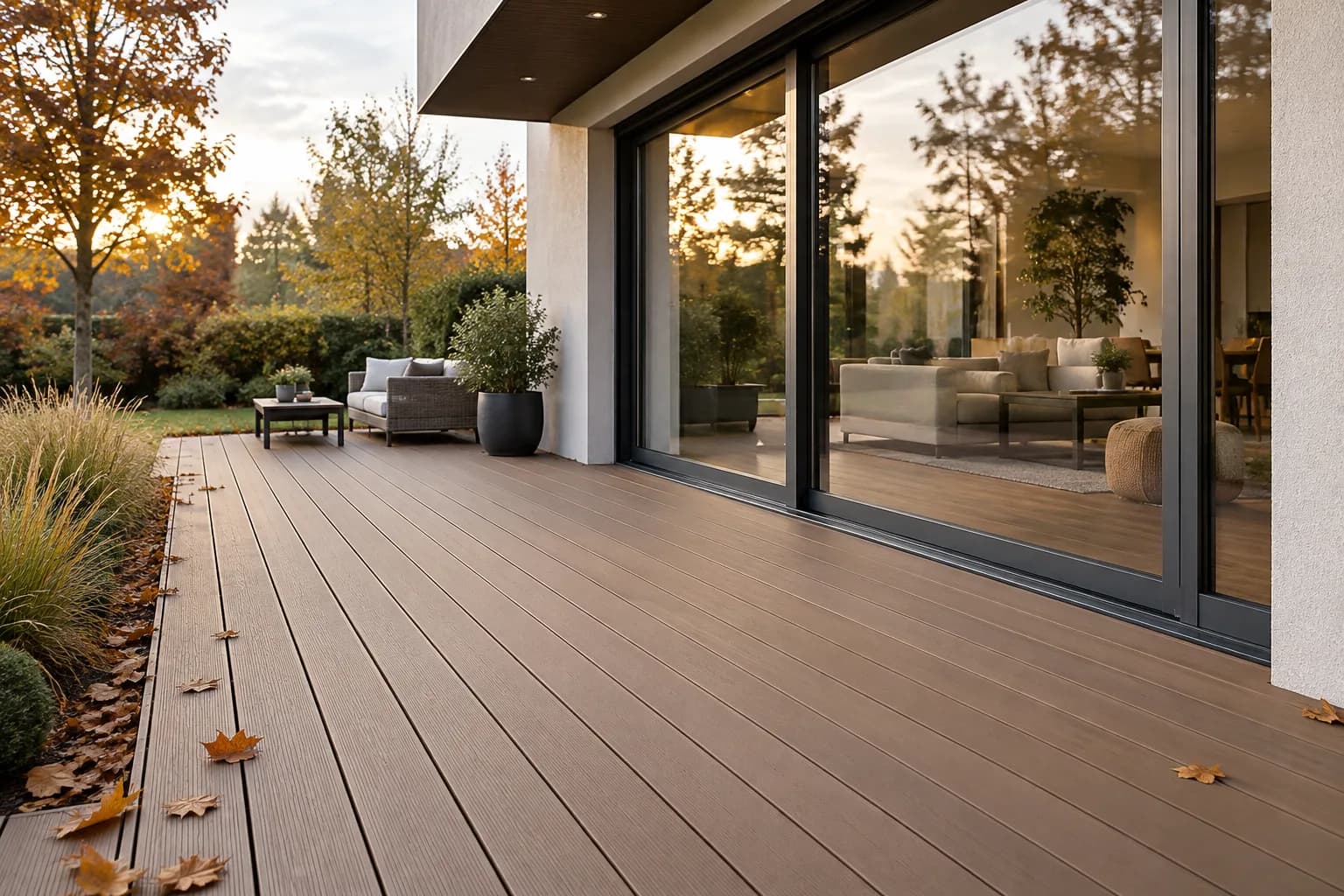
Warm oaks and honey teaks.
The classic is back with a new look. Contemporary composite decking board in honey oak now features subtle tonal variations (so-called multi-colour), which imitate the natural grain of wood.
- What to pair it with? Black aluminium furniture and plenty of ornamental grasses.
“Greige” – the perfect balance.
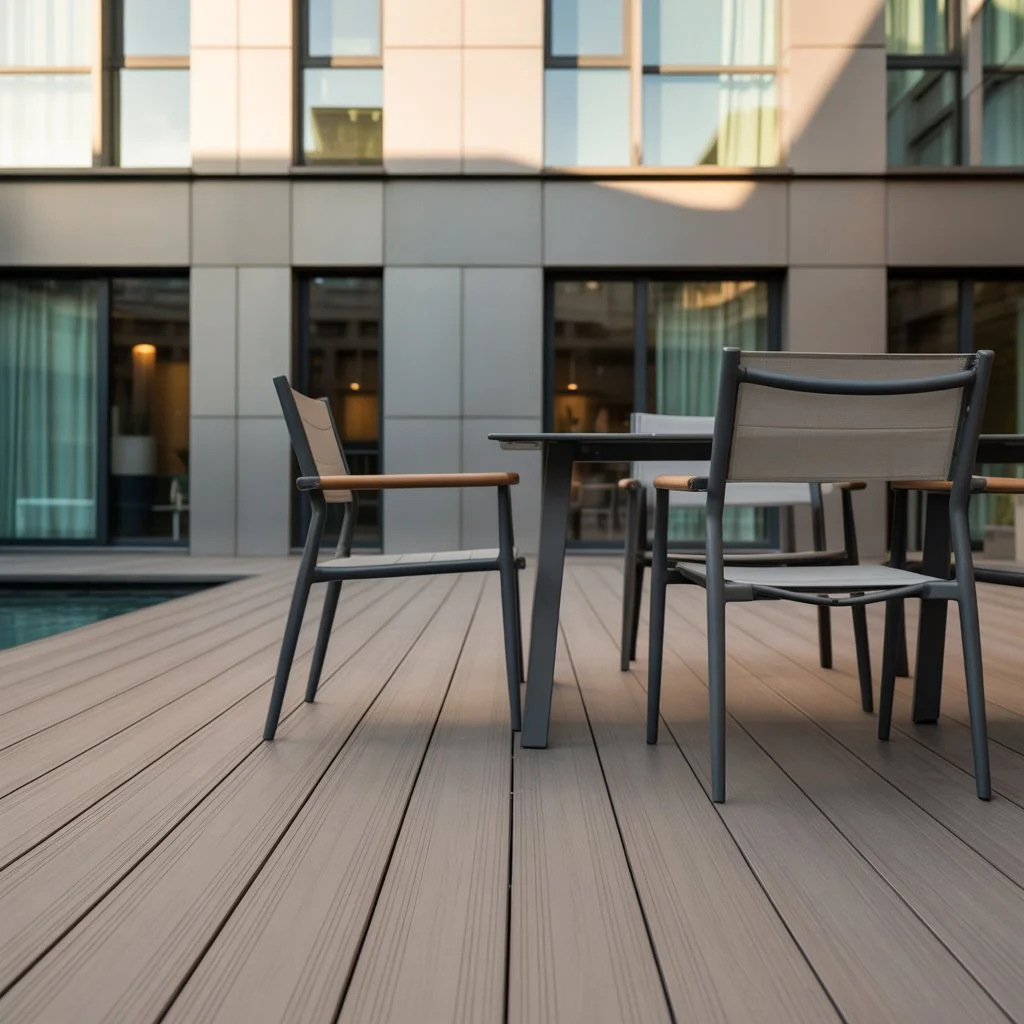
A blend of grey and beige (gray + beige) is an absolute hit for the coming season. It’s an extremely practical colour – dust is less visible on it than on dark anthracite, while it feels cosier than cool grey.
Top 5 colour combinations for the 2026 season.
| Style | Recommended decking board colour | Accessories |
| Modern Loft | Anthracite / Brushed graphite | Concrete planters, steel railings |
| Scandi-Chic | Light ash / Whitewashed oak | Woven chairs, light-coloured textiles |
| Mediterranean | Sand / Cinnamon | Terracotta, olive trees |
| Japandi | Dark walnut / Ebony | Minimalism, bamboo mats |
| Eco-Natural | Classic brown / Cedar | Wooden pergolas, plenty of plants |
Composite decking board in shades of grey – is the trend over?
Many investors ask whether a grey deck will soon go out of fashion. The answer is: no, but it is evolving. In 2026, we’re moving away from “flat” greys towards colours inspired by natural stone and slate. A grey composite decking board with a subtle silvery sheen is a choice that goes perfectly with modern window frames in RAL 7016.
How to match the decking board colour to your home’s exterior?
The golden rule of harmony offers two approaches:
- Monochrome: Choose a decking board in the same tone as the exterior (e.g. a light grey exterior + an anthracite deck). It’s a safe, modern solution.
- Contrast: A dark, chocolate-coloured decking board beside a white house. This gives the building character and “anchors” it in its surroundings.
Practical aspects of colour: What do you need to know?
When choosing composite decking board colours, bear a few technical facts in mind:
- Heat absorption: Dark colours absorb more UV rays. If your terrace faces south and has no roof, consider lighter shades.
- Maintenance: Dirt (e.g. pollen, mud) is more visible on very dark and very light decking boards. Brown shades and the aforementioned “greige” are the most forgiving.
Innovations in colouring technology – what does 2026 bring?
In 2026, manufacturers are focusing on making pigments resistant to fading. Modern polymer coatings protect the colour from sunlight, so your terrace will look almost identical after 10 years to how it did on the day it was installed. Look for decking boards labelled “UV Resistant” and those with a thick outer layer (co-extrusion).
The most common mistakes when choosing a composite decking board colour.
Choosing a colour “by eye” or solely on the basis of catalogue photos is a trap. A common mistake is to ignore the surroundings – exotic wood on a terrace may clash with the cool graphite of the paving. You should also consider the lighting: dark decking boards “absorb” light at night, which can make the space feel claustrophobic without suitable LED lamps.
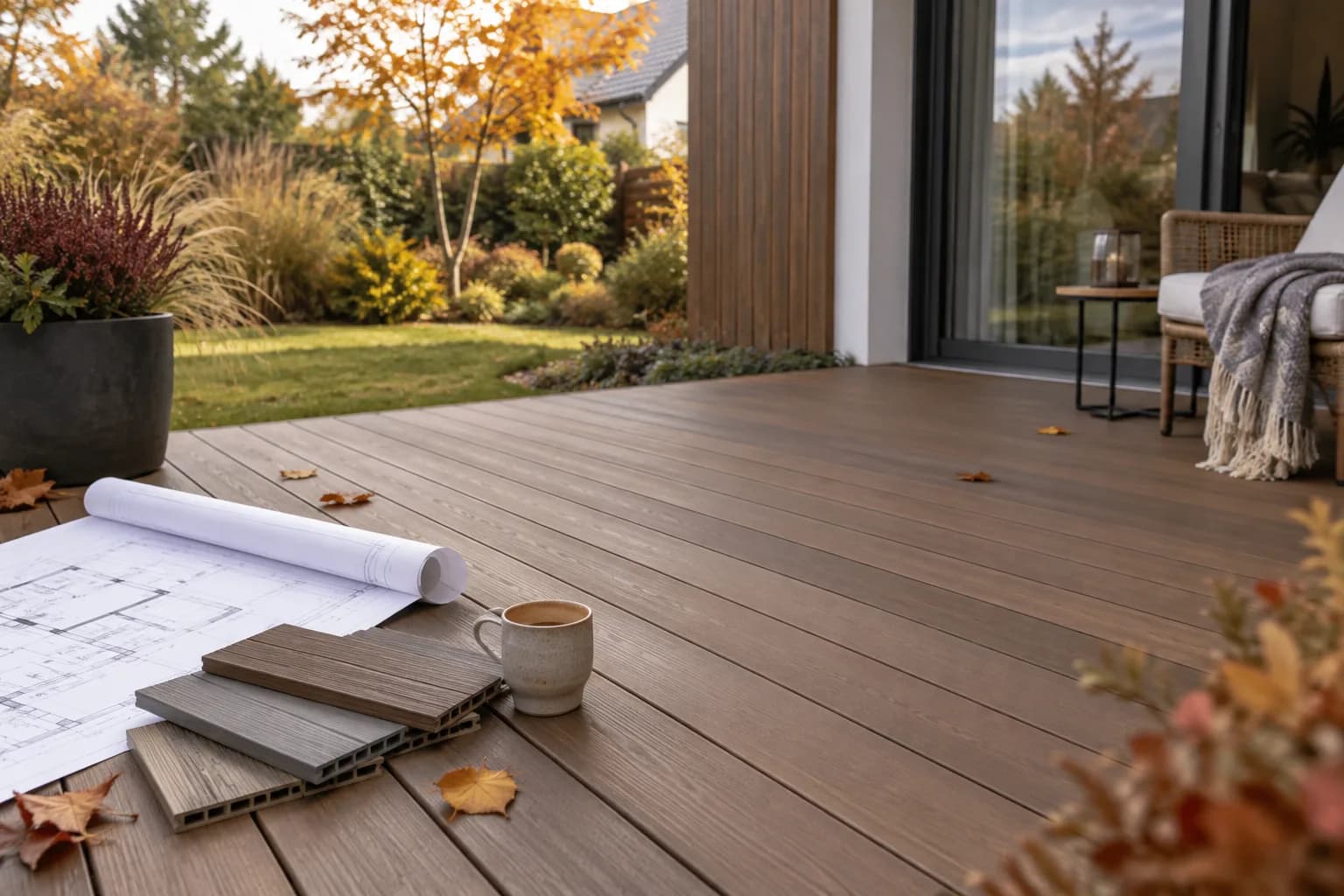
The phenomenon of metamerism is also important – the same decking board looks different in full sun than it does in the shade. To avoid disappointment, it’s worth buying samples from Gardpol. They let you check the material’s true colour and texture at different times of day, right next to your façade. This is the only way to avoid costly mistakes and be sure that the shade you choose will complement your home perfectly.
Summary: your terrace, your rules.
When choosing composite decking board colours for 2026, it’s worth considering not just passing fashions, but above all your home’s architecture and your own sense of wellbeing. Terrace trends favour natural looks, durability and spaces that flow into one another. Whether you choose deep anthracite or warm oak, a composite decking board will give you peace of mind and an attractive finish for years to come.
FAQ – Frequently asked questions.
1. Does composite decking change colour over time? Most decking boards go through a colour stabilisation process during the first few months, after which the colour becomes stable.
2. What is the most fashionable terrace colour in 2026? “Greige” shades and colours imitating charred wood (Shou Sugi Ban) are gaining the most popularity.
3. Is dark decking a good idea for a terrace? Yes, provided you ensure suitable roofing or wear footwear, as dark surfaces heat up more in full sun.
4. Which composite decking board colour hides dirt best? Colours with a varied texture are the most practical (so-called honey browns, teak or light greys such as “greige”). Thanks to their natural tonal variations, dust, pollen and dried rain marks are much less visible on them than on smooth, very dark surfaces (e.g. black or deep anthracite).
5. Does the colour of a decking board affect how much it heats up? Yes, this is a natural physical phenomenon. Darker colours (graphite, anthracite, wenge) absorb more sunlight and heat up more than light shades (beige, light grey). If your terrace is in full sun and you plan to walk on it barefoot, consider a lighter colour palette from Gardpol’s range.
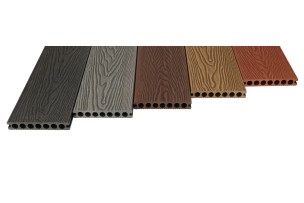
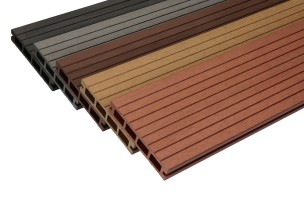
DUO composite decking board samples 23x148 SET
Colours in the set: honey, copper, chocolate, light grey and graphite.
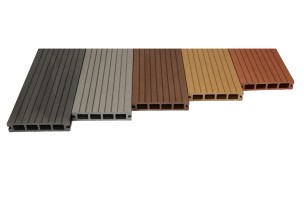
SELECT composite decking board samples 25x140 SET
Colours in the set: honey, copper, chocolate, light grey and graphite.
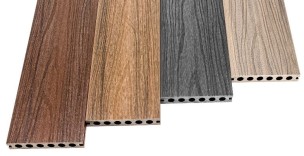
PREMIUM composite decking board samples 23x138
Composite decking board sample swatches.
SELECT composite decking board samples 25x140
Composite decking board sample swatches.