
Garden paths made from composite decking boards – a durable alternative to paving stones.
Garden paths made from composite decking boards are a modern alternative to paving stones. Find out about the advantages, disadvantages and installation tips before planning your garden!

When we think of a garden path, most of us picture classic paving stones. They seem durable, but... are they really ideal? Exactly! If you’re looking for something more modern, more attractive and easier to maintain, it’s time to discover composite decking boards – a solution that combines the appearance of wood with the practicality of plastics.
In this post, I’ll show you why it’s worth swapping traditional paving for composite garden paths, what to look out for when choosing them and how to install them so they last for many years.
What are composite decking boards?
Let’s start with the basics. Composite decking boards are made from a mixture of:
- wood flour (usually from hardwood),
- plastic (usually PVC, PE or HDPE),
- protective additives (e.g. against UV, mould or moisture).
The result is a material that looks like wood, but is much more resistant to the weather and requires no treatment or varnishing.
Why choose paths made from composite decking boards?
1. The look of wood, without the drawbacks of wood.
A natural appearance? Yes. Wood grain? Absolutely. But no oiling, sanding or painting every season.
2. Resistance to the weather.
Composite decking boards are resistant to:
- rain and snow,
- sunlight and UV rays (they do not fade as quickly as wood),
- temperature changes,
- mould and fungi.
3. Safety and comfort in use.
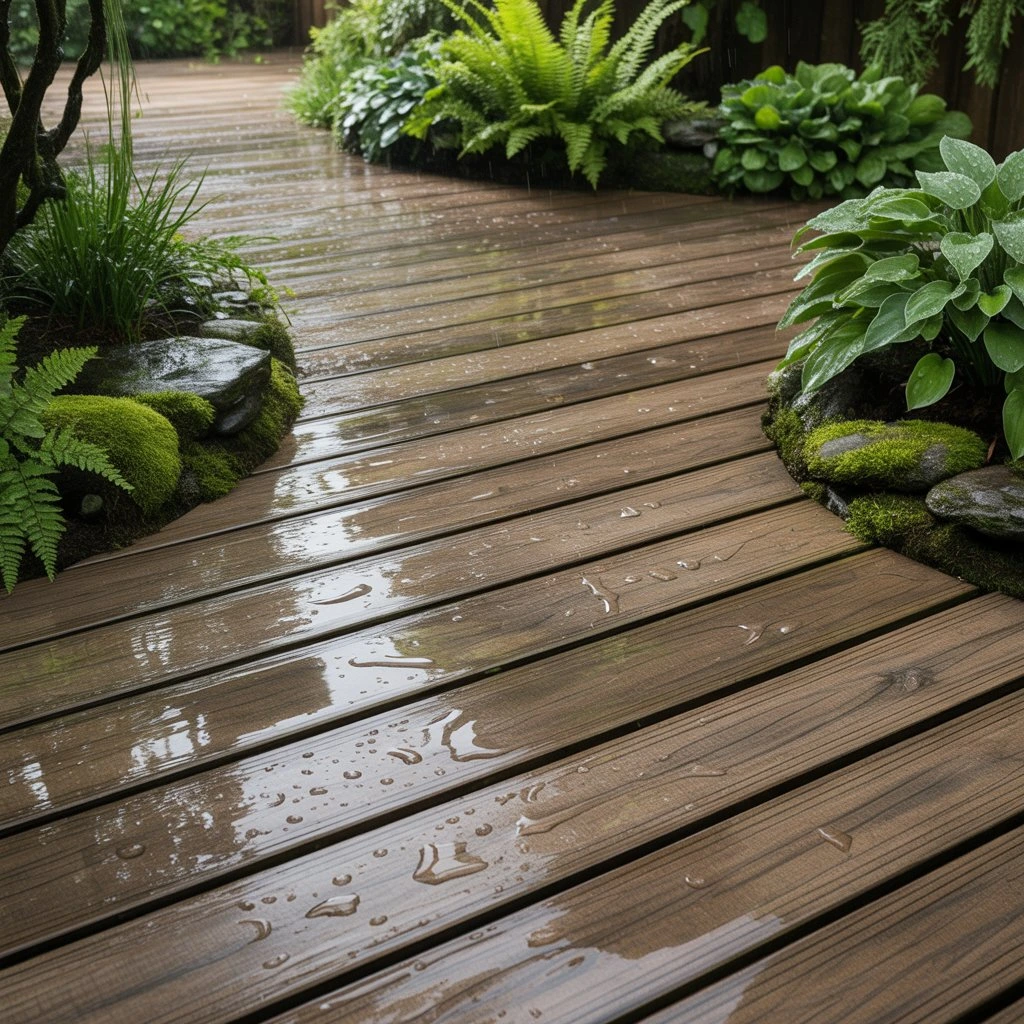
- They are non-slip, even after rain – ideal if you have children or older people at home.
- They do not splinter like wood – you can walk barefoot without risk.
- They do not heat up as much as some stone surfaces.
4. Easy to install.
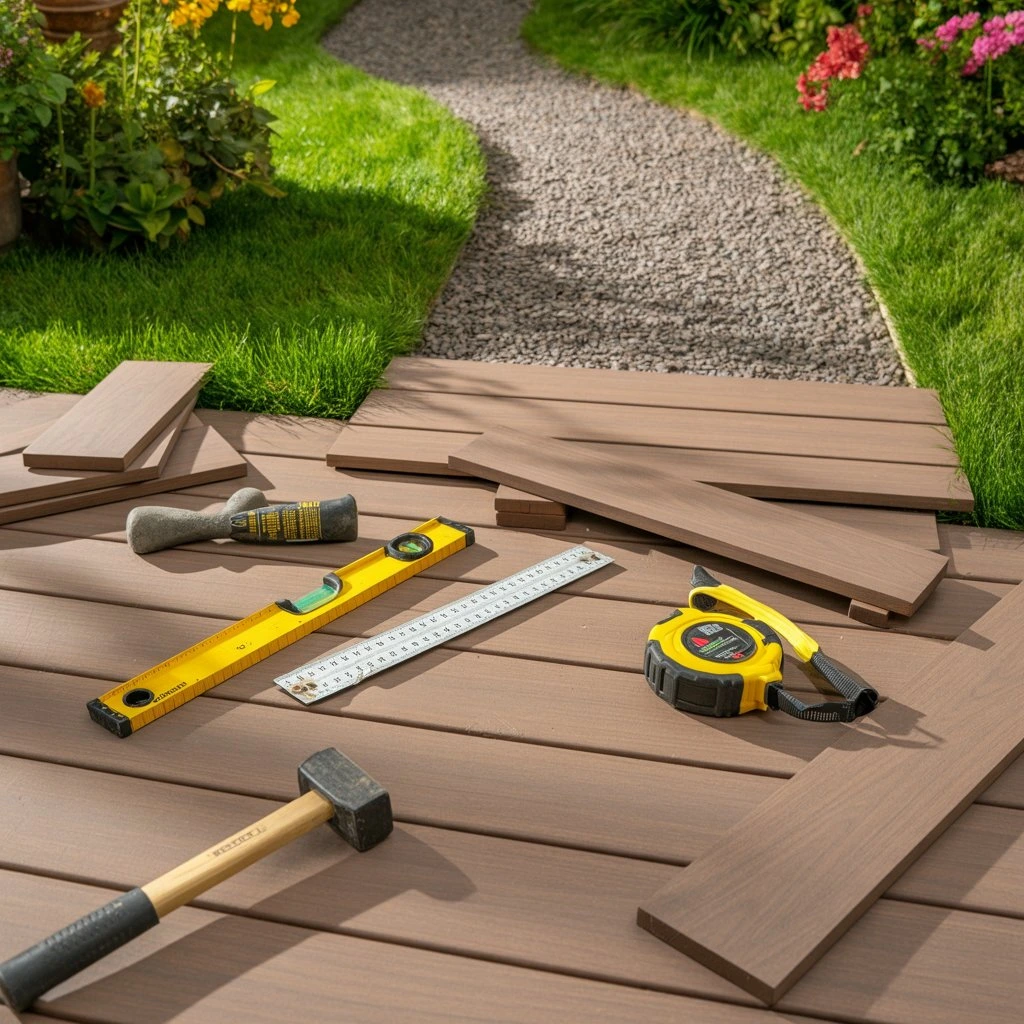
Composite decking boards are installed on a special frame or joists, without the need to pour concrete or carry out complicated ground preparation. Depending on the type of terrain, you can use:
- plastic or aluminium joists,
- rubber pads,
- click systems for quickly joining the boards.
5. An environmentally friendly alternative.
Many manufacturers use recycled materials – both wood and plastics. This makes composite decking boards more environmentally friendly than concrete or paving stones.
And what are the drawbacks?
Well, no material is perfect. Here are a few things worth bearing in mind:
- More expensive than paving stones, although you save on treatment and maintenance costs.
- Damage is harder to repair – if a board cracks, the whole board needs to be replaced.
- Some cheap boards may discolour – so it’s worth choosing products from reputable companies.
Where are paths made from composite decking boards suitable?
This solution isn’t just for patios! Here are a few great uses:
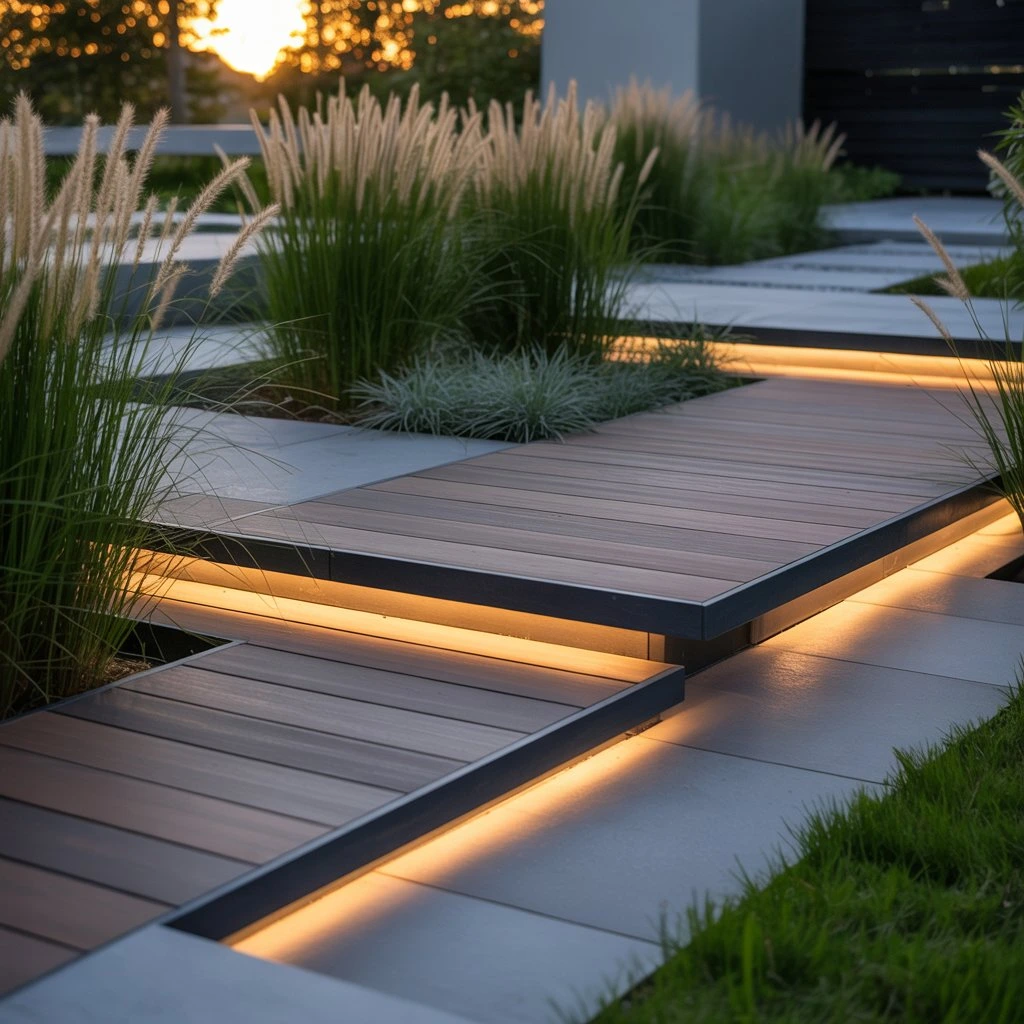
- Main garden paths – elegant and durable.
- Paths between vegetable beds – the boards are easy to clean.
- Paths by a swimming pool or hot tub – non-slip and water-resistant.
- Garden patios, barbecue areas and relaxation zones – comfortable underfoot with a premium look.
How do you prepare and install a path made from composite decking boards?
Step 1: Prepare the ground.
- Remove the turf and level the ground.
- Add a layer of aggregate (e.g. crushed stone or gravel).
- Compact the ground.
Step 2: Install the joists.
- Lay the joists along the planned path (spacing according to the manufacturer’s recommendations).
- You can use rubber pads to level them.
Step 3: Lay the boards.
- Install the boards using fixing clips (for concealed joints).
- Leave expansion gaps – composite material expands and contracts with temperature changes.
Step 4: Finishing touches.
- Install the cover trims.
- Clean the finished path and enjoy the result!
Practical tips.
- Don’t skimp on the quality of the boards – cheap alternatives may warp and fade.
- Plan the gradients – the path should have a slight slope to allow water to drain away.
- Clean regularly – although the boards do not need treating, it is worth rinsing them with water once a season.
Frequently asked questions (FAQ).
Are composite decking boards slippery when wet?
No – they have an anti-slip surface, ideal even around swimming pools.
How long do composite paths last?
Usually at least 15–25 years, depending on the quality and conditions.
Can you install a path made from boards yourself?
Yes! Installation is not complicated – all you need is a little patience and basic tools.
How much do composite decking boards cost?
On average, from 200 to 400 zł/m² with a fixing system. Prices depend on the manufacturer and type of board.
What’s worth remembering?
Composite decking boards are a great alternative to paving stones if you are looking for:
- a natural look,
- comfort in use,
- resistance to weather conditions,
- and no need for maintenance.
This solution may be a little more expensive initially, but in the long term it is economical, environmentally friendly and highly attractive. Ideal for those who want to combine a modern garden style with convenience and durability.
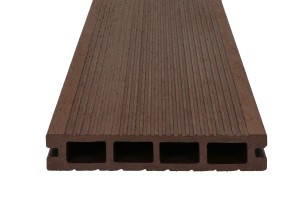
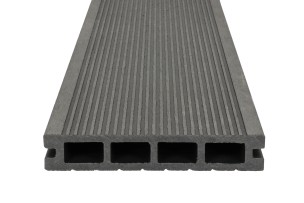
SELECT composite decking board 25x140 - 3.5 m
Price per 1 linear metre of board: 17.27 zł
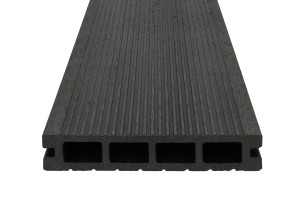
SELECT composite decking board 25x140 - 5.0 m
Price per 1 linear metre of board: 17.27 zł
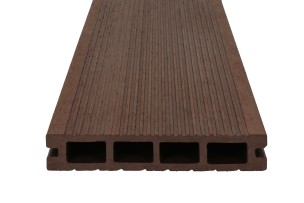
SELECT composite decking board 25x140 - 2.25 m
Price per 1 linear metre of board: 17.27 zł
SELECT composite decking board 25x140 - 1.8 m
Price per 1 linear metre of board: 17,27 zł



