
Fluted or slatted panels? Comparing their visual effect in interior design.
Wondering what to choose for your wall decoration – fluted panels or slatted panels? Discover the visual differences, learn about their advantages and find the style that’s perfect for your interior.
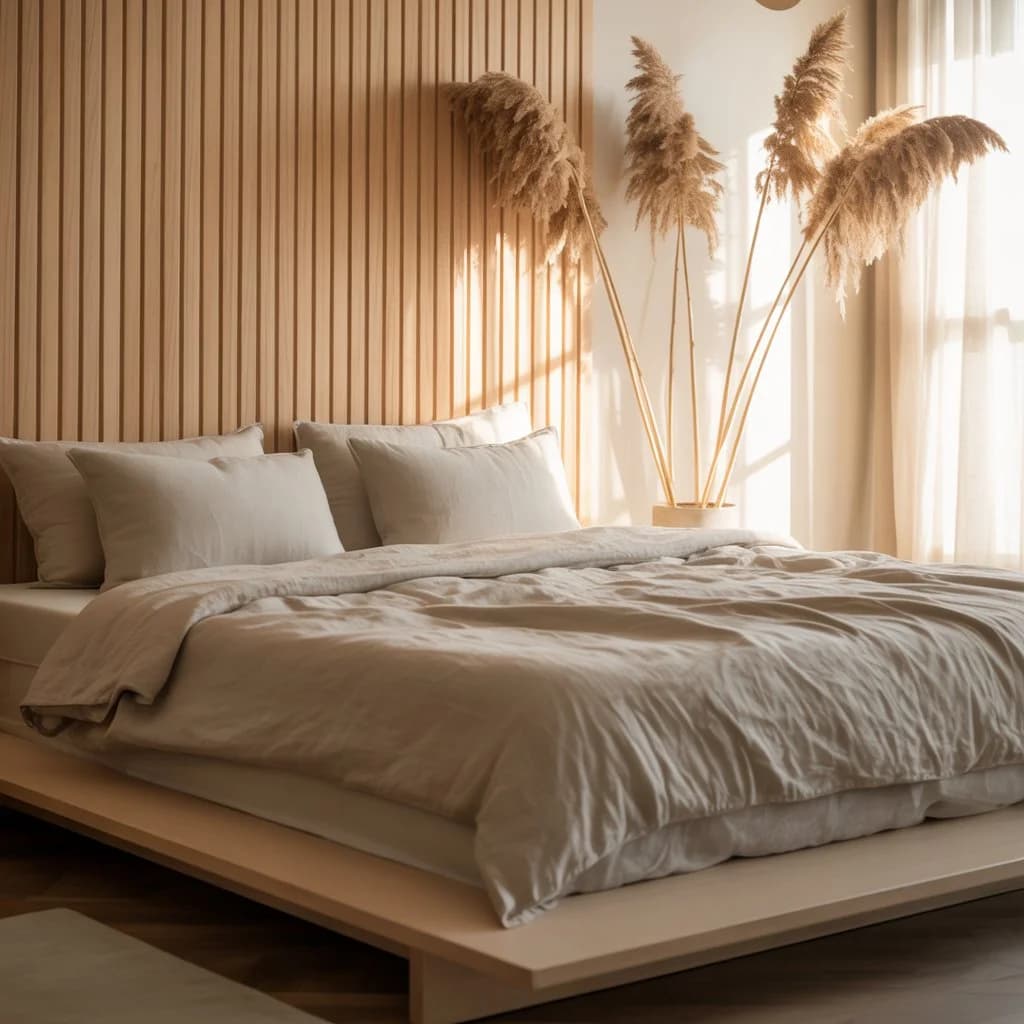
Decorative wall panels have brought a new dimension to interiors. They not only enhance the décor, but also make a room feel warmer, improve acoustics and add style. Fluted panels and slatted panels are currently the two most popular options. Although both look elegant and suit modern interiors, they create a completely different visual effect. In this article, we compare both types of panels in terms of aesthetics, style and use. You’ll find out which type to choose for your living room, bedroom, office or hallway to achieve exactly the look you’re after.
How do fluted panels differ from slatted panels?
Fluted panels – what are they?
These are decorative panels with delicate grooves (fluting) running vertically or horizontally across the entire surface. They can be made from MDF, veneer or laminate.
Characteristics:
- Subtle texture,
- A modern yet understated look,
- Ideal for minimalist interiors,
- Create a “wavy” wall effect.
Slatted panels – what sets them apart?
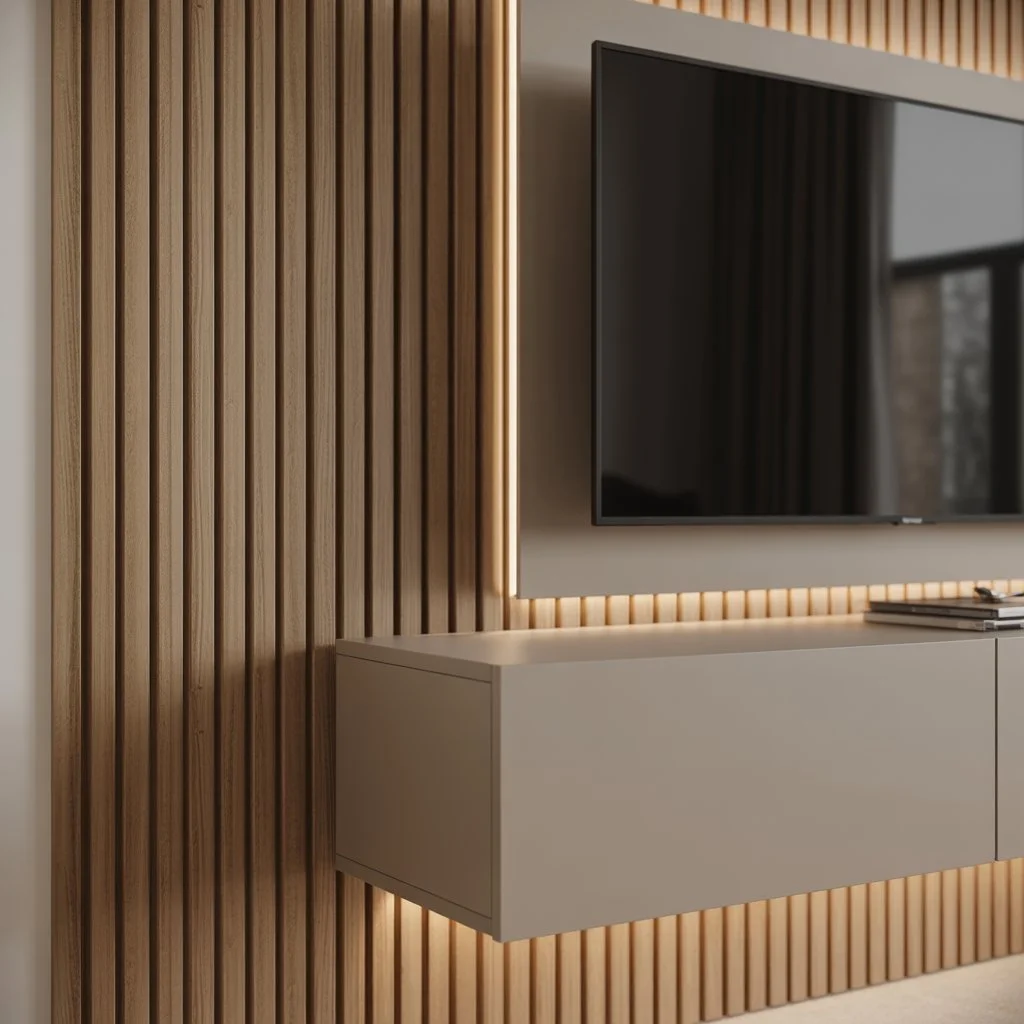
They consist of narrow strips (slats) mounted on a contrasting backing – for example, acoustic felt. They can be installed vertically, horizontally or even on the ceiling.
Characteristics:
- A very pronounced 3D texture,
- A striking visual effect and depth,
- They improve acoustics exceptionally well,
- Ideal for modern, loft-style and Scandinavian interiors.
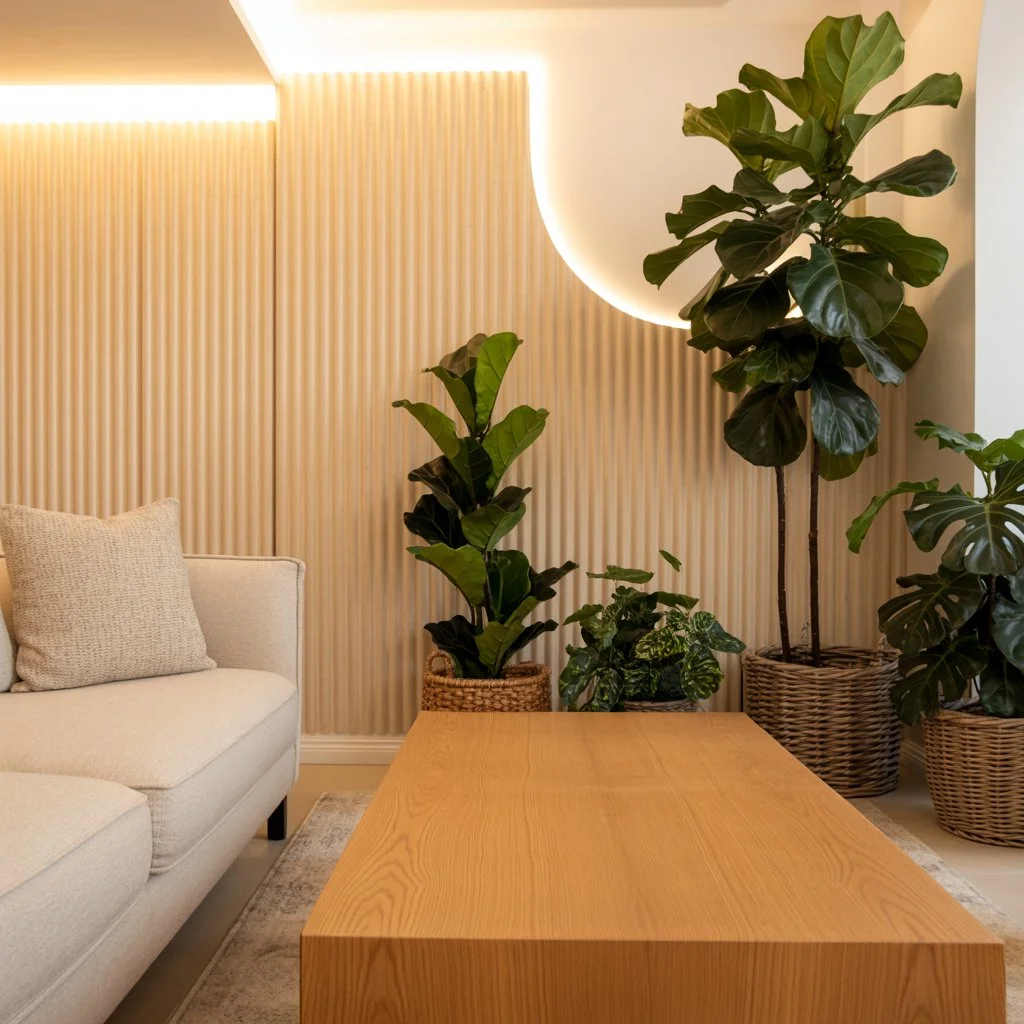
Visual effect – a comparison of styles.
| Feature | Fluted panels | Slatted panels |
|---|---|---|
| Texture | Subtle, fine grooves | Pronounced, strips with gaps |
| Sense of depth | Light, delicate | Strong, 3D |
| Style | Minimalist, elegant | Designer, loft-style, Scandinavian |
| Dominant line | Depends on the arrangement – horizontal or vertical | Usually vertical |
| Visual enlargement | Yes, they subtly “stretch” the wall | Yes, particularly in a vertical arrangement |
| Suitable for | Offices, bedrooms, kitchens, hallways | Living rooms, TV feature walls, open-plan spaces, ceilings |
| Distinguishing feature | Understated elegance | A “WOW” effect and modern design |
Use in different rooms.
In the living room:
- Slats work perfectly as a backdrop for the TV or as a feature wall behind the sofa.
- Fluted panels are a great complement to modern classic or Japandi interiors.
In the bedroom:
- Slats used as a headboard behind the bed look stylish, but can dominate the room.
- Fluted panels create a calm, soft feel – ideal for a relaxation area.
In the kitchen/hallway:
- This is where fluted panels come into their own – they are easier to keep clean.
- Slats may be more difficult to clean in places exposed to dust and grease.
In the office/home office:
- Felt-backed slatted panels improve acoustics – ideal for work and online meetings.
- Fluted panels add elegance and professionalism – great as a backdrop behind a desk.
Installation and practicality.
Fluted panels:
- Installed using adhesive or mounting tape,
- Lightweight and easy to cut to size,
- The smooth surface makes cleaning easier.
Slatted panels:
- Installed using wall plugs, a frame or directly onto the wall,
- Require greater precision,
- Better acoustic properties thanks to the felt.
Note! When installing slats with a felt backing, it is worth leaving small gaps between them and the floor and ceiling to preserve the “lightness” of the design.
Cleaning and care.
- Fluted panels: easy to wipe down; ideal for kitchens and hallways.
- Slatted panels: more prone to dust – it is worth regularly vacuuming the gaps between the slats.
Prices – how much do they cost?
Prices depend on the material, manufacturer and installation method. As a guide:
| Panel type | Price per m² |
|---|---|
| Fluted MDF | 120–180 zł |
| Felt-backed MDF slatted panels | 180–300 zł |
| Solid wood slats | 300–600 zł and more |
Pro tip: Fluted panels are cheaper and easier to install – a good choice for getting started with a room makeover.
Frequently asked questions (FAQ).
1. Do slatted panels improve acoustics?
Yes! Especially those with a felt backing – they absorb sound and reduce echo.
2. Are fluted panels moisture-resistant?
If they are veneered or laminated – yes. However, it is worth avoiding them in wet areas.
3. Can you install them yourself?
Absolutely – many fluted and slatted panels are DIY products. All you need is a spirit level, tape or adhesive, and a little patience.
4. Which panels are more durable?
In terms of everyday use – it’s a tie. Wood slats are more durable than MDF, but also more expensive.
Conclusion – which should you choose?
It all depends on the effect you want to achieve:
- If you are looking for an elegant, understated finish – choose fluted panels. They are subtle, stylish and easy to maintain.
- If you want a bold, modern decorative feature – slatted panels are the perfect choice. They create a wow effect, improve acoustics and are currently a real hit.
You don’t have to choose just one type – more and more designs combine fluted walls with slatted details to create unique compositions.
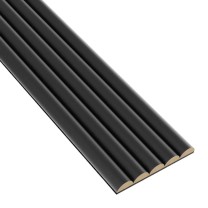
Black fluted panel 16x145 decorative half-round wall strips
Price is for one slat
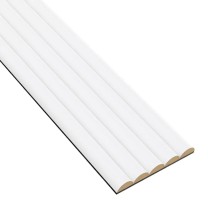
White fluted panel 16x145 decorative half-round wall strips
Price is for one slat
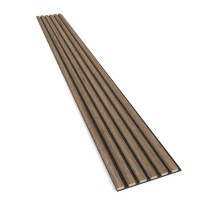
Dark oak slats on felt 24x300 mm decorative wall strips on felt
Price applies to one slat
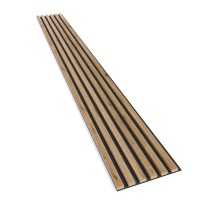
Artisan oak slats on felt, 24x300 mm, decorative wall strips on felt
Price applies to one slat



