
Planning a terrace in autumn and winter – why buy composite decking boards off-season?
Planning your deck in autumn and winter is the best time to buy composite decking boards. Find out how to save money, avoid queues and get your deck ready for spring.
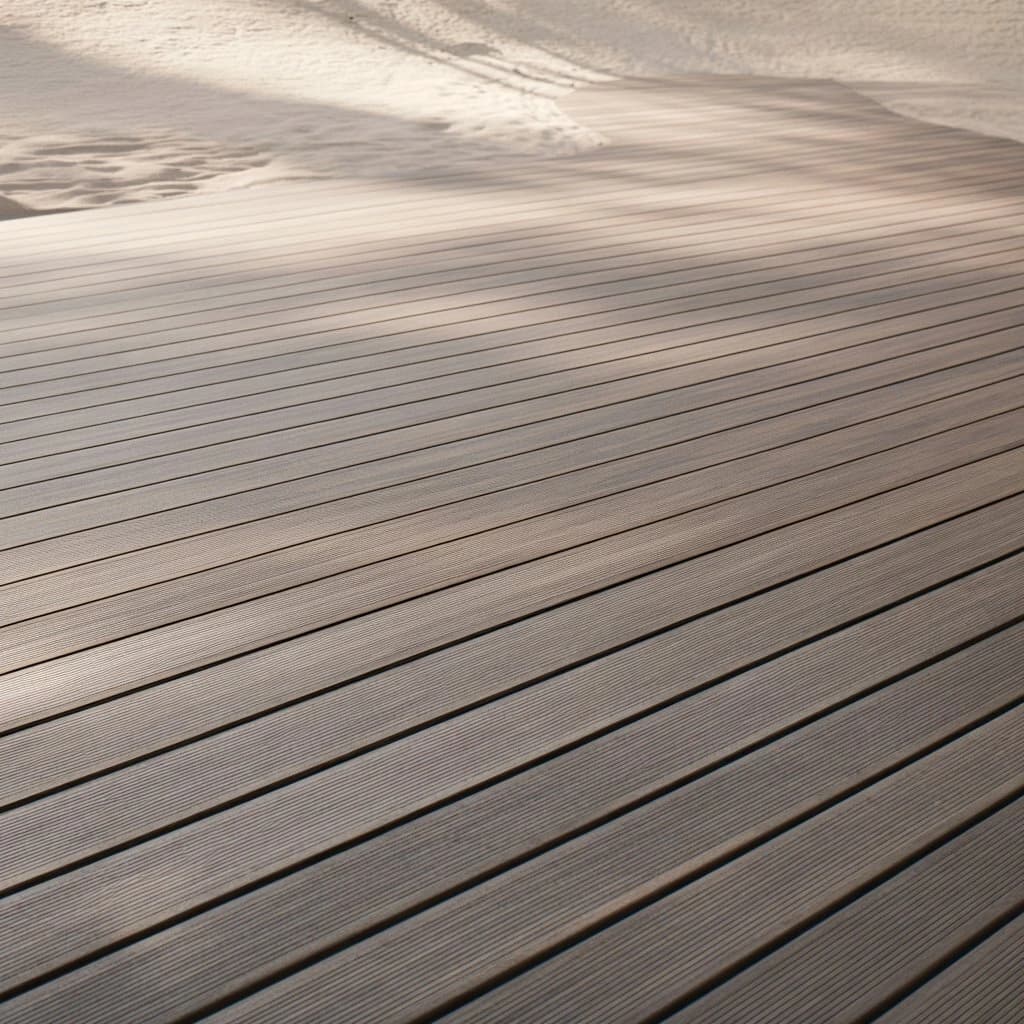
For most of us, thoughts of planning a terrace only start to take shape when the sun begins to warm things up and spring is in the air. After all, how could you not think about coffee outdoors, a barbecue and a lazy evening under a blanket? But… that’s exactly when things get most expensive, crowded and stressful. And that’s where autumn and winter come in – nice and calmly – as the best time to approach the project with a clear head.
If you want your terrace to be ready for the first warm days, rather than ‘sometime or other’, buying materials out of season can make a huge difference. And when it comes to a material that appreciates stable conditions, is not afraid of moisture and does not require the kind of care rituals needed by traditional timber, a composite decking board naturally takes the top spot. Below is a practical, joined-up guide to why autumn and winter are a great time to plan and shop, what to look out for, and how to avoid the most common mistakes made in the spring rush.
Relaxed planning without time pressure (and without ‘just get it done before the May bank holiday’).
Autumn and winter have one major advantage: nobody is rushing you. There’s none of that pressure that ‘the season is just around the corner, we have to click on anything so we have something’. Instead of shopping in emergency mode, you can:
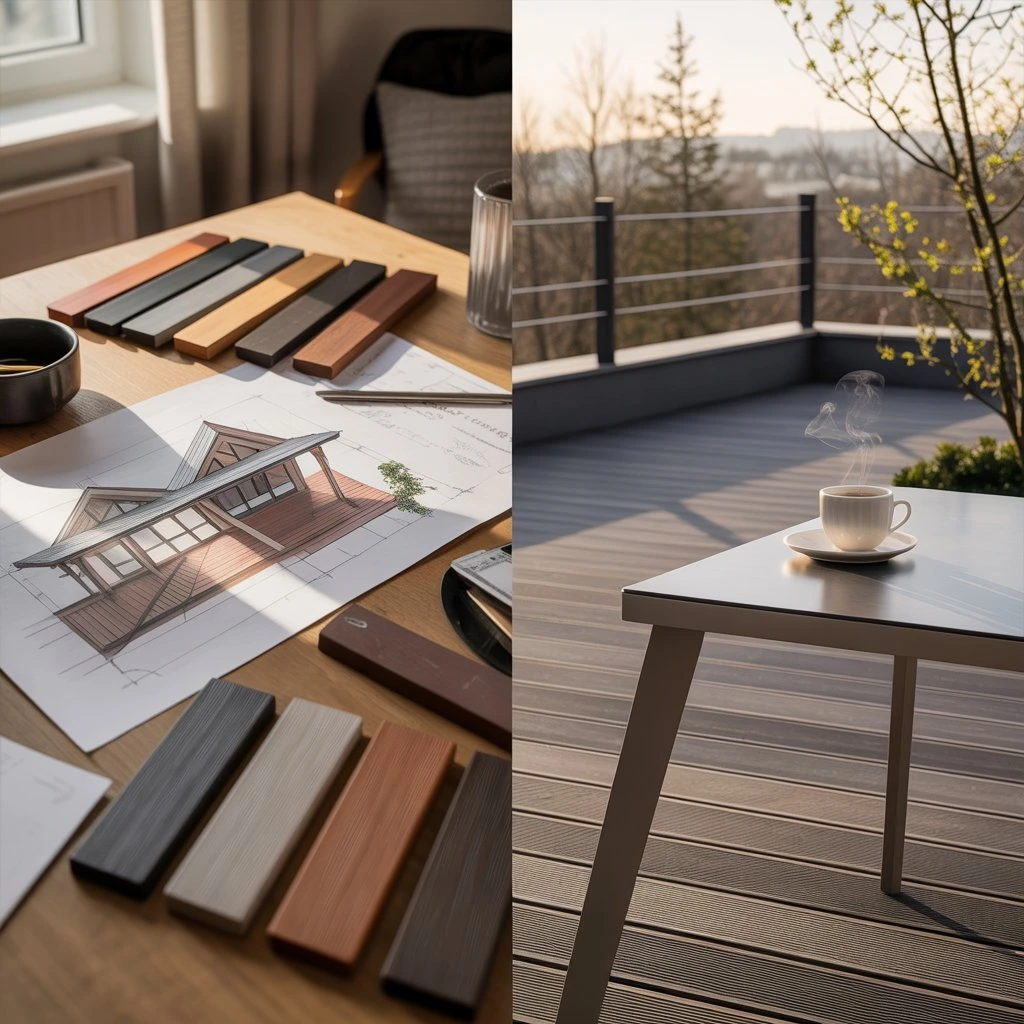
- compare colours and textures (matt, brushed, with pronounced grain),
- match the look of the terrace to the exterior walls, garden and fencing,
- think about the direction in which to lay the decking boards (it can visually change the proportions of the space),
- plan steps, stair treads, edging around the terrace and relaxation areas.
And importantly, composite decking boards really do come in a wide range of options. When you have time, you can get samples, look at them in different light (sunshine vs a cloudy day), hold them up against the exterior walls, rather than choosing ‘by eye’ from a screen. That often makes the difference between ‘nice’ and ‘oh dear, that’s not how I wanted it to look’. - Order decking board samples HERE.
The strongest argument: money, promotions and locking in the price.
The construction market is seasonal. Demand rises in spring, transport costs increase, and typical ‘pre-season price adjustments’ come into play. The result? It can be most expensive precisely when everyone wants to buy. By buying a composite decking board in autumn or winter, you usually gain three things at once:
1. A lower price out of season.
Distributors run promotions and warehouse clearance sales, or offer better purchase terms.
2. ‘Locking in’ the cost for spring.
Even if you are not planning installation until March/April, buying now may protect you from price rises.
3. Better budget control.
Without the stress of adding things at the last minute ‘because it has to be done now’, it is easier to plan the whole project: terrace + lighting + edging + accessories.
I know, it doesn’t sound very romantic. But in practice, this ‘straightforward calculation’ is often what makes the investment more worthwhile.
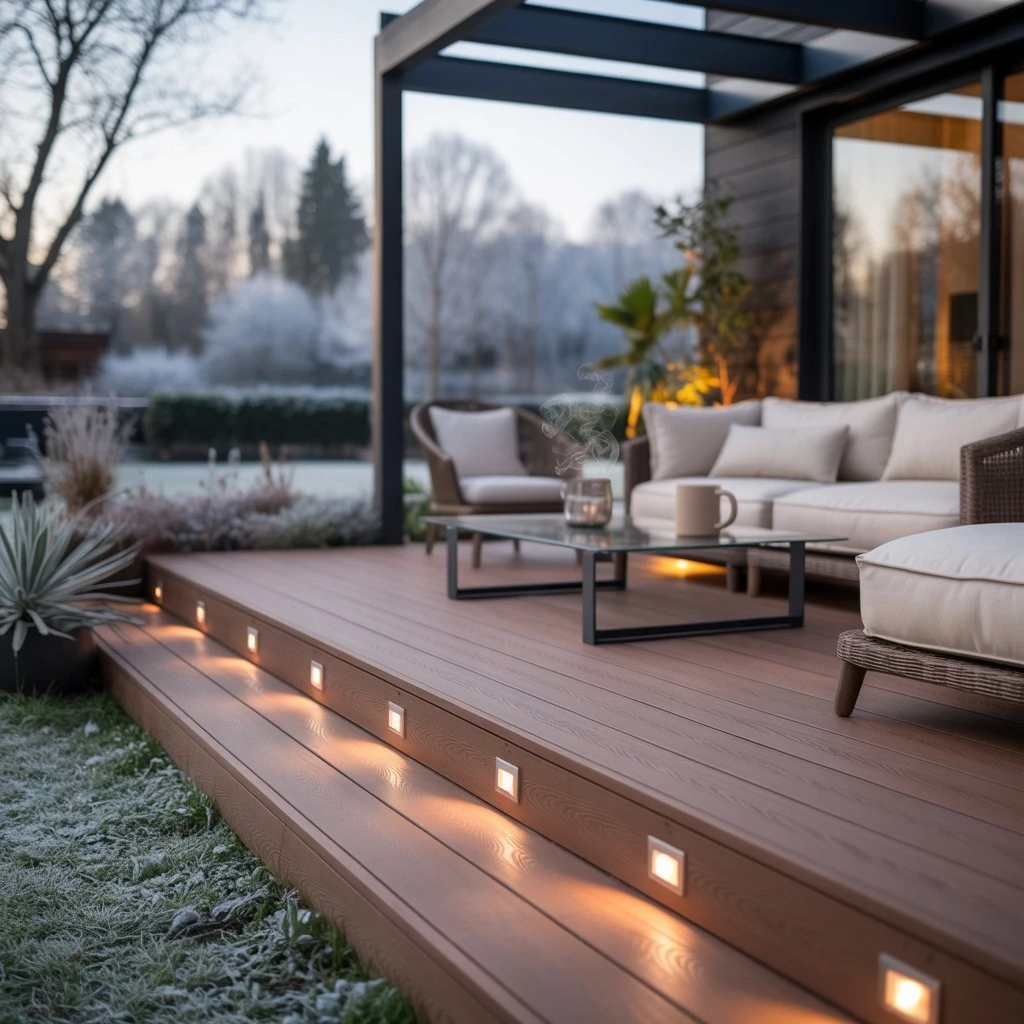
Availability ‘off the shelf’: you choose what you want, not what is left.
In May and June, things can go like this: your dream colour sells out, the lengths are not right, and you have to wait for delivery. On top of that, there is the risk that you will have to put your terrace together ‘from several sources’, because one place has decking boards while another happens to be out of finishing elements. It’s different out of season. You have a better chance of:
- choosing exactly the shade that suits your home (rather than ‘the closest match’),
- buying everything in a single order,
- avoiding a situation where installation grinds to a halt because one component is missing.
And here’s an important aesthetic detail: when everything comes from the same production batch, it is easier to achieve a consistent shade. It may seem like a small thing, but on a finished terrace it can really stand out if the components ‘differ ever so slightly’.
Stress-free logistics: delivery, storage and a plan of action.
During the season, transport and deliveries can be overloaded. A delayed delivery can hold up the installation crew (whose schedule is already tight). In winter and late autumn, things are usually simply… quieter. Deliveries run more smoothly, it is easier to agree the details, and you can prepare a place to store the materials at your leisure.
The good news: composite decking boards are resistant to weather conditions, so the fact that it is cold is not a problem. The key is to store them properly: level and stable, without bending, preferably on a flat surface and protected from standing water or mud.
In winter, you plan the details that you’ll ‘sort out somehow’ in spring (and then regret).
A terrace is not just ‘decking boards laid down’. It also involves lots of decisions that make all the difference premium or… an “almost perfect” result. Winter gives you time to refine:
- drainage and gradients (so water doesn’t collect in puddles),
- board layout (lengthways, crossways, a pattern, zones),
- edge finishing and concealing the sides,
- lighting (e.g. LED lights in steps or alongside a path),
- transitions and connections to the garden, steps or entrance.
These are exactly the things that most often “fall by the wayside” when the weather warms up and everyone wants to finish before the weekend.
What about frost? Is buying material “in winter” a good idea?
There are plenty of myths around this, so let’s be clear: composite decking board stands up well to changing conditions. It doesn’t absorb moisture like wood, doesn’t require impregnation and isn’t prone to cracking or warping in the same way. Of course, every product has its own specifications and recommendations, but buying in winter isn’t a problem in itself.
What’s more, it’s a time when you can prepare everything “on paper”:
- design,
- calculations,
- installation plan,
- booking an installation team.
Then, as soon as the weather improves, you can get started without the chaos.
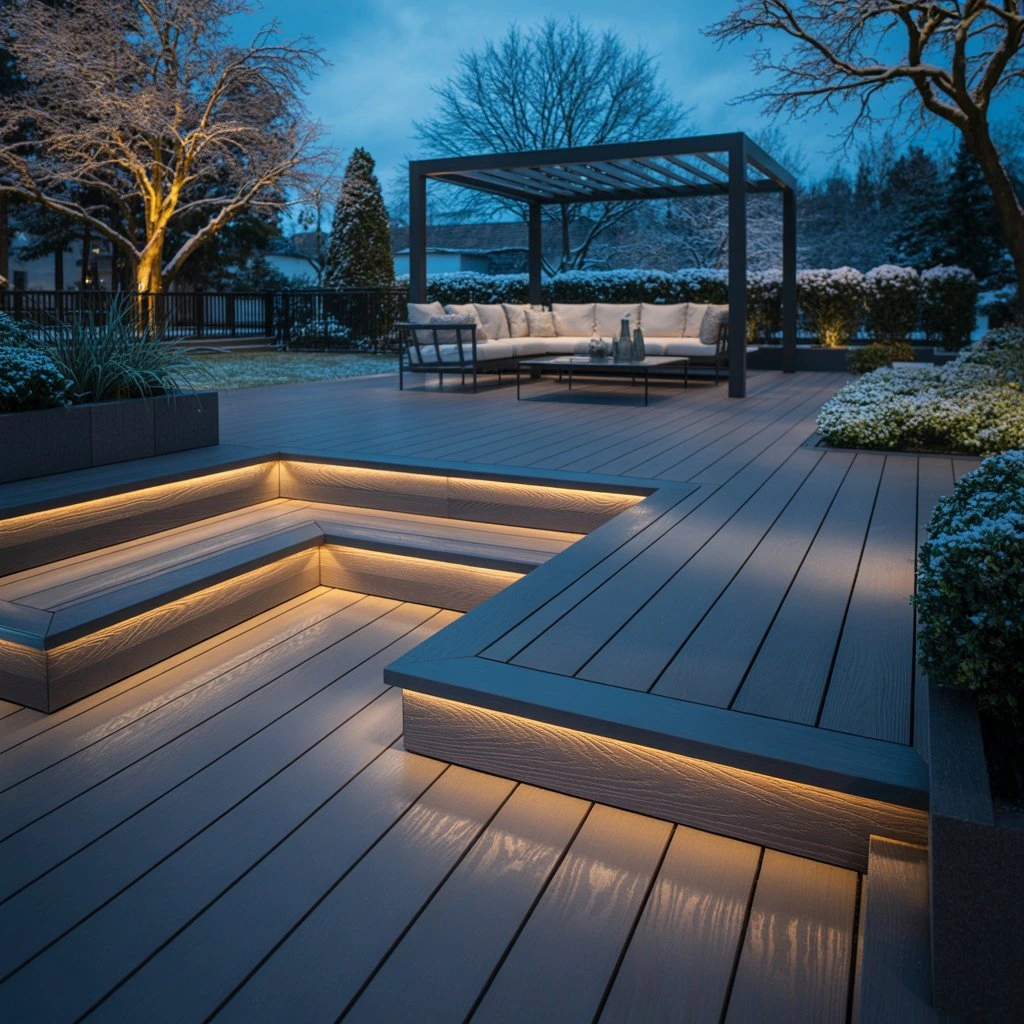
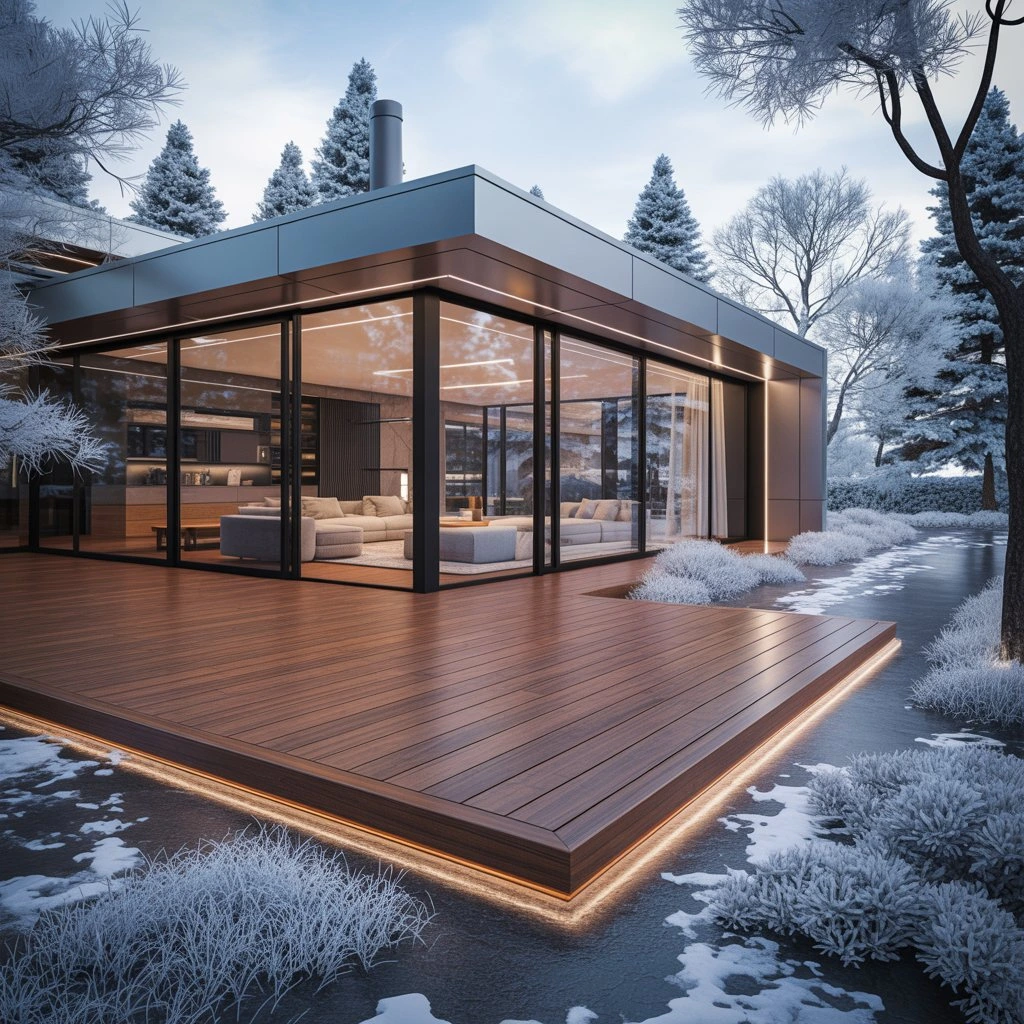
Booking tradespeople: those who plan in winter win in spring.
At the height of the season, good contractors are fully booked. And then comes the classic: “the earliest slot is in 6–8 weeks”. If you plan your patio in autumn or winter, you’re more likely to:
- book a slot in advance,
- agree the details without rushing,
- avoid having things done “in a hurry” because the weather has improved.
In practice, this often means one thing: your patio could be ready in March or early April, rather than not until June.
How should you approach your purchase so nothing takes you by surprise?
To make your planning truly “smart”, stick to a simple plan:
1. Measure the space and plan the layout. - Allow for furniture, walkways and any steps.
2. Choose the colour and texture. - Look at samples in natural light.
3. Make a list of the system components. - You’re not just buying boards. You’ll also need a complete installation system and finishing components.
4. Allow a sensible extra amount. - In practice, a few per cent extra material is useful for cuts and any adjustments.
5. Plan the details in advance. - Lighting, concealing the sides, edges, steps – it’s better to have these down on paper than to “make it up on site”.
Let me add one thing here: if you buy everything in one place and ask for an exact item-by-item calculation, you reduce the risk of missing components. And in season, being short of a single component can sometimes be the most costly thing in the world, because it brings the whole process to a halt.
A lovely-sounding bonus: your first coffee on the patio earlier than everyone else.
It may seem like a small thing, but it really does fire the imagination. While your neighbours are only starting to look for materials and available dates in May, you could already have a finished space: clean, level and ready for furniture and plants. And that’s when you really feel that planning “out of season” was worthwhile.
Instead of a traditional summary: winter is your clever shortcut to a finished patio.
If you want a patio without stress, compromise or overpaying, autumn and winter really are the best time to get started. You have more time to choose, greater product availability, smoother logistics and often better prices. And composite decking board is an ideal fit for this approach: it’s predictable, durable and convenient to use. Put simply: you buy more wisely, plan more calmly and, in spring, instead of “getting started”, you simply sit down with a coffee on your finished patio.
FAQ – frequently asked questions.
Is it worth buying composite decking board in winter if it won’t be installed until spring?
Yes – mainly because of the price, availability and the chance to plan at your leisure. You also protect yourself against spring price increases.
Can composite decking board be stored in a garage or under a shelter over winter?
Usually, yes, provided you store it flat, securely and in a dry place (with no standing water or mud, and without bending it).
Why is there more choice out of season?
Because demand falls, warehouses haven’t been “cleared out” by thousands of orders, and the most popular colours and lengths don’t sell out first.
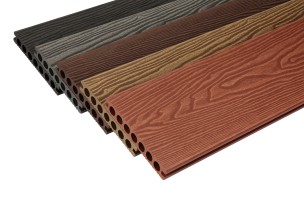
DUO composite decking board 23x148 - 5,8 m
Price per 1 linear metre of board: 21,30 zł
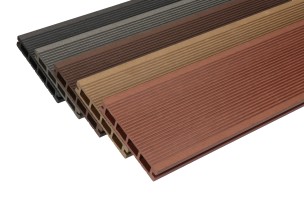
SELECT composite decking board 25x140 - 5,8 m
Price per 1 linear metre of board: 17,27 zł
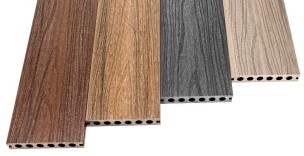
PREMIUM composite decking board 23x138 - 5,8 m
Price per 1 linear metre of board: 24,85 zł
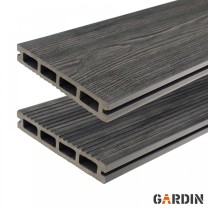
GARDIN NATUR composite decking board 23x146 - 2,0m
Price per 1 linear metre of board: 26,98 zł



