Joist pads for a composite decking board terrace – when are they necessary and how do they reduce noise?
Joist pads for a WPC decking terrace: when they are necessary, how they reduce noise, protect waterproofing and extend the lifespan of the substructure. Guide + FAQ.

A composite decking board terrace can look a million dollars: even gaps, clean lines and minimal maintenance. But there’s one “but” that comes back quicker than July rain — the substructure. WPC (that is, a composite decking board) looks stable, but it also readily “picks up” installation errors: unevenness, looseness, joist movement and even the transmission of vibrations. And that’s when a subject many people overlook comes up: pads under joists. Are they essential? Not always. Are they worth using? In most cases — definitely. Especially if you care about the two things customers love most: quiet and durability.
What are pads under joists and why does WPC “like” them more than you might think?
Pads under joists (sometimes called spacers, separators or EPDM rubber pads) are components placed between the joist and the base. Their role is even more important for a composite decking board terrace because WPC:
- is sometimes installed on composite joists or aluminium joists, which transmit vibrations differently from wood,
- expands and contracts with temperature, so the structure must be stable and level,
- is often installed over floor slabs, balconies and terraces above rooms, where noise is immediately more noticeable.
A pad is not a fitting “decoration”. It’s a quiet hero that does its job behind the scenes.
When are pads under joists essential?
There are situations where they are not an “option”, but a sensible standard.
1. A terrace on concrete, paving slabs or block paving.
A hard base + moisture + concentrated pressure from the joist = a risk of:
- water collecting beneath the joist,
- faster deterioration of the joist (even if treated),
- the transmission of vibrations and knocks.
Pads under joists break this contact and help maintain a gap.
2. A terrace on a balcony/floor slab with waterproofing.
Two things matter here: protecting the waterproofing and acoustics. Pads (especially rubber/EPDM ones) act as a buffer:
- less risk of damaging the roofing felt/membrane,
- less footfall noise transmitted to the building structure.
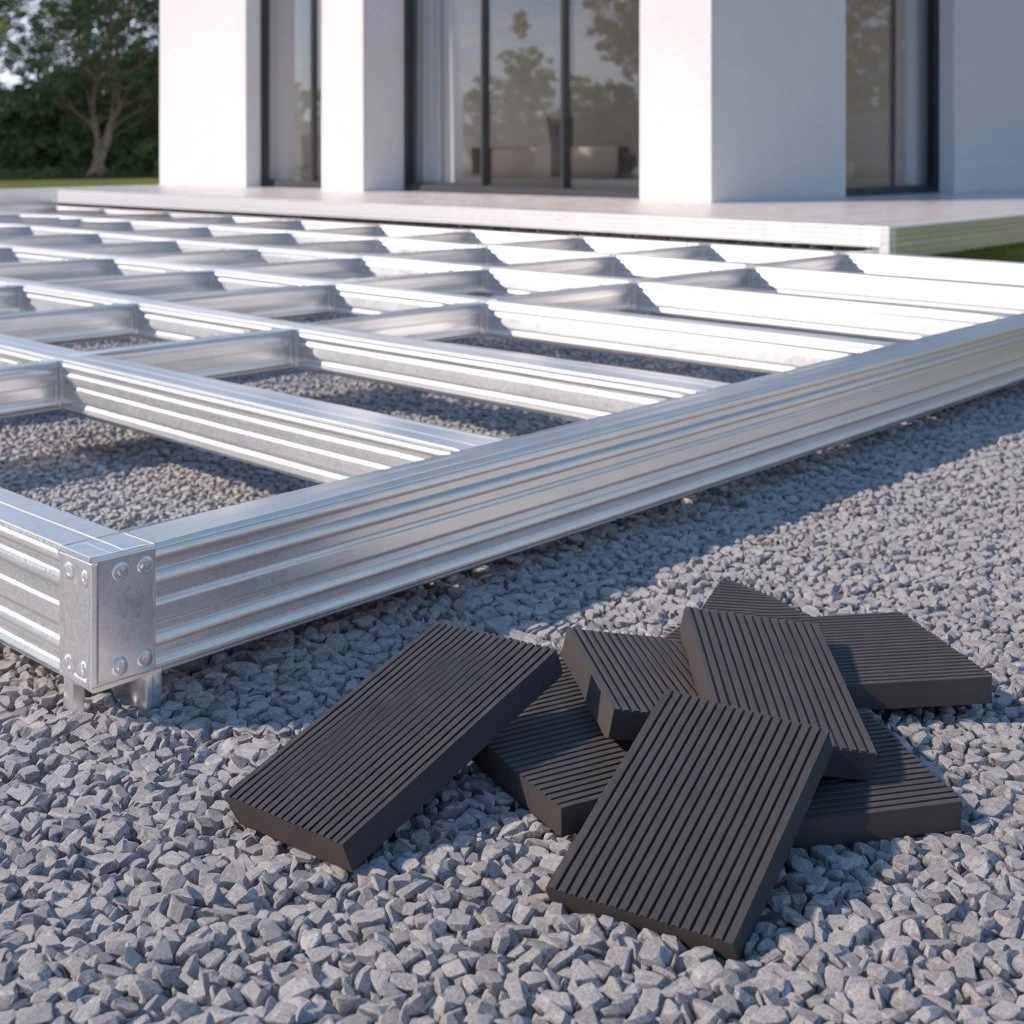
3. An uneven base (which occurs more often than not).
If the base has slopes, raised areas or dips, joists without pads will:
- rock,
- move,
- cause the fixing clips to click and create unpleasant noises.
4. If you want to reduce noise from a WPC terrace.
If the terrace is close to a bedroom, in a terraced house or above a room, pads can make a noticeable difference.
How do pads quieten a composite decking board terrace?
Noise on a WPC terrace is usually not caused by just one thing, but by a combination of:
- thudding (footsteps resonate through the structure),
- knocking at hard support points,
- clicking (small movements at the joints),
- sometimes squeaking (components rubbing as the material moves).
Pads act like mini shock absorbers. A flexible material (e.g. EPDM) absorbs some of the energy and limits the transmission of vibrations to the base. In practice, this means:
- less of a “hollow” sound,
- a softer, more pleasant footfall,
- a lower risk of the terrace starting to “talk” after a season.
Note: if the terrace is poorly designed (joists spaced too far apart, inadequate support, looseness), pads alone won’t work miracles. But as part of a noise-reduction system, they are one of the simplest and most cost-effective solutions.
How do pads affect the durability of the substructure and the entire terrace?
The principle here is simple: dry + stable = long-lasting.
Pads help in three key areas:
1. Less moisture beneath the joist.
When a joist sits directly on concrete, moisture has ideal conditions to remain there for weeks. A pad creates a gap and improves water drainage.
2. Better ventilation.
A small gap beneath the joist improves air circulation. And the faster the structure dries, the lower the risk of problems.
3. Less movement in the structure = less looseness.
Looseness is a deck’s number one enemy: fixing clips start to “pop”, joints wear, and boards may sit unevenly. Stable support on pads reduces small movements.
Which pads for joists should you choose for a deck made of composite decking boards?
You’ll most often come across three solutions. Each has its uses, but in different conditions.
Rubber / EPDM pads (the most common choice for WPC)
Who are they for? For people who want to reduce noise and isolate joists from the substrate.
Advantages:
- good vibration damping,
- moisture resistance,
- kind to waterproofing (lower risk of damage).
What should you watch out for? Choose a quality material — cheap alternatives can harden more quickly.

Plastic spacer pads (harder)
Who are they for? When you want stable, point support and a consistent height.
Advantages: water resistance, stability.
Disadvantages: less sound insulation than EPDM.
Adjustable deck supports (great for uneven ground)
Who are they for? When the deck needs levelling and the substrate is “moving”.
Advantages: quick levelling, easy installation.
Disadvantages: higher cost; a good layout plan is required.
The most common installation mistakes (and how to avoid them).
-
Pads placed too far apart.
Result: flexing, clicking, reduced stability.
Rule of thumb: more stable support points are better than “saving” on a few units. -
No slope or water drainage.
Result: water collects under the deck and traps moisture.
A slope away from the building and clear drains are essential. -
Mixing random materials. (cardboard, pieces of wood, tile fragments)
Result: uneven levels, rotting pads, noise.
Pads should be durable and resistant to water and pressure. -
Too small a gap and no ventilation.
Result: moisture and accelerated deterioration of the components.
Leave room for the structure to move and “breathe”.
In conclusion: are pads beneath joists worth using for a WPC deck?
If you’re building a deck with composite decking boards and want to get it right first time, pads beneath the joists are one of the simplest ways to:
- reduce noise from footsteps and limit drumming,
- level the structure without complications,
- keep moisture out and improve ventilation,
- extend the lifespan of the substructure and the whole deck.
It’s a small cost compared with what it can cost to fix a deck that has been moving improperly after just one season.
FAQ – frequently asked questions about pads beneath joists for WPC.
Are pads beneath joists compulsory for a deck made of composite decking boards?
Not always, but they are strongly recommended, especially on concrete, slabs and floor slabs. They improve acoustics, levelling and durability.
Do pads really reduce deck noise?
Yes, especially flexible ones (e.g. EPDM). They limit the transmission of vibrations and reduce drumming on a hard surface.
Which is better: rubber or plastic pads?
Rubber/EPDM is generally better for reducing noise and insulating against moisture. Plastic can work well as a stable spacer, but dampens noise less effectively.
Will pads help if the deck is already “clicking”?
Sometimes, but you need to find the cause: looseness, supports too far apart, or incorrect joist spacing. Pads are part of the solution, but not always the only one.
Can joists be laid directly on patio tiles?
Technically, yes, but you risk moisture, noise and movement in the structure. Pads are usually cheaper than later repairs.
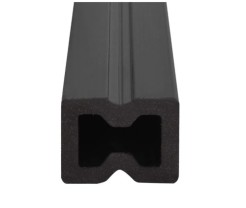
SELECT composite decking joist 30x40 (graphite) - 4m
30 x 40 x 4000
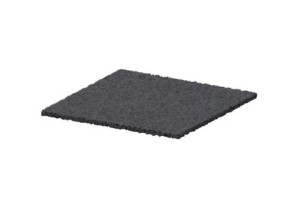
SBR rubber pads for joists 100x100x3 mm SBR100/3 104161
Sound-dampening pad that protects the insulation and surface for DDP002 and DDP008 supports.
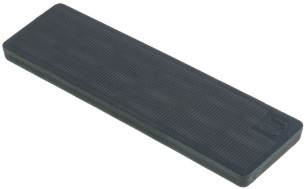
Pads for decking joists (PLASTIC) 6x30x100
Available in packs of: 500 pcs | 1000 pcs
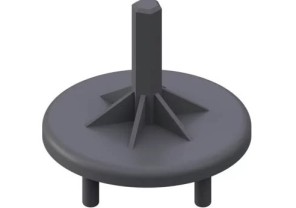
Screwdriver bit for faster assembly and height adjustment of PPK 107471 supports
Screwdriver bit designed for supports from the STANDARD and MAX series, for quickly adjusting the height of the support.