Terrace flooring – wood, composite or tiles? A comparison of materials
Terrace flooring – a comparison of wood, composite decking boards and porcelain tiles. Check the advantages, disadvantages and prices, and choose the best option.
A patio is an extension of the living room and a place where we spend warm summer days. Choosing the right patio flooring is essential, as it affects not only the appearance but also comfort of use and the durability of the structure. The most popular materials today are wooden decking boards, composite decking boards and porcelain tiles. Each of these options has its own advantages and disadvantages, so it is worth finding out more before buying.
Wooden decking boards – classic style and natural charm.
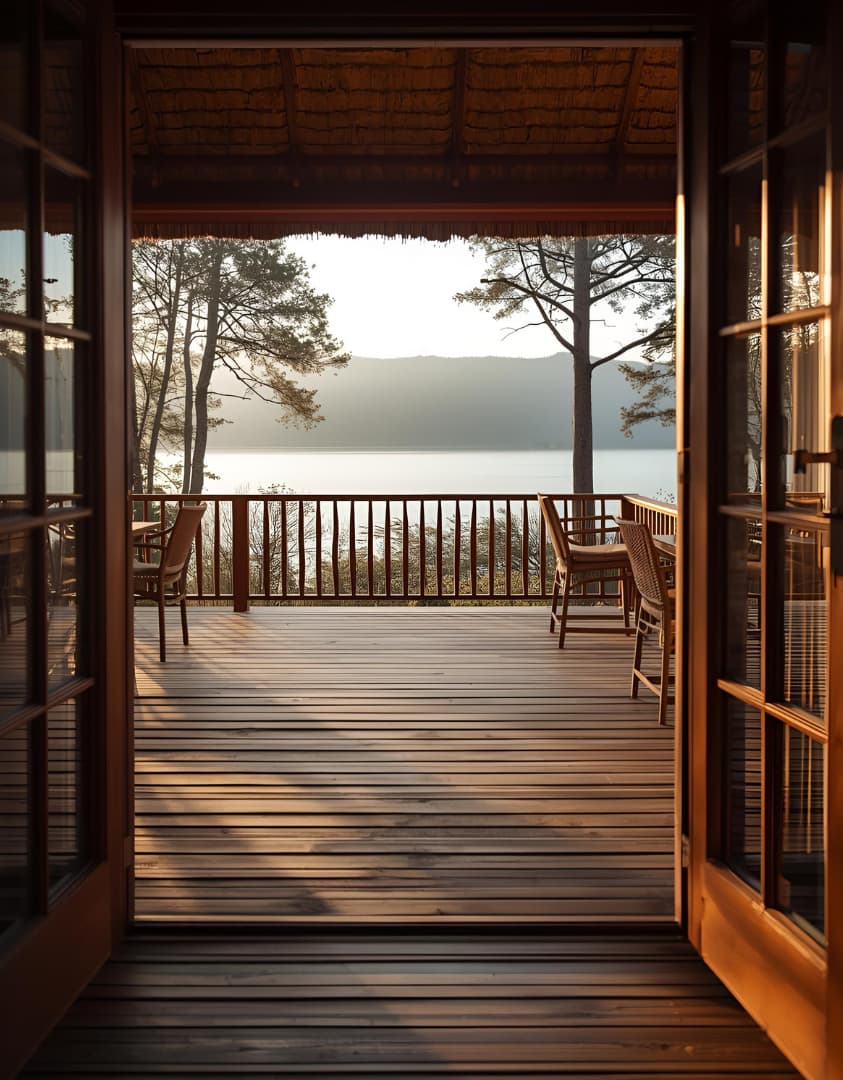
Wood has always been a popular choice for patios. Its natural appearance and warmth to the touch make a patio with wooden flooring look cosy and elegant.
Advantages of wooden decking boards.
-
Natural appearance – wood blends perfectly with the garden and greenery.
-
Pleasant to the touch – it does not get excessively hot in summer and is not freezing cold in winter.
-
Can be refurbished – a damaged surface can be refreshed by sanding and oiling.
-
An eco-friendly choice – a natural material that is fully biodegradable.
Disadvantages of wooden decking boards.
-
Require regular maintenance – to maintain their durability and appearance, the boards should be oiled at least once a year.
-
Susceptible to moisture – inadequately protected wood can rot or develop mould.
-
Risk of warping – wood can warp as a result of changing temperatures and humidity.
The best types of wood for a patio.
-
Siberian larch – hard-wearing and resistant to weather conditions.
-
Bangkirai, ipe, teak – exotic types of wood that are very durable but more expensive.
-
Pressure-treated pine – a cheaper option that requires more frequent maintenance.
The price of patio wood ranges from 80 to 250 zł/m², depending on the type and quality.
Composite decking boards – modern and practical.
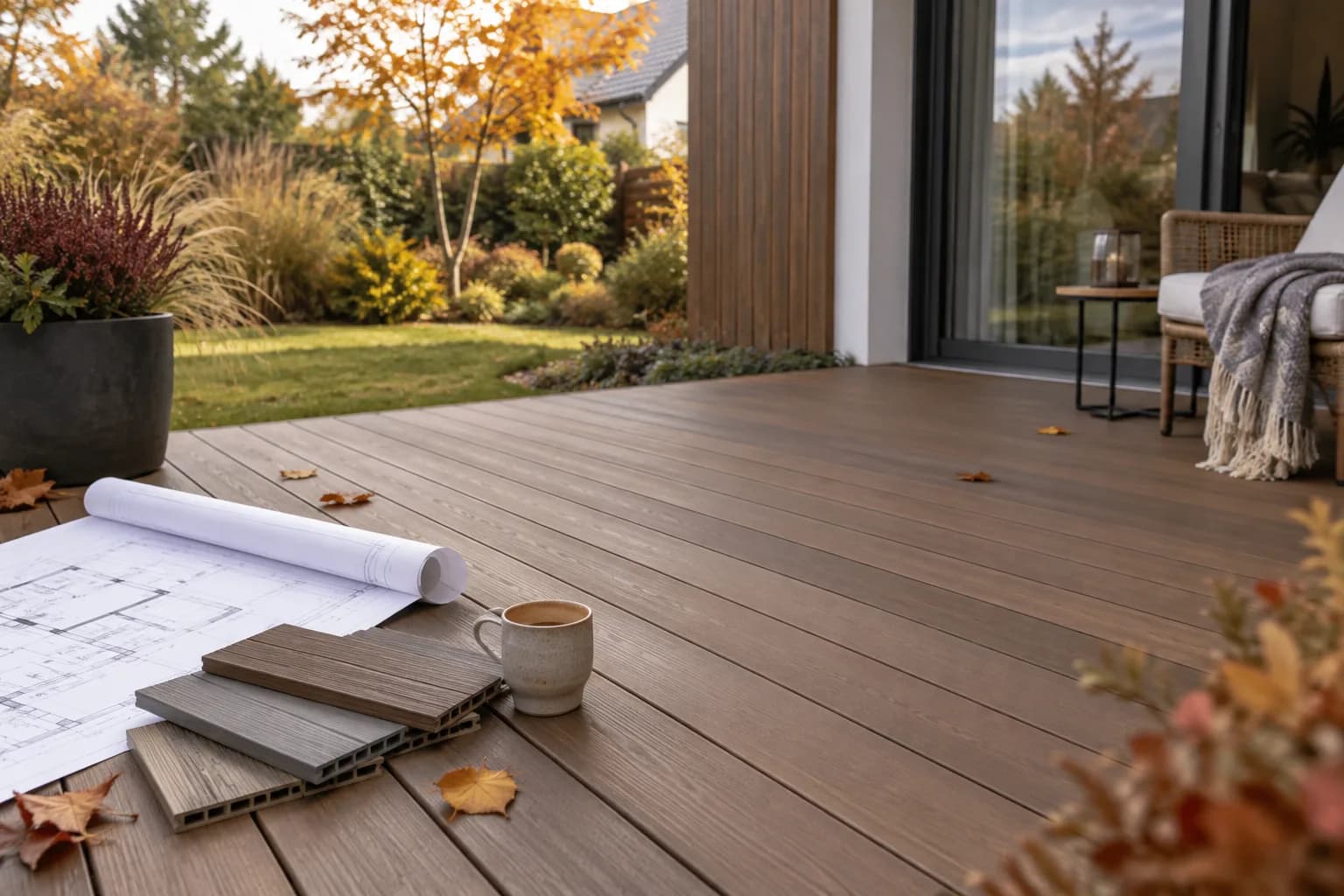
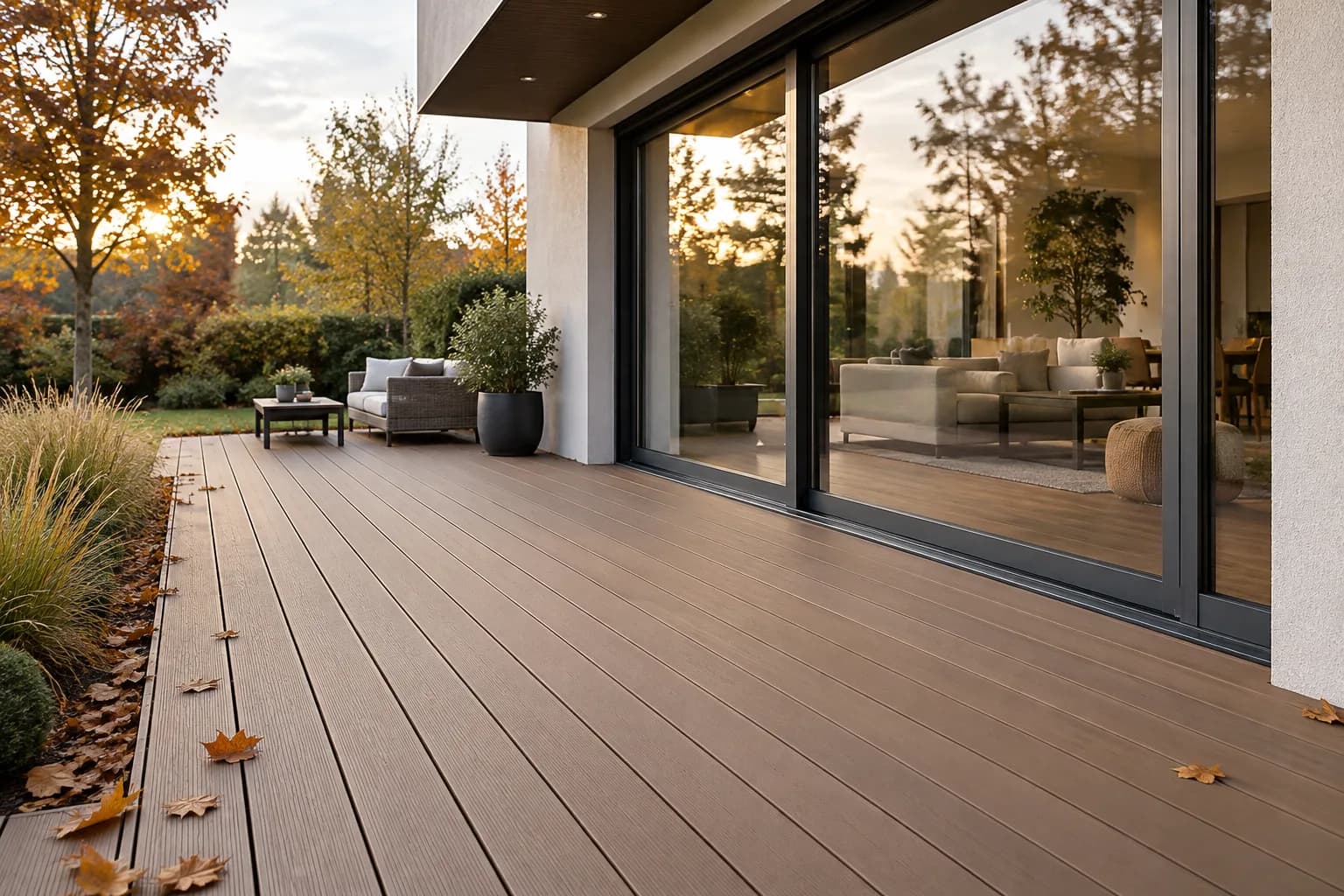
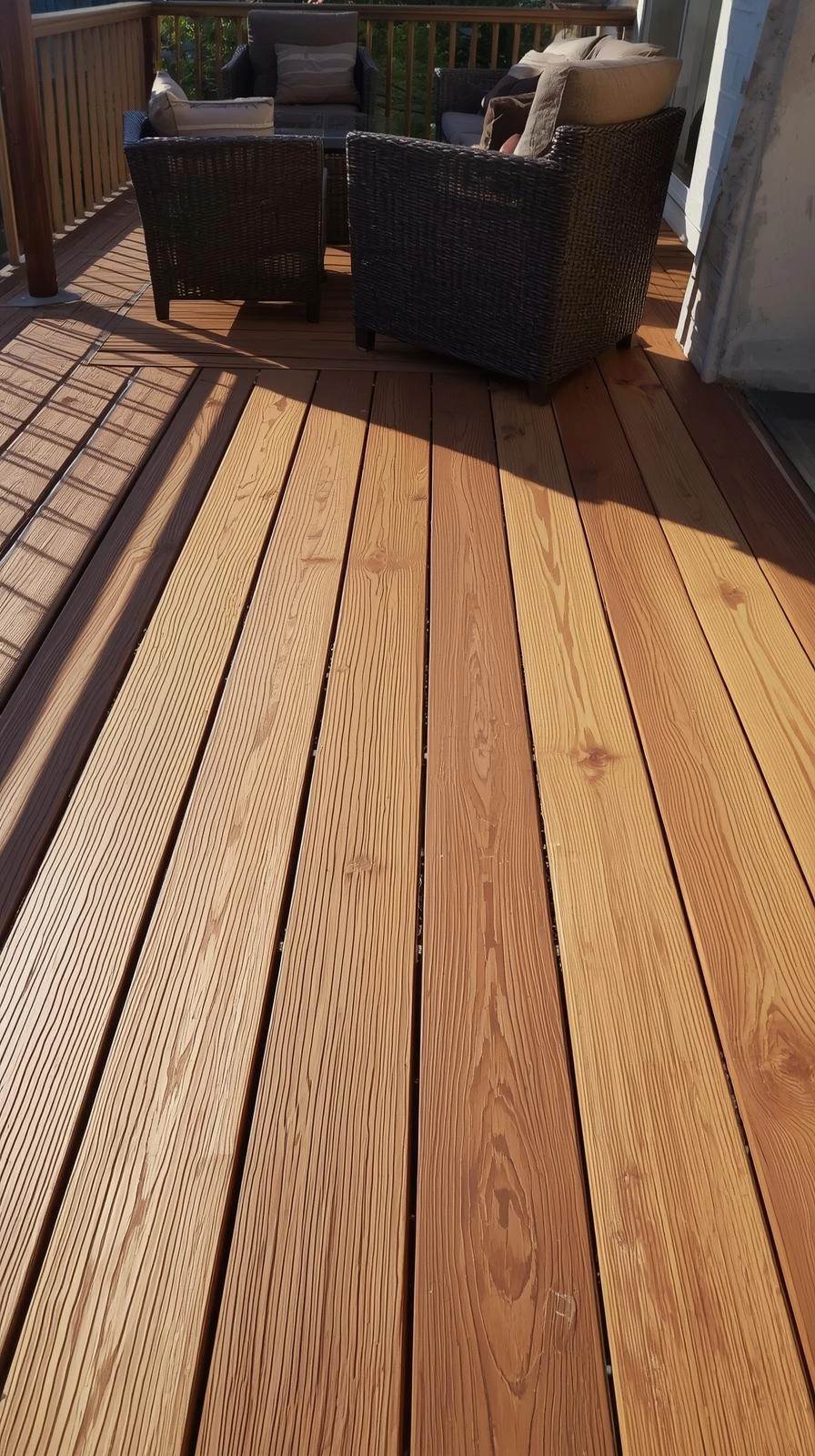
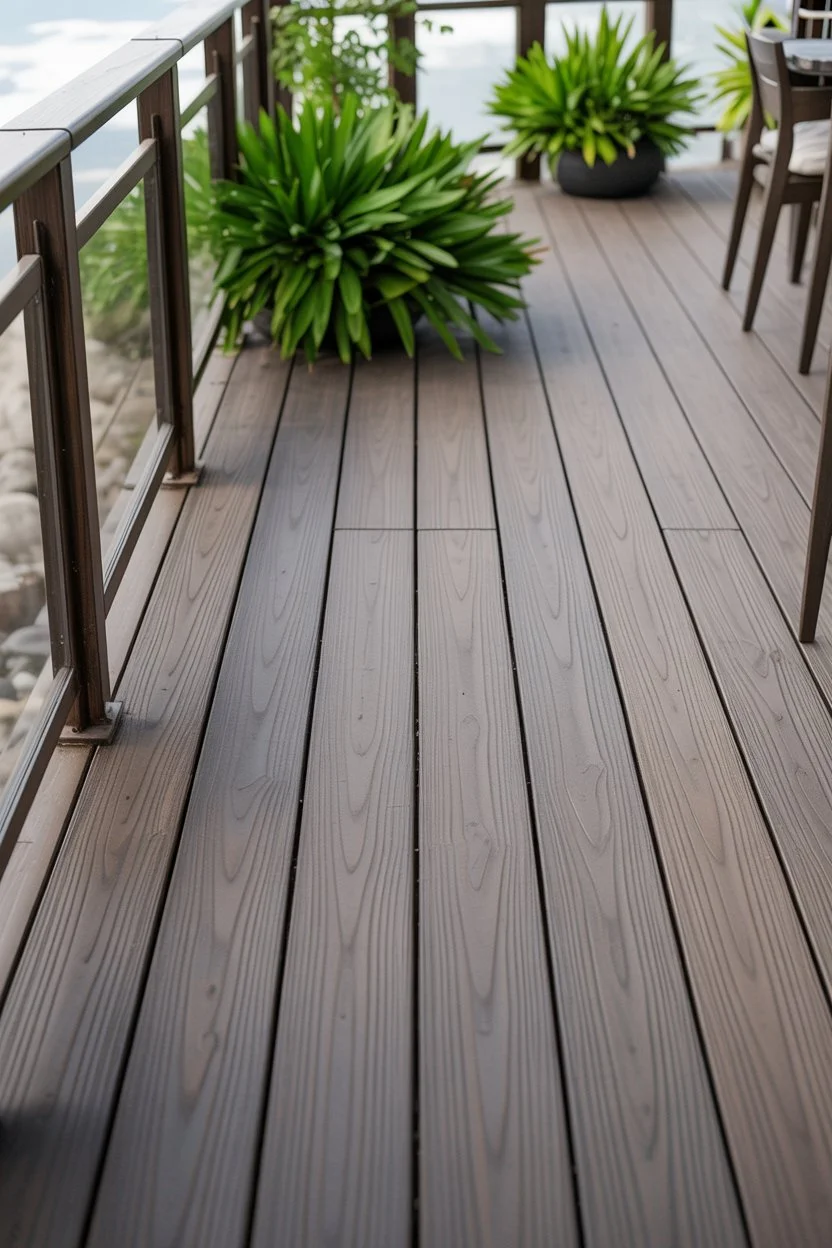
Composite decking boards, made from a mixture of wood flour and polymers, are a material that is increasingly replacing wood. Composite combines a natural appearance with high resistance to external factors.
Advantages of composite decking boards.
-
Maintenance-free – they do not require painting, oiling or impregnation.
-
Resistant to moisture and fungi – ideal for areas with high humidity.
-
Long-lasting colour – they do not fade to grey as quickly as wood.
-
Splinter-free – safe for children and pets.
-
Easy to install – the installation system with fixing clips enables quick installation.
Disadvantages of composite decking boards.
-
Less natural appearance – although they imitate wood increasingly well, they still do not have the same charm as natural material.
-
Higher initial cost – good-quality composite decking boards are more expensive than standard wood.
The price of composite decking for a terrace is usually PLN 120–300/m², depending on the manufacturer and installation system.
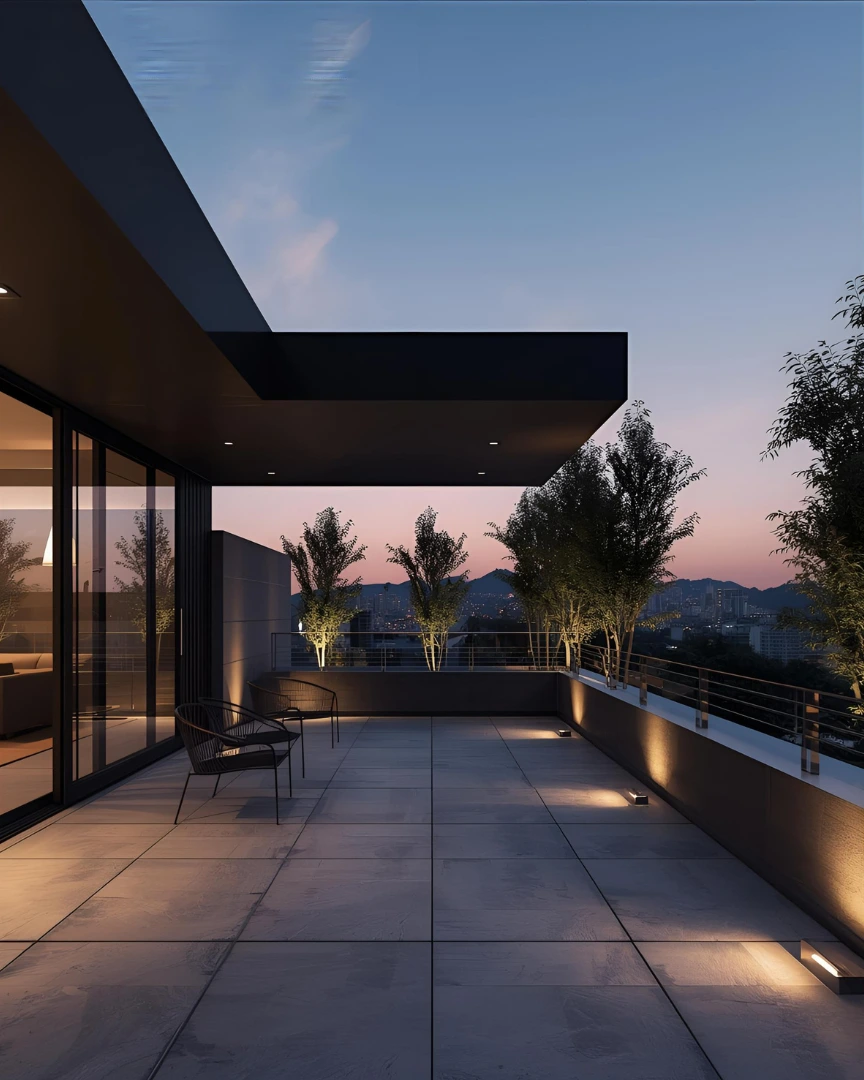
Porcelain stoneware tiles – elegance and easy maintenance.
Porcelain stoneware tiles are a great choice for modern terraces, particularly at homes with minimalist architecture. Porcelain stoneware is resistant to damage and easy to keep clean.
Advantages of porcelain stoneware tiles.
-
Resistance to weather conditions – frost-resistant and resistant to moisture and UV radiation.
-
Wide choice of designs – porcelain stoneware can imitate wood, concrete, stone or marble.
-
Easy to clean – dirt can be washed off with plain water or detergent.
-
Highly durable – properly laid tiles can last for a dozen or more years without major problems.
Disadvantages of porcelain stoneware tiles.
-
Cold surface – porcelain stoneware feels cold to the touch, which can be unpleasant when walking barefoot.
-
Risk of cracking – tiles can crack if installed incorrectly or if the substrate moves.
-
Slippery surface – particularly with inexpensive, smooth tiles.
Price of terrace porcelain stoneware is around PLN 60–200/m², depending on the grade and design.
Comparison of materials – table.
| Feature | Natural wood | Composite | Porcelain stoneware tiles |
|---|---|---|---|
| Appearance | Natural and warm | Modern, artificial | Elegant, varied |
| Maintenance | Requires oiling | None required | Wash with water/detergent |
| Moisture resistance | Average | Very high | High |
| Durability | 10–15 years (with care) | 20+ years | 15–20 years |
| Price | PLN 80–250/m² | PLN 120–300/m² | PLN 60–200/m² |
| Walking comfort | Warm and pleasant | Warm, but can heat up | Cold and hard |
Which flooring should you choose for your terrace?
Choosing the right flooring for your terrace depends primarily on your needs, lifestyle and climate, as well as the budget you want to spend on this investment. Each of the three popular materials – wood, composite decking boards and porcelain stoneware tiles – will suit slightly different situations. Here’s what to consider when making your decision:
1. Wood – for lovers of natural beauty.
If your priority is a natural look and a cosy atmosphere, wood is an excellent choice. It complements the greenery of the garden and suits classic terrace designs.
It’s a material chosen by people who enjoy looking after their surroundings and value traditional solutions.
2. Composite decking boards – convenience and no maintenance.
If you want maximum comfort and minimal maintenance, composite decking boards are the solution for you. This modern material combines the look of wood with the practicality of plastics. Composite is resistant to moisture, mould and fungi, making it ideal for terraces exposed to rain or located near swimming pools.
3. Porcelain stoneware tiles – elegance and minimalist style.
Porcelain stoneware tiles are a good choice for those who appreciate modern, minimalist design and easy cleaning. Porcelain stoneware withstands changing weather conditions and is available in a wide range of designs – it can imitate wood, concrete or stone, offering plenty of design possibilities.
How do you choose the right option for your needs?
-
For families with children and pets – composite decking boards are the best choice. They are safe (no splinters), non-slip and resistant to intensive use.
-
For lovers of classic style and nature – wood is a choice that never goes out of fashion and, with the right care, will retain its charm for years.
-
For those who value elegance and simplicity – porcelain tiles create a modern look, ideal for minimalist gardens and contemporary-style homes.
-
For very sunny terraces – it is better to avoid dark composite decking boards, which heat up quickly; light-coloured tiles or wood are more suitable here.
-
For terraces in the shade or near water – composite or porcelain tiles are the best choice, as wood may rot in these conditions.
How do you choose the right option for your needs?
-
For families with children and pets – composite decking boards are the best choice. They are safe (no splinters), non-slip and resistant to intensive use.
-
For lovers of classic style and nature – wood is a choice that never goes out of fashion and, with the right care, will retain its charm for years.
-
For those who value elegance and simplicity – porcelain tiles create a modern look, ideal for minimalist gardens and contemporary-style homes.
-
For very sunny terraces – it is better to avoid dark composite decking boards, which heat up quickly; light-coloured tiles or wood are more suitable here.
-
For terraces in the shade or near water – composite or porcelain tiles are the best choice, as wood may rot in these conditions.
The most common mistakes when choosing terrace flooring.
Even the best material will not make a terrace durable if it is chosen or installed incorrectly. Here are the most common mistakes to avoid:
-
Failure to prepare the substrate properly – particularly important with porcelain tiles, which can crack if the substrate is not stable.
-
Choosing low-quality wooden decking boards – cheap wood, such as untreated pine, will rot quickly.
-
Incorrectly fixing composite decking boards – a lack of expansion gaps can cause them to bulge.
-
Ignoring the climate and sun exposure – for example, composite decking in full sun can become very hot, making it less comfortable to use.
How do you care for your terrace so it lasts for years?
Even the most durable material needs some care. Here are some tips to help extend the life of your terrace:
-
Wood – oil it regularly, clean it with a brush and check the condition of the boards each season.
-
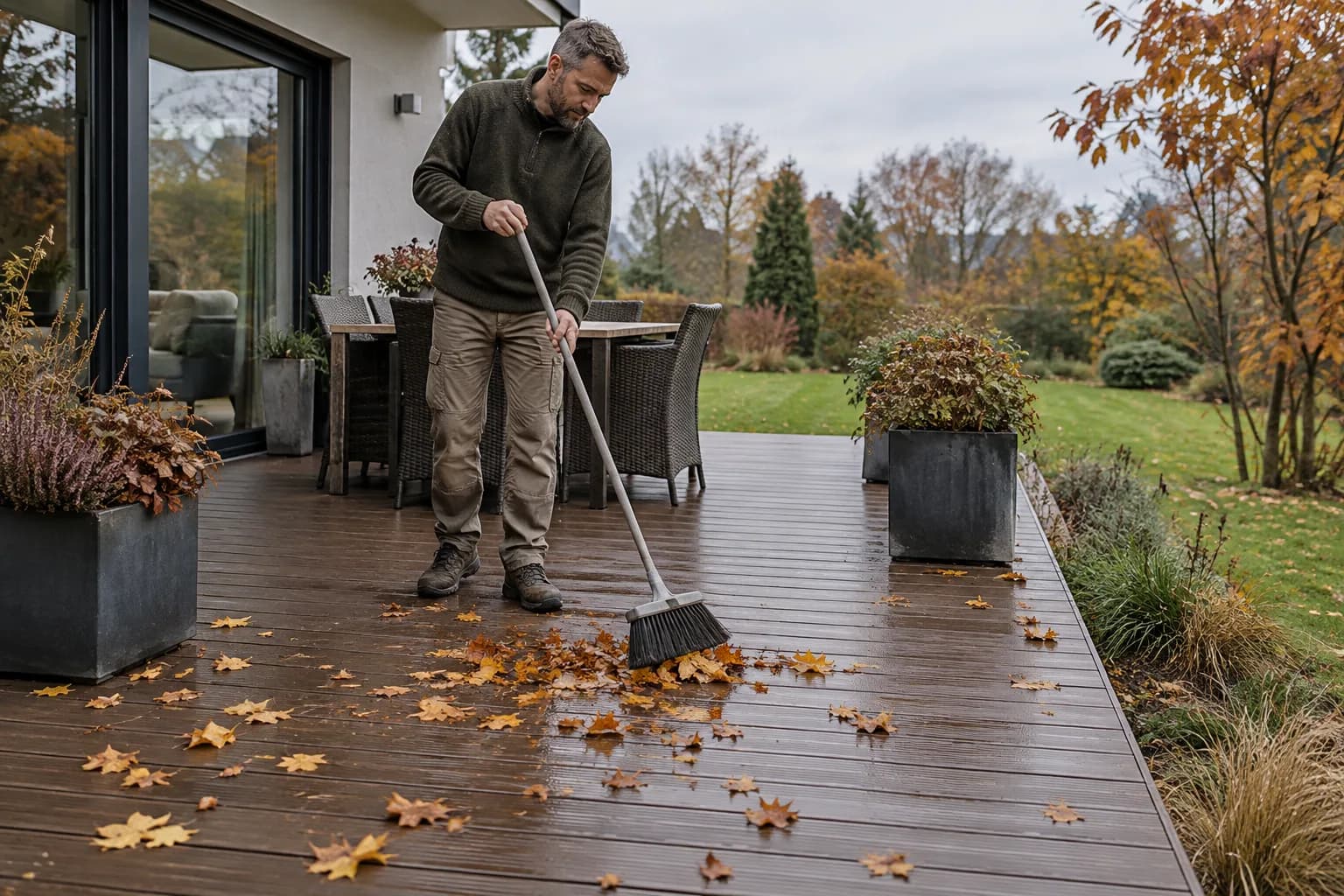
Composite – wash with a pressure washer every few months and avoid strong chemical cleaners.
-
Porcelain tiles – clean the grout regularly and protect the joints against moisture penetration.
-
In winter – avoid road salt, which can damage both wood and porcelain tiles.
-
Regular checks – check the surface for cracks or loose elements.
Summary – an investment in comfort, aesthetics and durability.
Terrace flooring is a long-term investment, so it is worth giving careful thought to your choice of material.
-
Wood offers natural beauty, but requires work and care.
-
Composite offers a modern look and convenience, although it costs more initially.
-
Porcelain tiles offer elegance and are easy to maintain.
Whatever you choose, correct installation and substrate preparation are essential – only then will the terrace be durable and comfortable for many seasons.