
Comparing composite decking board installation patterns: straight, staggered and picture frame – impact on waste and appearance.
How should you lay WPC composite decking on a terrace? We compare straight, staggered and picture-frame layouts: appearance, the amount of cutting, waste, practical installation tips and accessories.
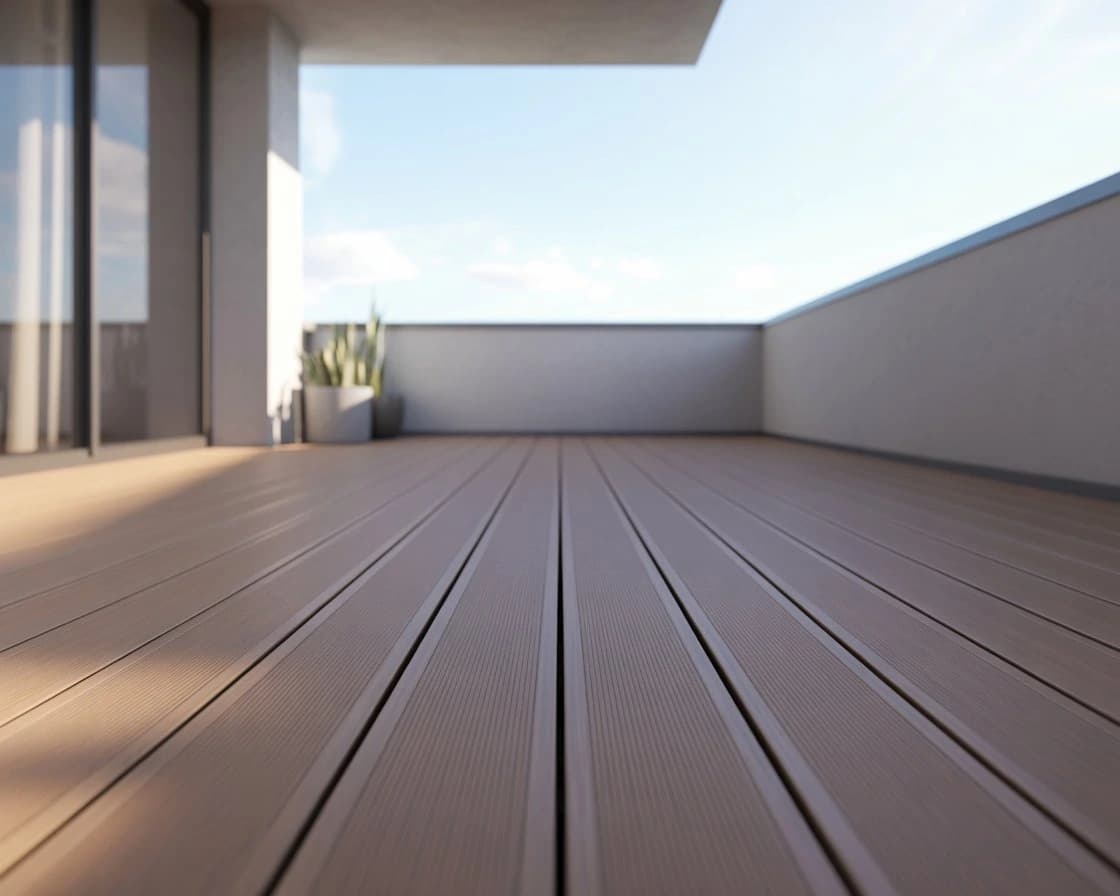
Choosing a pattern is not just a matter of whether it looks good. It also has a real impact on how much composite decking you use, how much waste is produced when cutting, how the joints are laid out and whether your terrace will look cohesive for years to come. Below is a comparison of the three most popular options: straight layout, staggered layout and picture frame (border all around) — all in the context of a terrace made with WPC composite decking.
Straight layout (boards parallel, the “classic”).
What does it look like?The boards run in one direction (usually along the longer side of the terrace). The result is orderly and minimalist. This is the most common choice for modern buildings and simple terraces.
Impact on waste and cuts.This is the most “economical” pattern:
- few angled cuts,
- offcuts from one row can often be used in the next,
- it is easier to plan the joints.
Estimated composite decking allowance: usually 7–10%
(10% if you have lots of edges, posts, recesses or steps).
- people who want to reduce waste,
- terraces with a simple shape,
- when quick composite decking installation is important.
Tip: A straight layout works brilliantly to make a terrace look “longer” when the boards run along its longer side.
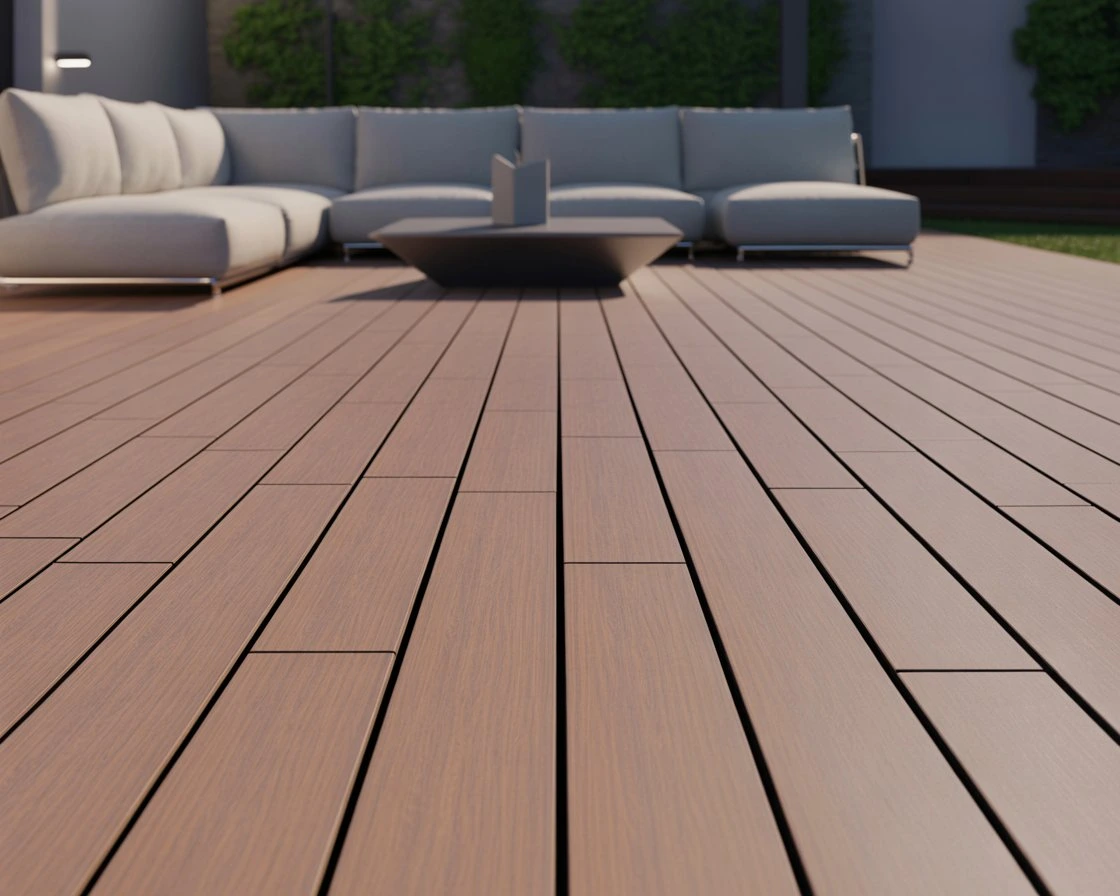
Staggered layout (offset joints).
What does it look like?The joints do not line up; instead, they are offset (e.g. by 1/2 the length or randomly). The terrace looks more “natural”, a little like a wooden parquet floor outdoors — but in WPC.
Impact on waste and cuts.A lot depends on the width of the terrace and the chosen pattern:
- with a 1/2 offset and regular lengths, cuts are easy to control,
- with a 1/3 offset or short sections, the number of “offcuts” may increase.
Estimated composite decking allowance: most often 10–12%
(12% if the terrace is narrow, has lots of doors/passages or many “short” sides).
- people who do not want “start-to-finish stripes” and like a more dynamic pattern,
- terraces where joints in a single line would look too technical.
Tip: With WPC, it is worth using a consistent offset module so that the layout looks “neat” rather than random.
Picture frame (border all around + centre in one direction).
What does it look like?
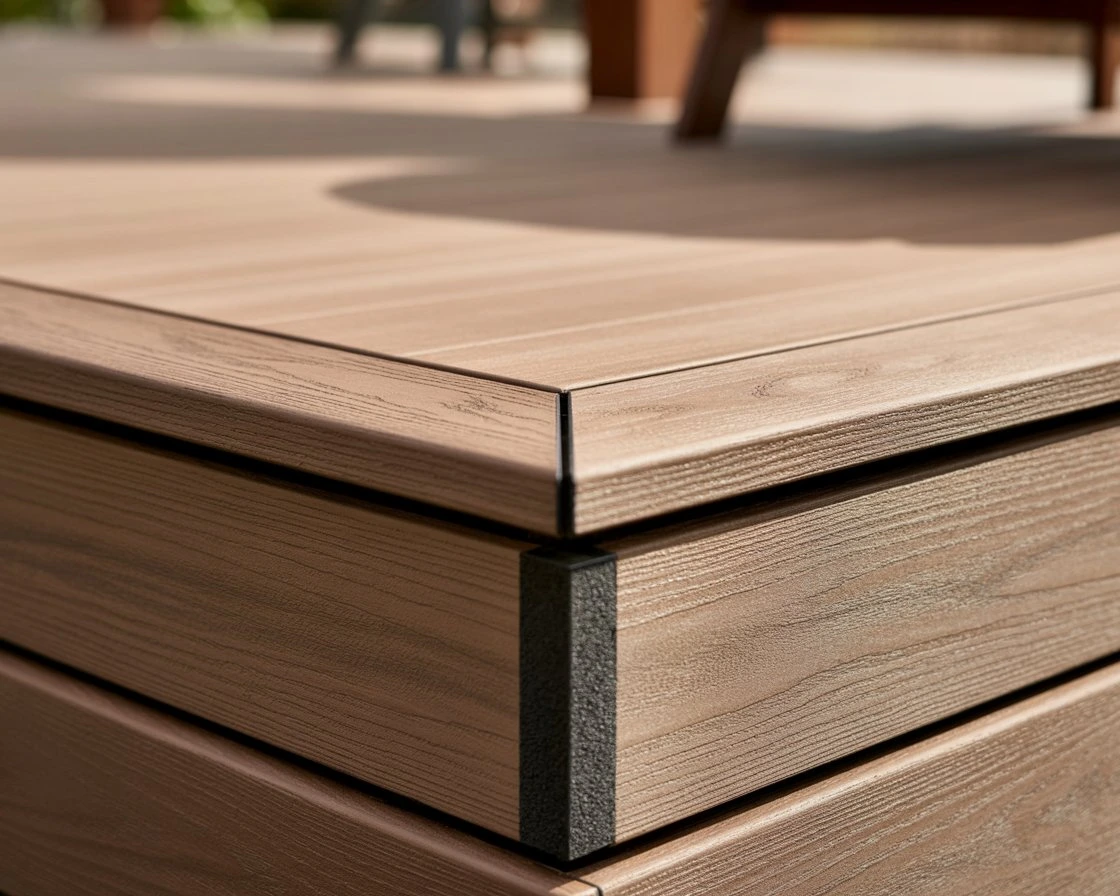
You create a border of boards around the terrace (a frame), with the boards in the centre running straight (sometimes in a different direction from the border). The result is the most “premium” look — the terrace appears refined and architectural.
Impact on waste and cuts.
A picture frame almost always increases the number of cuts:
- corners need to be fitted,
- more cuts are needed around the edges,
- you more often make cuts “for the effect” (to keep the lines even).
Estimated composite decking allowance: usually 12–15%
(15% if the frame has 45° corners or the terrace has an irregular shape).
Who is it for?
- people who want a “wow” effect,
- when the terrace is prominent (e.g. next to large windows),
- when you are planning steps and want to finish the edges neatly.
Tip: A picture frame works brilliantly to conceal uneven edges and “complete” the design — but it requires a good cutting plan.
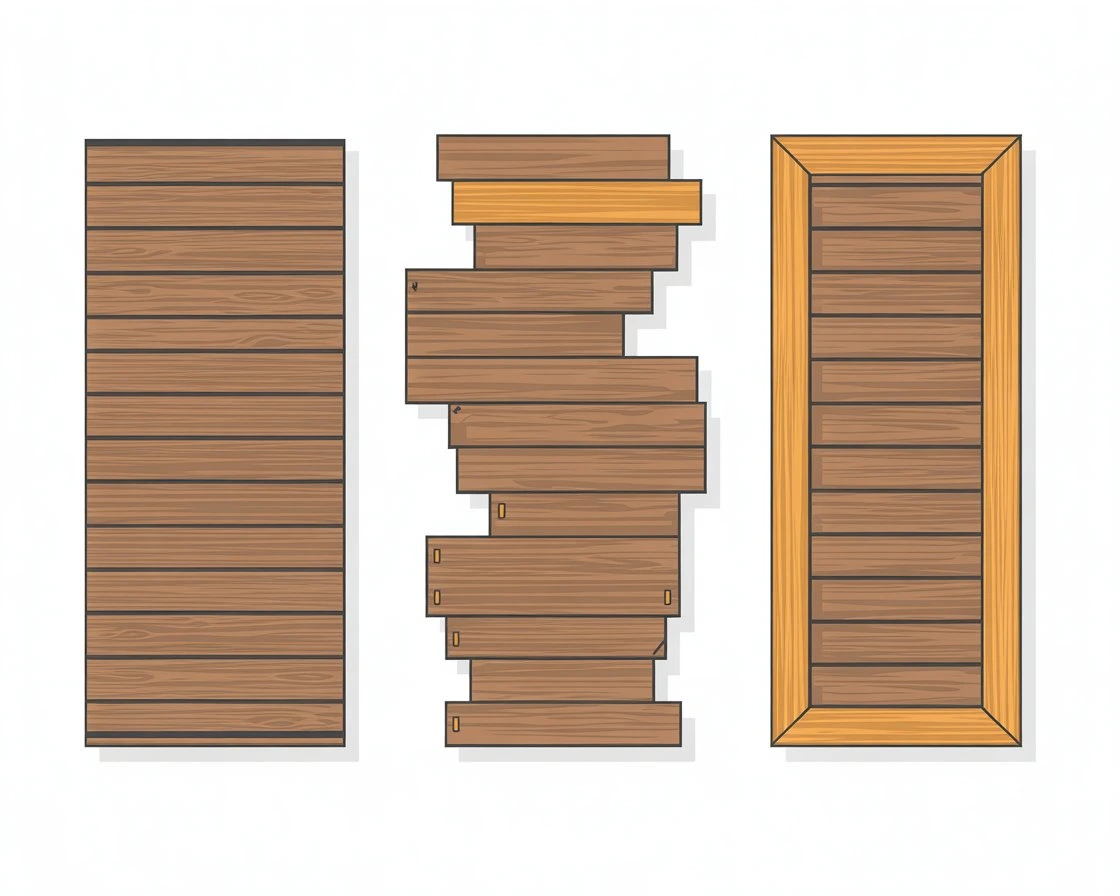
Quick comparison: appearance vs waste (WPC composite decking board).
- Straight: a modern look, the least waste and the quickest installation.
- Staggered: a more “natural” look, moderate waste; choosing the offset is important.
- Border: the most decorative look, the most waste, and more work and accessories.
If minimising offcuts is your priority, choose a straight pattern.
If you want a more interesting rhythm, choose a staggered pattern.
If you want a terrace “straight from a catalogue”, choose a border (with a larger allowance).
What about accessories? (You can’t build a terrace without them.)
Regardless of the composite decking board pattern you choose, remember to allow for:
- WPC fixing clips + 5–10% extra,
- starter element/starter clip (often needed for the first row),
- joists (composite or aluminium), in line with the recommended spacing,
- WPC finishing trims (L-shaped trims, cover strips, plinths), calculated from the terrace perimeter + 5–10%.
A border usually means more trims/finishing pieces and more “details”, so it’s worth allowing a little extra for accessories too.
To finish (practical advice).
If you like, I can add a short section to this post on “how much composite decking board and how many accessories to order”, with ready-made ranges for your shop (e.g. clips per m², trims for the perimeter), without guessing brands. That would make the text more sales-focused and “shop-oriented”, rather than just an advice article.
FAQ.
Which composite decking board pattern produces the least waste?
Usually a straight pattern — the fewest cuts and the easiest way to make use of offcuts.
Does a border always increase composite decking board use?
Almost always, because there are more cuts and adjustments around corners and edges.
How much extra WPC composite decking board should I allow for a staggered pattern?
Most often 10–12%, but for narrow terraces with many doorways, it’s better to allow 12%.
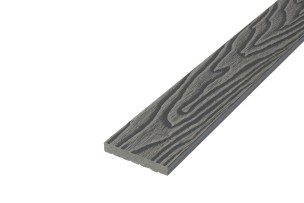
DUO composite plinth trim 10x70x4000
Trims available in 5 colours
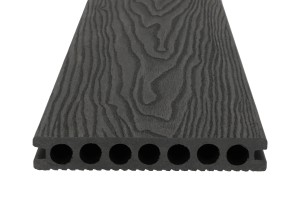
DUO composite decking board 23x148 - 5,0 m
Price per 1 linear metre of board: 21,30 zł
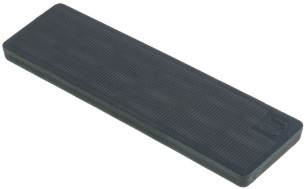
Pads for decking joists (PLASTIC) 6x30x100
Available in packs of: 500pcs. | 1000pcs.
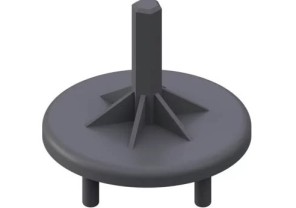
Screwdriver bit for faster screwing and height adjustment of PPK 107471 supports
Screwdriver bit designed for supports from the STANDARD and MAX series, for quickly adjusting the height of a support.



