
Adjustable decking supports – when are they the best solution?
Find out when to use adjustable decking supports. Discover their benefits, applications and impact on the durability of a composite decking terrace.
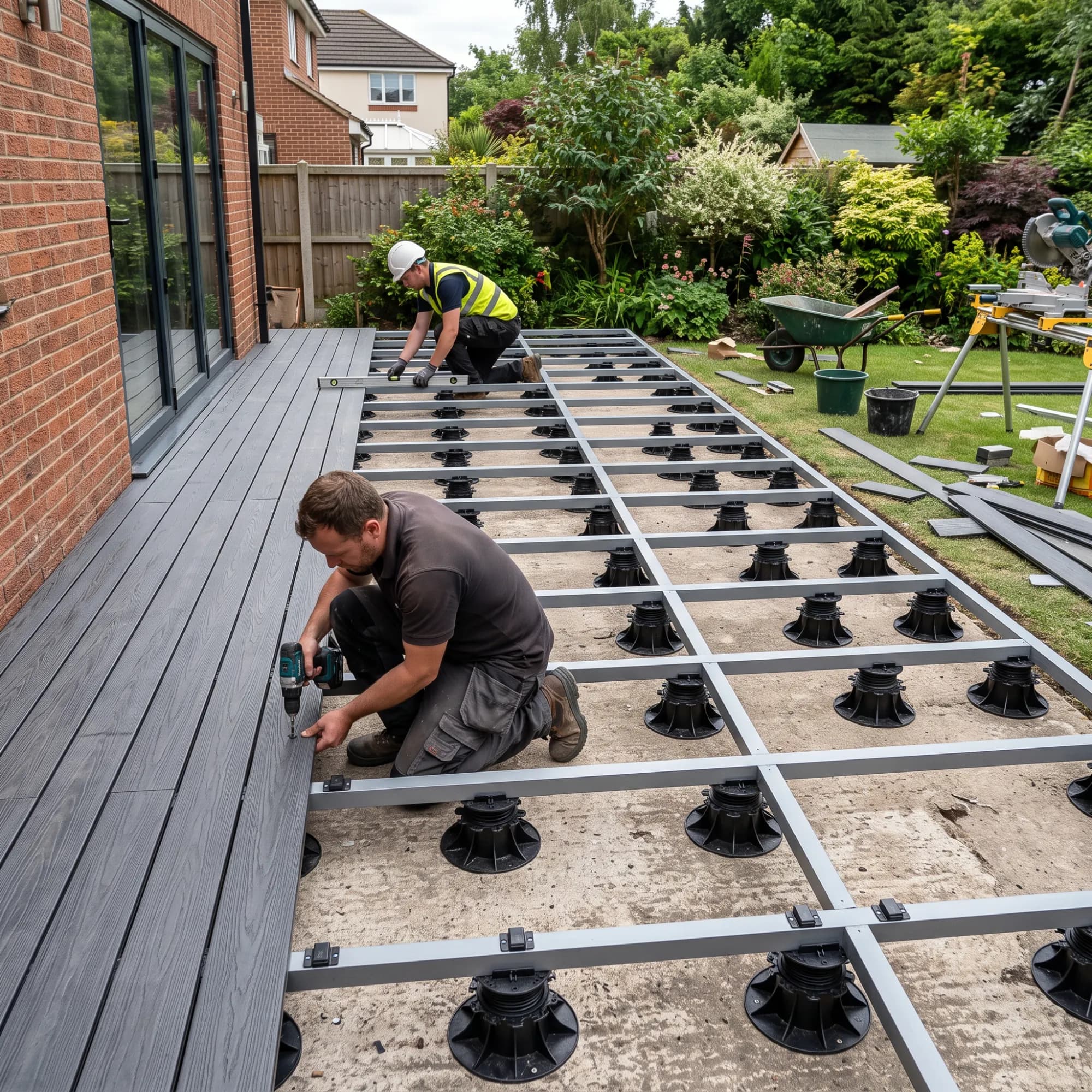
Building a modern composite decking terrace requires not only choosing high-quality finishing materials, but also designing a suitable supporting structure. One element that has become hugely popular in recent years is adjustable terrace supports. They make it possible to level the structure quickly, improve ventilation and make it easier for water to drain from beneath the terrace. Although supports were used mainly in large commercial projects just a few years ago, they are now increasingly used at private homes too. This solution works well for both composite terraces and terraces made from ceramic or stone slabs. When should you use adjustable terrace supports? What are their advantages, and are they suitable for every project? We answer the key questions.
What are adjustable terrace supports?
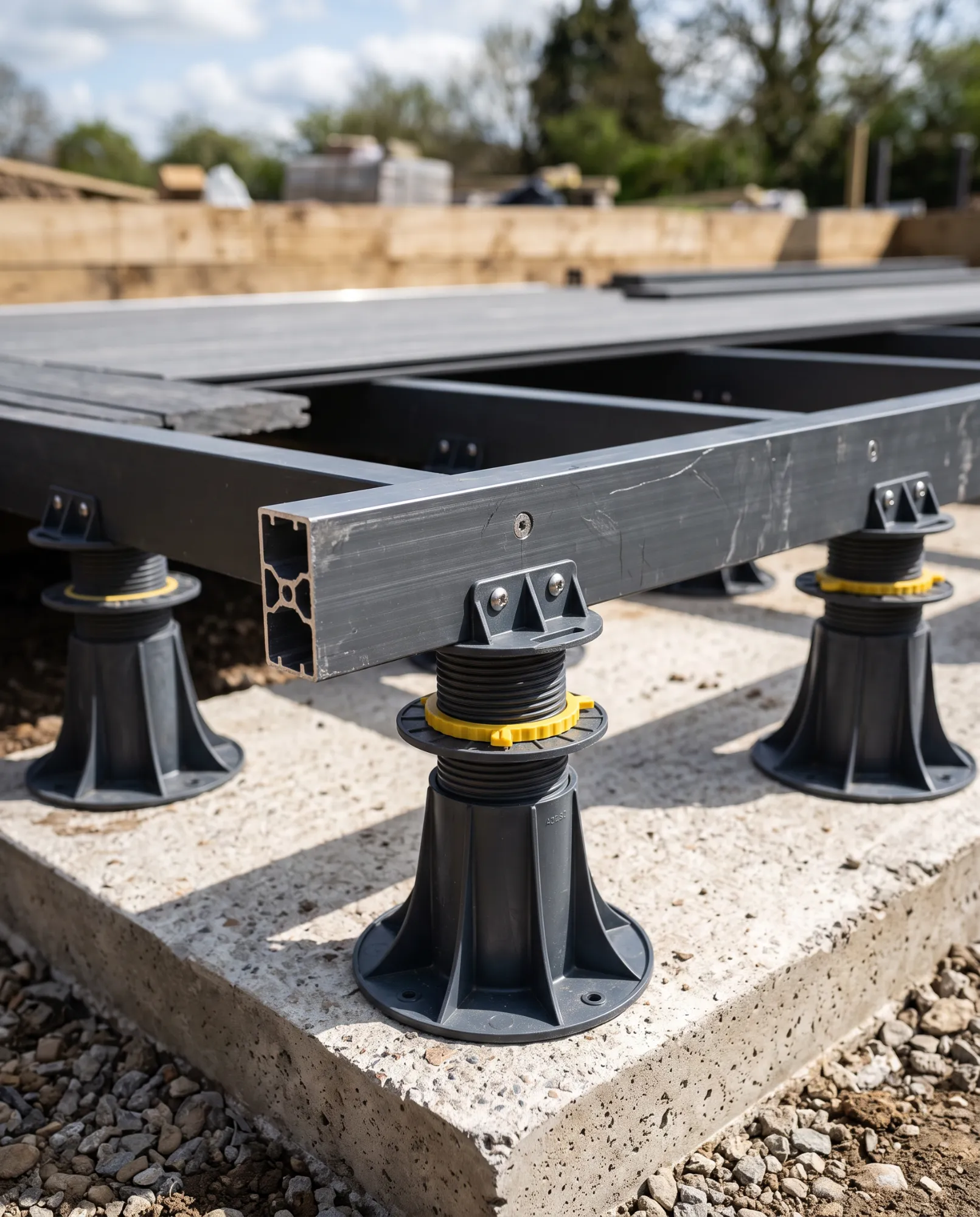
Adjustable terrace supports are structural components that allow the height of joists or terrace slabs to be set precisely. Their adjustability makes it easy to level even uneven ground without having to lay additional screed or carry out costly groundworks. The supports are made from durable plastics resistant to:
- moisture,
- frost,
- UV radiation,
- temperature fluctuations,
- heavy loads.
Modern systems allow height adjustment across a very wide range, so they can be adapted to virtually any project.
Why are adjustable supports becoming increasingly popular?
The growing popularity of this solution is mainly due to its ease of installation and great flexibility. Using adjustable terrace supports makes it possible to:
- level the structure quickly,
- reduce the amount of preparatory work,
- improve ventilation beneath the terrace,
- ensure water can drain freely,
- make it easier to run services beneath the structure.
This makes installing a composite terrace quicker and less prone to installation errors.
When should you use adjustable supports?
There are many situations in which supports are the best solution. They are most commonly used when building terraces:
- on uneven ground,
- on flat roofs,
- above underground garages,
- on balconies,
- beside swimming pools,
- on existing concrete slabs.
They are also ideal when the client wants to avoid laying new concrete screed.
Adjustable supports and composite decking boards.
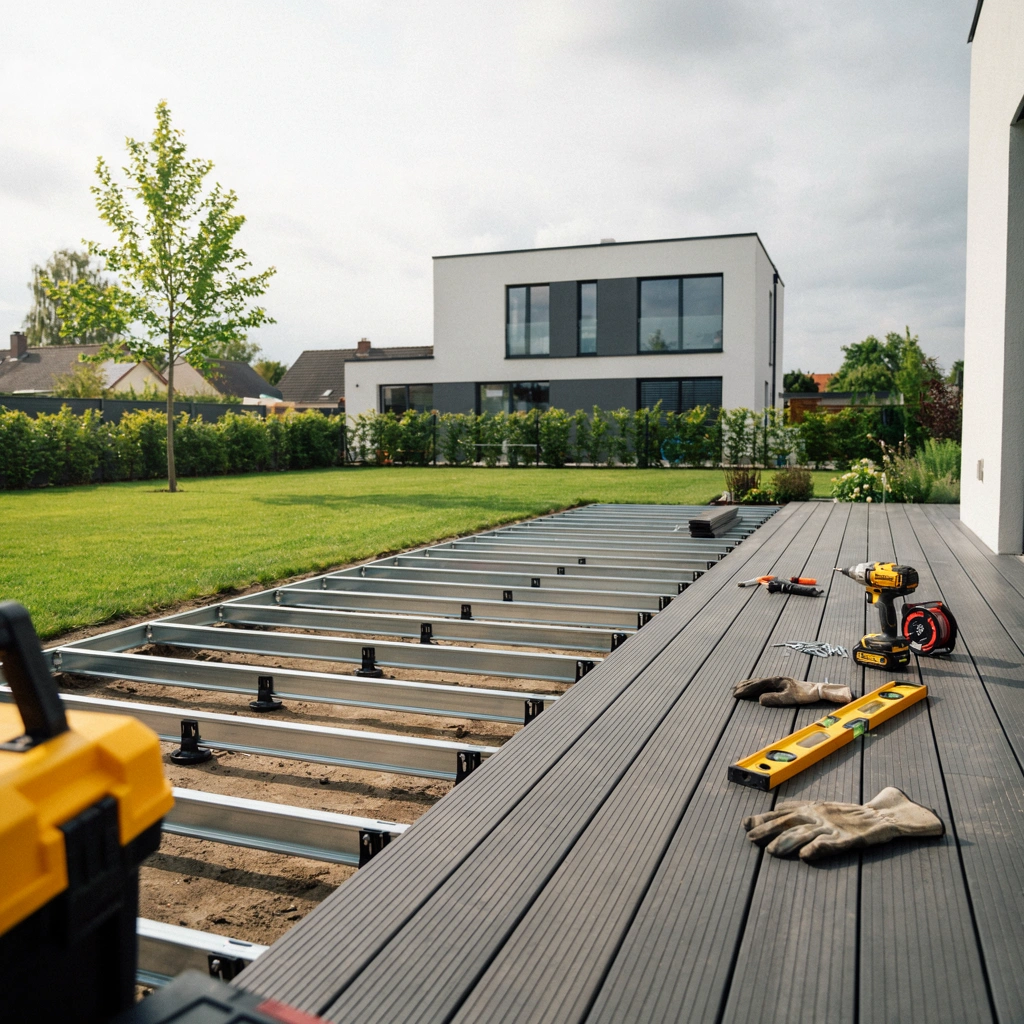
More and more manufacturers recommend using supports when building a composite decking terrace. Why? Because they make it possible to:
- set the joist height precisely,
- maintain the correct gradients,
- improve ventilation,
- drain moisture more easily,
- increase the durability of the entire structure.
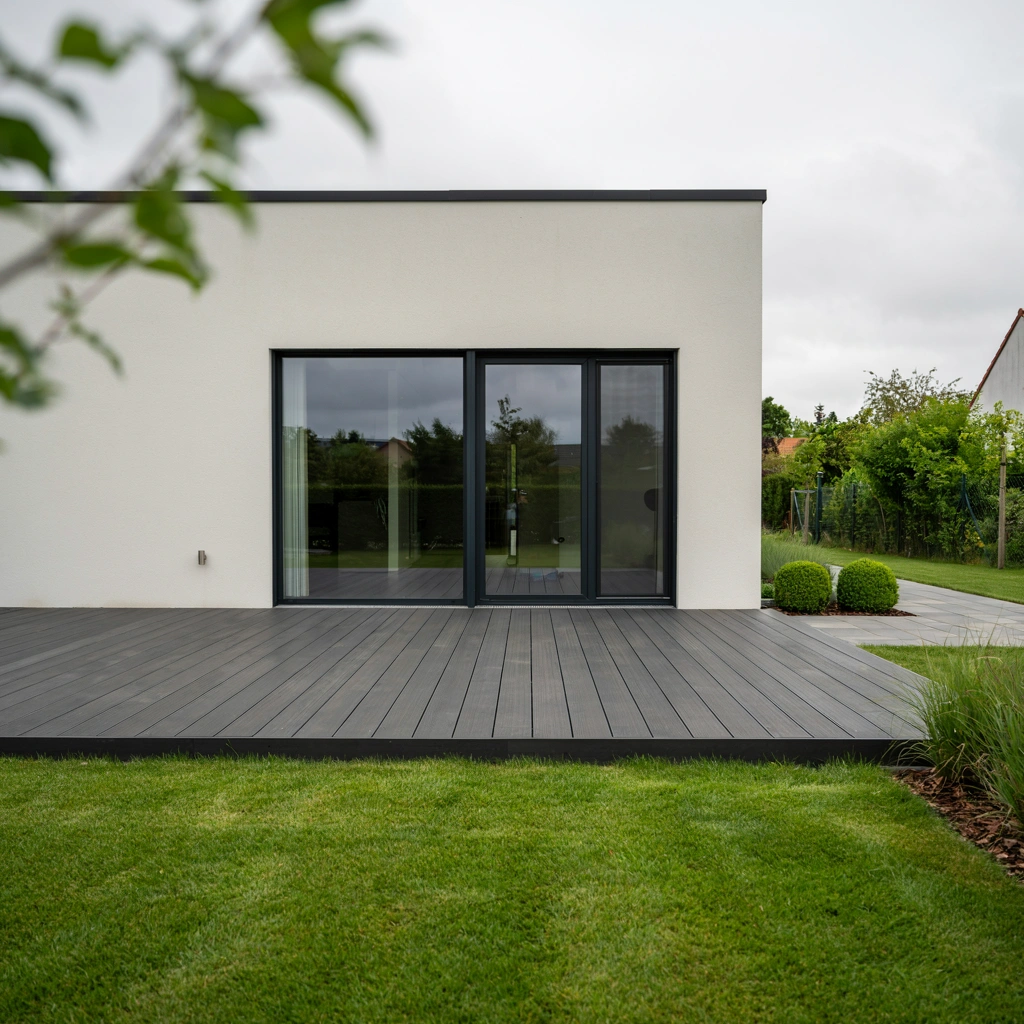
Combined with high-quality composite decking boards and suitable joists, they create a modern and durable terrace system.
Do supports improve the durability of a terrace?
Yes. Standing water is one of the biggest threats to any outdoor structure. Using adjustable terrace supports leaves an open space beneath the structure, allowing for:
- free airflow,
- rainwater drainage,
- faster drying of the structure,
- reduced moisture build-up.
This contributes to greater durability for both the joists and the entire composite terrace.
Supports and uneven ground.
Not every plot has a perfectly level surface. Where there are uneven areas, traditional installation may require:
- laying new screed,
- grinding the concrete,
- use of packers,
- additional levelling work.
Adjustable pedestals eliminate most of these problems and significantly reduce installation time.
Which joists should be used with pedestals?
The most commonly used are:
Aluminium joists
They are very rigid, corrosion-resistant and work perfectly with adjustable pedestals. Recommended especially for:
- large terraces,
- rooftop terraces,
- commercial projects.
Composite joists
They are suitable for standard projects at detached houses. It is best to choose products that are compatible with the manufacturer's composite decking board system.
Are pedestals suitable for rooftops?
Yes. This is one of their most common applications. On flat roofs, pedestals make it possible to:
- preserve the waterproofing,
- create the appropriate falls,
- easily access services beneath the terrace,
- quickly remove selected components when needed.
That is why they are widely used in modern construction.
The most common installation mistakes.
Even the best terrace pedestals cannot guarantee a durable structure if they are installed incorrectly. The most common mistakes include:
- incorrect pedestal spacing,
- unsuitable joists,
- no expansion gaps,
- failure to follow the manufacturer's recommendations,
- using miscellaneous accessories.
That is why it is worth using complete installation systems.
What are the advantages of adjustable pedestals?
The main benefits are:
- quick installation,
- height adjustment,
- easy levelling,
- improved ventilation,
- effective water drainage,
- greater structural durability,
- the ability to run services beneath the terrace,
- easier maintenance in the future.
This solution is particularly valued by professional installers.
Do adjustable pedestals have any limitations?
Like any solution, pedestals are not always the best choice. In some cases, conventional foundations or additional structural components are required, especially for very high terraces or unusual projects. That is why it is worth consulting an experienced installer about the design before starting the project.
How do you choose the right pedestals?
When buying, pay attention to:
- height adjustment range,
- maximum load,
- UV resistance,
- frost resistance,
- compatibility with joists,
- compatibility with the manufacturer's system.
High-quality adjustable terrace pedestals will ensure the structure remains stable for many years.
FAQ.
Are adjustable pedestals suitable for composite decking boards?
Yes. This is one of the most commonly used solutions when building modern terraces with composite decking boards.
Can pedestals be used on old concrete?
Yes. In many cases, they allow you to use the existing base without having to lay new concrete screeds.
Are pedestals frost-resistant?
Yes. They are made from materials resistant to changing weather conditions, moisture and low temperatures.
Do adjustable pedestals increase the durability of a terrace?
Yes. They improve ventilation, enable effective water drainage and reduce the risk of the structure becoming damp.
Summary
Adjustable terrace pedestals are a modern solution that makes it much easier to build a durable and attractive terrace. They enable precise levelling of the structure, improve ventilation and support effective water drainage, which directly affects the service life of the entire system.
If you are planning to build a terrace with composite decking boards, it is worth considering adjustable pedestals in combination with high-quality composite decking boards, suitable aluminium joists or composite joists and system-compatible installation accessories. This solution will provide a stable structure, easier installation and comfortable use for many years. A well-designed terrace is an investment that increases the functionality of the space around your home and lets you enjoy it regardless of the weather.
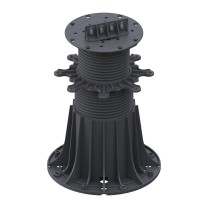
Adjustable terrace pedestal for MAX joists
Available pedestal sizes: 4,5cm - 95cm
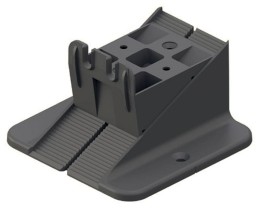
Adjustable RAPTOR decking joist support
Available support sizes: 1.5 cm - 18.5 cm
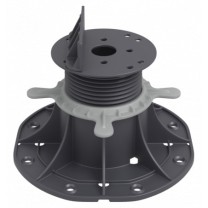
Adjustable STANDARD decking joist support
Available support sizes: 3 cm - 42 cm
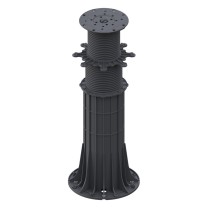
Adjustable MAX support for paving slabs
Available support sizes: 4.5 cm - 95 cm



