
Composite decking boards squeaking – fixing clips, joists or the substrate? Causes and solutions.
Squeaky composite decking boards can spoil the whole look of your terrace. Find out whether the cause is the fixing clips, joists, substrate, expansion gaps or installation, and discover proven ways to fix the problem.

Composite decking is the answer for many people who want peace of mind: there’s no need to oil it like timber, there are no splinters, and it looks great. That’s exactly why squeaky composite decking boards can be doubly annoying. Composite was supposed to be ‘premium’, after all, yet it sounds as if someone fitted it in a hurry on a Friday at 18:00. The good news? In most cases, you can identify and fix the cause. The bad news? Squeaking doesn’t always come from just one source. Sometimes it’s a mix: a bit of clips, a bit of joists, a bit of sub-base… and there you have it. Here’s a practical guide to how to identify what’s squeaking, why it happens and how to fix it.
Why does composite decking squeak?
Let’s start with the basics: squeaking is most often caused by friction or micromovements between components. Composite (WPC) expands and contracts with temperature. If the structure isn’t designed to accommodate this movement, the components start to ‘talk’. The most common causes are:
- clips tightened too much or the wrong type of clip,
- unstable or incorrectly spaced joists,
- poorly prepared sub-base (settling, no fall, insufficient support),
- missing or inadequate expansion gaps,
- dirt/sand at contact points (it can squeal like chalk on a blackboard).
And here’s the most important point: squeaking composite decking boards is a symptom. Treat the cause, not just the noise.
1. Clips – a small component that can cause a lot of frustration.
If your composite deck mainly squeaks when you step on a board, and the sound is localised (for example, in specific spots), the clips are often to blame.
Common clip-related mistakes.
a) Clips tightened ‘as hard as possible’.
A clip should hold the board in place, but it mustn’t lock it rigidly. If it’s too tight, the composite has no room for slight movement and starts to rub.
b) Clips that aren’t compatible with the system.
They may look similar, but can differ in height, clearance and how they guide the board. Wrong clip = wrong pressure = noise.
c) Poor-quality clips.
Cheap clips can deform, break or flex under load. The result? Squeaking and creaking over time.

- The squeak is a ‘click’ or ‘squeal’ in one spot.
- You can feel a slight movement when you gently rock the board.
- The noise gets worse in hot weather or after significant temperature changes.
What should you do?
- Loosen the clip screws (sometimes a quarter turn is enough).
- Replace the clips with those recommended by the board manufacturer.
- Add sound-dampening pads (if the system and warranty allow it).
- Check for sand in the grooves – it can make quite a ‘concert’.
Tip: If the deck was fitted with no gaps, the clips may simply be exposing an expansion-gap problem. In that case, replacing the clips alone won’t be enough.
2. Joists – the backbone of the deck mustn’t wobble.
Another classic cause is joists for composite decking. If the joists are spaced incorrectly, poorly supported or flexing, the boards start to move and squeak.
The most common joist problems.
a) Joists spaced too far apart.
Every manufacturer specifies the maximum spacing (often 30–40 cm, depending on the board). If the spacing is greater, the board flexes and moves against the clips.
b) Joists are not level.
If the joists form a ‘wave’, the board’s support point keeps changing and it starts to rub.
c) Joists on soft supports.
If a joist rests on individual pads that compress or move, the whole structure develops slight movement. And slight movement can cause squeaking.
d) The wrong joist material.
Sometimes timber joists are installed without suitable insulation or treatment. The timber moves, cracks and warps – and the deck starts to ‘talk’.
How can you tell if the joists are to blame?
- The squeaking is spread over a larger area.
- You can feel the deck flex as you walk.
- The noise is particularly noticeable under heavier loads (for example, when two people stand side by side).
Solutions.
- Check the joist spacing and add more joists if needed.
- Stabilise the supports (adjustable pads, wedges, EPDM rubber).
- Apply sound-dampening/insulating tape to the joists (a common installation practice).
- For serious problems, adjusting the structure is often the only sensible solution.
3. The sub-base – the foundation for a quiet deck.
Now we get to the heart of the matter: the sub-base. Very often, squeaking isn’t caused by the composite itself, but by what lies beneath it.
What can go wrong with the sub-base?
a) The sub-base settles.
If the deck is laid on the ground and the base was prepared ‘in a hurry’, it may sink over time. The joists then lose stability and noises start.
b) No fall or drainage.
Water standing beneath the deck is a recipe for problems: damp, frost heave, moving pads and, ultimately, squeaking.
c) Uneven concrete or paving slabs.
If the deck is on concrete but the surface has bumps and dips, the joists are unevenly supported. And components that aren’t evenly supported… you know the rest.


How can you check the sub-base?
- See if the deck feels ‘soft’ or seems to rock in certain places.
- Check whether water collects beneath the structure after rain.
- If you can look underneath, check whether the support pads are stable and level.
What can you do?
- Level the sub-base (concrete, paving slabs or adjustments to the bedding layer).
- Improve drainage and falls.
- Use stable structural supports (adjustable pedestals instead of makeshift pads).
4. Expansion gaps – a detail that makes all the difference.
Composite moves. That isn’t a defect – it’s a characteristic of the material. If expansion gaps were omitted during installation, the boards will push against each other in hot weather and contract in winter. The side effects?
- squeaking,
- bulging,
- pressure on the clips and joists,
- and sometimes even cracked components.
Where are expansion gaps essential?
- along the building wall,
- where boards join,
- at the ends,
- between boards (if the system requires it).
The rule is simple: always follow the manufacturer’s instructions – as different WPC boards can have different requirements.
5. Dirt, sand and ‘invisible’ friction.
It may sound trivial, but it’s true: sand can cause squeaking, especially if it gets into the grooves or between the board and the clip.
What helps?
- wash the deck thoroughly (use a pressure washer carefully),
- clean the grooves and contact points,
- sweep regularly (especially after winter and gardening work).
Quick diagnosis: how to find the source of the squeaking
If you want to deal with it quickly, follow these steps:
- Find the spot – walk slowly and mark where it squeaks.
- Check specific areas – is it one particular board or the whole section?
- Look underneath – if you have access, inspect the clips and joists.
- Loosening test – gently loosen the clip where you hear the noise and check the result.
- Assess the flex – if the deck ‘bounces’, the problem is often with the joists or sub-base.
Instead of a summary: quiet starts with good design.
Squeaking composite decking boards rarely happens ‘for no reason’. Most often, one of three things is to blame: clips, joists or the sub-base, sometimes two of them or all three at once. If your composite deck squeaks, don’t assume straight away that the boards are faulty. First, check the installation: clip pressure, joist stability and the condition of the sub-base. That’s usually where the problem lies.

Frequently asked questions (FAQ).
1. Why do composite decking boards only start creaking after a while?
Because the structure settles, the ground moves and the composite reacts to temperature. Often, the installation was right on the tolerance limit, and small gaps or points of pressure only become apparent after a season.
2. Does a creaking composite deck mean the boards are poor quality?
Not always. Very often, the boards are fine and the problem lies with the clips, joists or ground.
3. Can you quieten a deck without taking it apart?
Sometimes: you can loosen the clips, add extra supports or fit tape to the joists (if you can access them from above or remove a few boards). However, if the ground is settling, the structure will usually need adjusting.
4. Does EPDM tape on joists really work?
Often, yes, because it reduces friction and separates the board from the joist, while also protecting the joists. Just make sure you choose a solution that is compatible with the installation system and the manufacturer's recommendations.
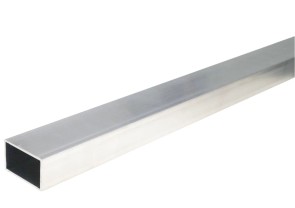
Aluminium decking joist "L" 40x80x2
Available lengths: 3m | 4m | 6m
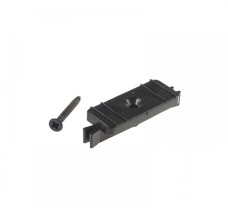
GARDIN composite decking clip + screw (100 pcs)
For boards: GARDIN
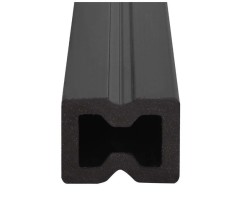
SELECT composite decking joist 30x40 (graphite) - 2m
30 x 40 x 2000
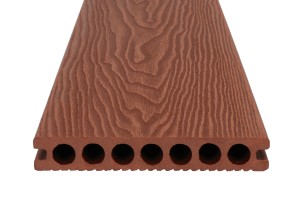
DUO composite decking board 23x148 - 2.25 m
Price per 1 linear metre board: 21.30 zł



