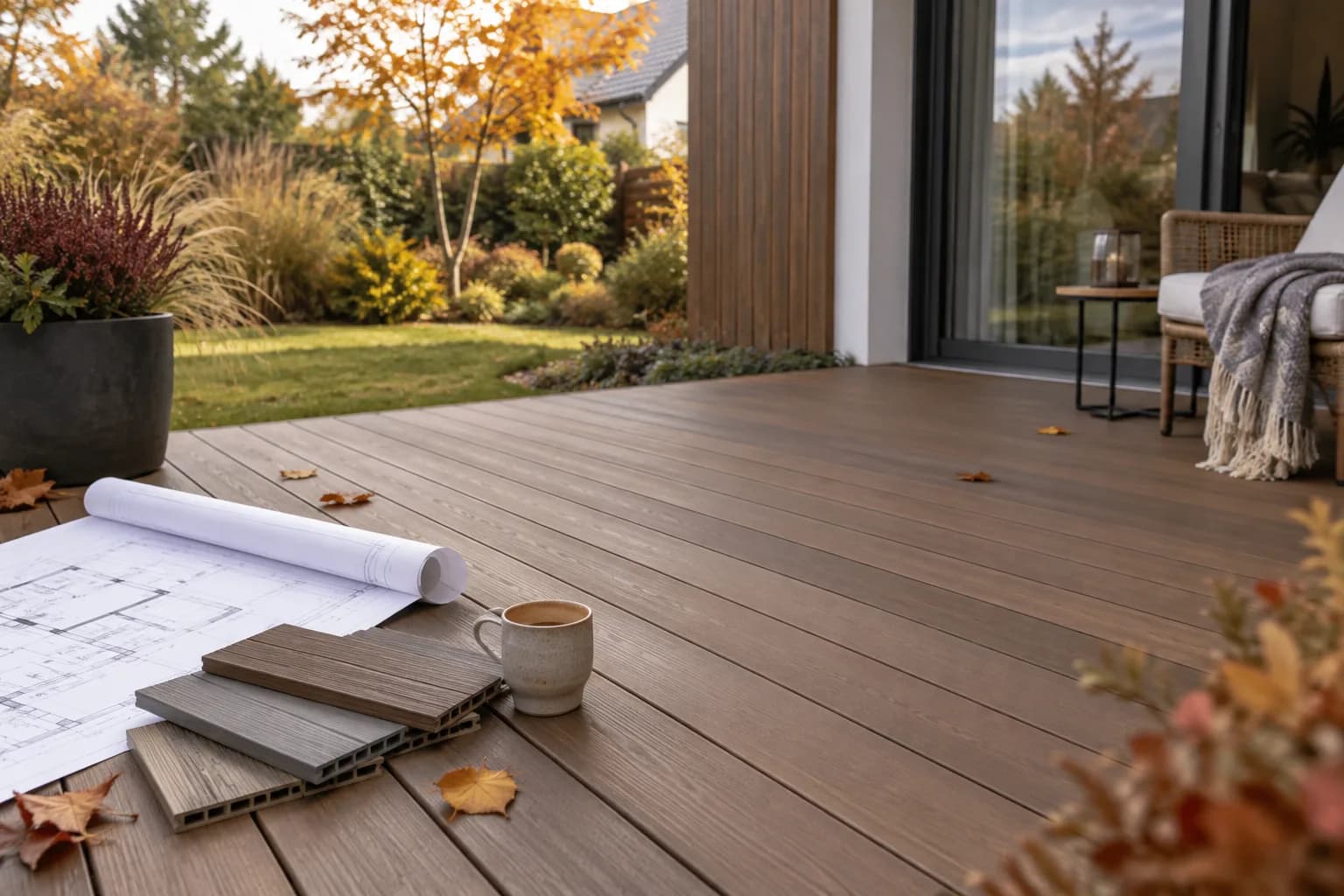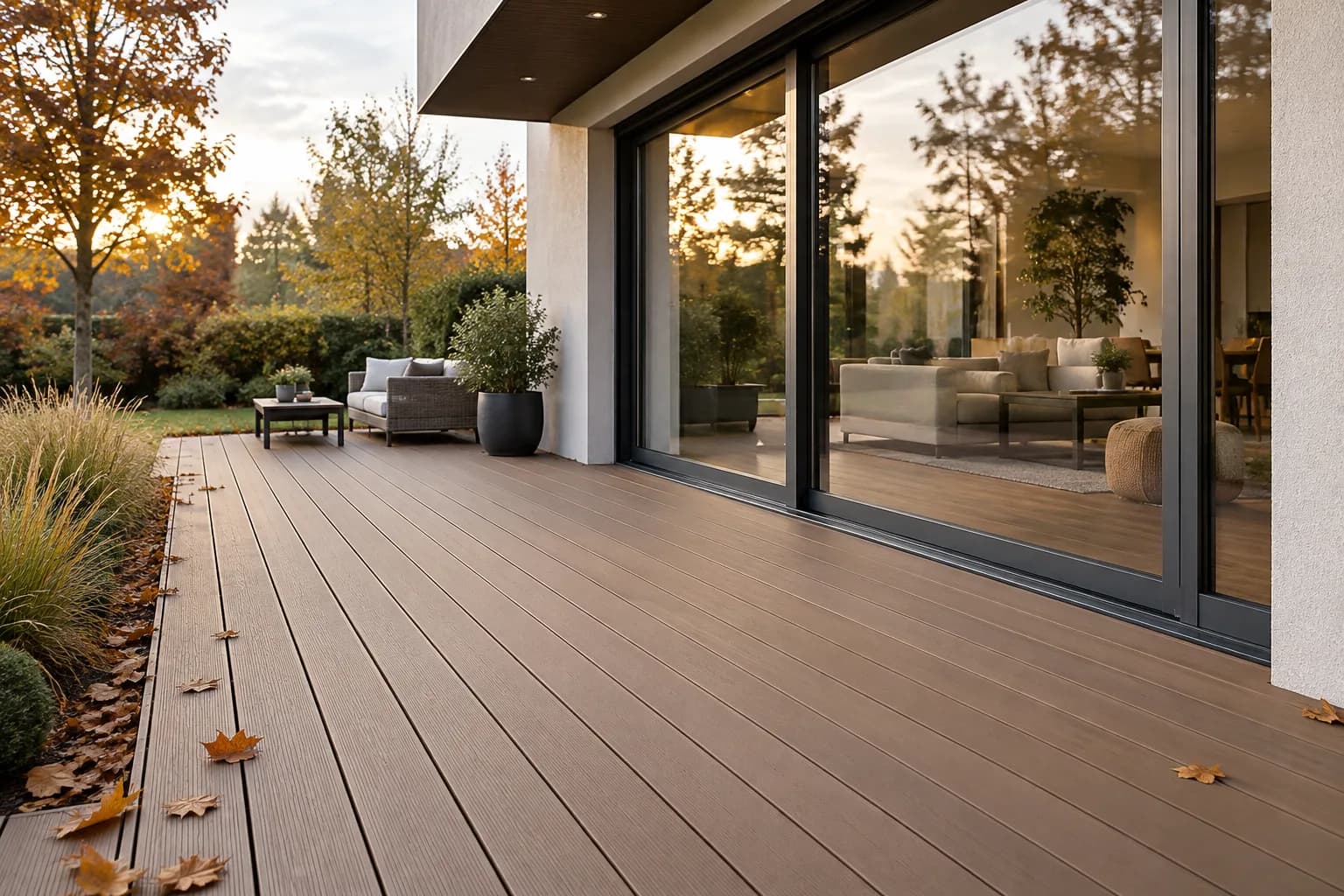
Colour stabilisation of composite decking boards – why is a change in shade a natural process?
Does composite decking change colour? Find out what colour stabilisation involves, why it is a natural process and how long it takes. Learn the facts and dispel the most common myths.
People planning to build a terrace often wonder whether a composite decking board will retain its original colour for many years. This is one of the most frequently asked questions when choosing a material for a terrace. However, it is worth knowing that a slight change in shade after installation is entirely natural and does not indicate a product defect. This process is known as colour stabilisation of composite decking boards. It occurs with most modern WPC decking boards and results from the effects of UV radiation and weather conditions on the material. Once stabilisation is complete, the colour reaches its final shade and remains at a similar level for the following years.
In this article, we explain what composite decking board stabilisation is, how long it takes and why it is worth treating it as a natural stage in the use of a terrace.
What is colour stabilisation in a composite decking board?
Colour stabilisation of a composite decking board is the process during which the material gradually reaches its final appearance under the influence of weather conditions.
Modern composite decking boards are made from a blend of wood flour, polymer materials and additives that improve durability and resistance to UV radiation. Once the decking boards have been installed, the material naturally begins to adapt to outdoor conditions. This does not mean a loss of quality or a deterioration in technical performance. It is a predictable phenomenon that manufacturers take into account when designing their products.
Why does a composite decking board change shade?
The appearance of a composite decking board is affected by many environmental factors. The most significant are:
- UV radiation,
- temperature changes,
- rainfall,
- air humidity,
- everyday use.
Under the influence of these factors, the surface of the decking board stabilises slightly, giving it a more natural and uniform appearance. In practice, the colour change is usually subtle and even.
How long does composite decking board stabilisation take?
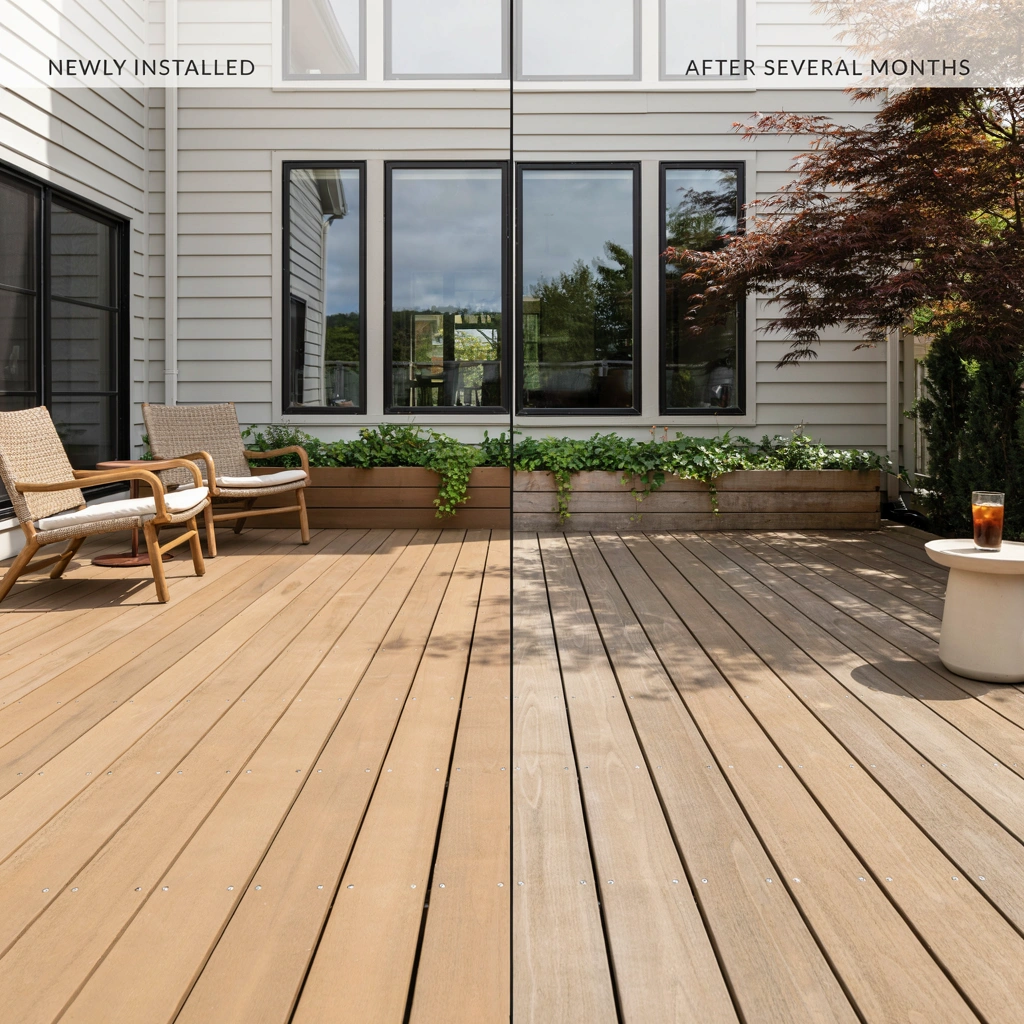
The duration of the process depends on the manufacturer, production technology and weather conditions. In most cases, composite decking board stabilisation takes from a few weeks to a few months after installation. The most noticeable changes can be seen during the first season of use, particularly if the terrace receives plenty of sunshine. Once this stage is complete, the colour is much more stable, and any further changes are usually minimal.
Does every composite decking board undergo stabilisation?
Yes, although the intensity of the process may vary. High-quality composite decking boards contain additives that protect them from excessive exposure to UV radiation, so the change in shade is slight and even.
Lower-quality products, on the other hand, may show greater colour differences and less predictable material behaviour. That is why, when choosing a terrace, it is worth considering not only the price but also the manufacturer's reputation and the technical specifications.
Does stabilisation mean fading?
This is a very common myth. Colour stabilisation of a composite decking board is not the same as significant material fading.
Natural stabilisation involves a slight evening out of the shade, whereas excessive colour loss may indicate the use of low-quality materials or insufficient protection against UV radiation. Modern composite decking boards are designed to retain their attractive appearance for many years of use.
What affects the rate of stabilisation?
Not every terrace will change colour to the same extent. Factors include:
- exposure to sunlight,
- the location of the terrace,
- shade from buildings or trees,
- weather conditions,
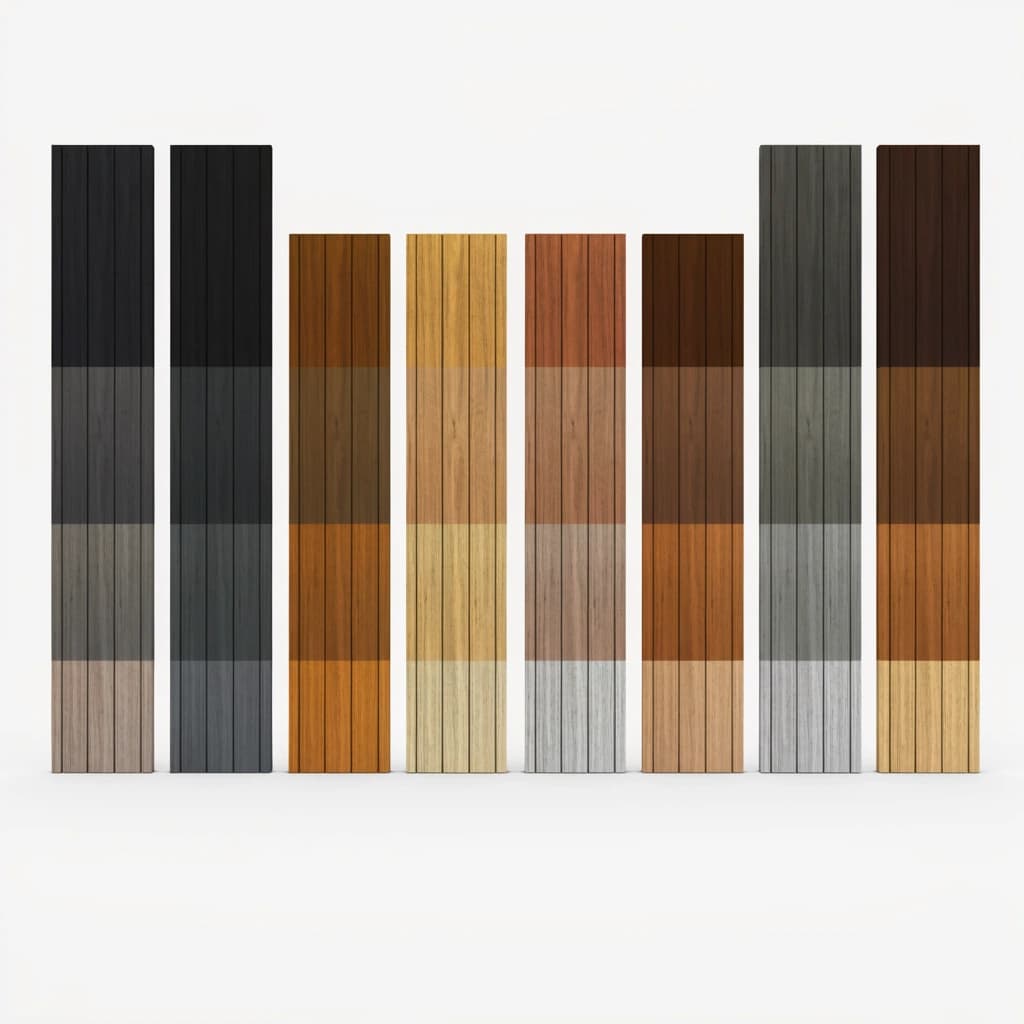
- the colour of the selected board.
Darker shades may reach their final appearance slightly faster than lighter ones, but the differences are usually minor.
Can the stabilisation process be stopped?
No. This is a natural property of the material, and you should not try to stop it by painting, varnishing or impregnating it.
One of the greatest advantages offered by composite decking boards is precisely that they do not require this type of treatment. Regular cleaning and removing dirt in accordance with the manufacturer's recommendations are all that is needed.
How should you care for composite decking boards during stabilisation?
The stabilisation process does not require any special measures. However, it is worth following a few simple rules:
- sweep the decking regularly,
- remove leaves and dirt,
- wash the surface with water or a mild cleaning agent,
- do not use harsh chemical products,
- ensure that water drains away properly.
These steps help keep your decking looking good for many years.
Does the colour of all the boards change in the same way?
Not always. If part of the decking is in full sun while another part is under a roof or pergola, the colour stabilisation of composite decking boards may proceed at different rates. After a while, the differences usually become less noticeable as the material gradually reaches colour equilibrium.
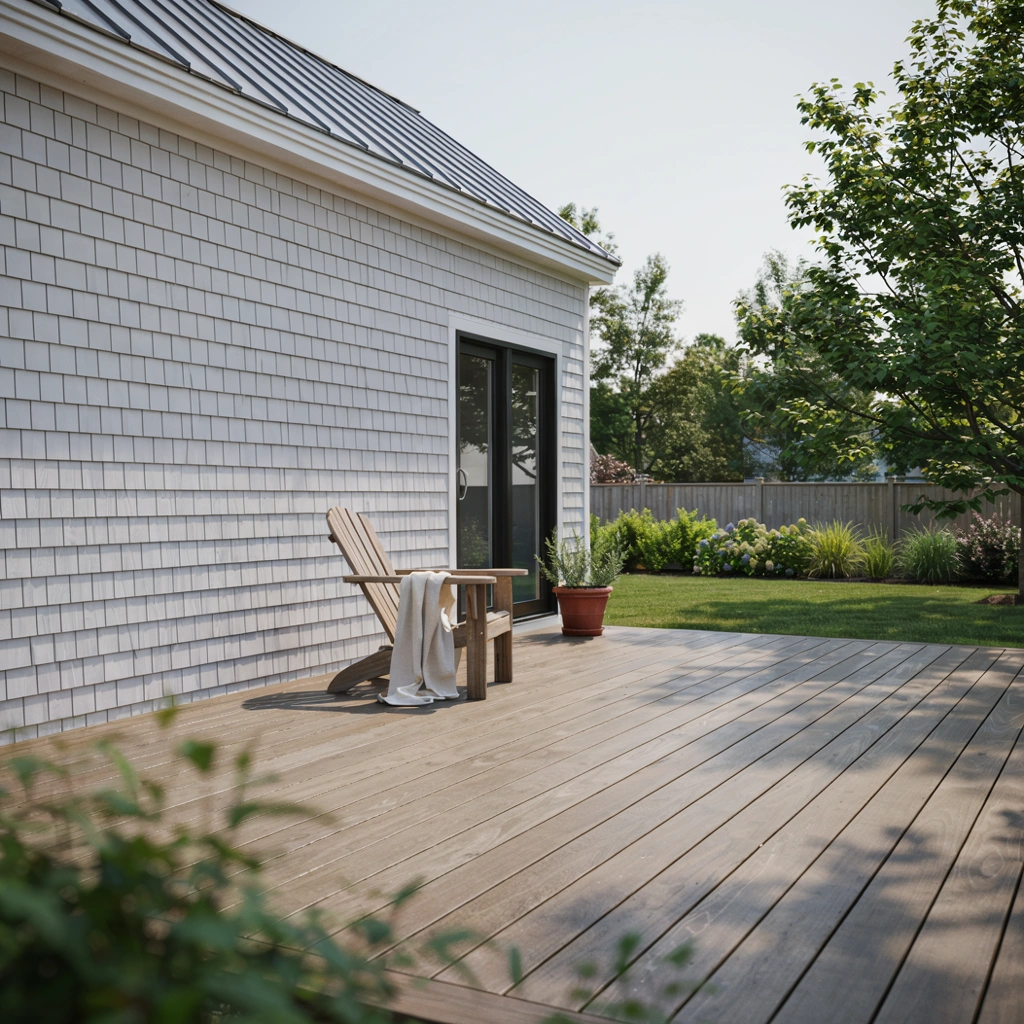
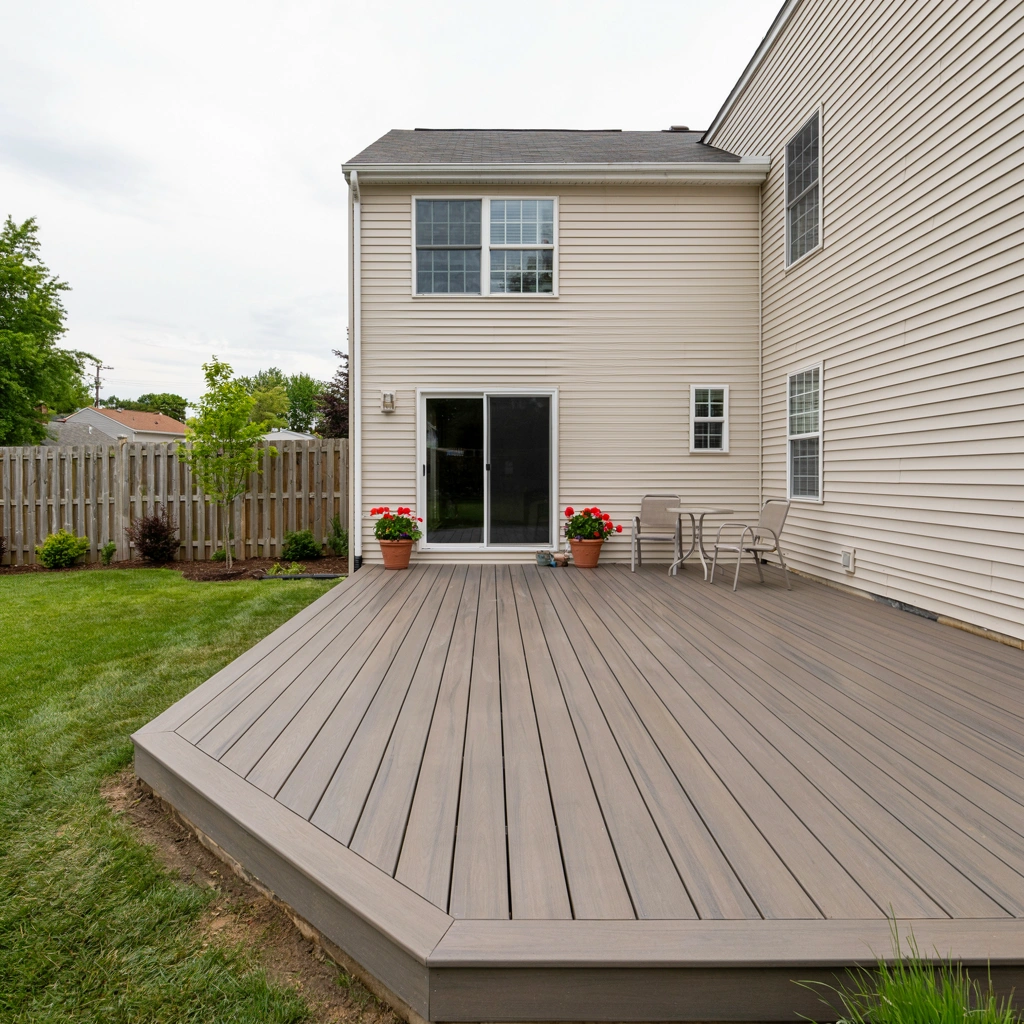
What role does the quality of composite decking boards play?
The quality of the material has a considerable impact on how it looks over time. Reputable manufacturers use:
- UV stabilisers,
- high-quality polymers,
- carefully selected wood flour,
- modern production technologies.
As a result, composite decking boards retain their appearance, resistance to weather conditions and high durability for many seasons.
Colour stabilisation and decking durability.
A natural change in shade does not adversely affect the material's performance. A well-built composite decking terrace remains resistant to:
- moisture,
- precipitation,
- frost,
- UV radiation,
- the growth of mould and fungi.
This is why composite decking is becoming increasingly popular both at detached houses and on balconies, restaurant terraces and in commercial properties.
The most common myths about colour stabilisation.
Many misconceptions have arisen around composite decking board stabilisation. The most common myths are:
- any colour change means the product is defective,
- composite decking boards need to be impregnated,
- stabilisation weakens the material,
- the board will fade completely after a few years.
In reality, high-quality composite decking boards are specifically designed with the natural stabilisation process in mind and retain their properties for a long time.
FAQ - Frequently asked questions.
Is it normal for the colour of composite decking boards to change?
Yes. A slight change in shade after installation is a natural stage in the material's stabilisation and does not indicate a product defect.
How long does colour stabilisation of composite decking boards take?
Usually from a few weeks to a few months, depending on weather conditions and production technology.
Does stabilisation affect the durability of the decking?
No. The process mainly affects the surface's appearance and does not impair the board's performance.
Can colour stabilisation be prevented?
There is no need to do so. It is a natural phenomenon that requires no additional treatment or maintenance.
Summary.
Colour stabilisation of composite decking boards is a natural and predictable process that occurs in most modern WPC products. A slight change in shade after installation is not a sign of a defect, but the result of the material adjusting to weather conditions.
By choosing high-quality composite decking boards and following the manufacturer's recommendations for installation and care, you can be confident that your composite decking terrace will look attractive and remain durable for many years. The key to satisfaction is choosing a proven system with care and understanding that composite decking board stabilisation is a normal part of its use and not a cause for concern.
SELECT composite decking board 25x140 - 2,25 m
Price per 1 linear metre of board: 17.27 zł
DUO composite decking board 23x148 - 4,0 m
Price per 1 linear metre of board: 21,29 zł
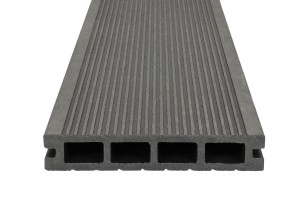
SELECT composite decking board 25x140 - 2,9 m
Price per 1 linear metre of board: 17,27 zł
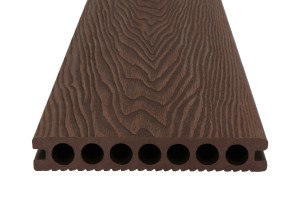
DUO composite decking board 23x148 - 3,5 m
Price per 1 linear metre of board: 21,30 zł