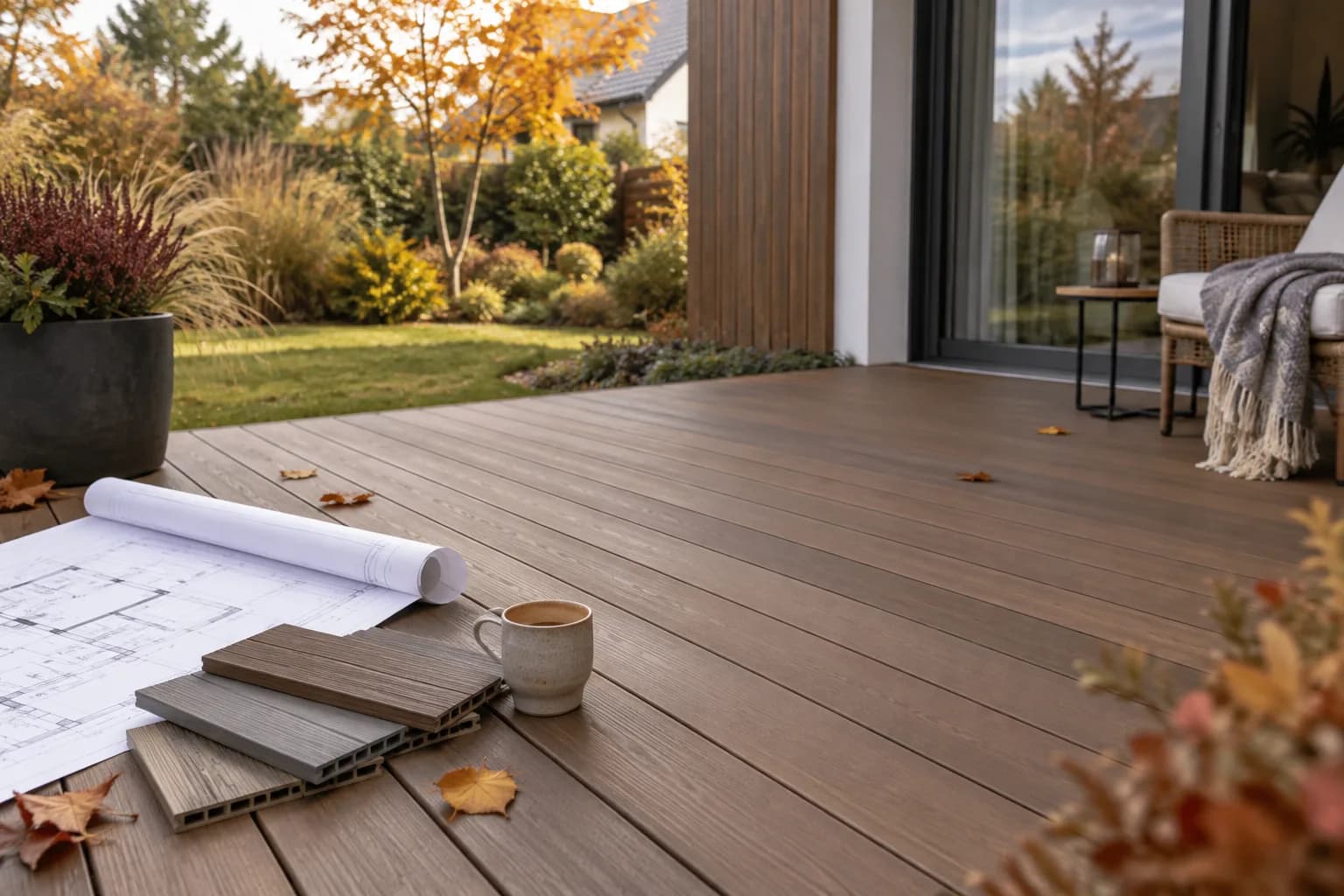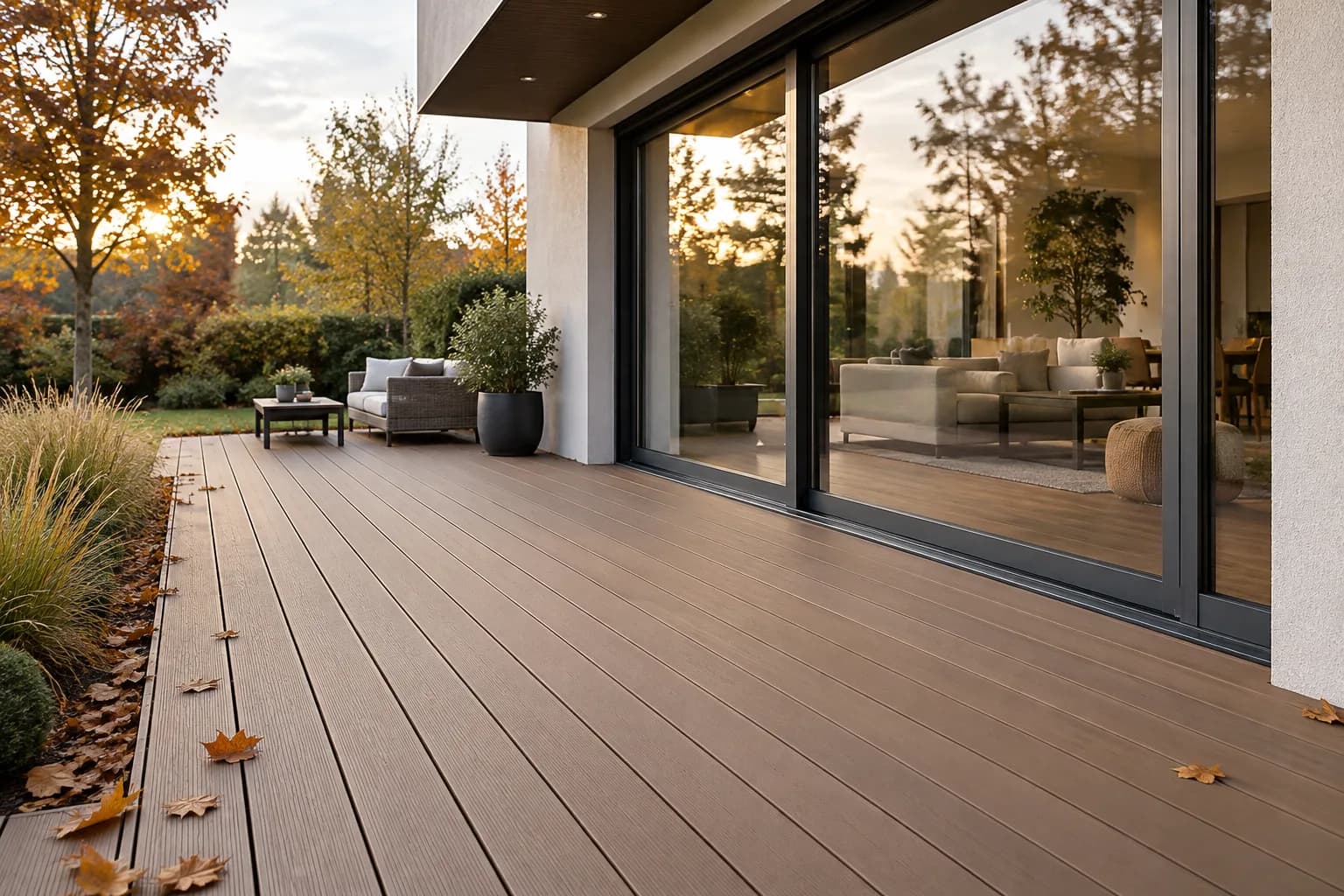
Patio on the ground or on joists? Which should you choose for composite decking?
Wondering whether it’s better to build a patio directly on the ground or on joists? Find out which option works better for installing a composite decking board patio and discover the advantages of both solutions.
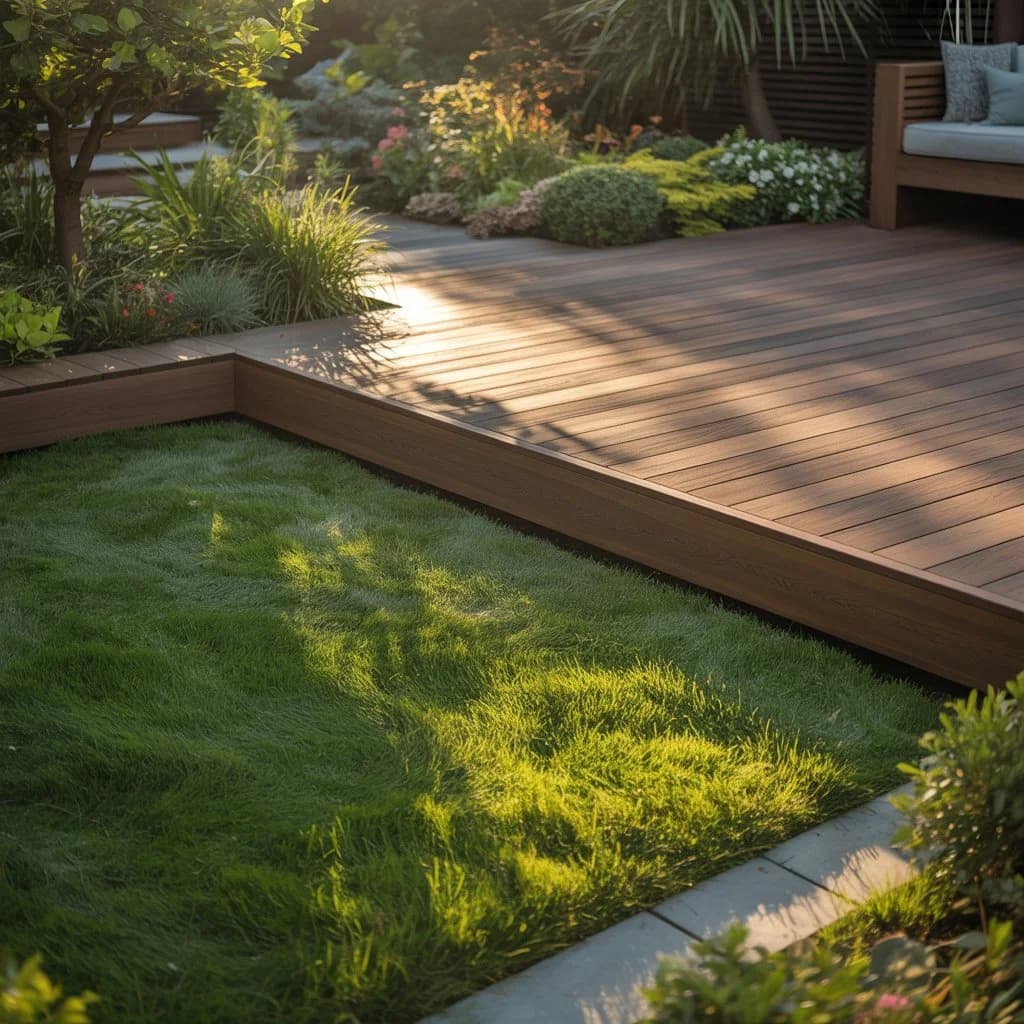
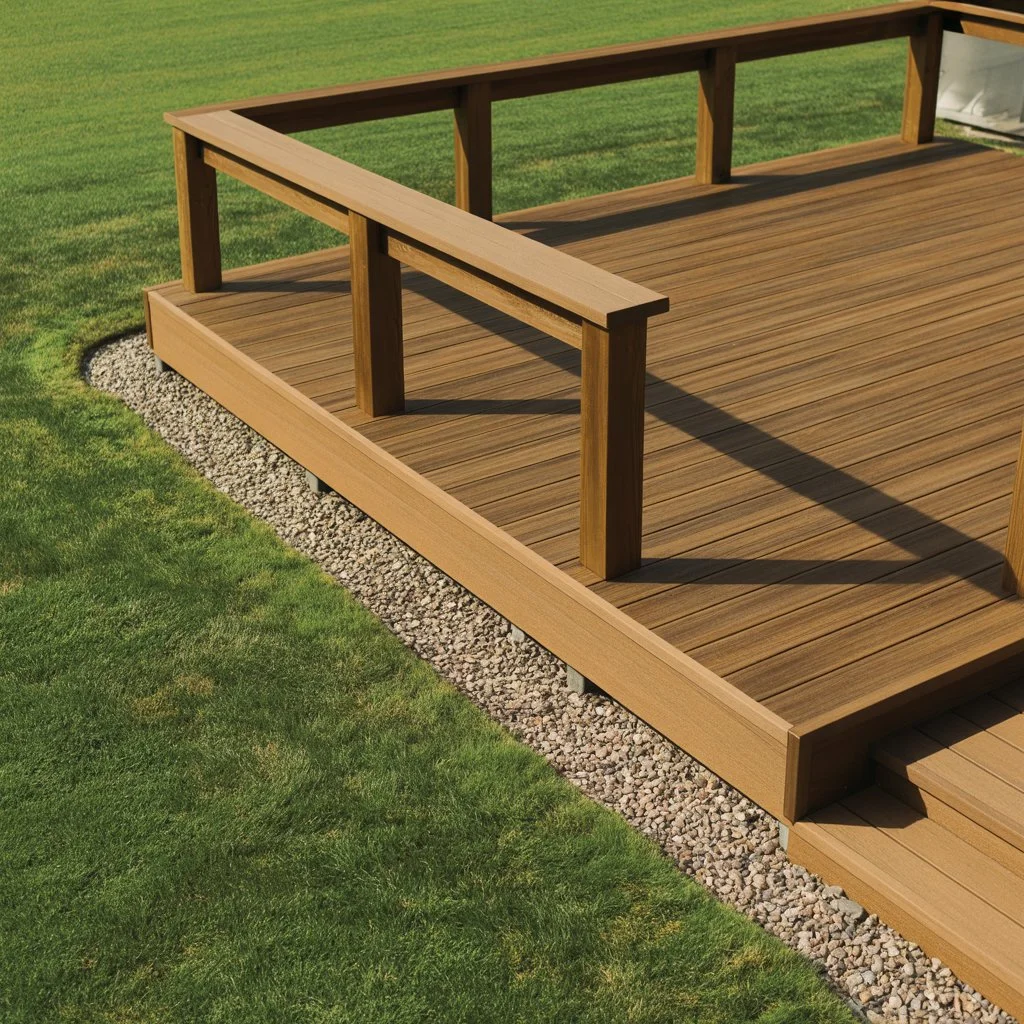
A composite decking terrace is a great investment – durable, attractive and easy to maintain. But before you drive in the first screw, there’s an important decision to make: should you install the decking directly on the ground, or build it on joists? Exactly! Choosing the right structure has a huge impact on the durability, stability and comfort of your decking terrace.
In this article, we’ll break the subject down. You’ll see how these two solutions differ, when it’s worth choosing one over the other, and why composite joists could be just the thing. We’ll also tell you what to look out for during decking installation, so you can avoid mistakes and save time and money.
Decking on the ground – quick and easy, but is it worth it?
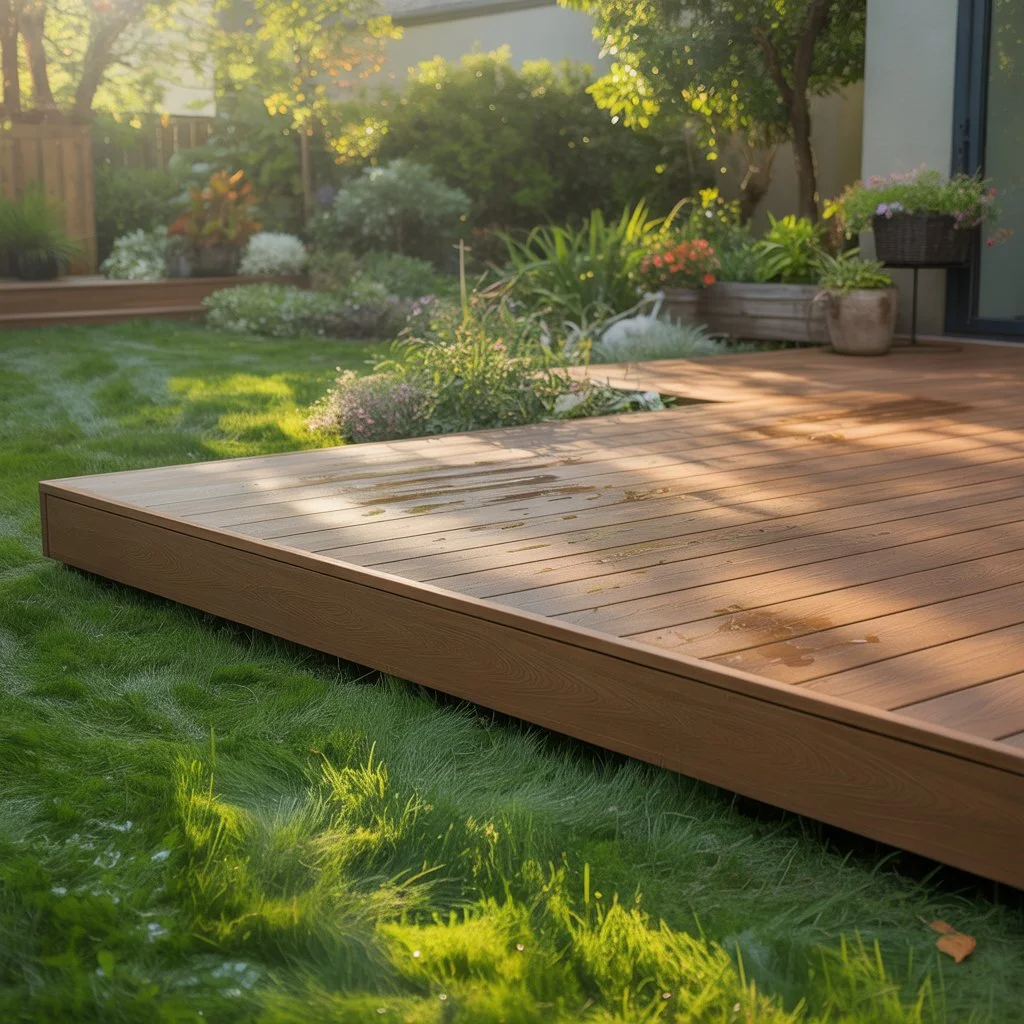
Building a decking terrace directly on the ground is a popular solution, especially in gardens where quick and straightforward installation is important. But is it really a good option?
Advantages of decking on the ground:
- Easy installation – no need to build a supporting structure.
- Lower cost – fewer materials = lower expenses.
- Lower decking level – ideal if you want the decking to be level with the lawn.
Disadvantages:
- Moisture problems – without proper drainage, water can collect beneath the boards.
- Less ventilation – a lack of airflow can shorten the lifespan of the boards.
- Difficult to level – the ground is often not perfectly level, which can lead to instability.
If you decide to build your decking on the ground, you’ll need to prepare the base properly – gravel, sand, geotextile membrane and, if necessary, a concrete bedding layer are essential. Without these, even the best composite decking boards may not stand the test of time.
Decking on joists – stability, durability and better ventilation.
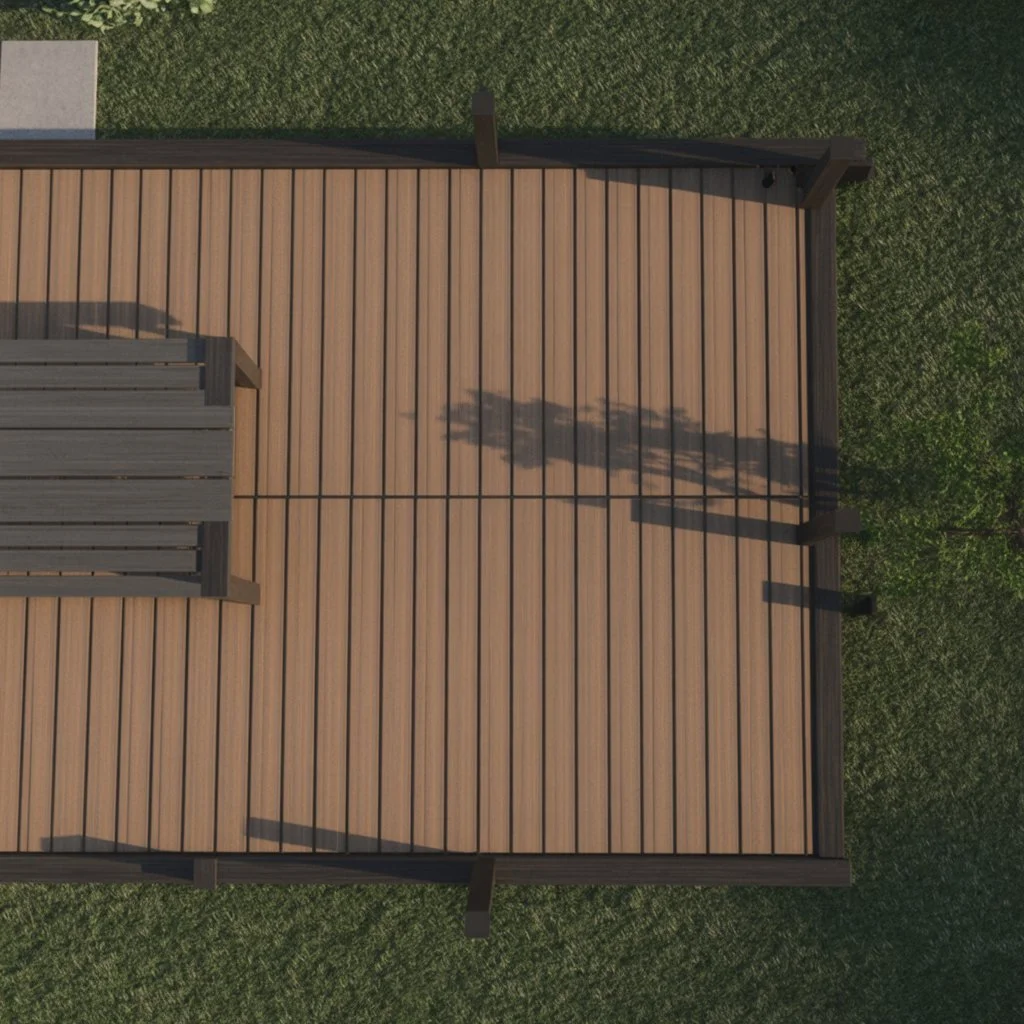
Installing decking on joists is a more advanced solution, but definitely more durable – especially when using composite decking boards.
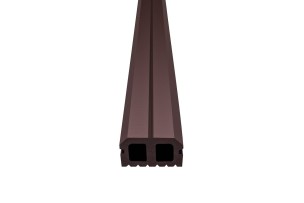
PREMIUM composite decking joist 28x50 (dark brown)
28 x 50 x 2000 | 4000
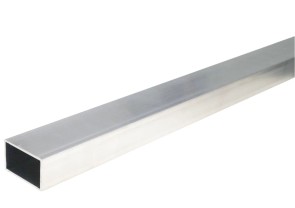
Aluminium “L” decking joist 40x80x2
Available lengths: 3m | 4m | 6m
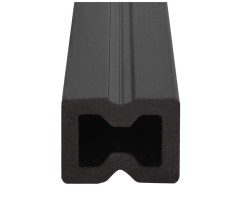
STANDARD composite decking joist 30x40 (graphite) - 2,90m
30 x 40 x 2900
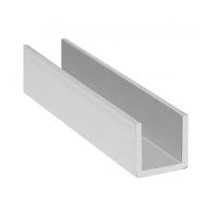
Aluminium C-channel 30x30x3
IDEAL FOR BUILDING A FENCE
What are composite joists?
These are structural profiles made from the same material as the decking boards – a mixture of wood flour and plastics. Their main purpose is to create a stable framework to which the boards are fixed.
Advantages of installing decking on joists:
- Better ventilation – airflow between the boards and the ground prevents damp.
- Structural stability – it is easier to get the decking perfectly level.
- Longer lifespan – the boards are less exposed to moisture and ground movement.
- Easier repairs – if something gets damaged, it is easier to replace an individual component.
Disadvantages:
- Higher cost – joists and brackets need to be bought, and often adjustable supports too.
- Longer installation time – there are more stages of work.
Decking made from composite decking boards – what should you know before installation?
Whichever option you choose, there are some rules you must know:
1. The ground is the foundation.
Whether you are laying decking on the ground or on joists, the base must be stable and permeable. The ground should be drained and levelled.
2. Leave gaps.
Although composite decking boards are weather-resistant, they still expand and contract. Therefore, expansion gaps must be left.
3. Use suitable joists.
The best option is composite joists, as they are moisture-resistant, do not rot and work very well with the boards. Aluminium joists are an alternative – more expensive, but very durable.
Comparison: Decking on the ground vs. Decking on joists.
| Features | Decking on the ground | Decking on joists |
|---|---|---|
| Cost | ✅ Lower | ❌ Higher |
| Durability | ❌ Lower | ✅ Greater |
| Ventilation | ❌ Limited | ✅ Very good |
| Installation | ✅ Faster | ❌ Requires more work |
| Appearance | ✅ Natural, level with the ground | ✅ Height can be adjusted |
| Moisture resistance | ❌ Depends on ground preparation | ✅ Much better |
What should you choose? Let's sum up!
If you are looking for:
- a quick, low-cost solution,
- have well-drained ground,
- and only plan to use the deck for a few seasons,
then a deck on the ground could be a good choice.
But if:
- you want your deck to last for many years,
- you want a solid, durable structure,
- and you don't mind making a slightly larger investment,
then we definitely recommend installing the deck on composite joists.
FAQs – frequently asked questions.
Can composite decking boards be installed directly on the ground?
Technically, yes, but it is not recommended. It is better to install them on a prepared base or on joists.
Is it worth investing in composite joists?
Definitely – they are durable, moisture-resistant and work well with composite decking boards.
Which joists should I use for composite decking?
The best choice is composite joists or aluminium joists, which are weather-resistant.
Does composite decking need to be treated?
No! One of the main advantages of composite decking boards is that they are maintenance-free – they do not need painting or treating.
What next?
Before you start installation, plan the whole structure carefully. Choosing between a deck on the ground and installation on joists is a decision that will affect comfort and durability for many years.
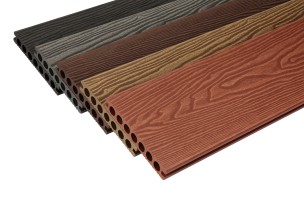
DUO composite decking board 23x148 - 5,8 m
Price per 1 linear metre of board: 21,30 zł
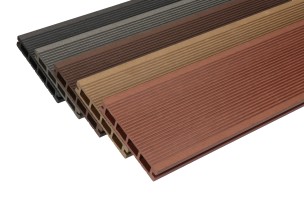
SELECT composite decking board 25x140 - 5,8 m
Price per 1 linear metre of board: 17,27 zł
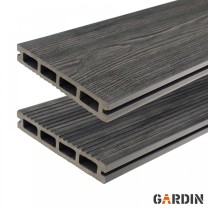
GARDIN NATUR composite decking board 23x146 - 2,0m
Price per 1 linear metre of board: 26,98 PLN
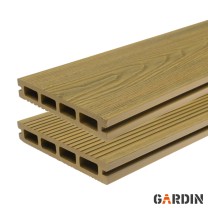
GARDIN NATUR composite decking board 23x146 - 4,0m
Price per 1 linear metre of board: 26,98 PLN